



The pendulum of cosmetic trends is swinging once again, signaling a definitive move away from the era of "no-makeup" makeup and barely-there balms toward the return of the bold, high-impact lip. For several years, the beauty industry has been dominated by a focus on "clean girl" aesthetics, characterized by sheer tints, high-gloss oils, and effortless, low-maintenance finishes. However, recent developments on the red carpet, a spike in consumer search data, and a strategic pivot from major beauty conglomerates suggest that the industry is entering a new phase of maximalism. This transition reflects a broader cultural desire for intention, precision, and personal expression in makeup application.
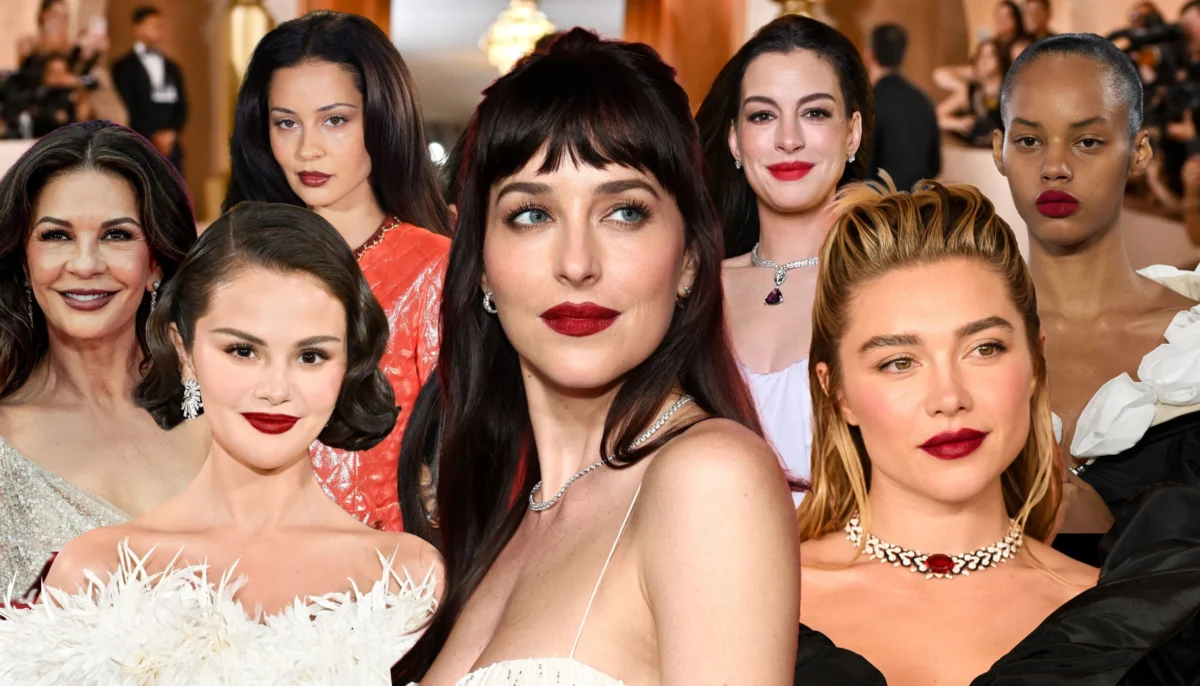
The shift toward bold, color-drenched lips has become increasingly visible through high-profile media appearances. The trend gained significant momentum during the recent press cycle for the Netflix series East of Eden, where actress Florence Pugh debuted a deep, cranberry-toned lip that precisely matched her statement jewelry. Makeup artist Alex Babsky, who orchestrated the look, noted that the decision to lean into a saturated, defined lip was a departure from the softer, stained finishes that have defined the past few years. This look was quickly followed by Dakota Johnson’s appearance in Taylor Swift’s "Patient Zero" music video and her subsequent red-carpet looks for the film Verity, where deep crimson and classic red shades took center stage.
The Chronology of a Trend Shift
To understand why the beauty industry is pivoting, it is essential to examine the lifecycle of the "minimalist" trend that preceded it. Following the global pandemic, beauty routines became largely functional. Masks rendered heavy, transfer-prone lipsticks impractical, leading to a surge in the popularity of balms, stains, and glosses. This period of "low-commitment" beauty persisted through 2024 and 2025, prioritizing comfort and health-centric skin finishes over the structured, matte-heavy looks that dominated the 2010s.
However, the "Lipstick Lesbians"—a prominent duo of industry experts and product developers—have noted that the market has effectively "exhausted" the high-shine, watery-stain aesthetic. By the spring of 2027, runways for luxury houses including Simone Rocha, Marc Jacobs, and Chanel featured models with opaque, longer-wearing, and highly pigmented lips. This shift indicates that the industry is not merely reviving old styles but is instead evolving toward a more sophisticated iteration of the classic bold lip.
Empirical Data and Consumer Demand
Market analytics reinforce these anecdotal observations. According to the Spate Popularity Index, which tracks consumer interest across search engines and social media platforms, the demand for traditional lip products is rising significantly. Specifically, search volume for "matte lipstick" experienced a 19% increase between September 2025 and August 2026. Furthermore, Pinterest’s 2026 Beauty Trend Report highlights a 121% surge in searches for "bold lip combos," a term that suggests consumers are moving beyond single-product applications toward multi-layered, customized looks.
.jpg)
This data is supported by industry product development cycles. Major brands are currently shifting their R&D focus to meet this demand. For example, Victoria Beckham Beauty recently launched the "Rouge Victoria" line, a collection of six demi-matte lipsticks, while MAC Cosmetics is preparing a strategic relaunch of its iconic "Frost" lipstick franchise. These moves demonstrate that brands are betting on a sustained consumer interest in pigmented, high-coverage products that offer a sense of "personality" and "intention."
Expert Perspectives on the Return of Maximalism
Industry leaders suggest that the return to the bold lip is a reaction to the perceived fatigue of "effortless" beauty. Teny Kureghian, the global head of product development at MAC Cosmetics, suggests that beauty trends function in cyclical waves. "Glosses and balms made perfect sense for a period where consumers prioritized ease," Kureghian states. "But beauty always moves in cycles, and we are witnessing a return to the desire for intention. People are ready to use their makeup as a tool for personality and power."
Hannah Murray, global artistic director for Bobbi Brown, provides historical context to this transition. She notes that the evolution of beauty often mirrors larger societal shifts. The transition from the earthy, neutral tones of the 1970s to the bold glamour of the 1980s, and the move from the minimalist 1990s to the matte-obsessed 2010s, all demonstrate that beauty trends are inherently responsive to their eras. According to Murray, the current move toward bold lips represents a transition from a period of isolation and minimalism back to one of social engagement and visible confidence.
The Nuance of the 2026 Bold Lip
While the current trend shares similarities with the 2010s "liquid lipstick" craze, industry experts emphasize that the 2026 iteration is fundamentally different. The primary differentiator is the focus on texture and layering. Where the 2010s were defined by flat, ultra-matte, and often drying formulas, the current trend draws heavily from K-beauty’s "blurred" aesthetic.
"We are seeing much more lip liner activity than we have ever had before," says product developer Alexis Androulakis. She notes that the modern consumer has access to a wider variety of long-wear lip liners and layering products, which allow for a more nuanced application. The current aesthetic favors a velvety, dimensional finish that feels more organic than the previous generation of "Kylie-style" lip kits. This allows for a look that is bold but feels contemporary, avoiding the harsh edges that characterized earlier iterations of the trend.
The Psychology of Application
Beyond the aesthetics, there is a psychological element to the resurgence of the statement lip. Makeup artist and educator Kisha Augustine highlights the "unspoken ritual" of applying lipstick. For many, the act of applying a bold color is a transformative process that helps establish a sense of authority and confidence. This ritualistic aspect of beauty is increasingly valued by consumers who see makeup as a form of self-care and empowerment rather than just a cosmetic necessity.

Alex Babsky echoes this sentiment regarding the confidence required to wear a statement lip. "A bold lip is not for the faint-hearted," he explains. "It is a focal point of the face, and it requires the wearer to own that space." His work with high-profile clients illustrates that while trends are a factor, the success of a look often comes down to the synergy between the makeup, the fashion, and the wearer’s demeanor. The cranberry lip that gained viral attention was not planned as a trend-setting moment; it was a response to the need for a "definite focal point" to balance a high-fashion ensemble.
Future Implications and Broader Impact
The return of the bold lip has implications for the retail beauty landscape, which must now pivot its marketing and inventory strategies to match the demand for opacity and precision. As we head into the holiday season and beyond, it is likely that the "bare face, bold lip" aesthetic will become the standard for both professional and social settings.
This trend shift suggests that the market is moving toward a more eclectic approach to beauty, where the binary of "natural" vs. "glam" is being replaced by a more flexible philosophy. As consumers become more adept at layering, blending, and utilizing specialized tools like long-wear liners, the definition of what constitutes a "bold" look will continue to expand.
Ultimately, the comeback of the statement lip is a testament to the enduring power of color in the beauty industry. Whether through a deep, gothic-inspired plum or a classic, high-octane red, the focus has shifted from blending into the background to making an intentional, visible statement. As the industry continues to innovate, the focus will likely remain on formulas that provide the longevity of the past with the comfort and sensory experience required by the modern, discerning consumer. The message is clear: the era of hiding behind tinted balms is concluding, and the era of the intentional, unashamedly bold lip has officially returned.