










The modern fashion industry operates on a structural foundation deeply entwined with historical, racist, and colonial frameworks that continue to inflict measurable harm on Black communities globally. While conversations surrounding sustainability frequently focus on carbon footprints, material sourcing, and waste reduction, a critical assessment reveals that true environmental sustainability cannot be achieved without confronting the anti-Black racism embedded within global supply chains. Examining the lifecycle of a garment—from the agricultural fields where raw fibers are harvested to the low-income nations where textile waste ultimately accumulates—exposes an urgent intersection between climate collapse and civil rights.
Systemic oppression in the global economy has long dictated that the social and environmental costs of mass consumption are outsourced to vulnerable populations. As international trade expanded through globalization, supply chains grew increasingly complex and opaque. To maintain low retail prices for fast fashion and rapid micro-trends, major corporations shifted textile manufacturing, garment construction, and raw material extraction to low- and middle-income countries (LMICs) such as Bangladesh, Guatemala, and Mexico. Within these regions, marginalized workers—predominantly people of color—bear the brunt of hazardous working conditions, chemical exposure, and suppressed wages.
The crisis extends far beyond the factory floor, manifesting visibly in the mountains of textile waste exported to the Global South. A prominent example of this phenomenon is documented in Ghana, where the Kantamanto Market in Accra receives vast quantities of discarded, low-quality garments from Western nations including the United States, the United Kingdom, and members of the European Union. Research organizations, including The Or Foundation, have extensively detailed how this influx of unwearable clothing has transformed local ecosystems and municipal systems into toxic landfills. As local textile importers and community leaders have frequently pointed out, the structural dumping of Western waste onto African nations reflects an underlying devaluation of human life in the Global South, operating as a modern manifestation of colonial extraction.
Recognizing these systemic failures requires shifting the dialogue toward climate justice and environmental racism. Climate justice posits that environmental degradation cannot be isolated from socioeconomic and racial inequalities. Activists and scholars emphasize that the climate crisis is inextricably linked to white supremacy and historical exploitation. Without dismantling these foundational injustices, efforts to curb ecological collapse remain superficial.
Despite these systemic challenges, a powerful counter-movement is underway. Black-owned brands, designers, and artisans are pioneering alternative models that fuse dazzling creativity with rigorous sustainability innovations. These enterprises are actively redefining the boundaries of ethical production, proving that accountability, transparency, and cultural preservation can coexist at the highest levels of design.
Pioneering Black-Owned Sustainable Brands
Several independent labels and enterprises are leading the transition toward a more equitable and eco-conscious fashion and lifestyle industry.
Tolu Coker is a prominent London-based womenswear brand deeply influenced by the designer’s British-Nigerian heritage and a familial legacy of social activism. The label prioritizes lower-impact materials and localized manufacturing, ensuring that production methods honor both people and the planet.
We Are Kin operates as a slow fashion label rooted in London, specializing in handmade garments created in limited runs to minimize surplus waste. Emphasizing inclusive sizing—with offerings spanning UK sizes 4 to 26—alongside bespoke options for tall and petite frames, the brand champions longevity, timeless silhouettes, and ethical craftsmanship.
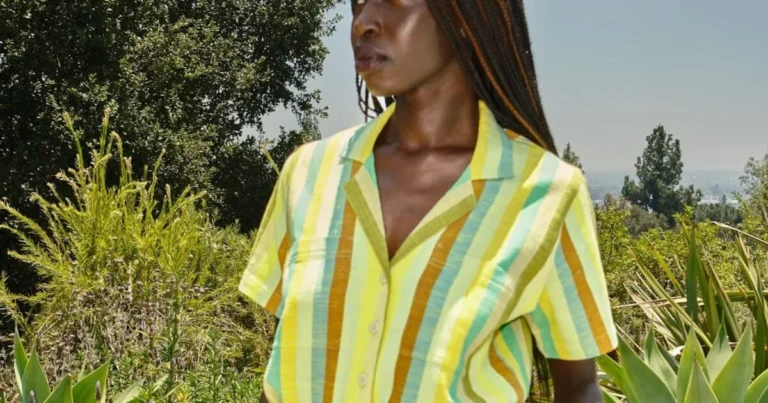
Founded by supermodel Liya Kebede, lemlem encompasses women’s, men’s, and children’s apparel, as well as home goods. Drawing its name from the Amharic word meaning "to bloom and flourish," the brand is dedicated to expanding artisan production throughout Africa. By partnering directly with local makers, lemlem preserves traditional weaving techniques while generating sustainable employment opportunities across the continent.
Sami Miro Vintage pushes the boundaries of circular fashion by constructing modern garments from vintage deadstock and recycled fabrics. Known for conceptual collections addressing ecological crises, the brand merges high-profile appeal with a clear messaging platform centered on climate awareness.
Jade Swim, based in Los Angeles, approaches swimwear through a minimalist yet innovative lens. The brand emphasizes refined silhouettes and durability, utilizing lower-impact production practices to reduce its overall environmental footprint.
GOODEE operates as a certified B Corporation, offering a curated selection of homewares, furniture, and textiles sourced responsibly from artisan communities around the globe. The enterprise sets a high standard for supply chain transparency and fair labor practices within the home design sector.
Adele Dejak creates bold, sophisticated accessories and jewelry responsibly manufactured in Kenya. By utilizing more environmentally friendly materials and honoring traditional African craftsmanship, the brand champions a circular and culturally rich approach to design.
Sancho’s serves as a UK-based ethical lifestyle brand offering effortless apparel alongside circular retail initiatives, including a dedicated platform for customers to resell pre-loved garments, thereby extending the lifecycle of each piece.
Amplifying Voices: Key Activists, Scholars, and Organizations
Driving systemic change requires engaging with the thought leaders, researchers, and grassroots organizations that have long championed environmental justice.
Mikaela Loach is a prominent climate justice activist and author whose work highlights the intersection of human rights, systemic racism, and the climate emergency. Her advocacy underscores the necessity of dismantling white supremacy to achieve genuine ecological stability.
Leah Thomas, an environmentalist and eco-communicator based in Los Angeles, coined the term "intersectional environmentalism." Her seminal 2022 work, The Intersectional Environmentalist, examines the unbreakable ties between environmental degradation, privilege, and institutional racism, asserting that ecological preservation must actively uplift marginalized voices.
Dr. Dorceta E. Taylor is an esteemed environmental sociologist and the Wangari Maathai Professor of Environmental Sociology at the Yale School of the Environment. Her extensive research and numerous publications have provided foundational data on environmental racism and the historical exclusion of people of color within the mainstream environmental movement.
Dr. Ayana Elizabeth Johnson is a marine biologist, policy expert, and co-founder of Urban Ocean Lab and The All We Can Save Project. A prolific author and co-creator of climate-focused literature, Johnson maps actionable, equitable solutions for a sustainable future while amplifying women leading the climate movement.
Aja Barber is a writer, consultant, and stylist whose work dissects the colonial underpinnings of modern consumerism and the textile industry. Her book, Consumed: The Need for Collective Change, offers critical guidance on how individuals can recognize and challenge oppressive supply chain systems through mindful consumption.
The late Hazel M. Johnson, widely recognized as the "mother of environmental justice," established the People for Community Recovery on the South Side of Chicago. Her grassroots organizing against toxic pollution in minority neighborhoods culminated in foundational framework documents, including the 17 Principles of Environmental Justice.
Brittany Sierra serves as a leading voice in sustainable fashion as the founder of the Sustainable Fashion Forum and host of the Green Behaviour podcast. Recognized for her thought leadership, Sierra facilitates critical dialogues between industry insiders and consumers regarding ethical accountability.
Teresa Baker bridges the gap between outdoor organizations and communities of color. As the founder of the African American National Park Event and co-creator of The Outdoor CEO Diversity Pledge, Baker works to advance genuine representation and inclusivity within outdoor industries.
Gloria Walton, president and CEO of The Solutions Project, leads an organization dedicated to funding and amplifying frontline-led climate solutions designed to foster an equitable, regenerative economy.
Dr. Rae Wynn-Grant is a renowned wildlife ecologist studying the impacts of human activity on carnivore behavior. Through her research, memoir, and media advocacy, she expands representation within environmental sciences and inspires future generations of conservationists.
Marjorie Alexander produces and hosts the podcast A Sustainable Mind, providing a platform for the innovators, campaigners, and entrepreneurs driving contemporary environmental movements.
Additionally, organizations such as Outdoor Afro, The Sunrise Movement, Intersectional Environmentalist, The Or Foundation, Generation Green, GrowNYC, and the Climate Justice Alliance continue to mobilize communities, advance policy reforms, and build localized power structures necessary for long-term ecological and racial equity.
Implications and Future Outlook
The integration of racial justice into fashion sustainability is not merely an ethical preference; it is an operational necessity. As regulatory bodies increasingly scrutinize supply chain transparency, and as consumers demand accountability from corporations, the fashion industry faces a definitive turning point. True sustainability mandates an immediate reckoning with historical exploitation, fair compensation for garment workers, ethical management of textile waste in the Global South, and the elevation of Black-led innovation. Only by dismantling the colonial frameworks that dictate modern consumption can the global fashion ecosystem evolve into a regenerative, just, and truly sustainable industry.