






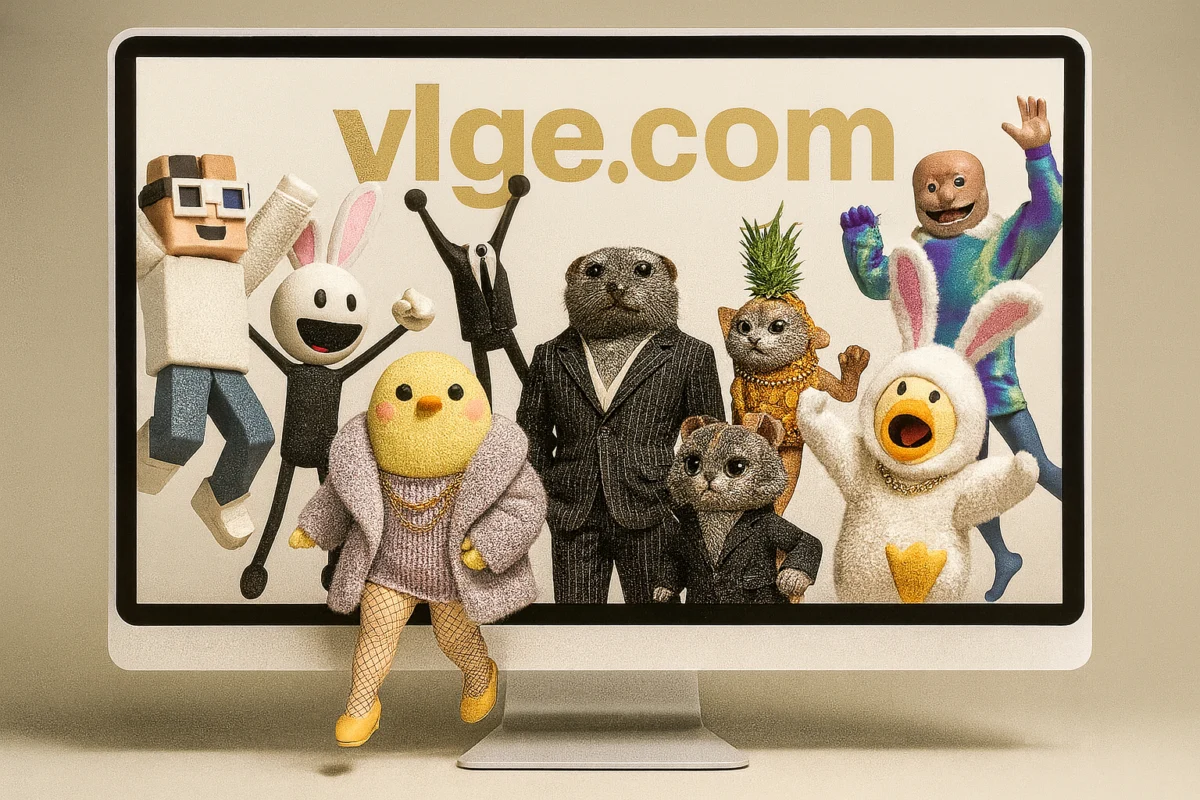
The landscape of global fashion is undergoing a fundamental transformation as digital immersion moves from a niche experimental phase to a core pillar of retail strategy. Evelyn Mora, a visionary entrepreneur who recognized the inherent sustainability flaws of traditional large-scale fashion events early in her career, has positioned her platform, VLGE, at the epicenter of this shift. Launched in 2021, VLGE is a gaming and immersive-world-building platform designed specifically to empower brands to navigate the complexities of the metaverse. By providing a suite of tools that allow for the creation of interactive, gamified content that can be seamlessly exported to massive platforms like Roblox, VLGE is redefining how brands interact with a new generation of consumers.
The announcement of World Fashion Week marks a significant milestone for the company and the broader industry. This initiative will see 50 fashion brands launch their own shoppable digital worlds, all powered by VLGE’s proprietary technology. The event serves as a strategic bridge, allowing creators and heritage brands alike to deploy shoppable games on platforms such as Roblox without the traditional technical hurdles. This move reflects a broader industry trend where interactive engagement is replacing the static nature of traditional fashion shows and filmed marketing campaigns.
Bridging the Gap Between Luxury and the Metaverse
For decades, the fashion industry relied on a rigid cycle of physical runway shows, a model that is increasingly scrutinized for its environmental impact and its inability to reach younger, digitally native audiences. Evelyn Mora’s background in sustainability led her to identify a critical gap: while designers were often committed to eco-friendly practices in their garments, the logistical requirements of a global fashion show—including international travel, physical set construction, and temporary infrastructure—remained stubbornly carbon-intensive.
VLGE was conceived as a solution to this paradox. By shifting the "theatre" of fashion to immersive 3D environments, brands can achieve the same level of storytelling and brand building without the physical waste. The platform specializes in working with high-end brands, offering them the ability to build custom worlds filled with interactive content. These worlds are not just static galleries; they are living ecosystems where users can play games, socialize, and, most importantly, shop.
The platform’s ability to export these worlds to Roblox is particularly significant. Roblox has evolved far beyond its origins as a children’s gaming site, becoming a "third place" for Gen Z and Gen Alpha. With over 70 million daily active users, the platform represents a massive, untapped market for luxury and retail brands. However, entering this space has traditionally required specialized knowledge of Roblox’s coding language, Luau, and significant financial investment. VLGE’s "instant" integration removes these barriers, allowing brands to launch on Roblox in real-time through a browser-based interface.
The Evolution of VLGE: From Vision to $5 Million in Capital
Since its inception in 2021, VLGE has rapidly ascended within the fashion-tech ecosystem. The company’s trajectory is marked by high-profile collaborations and substantial institutional backing. To date, VLGE has raised a total of $5 million in capital, attracting a diverse group of investors that includes Lammot J. du Pont of the renowned du Pont family, the L’Oréal Group, and the British Fashion Council. This mix of traditional industrial wealth, beauty industry leadership, and official fashion governance underscores the widespread belief in VLGE’s potential to reshape commerce.
The platform has already proven its efficacy through successful partnerships with some of the most recognizable names in global luxury and media. Lancôme, Charlotte Tilbury, and Vogue Scandinavia have utilized VLGE’s tools to create immersive experiences that resonate with a modern audience. These early adopters have demonstrated that 3D environments can drive engagement levels far exceeding those of traditional e-commerce sites or social media advertisements.
The financial model of VLGE is designed for scalability, offering four distinct payment tiers: a Freemium version for independent creators, and three paid tiers tailored for creators, small businesses, and large-scale enterprises. This tiered approach ensures that the "democratization of the metaverse" is not just a marketing slogan but a functional reality, allowing emerging designers to compete on the same digital playing field as multi-billion-dollar conglomerates.
World Fashion Week: A Scalable Frontier for 50 Global Brands
The upcoming World Fashion Week represents the first large-scale activation of VLGE’s full capabilities. Unlike traditional fashion weeks restricted to the industry elite in cities like Paris, Milan, or New York, World Fashion Week is globally accessible and inherently interactive. The 50 participating brands will each debut a shoppable world, creating a decentralized yet interconnected digital festival.
This initiative is more than a showcase; it is a proof-of-concept for the future of "e-tail." Each world within World Fashion Week is designed to be a "shoppable game," where the act of purchasing is integrated into the gameplay itself. This gamification of commerce aligns with the behavioral patterns of Gen Z, who view shopping as a social and entertainment-oriented activity rather than a purely transactional one.
Mora has emphasized that the goal of World Fashion Week is to act as a bridge. By facilitating the launch of these games on Roblox, VLGE is helping brands meet consumers where they already spend their time. The interoperability of the platform—meaning the ability to move assets and environments between different digital spaces—is a key competitive advantage. While the current focus is heavily on Roblox, VLGE is also compatible with Unreal Engine and is actively developing compatibility with Meta’s Horizon Worlds.
Solving the Technical and Financial Barriers of Roblox Integration
One of the most significant insights driving VLGE’s current strategy is the recognition of how difficult it has historically been for brands to enter the Roblox ecosystem. Under the traditional model, a brand wishing to establish a presence on Roblox would need to hire a specialized creative agency. These projects often cost between $10,000 and $100,000 and can take months to develop, test, and launch. Furthermore, any updates to the digital world would require further technical intervention and additional costs.

VLGE disrupts this agency-led model by providing a "no-code" or "low-code" solution. Brands can build their environments using VLGE’s intuitive tools and see those changes reflected on Roblox instantly. This reduces the time-to-market from months to minutes and slashes the associated costs.
"This is significant because Roblox has become fashion’s most powerful youth frontier, yet until now, world-building there has been costly, technical, and complex," Mora stated in a recent briefing. "We make it instant, affordable, scalable, and interoperable, bridging the gap between e-commerce, gaming, and cultural creation."
By removing the need for substantive backgrounds in tech or knowledge of specific coding languages, VLGE allows creative directors and marketing teams to take direct control of their digital presence. This shift ensures that the brand’s aesthetic and narrative are maintained without being "lost in translation" through a third-party technical intermediary.
The Rise of Gamified Commerce and the Gen Z Consumer
The shift toward gamified commerce is backed by compelling consumer data. Gen Z, currently the world’s largest generation, is expected to represent a significant portion of global retail spending by 2030. This demographic spends an average of eight or more hours a day online, with a substantial portion of that time dedicated to gaming and social platforms.
Research indicates that Gen Z consumers are more likely to purchase items—both physical and digital—that they encounter within a gaming environment. This has led to the rise of "direct-to-avatar" (D2A) commerce, where brands sell skins, clothing, and accessories for digital personas. VLGE is taking this a step further by integrating physical retail into these environments. The platform plans to launch an online e-tail store that will sell both physical garments from emerging brands and 3D assets that can be exported directly into Roblox.
This hybrid model addresses a growing trend: the blurring of lines between a consumer’s physical and digital identities. For a Gen Z shopper, owning a limited-edition digital jacket for their Roblox avatar can be just as socially significant as owning the physical version. By offering both, VLGE creates a holistic brand experience that spans multiple realities.
Sustainability as a Catalyst for Digital Transformation
While the technological and financial aspects of VLGE are impressive, the underlying catalyst remains sustainability. The traditional fashion industry is responsible for approximately 10% of global carbon emissions. A single runway show involves the production of massive amounts of waste, from the energy used to light the venue to the materials used for one-time-use sets.
Digital fashion shows and immersive worlds offer a path toward a more sustainable future. By hosting World Fashion Week in a 3D environment, the 50 participating brands are collectively saving thousands of tons of CO2 emissions that would have otherwise been generated by travel and physical production. Furthermore, digital assets do not require raw materials, water, or chemical dyes, and they do not contribute to the global textile waste crisis.
Evelyn Mora’s vision is that digital immersion will not replace physical clothing, but it will replace the wasteful promotion and display of physical clothing. By using 3D assets for marketing and virtual try-ons, brands can also reduce return rates—a major source of environmental impact in e-commerce—by giving consumers a better sense of how a product looks and moves before they buy it.
Future Outlook: The Convergence of Physical and Digital Retail
As VLGE prepares for the launch of World Fashion Week and the expansion of its e-tail store, the company is positioning itself as the essential infrastructure for the next generation of commerce. The integration with Unreal Engine suggests that VLGE is looking toward high-fidelity, hyper-realistic environments that could eventually serve the ultra-luxury market, while its work with Meta’s Horizon Worlds points toward a future in virtual reality (VR).
The success of VLGE signals a broader shift in the retail industry. We are moving away from a world of "flat" e-commerce—scrolling through 2D images on a website—toward a world of "spatial" commerce, where shopping is an immersive, 3D experience. In this new paradigm, a brand’s digital world is just as important as its flagship store on Fifth Avenue or Bond Street.
"This moment isn’t just about fashion; it’s about the infrastructure that will power the next generation of commerce for the new generation," Mora concluded. As 50 brands prepare to debut their shoppable worlds, the industry will be watching closely to see if VLGE’s gamified, interoperable, and sustainable model becomes the new standard for global retail. The bridge between the physical and the digital has been built; now, the world’s most iconic brands are beginning to cross it.