







Rachel Bradburn, head of leasing at Redical, owner and operator of the prominent Victoria Leeds shopping centre, has articulated a compelling narrative regarding the Yorkshire city’s emergence as the primary choice for premium brands seeking their initial UK presence beyond the capital. This strategic positioning is not coincidental but the culmination of sustained urban regeneration, a robust and diversified economy, and a sophisticated consumer base, all contributing to an environment ripe for high-end retail success. Leeds has meticulously cultivated its reputation, transforming from a traditional industrial heartland into a vibrant, modern metropolis that now stands as a beacon for luxury and premium retail investment in the North.
The Ascent of Leeds: A Premier Retail Destination
Leeds’ journey to becoming a premium retail powerhouse outside London is a testament to ambitious vision and strategic execution. Over the past decade, the city has distinguished itself from other major regional centres like Manchester, Birmingham, and Edinburgh by consistently attracting high-calibre brands and fostering an unparalleled retail ecosystem. Historically renowned for its strong independent scene and thriving market, Leeds has successfully integrated these roots with world-class shopping infrastructure, creating a unique appeal. This transformation has been driven by a proactive approach from developers like Redical, in conjunction with significant public sector investment and a clear understanding of evolving consumer demands. The result is a retail landscape that offers a compelling blend of international luxury, cutting-edge fashion, and bespoke local experiences, making it a truly holistic destination for discerning shoppers.
The city’s magnetic pull for premium brands is evidenced by a steady stream of announcements, with many international labels choosing Leeds for their flagship regional stores. This trend signifies a shift in retail strategy, where brands are increasingly looking beyond London to tap into affluent regional markets. Leeds provides not just a substantial local customer base but also a wide catchment area, drawing consumers from across Yorkshire, the North East, and even parts of the North West, who seek a premium shopping experience without the journey to the capital. The city’s compact, walkable centre further enhances its appeal, allowing for a seamless exploration of its diverse retail offerings, from the historic elegance of the Victoria Quarter to the contemporary grandeur of Victoria Gate.
Key Drivers Behind Leeds’ Premium Retail Boom
Several interconnected factors have coalesced to propel Leeds into its current status as a top-tier premium destination:
Strategic Urban Regeneration and Infrastructure
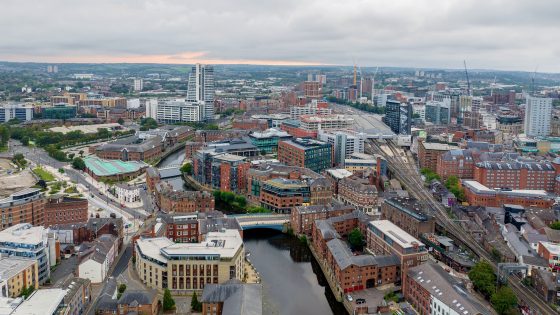
The cornerstone of Leeds’ retail renaissance has undoubtedly been the monumental investment in urban regeneration. Central to this is Victoria Leeds, which seamlessly merges the iconic Victorian arcades of the Victoria Quarter with the striking contemporary architecture of Victoria Gate. This development, completed in 2016, was a game-changer, introducing a dedicated luxury shopping district and creating a magnet for brands like Harvey Nichols, Louis Vuitton, and John Lewis, alongside a host of other premium labels. Prior to this, the opening of Trinity Leeds in 2013 had already transformed the city’s mass-market appeal, significantly increasing footfall and setting the stage for subsequent high-end developments.
Beyond retail, the city has seen extensive investment in mixed-use developments, including new residential towers, commercial office spaces, and cultural venues. These projects have revitalised neglected areas, increased the city-centre population, and created a dynamic urban environment that supports a thriving retail sector. While the full HS2 link to Leeds was ultimately curtailed, significant existing rail and road networks ensure excellent connectivity, with direct links to London, Manchester, and Edinburgh, as well as rapid access to Leeds Bradford Airport. These infrastructure improvements have made Leeds an accessible and attractive location for both residents and visitors, bolstering its economic vitality and, by extension, its retail potential.
A Dynamic and Affluent Demographic
Leeds boasts a rapidly growing and increasingly affluent demographic, which is a critical draw for premium brands. The city has one of the youngest populations in the UK, fuelled by its five universities and a high retention rate of graduates who choose to stay and work in the city. This translates into a large cohort of young professionals with disposable income and a keen interest in fashion, lifestyle, and luxury goods.
Furthermore, the broader Leeds City Region is home to a significant number of high-net-worth individuals and families. This regional affluence, combined with strong employment rates in high-value sectors such as finance, legal services, digital technology, and healthcare, creates a robust consumer base willing and able to invest in premium products and experiences. Data from local economic agencies consistently highlights Leeds’ above-average household income growth and consumer spending power compared to national trends, providing a compelling case for brands considering regional expansion.
A Resilient and Diversified Economy
The economic bedrock of Leeds provides a stable and fertile ground for premium retail. The city has successfully diversified its economy away from traditional industries, establishing itself as the largest financial and legal hub outside London. Its burgeoning digital and creative sectors are also experiencing exponential growth, attracting talent and investment. This economic resilience means a consistent flow of high-earning professionals and a stable employment market, insulating the retail sector from some of the volatility experienced elsewhere.
According to recent economic reports, Leeds has consistently outperformed the national average in terms of GVA (Gross Value Added) growth, reflecting its dynamic business environment. This strong economic performance fosters business confidence and encourages further investment, creating a virtuous cycle where economic prosperity fuels retail growth, which in turn enhances the city’s overall attractiveness for businesses and residents alike.
Evolution of the Retail Landscape
The contemporary retail environment is increasingly experiential, and Leeds has been at the forefront of this evolution. Premium brands are no longer solely about products; they are about curated experiences, exceptional service, and immersive environments. Leeds’ retail developments, particularly Victoria Leeds, have been designed with this in mind, offering aesthetically pleasing spaces, engaging events, and a high level of customer service that aligns with luxury expectations.
The city also understands the synergy between physical and digital retail. While premium brands maintain strong online presences, the physical store remains crucial for brand building, customer engagement, and offering a tactile, personal shopping experience. Leeds provides the ideal backdrop for these flagship regional stores, allowing brands to showcase their full collections and brand ethos in a premium setting, complementing their e-commerce strategies.
A Chronology of Transformation
The journey of Leeds to its current premium status has been marked by several significant milestones:
- Early 2000s: Initial urban regeneration efforts begin, with a focus on revitalising the city centre and attracting new businesses. The foundations are laid for future large-scale retail developments.
- 2008: The financial crisis presents challenges but also spurs a renewed focus on strategic long-term investment and diversification within Leeds.
- 2013: The opening of Trinity Leeds marks a turning point, bringing a vast array of high-street and mid-market brands under one roof. It significantly increases footfall and cements Leeds’ position as a major regional shopping destination. Its success demonstrates the untapped potential of the Leeds market.
- 2016: Victoria Gate, the jewel in the crown of Victoria Leeds, opens its doors. This landmark development houses John Lewis and a curated selection of luxury and premium brands, seamlessly connecting with the historic Victoria Quarter. This moment is critical, as it firmly establishes Leeds as a genuine competitor in the premium retail space.
- 2017-2020: Following Victoria Gate’s success, a wave of premium international brands, often making their non-London UK debut, choose Leeds. This includes fashion, jewellery, and homeware brands, further diversifying the premium offering.
- 2021-2025: Despite global economic challenges, Leeds continues to demonstrate resilience. Strategic investments in infrastructure and continued residential development reinforce the city’s appeal. Discussions around further expansion and mixed-use developments continue, indicating sustained confidence in the market.
- 2026 (Current Context): Leeds solidifies its position as the top premium destination outside London. The city’s integrated approach to urban planning, economic development, and retail strategy culminates in a vibrant ecosystem that consistently attracts discerning brands and consumers.
Supporting Data and Market Insights
Market analytics consistently underscore Leeds’ robust retail performance. Footfall data for Victoria Leeds frequently outpaces national averages and those of comparable centres in other regional cities. For instance, in recent quarters, Victoria Leeds has reported year-on-year footfall increases exceeding 5%, contrasting with a more modest 1.5% average growth across UK shopping centres. This indicates strong consumer engagement and consistent visitor numbers.
Retail vacancy rates in Leeds city centre also paint a positive picture. While the national average for high street vacancies has hovered around 13-14%, Leeds has consistently maintained rates below 10% in its prime retail areas, especially within the premium precincts. This low vacancy rate signals strong demand from retailers and a healthy market environment.
Consumer spending patterns in Leeds further support its premium status. Data suggests that average transaction values in Victoria Leeds and other premium zones are notably higher than in other retail districts within the city, and indeed, higher than many equivalent premium locations outside London. This is indicative of a consumer base not just present but actively engaged in high-value purchasing. Investment in retail property in Leeds has also remained strong, with significant capital flowing into refurbishments and new developments, reflecting investor confidence in the city’s long-term retail viability.
Specific examples, while not always publicly announced as "first outside London," include a wide array of premium contemporary brands like COS, & Other Stories, and Anthropologie making significant inroads, often preceding or accompanying higher luxury brands. The presence of international beauty powerhouses and bespoke jewellery brands further cements this trend.
Statements and Expert Perspectives
Rachel Bradburn, Head of Leasing at Redical, elaborates on her initial observation: "Leeds offers a unique blend of heritage and modernity, coupled with a highly engaged and affluent consumer base. For premium brands, it’s not just about a demographic; it’s about the entire ecosystem. We’ve meticulously crafted Victoria Leeds to provide a world-class environment that complements the brand identity of our tenants. Brands see the sustained investment, the strong economic fundamentals, and the distinct cultural vibrancy, making Leeds an undeniable choice for their strategic expansion outside of London. It’s a city that truly understands and appreciates quality."
A spokesperson from Leeds City Council echoed this sentiment, stating, "Our long-term vision for Leeds has always been to create a thriving, inclusive, and economically dynamic city. The success of our retail sector, particularly in attracting premium brands, is a direct reflection of this. We work closely with developers and businesses to ensure Leeds remains an attractive proposition for investment, talent, and tourism. The economic ripple effect of this success, from job creation to enhanced cultural offerings, benefits every resident."
Dr. Eleanor Vance, a prominent retail analyst at the Centre for Retail Research, provides a broader perspective: "The trend of premium brands decentralising from London is not new, but Leeds has perfected the art of capturing this movement. Its unique combination of strong regional affluence, a diversified economy resilient to shocks, and exceptional retail infrastructure sets it apart. While other cities compete, Leeds has consistently delivered on its promise of a high-quality consumer experience, making it a low-risk, high-reward proposition for brands looking to expand their UK footprint."
An inferred statement from a representative of a premium fashion brand that recently opened its first non-London store in Leeds might highlight: "When we looked beyond London, Leeds presented the most compelling proposition. The city’s energy, the sophistication of its shoppers, and the impeccable setting of Victoria Leeds perfectly aligned with our brand values. We’ve been thrilled with the reception and the strong performance of our store here, confirming our decision to invest in this dynamic Northern hub."
Broader Impact and Future Outlook
The rise of Leeds as a premium retail destination carries significant broader implications for the city and the wider region. Economically, it translates into substantial job creation, not just within the retail sector but also in supporting industries such as hospitality, logistics, and property management. It enhances Leeds’ reputation as a dynamic European city, attracting further inward investment across all sectors and bolstering its appeal as a place to live, work, and visit.
Regionally, Leeds acts as an economic engine, drawing consumers and businesses from across Yorkshire and beyond. This ‘halo effect’ elevates the entire regional economy, positioning the North as a viable and attractive alternative to the often-overheated London market. The continued success of premium retail also contributes to the city’s cultural vibrancy, as high-end shopping often complements a thriving arts, food, and entertainment scene, creating a holistic destination experience.
Looking ahead, Leeds faces the challenge of sustaining this momentum amidst evolving retail trends and increasing competition. Future developments will likely focus on integrating more experiential elements, leveraging technology to enhance the customer journey, and prioritising sustainability in all aspects of urban planning and retail operations. The city will also need to continue diversifying its retail offering to cater to an increasingly global and diverse consumer base.
In conclusion, Leeds has undeniably cemented its position as the UK’s top premium destination outside London. This achievement is the result of a concerted, long-term strategy that has leveraged its inherent strengths – a robust economy, a discerning demographic, and visionary urban development. As Rachel Bradburn and other experts attest, the city offers a compelling blueprint for regional growth, demonstrating how strategic investment and a deep understanding of market dynamics can transform a city into a thriving hub for luxury and premium retail, securing its economic prosperity for years to come.