


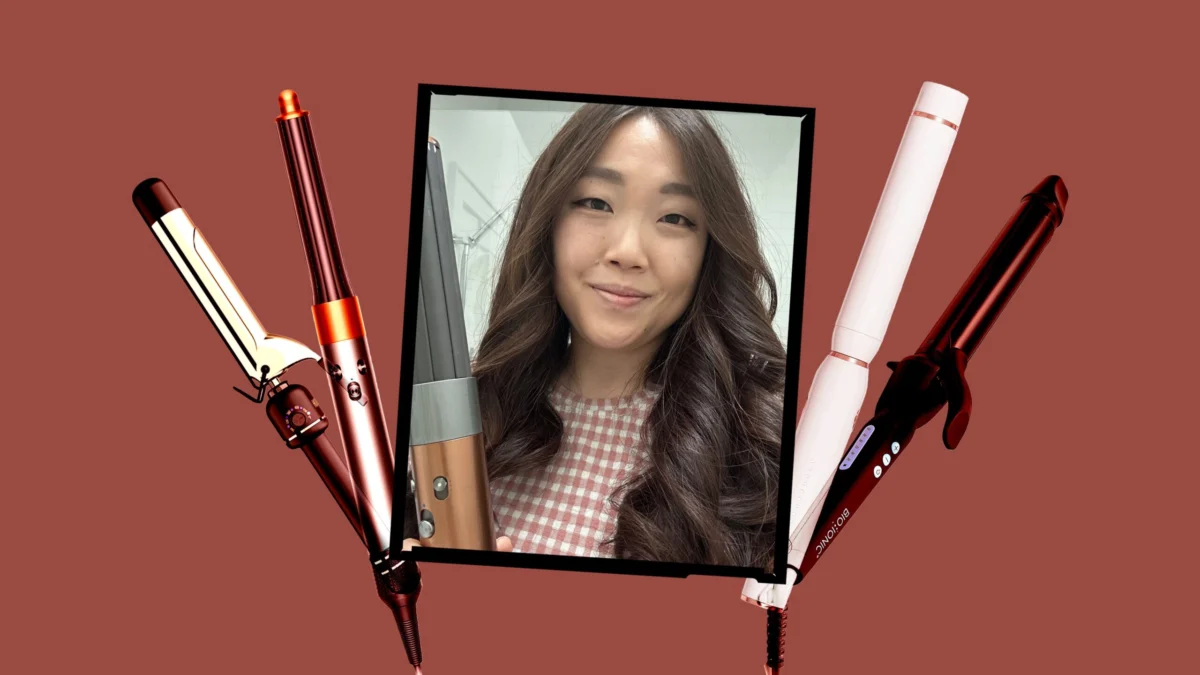
The quest for consistently beautiful curls is a journey many embark upon, armed with a variety of tools and techniques. While the allure of effortless waves and defined spirals is undeniable, achieving them without damage or frustration requires a deeper understanding of the tools at hand. This comprehensive guide delves into the intricacies of selecting the right curling iron and mastering its use, drawing on insights from seasoned hairstylists and a rigorous product testing methodology. From understanding barrel size and heat control to the nuances of different curling iron designs, we break down what you need to know to achieve salon-quality curls at home.
Decoding the Curling Iron: Key Features for Optimal Results
The foundation of any successful curling session lies in choosing the appropriate tool. According to Mia Santiago, a Columbus-based hairstylist, the paramount consideration when selecting a curling iron is its barrel size. This seemingly simple attribute dictates the very nature of the curls you can achieve. "Smaller barrels create tighter curls, whereas bigger barrels create looser, almost blowout-level curls," Santiago explains. This principle is rooted in the circumference of the barrel; a smaller diameter wraps more hair in a tighter coil, resulting in a more compact curl. Conversely, a larger barrel encompasses more hair, allowing for a gentler bend and a more relaxed, voluminous wave.
Beyond size, customizable heat settings are another critical component for both effectiveness and hair health. Santiago emphasizes the importance of "safe" heat settings, defining them as 360 degrees Fahrenheit and below. Exceeding this temperature threshold, especially without adequate heat protection, significantly increases the risk of heat damage, leading to dryness, breakage, and split ends. The ability to adjust the heat allows users to tailor the styling process to their specific hair type and texture. Fine, damaged, or color-treated hair often benefits from lower temperatures, while coarser, more resilient hair may require slightly higher settings. However, even with robust hair, staying within the recommended range minimizes long-term negative impacts.
The market offers a diverse array of curling iron designs, each catering to different user preferences and skill levels. Curling wands, for instance, are characterized by their lack of clamps. This design necessitates the user to manually wrap and hold sections of hair around the heated barrel. Due to the direct contact involved, wands are almost invariably accompanied by a heat-resistant glove to prevent accidental burns. While they offer a more natural, free-flowing curl, mastering the technique requires practice and dexterity.
The most ubiquitous type is the curling iron with spring-loaded clamps. These irons provide a mechanism to secure the hair, offering a more guided and controlled curling experience. The versatility of this design lies in the user’s ability to manipulate the clamp, the wand’s twist, and the hair’s insertion point to create a spectrum of curl types. By varying how much hair is fed into the clamp and how the barrel is rotated, users can achieve anything from tight spirals to soft waves.
For those seeking a more automated approach, automatic curling irons have emerged as a popular option. These devices typically feature small, spring-loaded clamps that actively wrap the hair around the heated barrel. While generally user-friendly, it is crucial to read and follow the accompanying instructions, as improper use can still lead to tangles or uneven results.
Finally, the Marcel iron represents a more specialized tool, primarily favored by professional hairstylists. Santiago notes that its manually controlled clamp and handle require a higher level of skill to operate effectively. "It has a manual handle that’s not as user-friendly to the masses," she observes. However, for those adept at its use, the Marcel iron allows for a remarkably smooth transition while curling, enabling seamless manipulation and a polished finish that is challenging to replicate with other tools.
Mastering the Art of Curling: Techniques for Lasting Styles
Achieving long-lasting, beautiful curls extends beyond selecting the right tool; it involves adopting proper techniques. A fundamental piece of advice consistently shared by stylists is to curl from the roots down. Kirsten Patterson, a Dallas-based hairstylist, articulated this principle to Allure, stating, "The ends of your hair are more delicate and don’t need nearly as much heat to curl." By starting closer to the scalp, you ensure that the entire section of hair receives adequate heat for curling, while avoiding overexposure and potential damage to the more fragile ends. This approach not only promotes healthier hair but also contributes to a more uniform curl pattern from base to tip.
The direction in which you curl sections of hair significantly influences the final aesthetic. For glamorous, uniform waves, Patterson advises curling all sections in the same direction. This creates a cohesive, flowing look that is polished and sophisticated. Conversely, for a more beachy, textured effect, she recommends curling sections in alternate directions. This creates a natural, tousled appearance with dimension and movement, mimicking the undone beauty of hair naturally dried by the sea.
Another crucial tip from Patterson pertains to the application of styling products, particularly hairspray. She strongly advises against using hairspray before curling. "Hairspray and heat from the curling iron can dry your hair out, so it’s important to only use hairspray once you’re finished styling," Patterson explains. The chemical compounds in hairspray, when exposed to high heat, can not only cause dryness and brittleness but can also create a sticky residue on the curling iron itself, making subsequent passes less effective and potentially damaging. Instead, Patterson advocates for the use of a heat-protectant spray prior to any heat styling. These products create a barrier between the hair cuticle and the heat source, minimizing moisture loss and reducing the risk of thermal damage.
The Rigorous Process Behind Product Recommendations
The selection of recommended curling irons and other hair-care tools is not an arbitrary process. Allure employs a meticulous testing and review methodology designed to ensure that every product featured meets a high standard of performance, safety, and user-friendliness. This process begins with assembling a diverse panel of testers. For hair-care products and tools, this diversity is particularly crucial, encompassing a wide spectrum of hair textures, lengths, curl patterns, thicknesses, colors (both natural and dyed), and specific hair concerns. This broad representation ensures that the recommendations are relevant to a wide audience, not just a niche group.
When evaluating hair tools, the testers’ experience levels are also taken into careful consideration. An innovative hair dryer, for example, might boast groundbreaking technology, but if its operation is only intuitive for professional hairstylists, its suitability for the average consumer is significantly diminished. The review process prioritizes tools that are not only effective but also accessible and easy to use for individuals with varying levels of styling expertise.
For the specific review of curling irons, Allure enlists a team of editors, writers, contributors, and professional hairstylists. This group collectively possesses a wide range of hair types and a shared objective: to find tools that can achieve a variety of looks—from loose waves to tight curls—without causing damage. The testers meticulously evaluate performance across three primary categories: efficacy (how well the tool performs its intended function), safety (its impact on hair health and user well-being), and ease of use (its intuitiveness and user-friendliness). This comprehensive approach ensures that the final recommendations are well-rounded and informed by real-world experience. For a deeper understanding of the investigative journalism that underpins these recommendations, readers are encouraged to consult Allure‘s complete reviews process and methodology page.
A Commitment to Inclusivity in Beauty Reviews
The philosophy behind Allure‘s product recommendations is deeply rooted in a commitment to inclusivity and personal relevance. The publication recognizes that beauty is a deeply personal endeavor, whether one is seeking a solution for persistent dryness, indulging in a self-care routine, or exploring the latest market innovations. To ensure that every recommendation resonates with the individual needs and concerns of its readers, Allure prioritizes a diverse team of writers and editors, complemented by a broad range of outside testers and industry experts.
This commitment to diversity is not merely a matter of optics; it is fundamental to the integrity of the reviews. The publication poses critical questions: Can a skincare product truly be deemed the "best" for individuals over 50 if its evaluation is solely based on the opinions of those under 30? Can a high-end diffuser be confidently recommended if it has never been tested on curly hair? Allure proudly acknowledges that its staff spans a wide range of ages, skin tones, hair textures, genders, and backgrounds. This broad demographic representation is considered essential for fairly assessing any beauty product that enters the "beauty closet," ensuring that the advice provided is equitable and applicable to a diverse readership. This dedication to representing a wide array of consumers ensures that the pursuit of perfect curls, or any beauty goal, is a journey supported by trustworthy and inclusive guidance.