




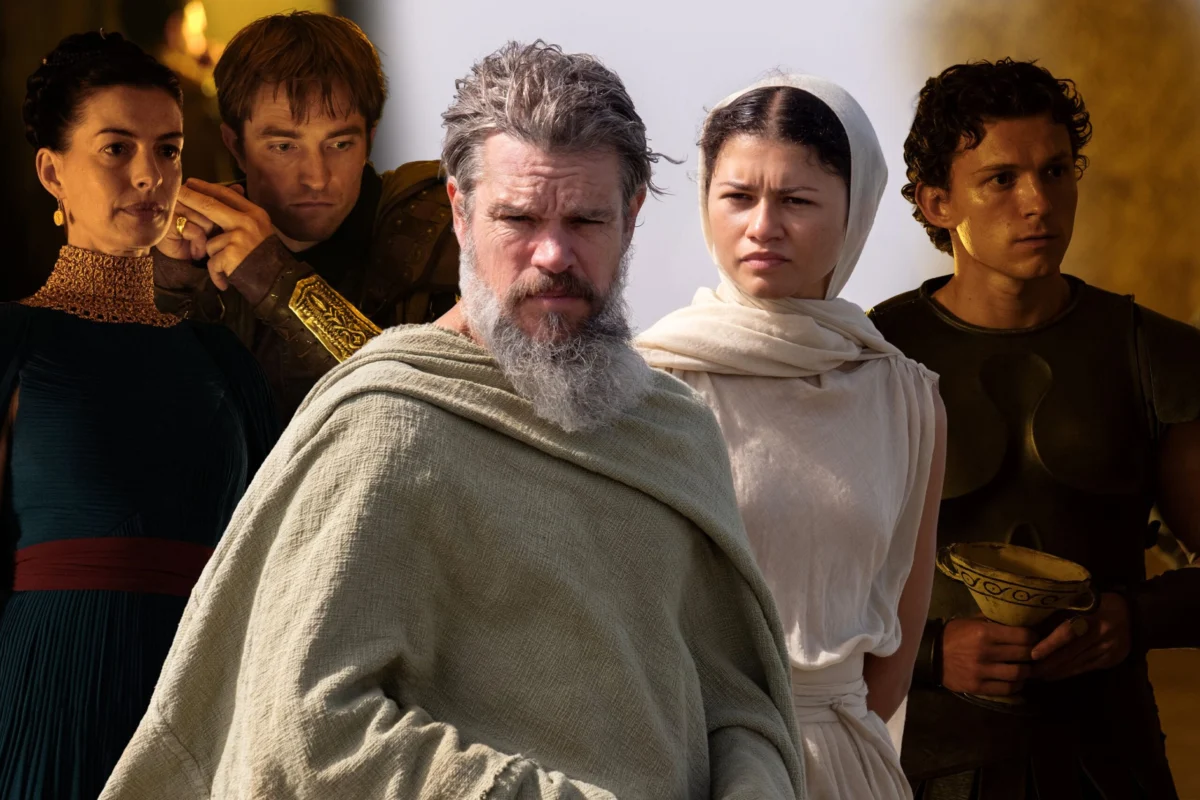
Christopher Nolan’s highly anticipated cinematic adaptation of Homer’s epic poem, The Odyssey, opens with a stark declaration: “It is a time of apparent magic…” This evocative line, presented against a black screen, immediately immerses the audience in the mythical world of gods, sorcerers, monstrous beasts, and transformative spells. Nolan’s rendition, renowned for his commitment to practical, in-camera effects, places a significant emphasis on the artistry of hair and makeup to conjure this "apparent magic." The film delves into the fantastical elements of the ancient tale, from the formidable Cyclops and the multi-headed dog to the memory-erasing lotus flowers and the chilling transformation of Odysseus’s men into swine by the sorceress Circe. It is within this meticulously crafted visual landscape that the departments of hair and makeup, led by Gloria Pasqua Casny and Luisa Abel respectively, have played a pivotal role in bringing Homer’s 3,000-year-old narrative to life with an earthy, intimate, and profoundly human quality.
Grounding the Myth: Nolan’s Vision and Artistic Interpretation
Director Christopher Nolan’s overarching directive for The Odyssey was to create "an earthy narrative." This vision aimed to ground the epic, despite its colossal scale—evident in its filming on 65mm stock, the depiction of larger-than-life creatures, and the numerous complex battle and seafaring sequences. The 3,000-year-old poem, under Nolan’s direction, is thus imbued with an intimate, human essence. This grounding was significantly achieved through the nuanced work of Casny and Abel in designing the characters’ hair and makeup. Their approach drew heavily from historical research while also adhering to Nolan’s desire for a more visceral, tangible representation of the mythical world.
The Foundation of Research: Ancient Greece Through Art and Artifacts
The creative teams behind The Odyssey embarked on an extensive research journey, meticulously examining ancient Greek art and artifacts to inform their designs. Gloria Pasqua Casny, the lead of the hair department, spent considerable time in museums, absorbing the visual language of the era. Makeup department head Luisa Abel delved into historical sources, scrutinizing pottery, murals, and paintings to understand the facial features and hairstyles prevalent in ancient Greece. Her research also extended to the available cosmetics of the time, enabling her to select modern products that could accurately simulate the period’s color palettes while delivering the flawless, lightweight finish required for IMAX cinematography.

This dedication to historical authenticity yielded fascinating insights. Casny discovered that curling irons existed as far back as 3,000 years ago and that ancient Greeks frequented barbershops, discoveries that directly influenced her styling choices for both principal actors and background performers. The pervasive presence of curly hair in Greek mythology, often symbolizing vitality, beauty, heroism, and divinity, was a significant thematic element. Homer’s descriptions, such as Odysseus’s hair being like “curling hair like hyacinth petals,” provided a rich source of inspiration. While actor Matt Damon retained his natural texture for his portrayal of Odysseus, many other characters’ curls were embraced and artfully enhanced.
A notable example of this is Tom Holland’s portrayal of Telemachus, Odysseus’s son. Casny expressed her delight upon seeing Holland’s natural curly texture, stating, "Tom has great curly hair, and when he came in [for tests], I just shook his hair up and was like, ‘You are not cutting it or wearing it straight.’” To enhance this natural texture, a touch of mousse, often from the R&Co line, and argan oil were used on set to provide definition and volume.
Adorning the Hair: Bronze Age Influences and Symbolic Meanings
The film’s elaborate hair accessories were also deeply rooted in historical research, drawing inspiration from Bronze Age artifacts. For Persephone, Odysseus’s long-suffering wife, portrayed by Anne Hathaway, Casny incorporated bronze age hairpins adorned with small bird motifs, which were meticulously recreated by the props team. A local jewelry maker in Morocco, a primary filming location, crafted gilded flowers inspired by similar artifacts discovered during Casny’s research.
Lupita Nyong’o’s dual role as Helen of Troy and Clytemnestra, depicted as twins in Nolan’s adaptation, presented a unique creative challenge. Casny adorned both characters’ hair with gold thread sourced from the costume department, alongside beads and gold strips procured from Etsy. For Clytemnestra, a distinctive hairpiece was designed, featuring a bird motif that resonated with Casny’s research. This accessory was intended to echo the spinal shape of Agamemnon’s helmet, Clytemnestra’s husband, while also symbolizing her suppressed desire for freedom from a marriage that demanded the sacrifice of her daughter. “We were saying that this is her symbol of freedom, of which he had no idea," Casny explained, "her own secret little pin.”

Deities on Earth: A Grounded Divine Presence
In Nolan’s The Odyssey, the gods are rarely seen, with their presence often implied through environmental cues like thunder and stormy seas. When deities do appear, they are not depicted with ethereal radiance or ostentatious jewelry. Instead, their appearances are deliberately pared down, rugged, and fundamentally human. This stylistic choice was central to Nolan’s vision of grounding the narrative.
Charlize Theron’s portrayal of Calypso, a recluse living on a remote island, exemplifies this approach. Casny described Calypso’s aesthetic as having "Survivor vibes," fitting for a character who catches her own fish. The challenging filming conditions in Morocco, with winds reaching 30-50 mph, inadvertently aided in creating Calypso’s disheveled, windswept look. Mousse was used to give her hair a "gritty look," while leave-in conditioner and serum from Virtue Labs (a brand for which Theron’s personal hairstylist, Adir Abergel, serves as creative director) were employed to maintain a perpetually wet appearance. Gauze from Theron’s costume was utilized to tie Calypso’s hair in shapes that suggested she would do it herself. Abel’s makeup for Calypso was equally grounded, featuring a tanned, weathered look with an outdoor feel, underscoring her warrior-like, self-sufficient nature.
Samantha Morton’s depiction of Circe, the sorceress, was conceived as deliberately disheveled, a disguise intended to lure Odysseus’s men, gain their trust, and exploit them. For Athena, portrayed by Zendaya, Casny and Abel aimed for a look that resonated with Odysseus’s memory of her as a young village girl tragically killed during the Trojan War. “I think the whole thing with Athena [in this film] is that she is the image of the young village girl killed…and that’s what stayed in Odysseus’s mind—that’s the form she took in his imagination—and it helped a lot with how her look ended up,” Casny elaborated. Zendaya’s bob was styled into two small, tucked braids, concealed beneath a headscarf. Her makeup was a subdued version of her premiere look, featuring blush and minimal eye makeup. Abel sought to create a "flawless while maintaining a grounded quality" for Athena, achieving a youthful, translucent appearance with sheer products like Merit blush.
Battling the Elements: Resilience and Ingenuity on Set
The hair and makeup teams faced formidable challenges due to the extreme weather conditions encountered during filming. From the humidity and strong winds of Morocco to the sideways rain in Iceland and the frigid temperatures and rough waters of the boat scenes, their work required constant adaptation. Casny humorously noted her relief that Nolan did not opt for wigs, admitting, "I’m not sure how we would have managed."

Maintaining the appearance of wet and sweaty characters during arduous boat sequences, where hair naturally dries and frizzes, was a significant hurdle. Casny employed generous amounts of hair wax to achieve the desired effect of sweat clinging to the skin, ensuring that the hair remained in place even under difficult conditions. For Matt Damon’s Odysseus, this involved applying copious amounts of wax to every strand, ensuring its immobility.
The unsung hero of the film’s beauty department was natural argan oil, used in substantial quantities. Casny explained that one of their hairstylists had a farm that processed argan nuts, providing them with gallons of high-quality virgin argan oil. This oil was applied to the hair of Odysseus, his men, Telemachus, and the approximately 1,300 background actors, helping to maintain a consistently wet appearance and preventing hair from drying out, even when frequently sprayed with water.
The Art of Dirt: Creating Authenticity Through Grime
The film’s commitment to realism extended to the pervasive presence of dirt on the characters. Abel noted that "there wasn’t a single scene in the film in which the characters didn’t have varying levels of ingrained dirt." To achieve this, custom-made dirt products were developed, ensuring a sheer, natural quality that was also waterproof. Abel emphasized that the dirt’s color and texture varied according to each location, research having informed the specific hues and consistencies needed to match the red and pale sands of Troy, the dark tones of Hades, the earthy colors of the Laestrygonians’ realm, and the pale white sands of Calypso’s island.
Casny’s hair team worked in tandem with the makeup department, matching the dirt applications. For a particularly striking scene set on the shores of Hades (filmed on a black-sand beach in Iceland), the hair team actively incorporated the environment into their work. Black pigment was mixed into inexpensive hair gel, and the black sand itself was sifted into fine and coarser granules. Casny described the process: “We mixed the fine sand into the hair gel as well, and then I would put the coarser pieces on my hand and stick them on the surface of the hair to get that crusty effect of Icelandic sand.”
.jpg)
Depicting the Passage of Time: Hair and Makeup as Narrative Tools
Homer’s epic poem, and subsequently Nolan’s film, employ a non-linear narrative to depict Odysseus’s 20-year journey. Hair and makeup were crucial in visually communicating the passage of time for the characters. For Penelope, Abel crafted distinct beauty looks to represent her youthful vibrancy and her later, aged state. Products like Typology Glow Drops were used for younger Penelope, while specific cheek placement and the application of age spots were employed to signify her aging.
Odysseus’s aging was also meticulously portrayed. Casny dyed Matt Damon’s hair brown for scenes set during the Trojan War and then incorporated loose gray pieces into his natural hair for sequences depicting him as 20 years older.
The character of Eumaeus, Odysseus’s loyal servant and swineherd, played by John Leguizamo, presented a significant aging challenge. Leguizamo’s naturally jet-black hair required extensive bleaching to achieve the desired white hue. This process, which typically involves multiple sessions over weeks, was compressed due to time constraints. After two bleaching rounds, a persistent yellow tinge remained. Casny and her team utilized Fanola and Kérastase purple shampoos to neutralize the brassiness. Touch-ups on set were managed with silver art pens.
During a break in filming, Leguizamo returned to New York. Casny provided his wife with Olaplex products, emphasizing diligent use to mitigate potential damage. Upon Leguizamo’s return to the Los Angeles set, Casny was finally able to achieve the perfect, bright white shade for his hair.

Status and Backstory: Hair and Makeup as Social Signifiers
Throughout The Odyssey, hair and makeup serve as powerful signifiers of social status. Servants’ hair is depicted as simple, uniform, and unadorned, contrasting sharply with the intricate and individualized styles of royalty. Even among the royal characters, beauty choices reveal their distinct personalities and circumstances.
Penelope’s look is characterized by elegance and restraint. Casny explained their intention: “One thing we were thinking is that she’s trying to stay put-together because she thinks Odysseus is going to come home any minute, but she also doesn’t want to give the impression to her suitors, ‘I’m available.’” Casny opted for a series of center-parted updos for Anne Hathaway, with approximately seven different styles created, each subtly varied for different scenes while maintaining a simple, classic aesthetic. Davines hairspray and a Mason Pearson brush were key tools in Casny’s styling arsenal for Penelope.
In stark contrast, Helen of Troy’s beauty looks are opulent and elaborate, mirroring the architectural differences between the castles of Ithaca and Sparta depicted in the film. Lupita Nyong’o’s skin for Helen is rendered vibrant and luminous. Abel created a custom contour that provided dimension without appearing overly modern. Helen’s hair was styled from Nyong’o’s natural sisterlocks, cut into a bob and then extended with 50-inch sisterlocks crafted in Kenya. These extensions, reaching Nyong’o’s calves, were latch-hooked to her natural locs. Casny noted that Nyong’o aimed to “salute her heritage with the look, leaning into African queens [of the time,] as opposed to the Greek aesthetic.”
The meticulous attention to detail in hair and makeup, from the historical accuracy of ancient Greek styles to the symbolic significance of accessories and the practical challenges of on-set conditions, has been instrumental in Nolan’s ambitious undertaking. By grounding the fantastical elements of The Odyssey in tangible, human artistry, the hair and makeup departments have not only contributed to the film’s visual splendor but have also played a crucial role in reviving interest in Homer’s timeless epic for contemporary audiences.