










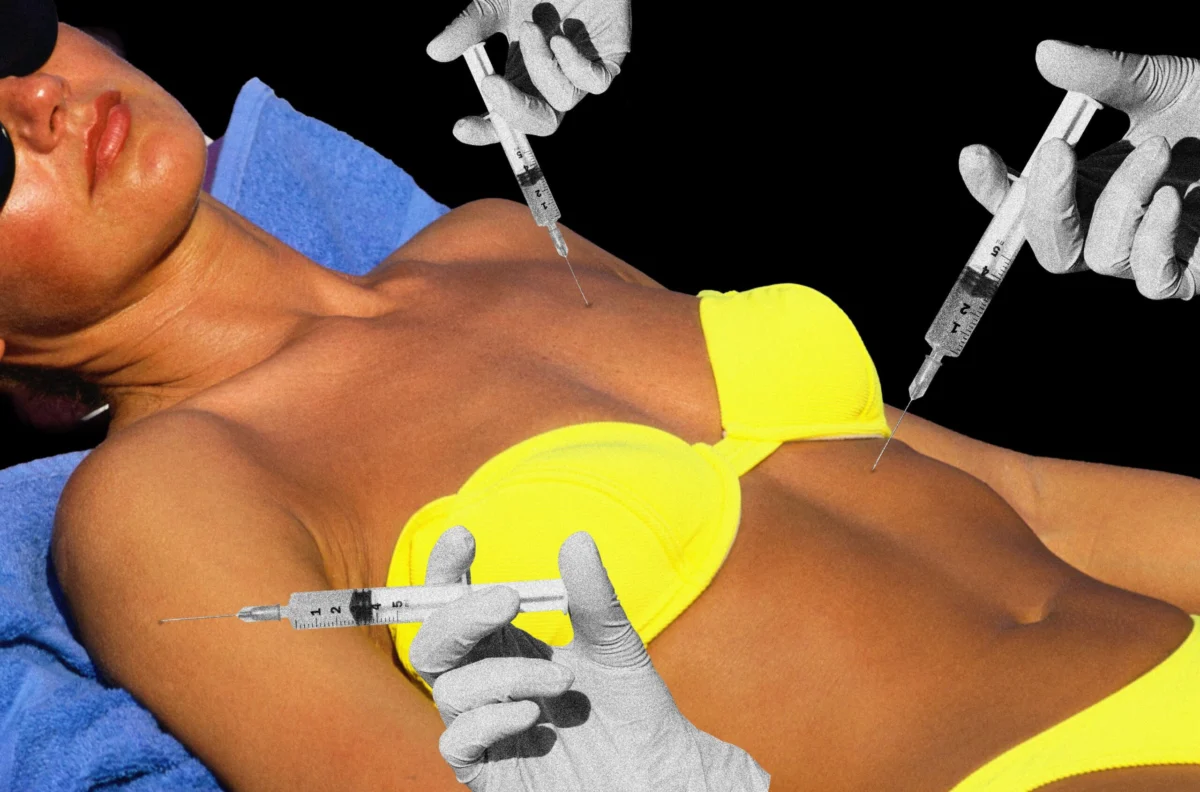
As the summer sun reaches its zenith, casting its golden rays upon landscapes and encouraging outdoor pursuits, a growing number of individuals are reportedly turning to unconventional methods to achieve a bronzed complexion. This trend is amplified by the increasing availability of peptides, substances that have surged in popularity for various purported health and aesthetic benefits. Among these, Melanotan II, a synthetic peptide with a complex regulatory history, has emerged as a significant point of concern for dermatologists and public health organizations. The substance, often dubbed "the Barbie drug," is currently under review by the U.S. Food and Drug Administration (FDA), with a critical meeting of the Pharmacy Compounding Advisory Committee scheduled for mid-July. The outcome of this review could potentially alter the regulatory status of Melanotan II, impacting its availability and further entrenching it in a burgeoning tanning culture that many experts deem profoundly dangerous.
The Rise of Peptides and the Allure of a Tan
The contemporary fascination with peptides is inextricably linked to the widespread success of injectable GLP-1 agonists, primarily marketed for weight loss. This has paved the way for a proliferation of "gray market" peptides, substances often sold online with unsubstantiated claims of efficacy for a range of conditions, from enhancing post-workout recovery and balancing hormones to promoting hair growth and improving skin health. Melanotan II fits squarely within this evolving landscape, positioned as a potential shortcut to achieving a tanned appearance without the prolonged exposure to harmful ultraviolet (UV) radiation from the sun or tanning beds.
Historically, tanning has been a deeply ingrained aesthetic ideal in many cultures, often associated with leisure, health, and attractiveness. However, decades of scientific research have unequivocally established the significant health risks associated with UV exposure, including premature skin aging, cellular damage, and an increased risk of developing various forms of skin cancer, including melanoma. Despite this overwhelming body of evidence, the pursuit of a tan persists, now potentially being fueled by synthetically produced peptides.
Melanotan II: Mechanism and Medical Concerns
Melanotan II functions by mimicking the action of alpha-melanocyte-stimulating hormone (α-MSH), a naturally occurring hormone in the body. Dr. Jenna Queller, a board-certified dermatologist and founder of DermWorks in Boca Raton, Florida, explains that α-MSH stimulates melanocytes, the cells responsible for producing melanin, the pigment that gives skin its color. By activating these receptors, Melanotan II can theoretically increase melanin production, leading to a darker skin tone.
However, the cosmetic benefits of this accelerated pigmentation are severely overshadowed by considerable health risks, according to medical professionals. A primary concern is that increased melanin production does not confer protection against the damaging effects of UV radiation. Individuals using Melanotan II may still intentionally expose themselves to the sun or tanning beds to further deepen their tan, thereby compounding their cumulative UV damage and escalating their long-term risk of skin cancer. "Any cosmetic benefit is outweighed by the potential health risks," Dr. Queller emphasizes.
Expert Warnings and Regulatory Scrutiny
Dermatologists and leading anti-tanning organizations have voiced strong apprehension regarding Melanotan II and its potential influence on tanning practices. The Skin Cancer Foundation, a prominent advocate for skin cancer prevention, recently issued a formal warning from its president, Dr. Deborah S. Sarnoff, a board-certified dermatologist. The foundation "strongly discourages the use of Melanotan II and other unapproved tanning agents marketed as shortcuts to achieving darker skin." This statement underscores the organization’s deep-seated concern about the potential downstream effects of such substances gaining broader acceptance or accessibility.
Dr. Amanda Kahn, a board-certified internist in New York City, cautions against viewing Melanotan II as a "benign beauty shortcut." She highlights the inherent safety questions raised by pharmacologically stimulating melanocytes. Dr. Kahn has noted anecdotal reports suggesting that Melanotan II can cause the appearance of new moles or the darkening of existing ones, which is a significant concern given the potential link to melanoma risk. While direct causation is difficult to definitively prove, the observed association is deemed sufficiently alarming to warrant strong discouragement of its use.
The FDA has not approved Melanotan II for cosmetic tanning, and there is a lack of established safety data. In fact, published medical literature has raised significant red flags about its potential risks. These include the possibility of rapid changes in moles and pigmented lesions, which could impede the early detection of skin cancer, and an increased risk of melanoma. Beyond dermatological concerns, reports have also linked Melanotan II to serious adverse health effects, such as muscle damage. Additional reported side effects include nausea, vomiting, elevated blood pressure, and flushing, as noted by Dr. Queller.
The Gray Market and the Perils of Unregulated Access
A substantial portion of the concern surrounding Melanotan II stems from its widespread availability through unregulated online sources, often referred to as the "gray market." This accessibility is facilitated by various loopholes, including the practice of labeling restricted or banned peptides as "for research only" to circumvent traditional medical and pharmaceutical oversight. As Dr. Kahn previously explained, this allows vendors to bypass regulatory channels and offer these substances to consumers directly.
The absence of FDA oversight for these gray market peptides means there are no guarantees regarding their safety, sterility, accurate dosing, or the presence of contaminants. "This means patients may not know what they’re actually injecting—whether it’s sterile, whether it’s dosed accurately, whether it contains contaminants," Dr. Kahn states unequivocally. Her professional advice is direct: "do not inject a research tanning peptide for cosmetic purposes."
The FDA Review: A Potential Turning Point
The mid-July meeting of the FDA’s Pharmacy Compounding Advisory Committee is pivotal for Melanotan II and other restricted peptides. The committee will review these substances, and their recommendations could influence whether they are approved, remain restricted, or are moved to a less regulated status. This review is particularly significant as it follows a period of increased interest in expanding access to certain peptides, especially those with potential clinical applications.
Dr. Anetta Reszko, a board-certified dermatologist in New York City, acknowledges the possibility that the regulatory landscape for some peptides might become more permissive, particularly within physician-supervised or compounding settings. If peptides are appropriately regulated and overseen by healthcare professionals, she suggests this could lead to improved patient care, enhanced quality control, and more robust data collection on safety and efficacy. However, she stresses that even if Melanotan II is removed from the restricted list, this does not equate to a declaration of its safety or efficacy for cosmetic tanning.
Implications and Future Considerations
The outcome of the FDA’s review will have far-reaching implications. Should Melanotan II be de-listed or its regulatory status change, it raises the question of whether it could eventually be found in medspas or pharmacies, potentially marketed as a safer or more convenient tanning alternative. However, any such transition would still require extensive FDA approval processes, a time-consuming endeavor that involves demonstrating both safety and efficacy for a specific indication.
"It’s worth clarifying that even if a peptide related to this pathway were to receive FDA approval in the future, approval would depend on a specific product, formulation, manufacturing process, indication, and demonstrated safety and efficacy," Dr. Queller explains. "That should not be interpreted as a blanket endorsement of currently available compounded or black-market tanning peptides. Every product must be evaluated on its own scientific evidence and regulatory review." Until robust long-term safety data for cosmetic tanning peptides becomes available, experts like Dr. Queller strongly advise against their use.
The pursuit of a tan, whether achieved through natural sun exposure, tanning beds, or now potentially through injected peptides, continues to be a subject of significant public health concern. Dermatologists universally agree that a tan, regardless of its origin, should never be equated with healthy skin. The overarching goal in cosmetic appearance should always be to achieve desired aesthetics while simultaneously minimizing cumulative UV damage and mitigating the long-term risks of skin cancer.
A Call for Caution and Informed Choices
For individuals considering the use of peptides like Melanotan II, the message from the medical community is clear and consistent: proceed with extreme caution. The allure of a quick tan should not overshadow the potential for severe health consequences. The current regulatory uncertainty surrounding Melanotan II, coupled with its availability through unregulated channels, presents a significant risk to public health.
Dr. Reszko advises particular caution for individuals with a history of numerous or atypical moles, a personal or family history of melanoma or skin cancer, or fair skin, as these factors may increase susceptibility to adverse effects. The fundamental principle remains: regulatory changes in compounding or prescribing are distinct from demonstrating proven safety and efficacy for a specific cosmetic purpose. As of now, Melanotan II remains unauthorized by the FDA for cosmetic tanning, and the risks associated with its use, particularly when sourced from the gray market, are substantial. The decision to inject an unregulated peptide for cosmetic purposes is, in essence, an experiment with unknown variables and potentially severe consequences. The long-term implications of this evolving peptide landscape on public health and tanning culture will undoubtedly continue to be a critical area of focus for medical professionals and regulatory bodies alike.