








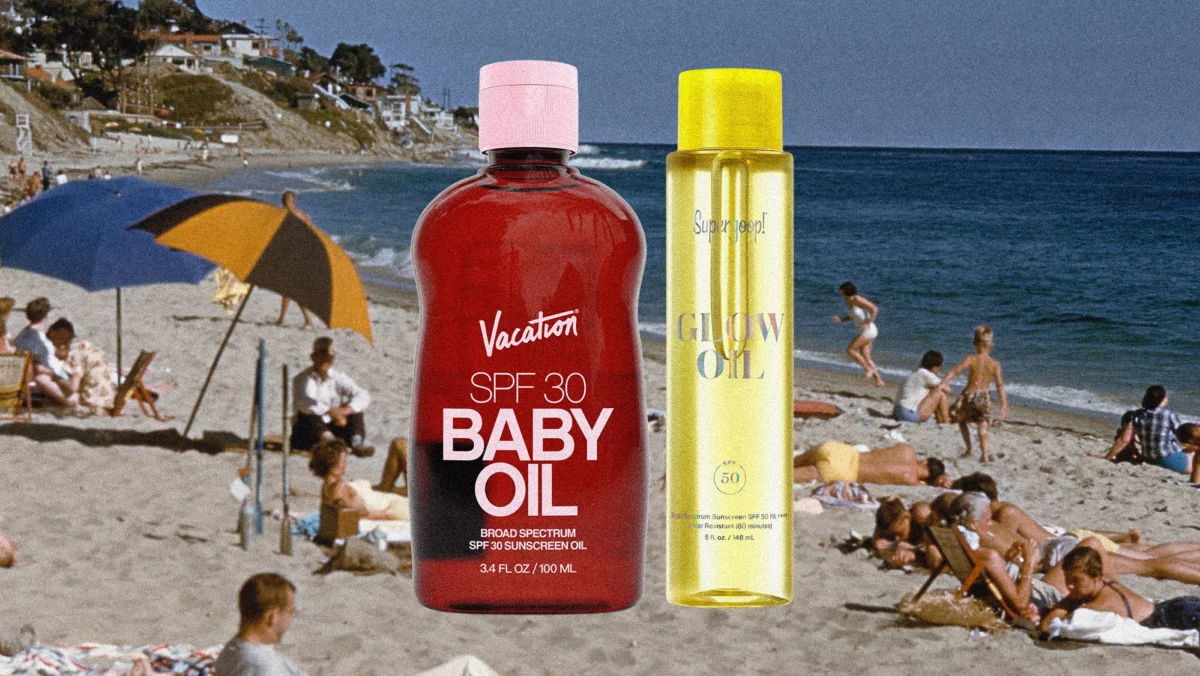
The once-reviled baby oil, a staple of teenage tanning rituals in the mid-2000s, has undergone a remarkable transformation. What was then a simple, often ineffective concoction slathered on in pursuit of a bronzed complexion has now re-emerged as a sophisticated skincare product: the sunscreen oil. This evolution reflects a broader societal shift towards prioritizing sun safety, coupled with advancements in cosmetic formulation, blurring the lines between aesthetic appeal and robust dermatological protection. For individuals who remember the era of high-SPF tanning oils, the re-emergence of oil-based sun protection with genuine SPF credentials offers a compelling, albeit sometimes surprising, return to form.
A Shift in Sun Safety Awareness
For a generation, the allure of a deep tan often overshadowed the critical need for sun protection. As a teenager in the mid-2000s, the author recalls a common practice among peers: eschewing sunscreen entirely, opting instead for lotions and potions designed to accelerate tanning. Baby oil, with its glossy sheen, was particularly favored, believed to amplify UV ray absorption. Even when sun protection was eventually incorporated into tanning routines, it often came in the form of low-SPF tanning oils, such as Banana Boat SPF 4 Dark Tanning Oil, a far cry from the rigorous protection recommended by dermatologists today.
This period was characterized by a nascent understanding of the long-term consequences of UV exposure. The rise of increased education and advocacy surrounding sun safety and responsible SPF usage began to shift consumer preferences. Tanning oils, once prominent fixtures on store shelves, began to recede, relegated to less conspicuous displays, overshadowed by the sleek packaging of sporty sunscreen sprays and the convenience of self-tanners. This shift signaled a growing public consciousness about the dangers of unprotected sun exposure, including premature aging, sunburn, and an increased risk of skin cancer.
The Renaissance of Sunscreen Oils
The early 21st century saw a significant surge in melanoma diagnoses and other UV-related skin conditions, prompting public health campaigns and increased media attention on the topic. According to the Skin Cancer Foundation, melanoma is the most serious type of skin cancer, and its incidence has been rising for decades. This growing awareness, coupled with the availability of more scientifically backed sun protection products, led to a decline in the popularity of traditional tanning oils.
However, a few years ago, a notable trend began to emerge: brands started launching oil-based products, but with a crucial distinction. These were no longer mere tanning accelerators; they were rebranded and reformulated as "sunscreen oils." These new iterations boasted actual SPF protection, often with broad-spectrum coverage, and promised to deliver the aesthetic benefits of radiant, glowing skin, akin to editorial magazine spreads. This rebranding aimed to bridge the gap between the sensorial appeal of oils and the essential protective qualities of sunscreen.
For those who grew up with the damaging legacy of tanning oils, the concept of an oil-based product replacing traditional creams or lotions for sun protection might seem counterintuitive. The memory of blistering sunburns from baby oil serves as a stark reminder of the risks associated with oil-based sun exposure. Yet, many consumers found themselves drawn to the novelty of these SPF oils, appreciating their appealing scents, the luxurious feel, and the luminous glow they imparted on the skin. The critical question, however, remained: could these oils offer genuine sun protection comparable to established sunscreen formulations?
The Science Behind Effective Sunscreen Oils
Dermatologists confirm that sunscreen oils can provide effective protection, but with specific conditions. Dr. Annette Czernik, a board-certified dermatologist in Stamford, Connecticut, emphasizes that these products must contain a genuine, broad-spectrum SPF of at least 30. Formulas with SPF 15 or lower, like the author’s past experience with SPF 4 tanning oil, are insufficient for adequate protection. Consumers are advised to scrutinize product labels, looking for "broad spectrum" prominently displayed, indicating protection against both UVA and UVB rays.
While Dr. Czernik often favors lotions and creams for their ease of application and visual cues for missed spots, she underscores a fundamental principle: "The best sunscreen is the one you’ll wear consistently and reapply as needed." This highlights the importance of user adherence in achieving effective sun protection, regardless of the product’s format.
The efficacy of sunscreen oils hinges significantly on proper application. Dr. Czernik stresses the need for an even, generous layer spread across all exposed skin, advising against light misting or sparing application. Allowing the product to sit for approximately 15 minutes before sun exposure enables it to form a protective film. A common mistake, she notes, is underestimating the required amount, assuming a thin, shiny layer is sufficient when it rarely is. For spray oil formulations, users are encouraged to rub the product in with their hands to ensure uniform coverage and to pay close attention to often-overlooked areas like the hairline, ears, and tops of the feet.
Furthermore, sunscreen oils may have a shorter wear time compared to their lotion and spray counterparts, particularly when exposed to water, sweat, or friction from towel-drying. This necessitates more frequent reapplication than the standard two-hour recommendation. Data from the American Academy of Dermatology indicates that consistent reapplication, especially after swimming or sweating, is crucial for maintaining adequate protection, a point particularly relevant for oil-based formulas that might emulsify or wash off more readily.
Formulation Insights: Merging Aesthetics and Efficacy
From a formulation perspective, sunscreen oils are not fundamentally different from other sunscreen types. Cosmetic chemist Kelly Dobos explains that these products deliver UV filters within an oil or emollient-rich vehicle, rather than a water-based emulsion or cream. "Many UV filters used in the U.S. are oil-soluble, so oils can actually be good vehicles for dissolving them," Dobos states.
Dr. Julian Sass, a cosmetic scientist, echoes this sentiment, noting that the primary difference lies in the absence of water in oil-based sunscreens. "SPF oils are anhydrous, meaning no water," he clarifies. "But other than that, nothing is really different about them except for the format." This anhydrous nature can contribute to a distinct sensory experience, often perceived as lighter and more easily absorbed by some users.
The development of a high-quality sunscreen oil is a delicate balance between user comfort and performance. Tiffany Mizell, head of global education at Supergoop, describes the consumer desire for an oil that feels lightweight and non-greasy, nourishes the skin, and provides a radiant glow, all while delivering reliable protection. One of the primary challenges in formulation, Mizell notes, is ensuring the even distribution of UV filters throughout the oil base to guarantee consistent protection with every application. "Ultimately, if a sunscreen doesn’t feel good on your skin, people are much less likely to use it consistently, and consistency is what makes sunscreen effective," she emphasizes.
Given that sunscreen is regulated as a drug by the FDA, new formulations undergo rigorous testing and approval processes. Sunscreen oils are subjected to the same testing protocols as cream-based sunscreens. Interestingly, oils can sometimes be easier to spread on testing plates during UVA testing due to their fluidity, whereas creams with high concentrations of mineral filters like zinc oxide and titanium dioxide can present application challenges. For actual SPF testing, specialists apply the oil in a thin, controlled layer to defined skin patches on test subjects, ensuring it doesn’t run.
Debunking the Myth of "Natural" Sunscreen Oils
Amidst the resurgence of oil-based sun protection, misinformation regarding "natural" sunscreen oils has persisted. Dr. Caren Campbell, a board-certified dermatologist in San Francisco, clarifies that while commercial sunscreen oils formulated with FDA-approved filters offer effective protection when used correctly, products primarily derived from plant oils like coconut, carrot seed, or raspberry seed, marketed as "natural" sunscreen oils, do not provide adequate sun protection. She directly refutes claims circulating on social media platforms like TikTok, stating that "Multiple studies have shown these oils have SPF values around 1 to 3, far below the recommended SPF 30, so they should never be considered a sunscreen substitute." A recent study examining several "natural" sunscreen alternatives that claimed to offer SPF 25 to 50 found that they consistently failed to meet these purported protection levels. This underscores the critical importance of relying on scientifically validated SPF ratings rather than unsubstantiated claims.
The Return of Tanning Culture and Sunscreen Oils
The growing popularity of sunscreen oils appears to coincide with a resurgence in tanning culture. Reports have noted instances where young individuals apply tan-enhancing, non-SPF products before layering sunscreen oils on top. Dr. Sass clarifies that applying an SPF oil over a tanning enhancer is a prudent step. "If an SPF oil is applied, then you’re getting all of the benefits of the SPF product and likely that will counteract any ‘tan boosting’ benefit of a tanning product, as the SPF product will be taking the brunt from any UV radiation," he explains. This layering strategy ensures that the primary protective barrier against UV damage is the SPF oil.
The aesthetic appeal of sunscreen oils aligns with the renewed interest in achieving a tanned look, even as they offer protection. While they shield the skin, their marketing often emphasizes a ritualistic aspect akin to "laying out" rather than solely focusing on sun protection. Dobos observes that sunscreen oils are heavily marketed around their appearance-enhancing qualities. "Many newer sunscreen oils are designed to create a luminous finish with pearlescent pigments," she notes. "From a formulation standpoint, they’re an interesting hybrid between a sunscreen and cosmetic body product." This dual functionality raises a question: do these aesthetically pleasing products inadvertently foster a false sense of security, encouraging users to prolong their sun exposure under the guise of being "protected"?
Psychological Impacts and Sun Safety Practices
The psychological impact of sunscreen oils on user behavior is a complex consideration. Dr. Sanam Hafeez, a neuropsychologist and director of Comprehend the Mind, suggests that individuals naturally seek information that supports their pre-existing desires. "If someone enjoys being in the sun, wearing sunscreen oil can make it easier to justify staying outside because they feel they’ve ‘done the responsible thing’," she explains. The carefree mindset associated with vacations and beach activities can be amplified by the perceived comfort and protection offered by these products, leading individuals to focus more on relaxation and less on UV damage.
"Once people feel protected, they often stop thinking about the need to reapply, wear a hat, or take shade breaks," Dr. Hafeez continues. "This doesn’t mean sunscreen oils are unsafe, but they can influence behavior in subtle ways because of how our brains perceive comfort and protection." This phenomenon is not exclusive to sunscreen oils; any sunscreen formulation can potentially lead to a sense of complacency if users believe they are fully protected and therefore less vigilant about other sun safety measures.
The popular belief among teenagers in the mid-2000s that oils could enhance tanning by increasing reflectivity is largely considered an urban legend. Dr. Sass explains that while oils possess a refractive index that influences how they reflect light and appear "shiny," this characteristic is not directly related to their ability to enhance a tan. However, shimmer and sparkle in SPF products are not necessarily detrimental. Mizell suggests that finishes like glow or shimmer can actually encourage consistent sunscreen use because users enjoy the aesthetic results. "If adding a little radiance makes someone excited to apply SPF every day, that’s a positive thing!" she concludes. This perspective highlights how integrating aesthetic appeal into sun protection can be a powerful tool for promoting regular use and ultimately, better skin health.
The evolution of sunscreen oils from tanning aids to sophisticated sun protection products signifies a crucial shift in consumer awareness and product innovation. As these formulations continue to gain popularity, understanding their efficacy, proper application, and potential psychological influences remains paramount for ensuring genuine sun safety in an increasingly image-conscious world.