


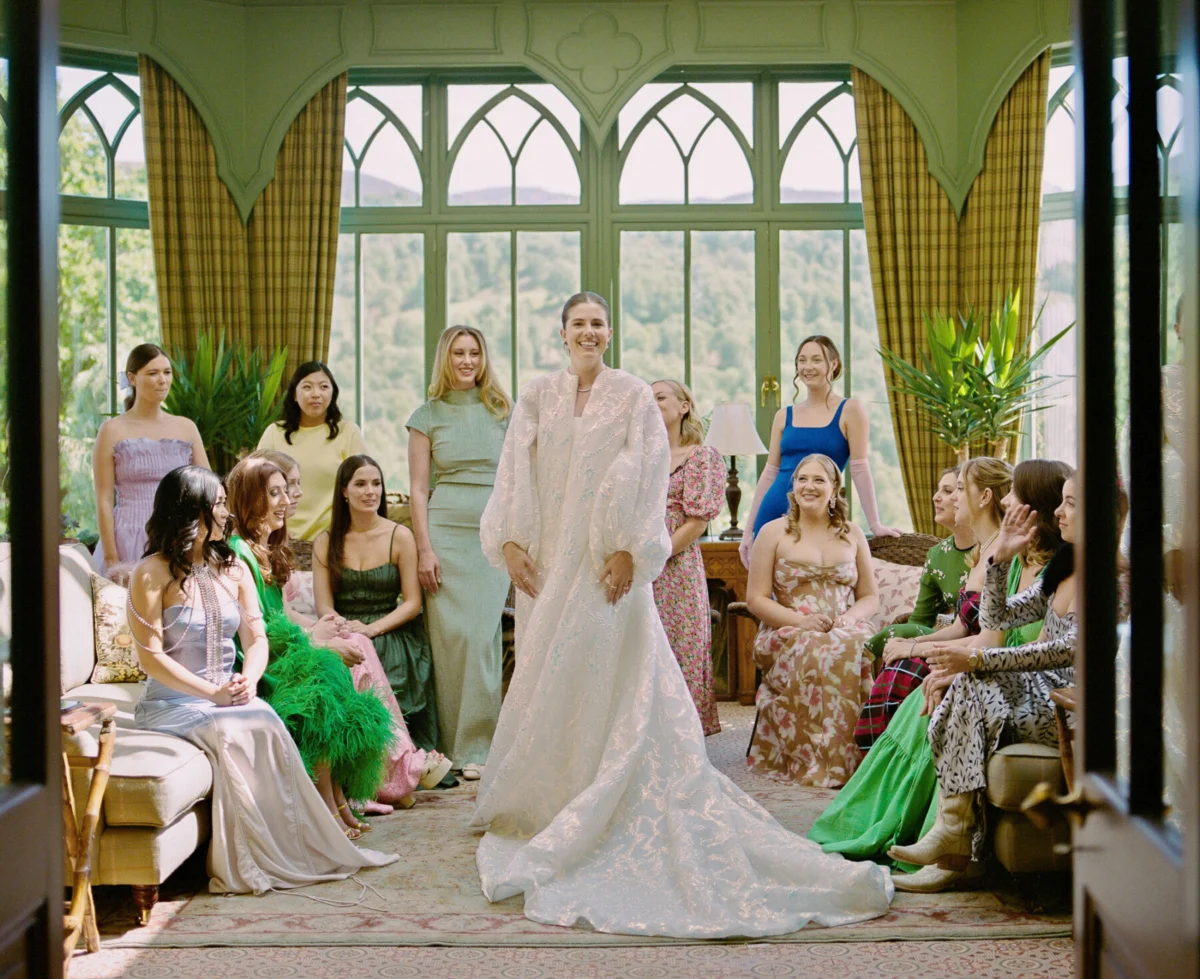
The digital landscape of the wedding industry has reached a critical inflection point as content platforms confront the rise of generative artificial intelligence. Following a summer hiatus, the founder of the long-standing publication Love My Dress has announced a definitive policy shift, pledging to purge all AI-generated imagery from its editorial output. This decision follows a high-profile incident in which a prominent bridal fashion brand utilized entirely synthetic imagery to promote its latest collection, successfully deceiving industry professionals and consumers alike.
The controversy highlights a growing tension between the rapid adoption of synthetic media and the traditional values of the luxury wedding sector. As AI tools become increasingly sophisticated, the line between curated photography and algorithmic fabrication has blurred, prompting a broader debate regarding intellectual property, labor rights, and the nature of human-centric artistry.
The Genesis of a Digital Deception
The catalyst for this industry-wide conversation was a recent campaign by a bridal designer whose work had previously been well-regarded. The campaign, which featured high-production-value visuals, was widely praised by industry observers upon its release. It was only after an industry analyst publicly exposed the campaign as being entirely generated by artificial intelligence—with no real models, photographers, or physical garments captured on location—that the extent of the fabrication was realized.
The designer’s initial response, which reportedly included the use of automated or copied-and-pasted defenses, categorized the work as "AI-generated professional photography." This terminology drew sharp criticism from established industry professionals, who argue that the term "photography" necessitates the physical presence of a camera, a subject, and a human eye. Following the backlash, the terminology was amended to "original design, visualized with AI," yet the controversy underscored a systemic lack of transparency in how digital marketing assets are being produced.
Chronology of the AI Surge in Bridal Media
The integration of AI into creative industries has accelerated significantly over the last 18 months. In early 2023, the industry saw the first widespread experiments with AI-assisted marketing, largely confined to background edits or lighting adjustments. By mid-2023, platforms like Midjourney and DALL-E 3 gained enough fidelity to produce hyper-realistic human forms, leading to the current phase of "full campaign" generation.
Industry experts note a distinct shift:
- Early 2023: Initial adoption of AI for mood-boarding and administrative tasks.
- Late 2023: Widespread use of AI for "in-painting" and background replacement in bridal photography.
- Summer 2024: The emergence of entirely synthetic fashion campaigns, replacing professional shoots entirely.
The Economic Implications for the Wedding Industry
The economic ramifications of this trend are significant for the diverse ecosystem of small businesses that define the wedding sector. The industry relies heavily on a complex web of human labor, including photographers, videographers, hair and makeup artists, floral designers, and venue staff. When a brand replaces a traditional shoot with AI, it bypasses the need for these specialized professionals.
Data from the creative sector indicates that photography and videography budgets often represent 10% to 15% of a brand’s annual marketing expenditure. By substituting these roles with generative tools, companies can theoretically reduce production costs by over 90%. However, this comes at the cost of supporting the livelihoods of the very professionals who contribute to the industry’s ecosystem.
Furthermore, the data sets used to train these AI models are a point of contention. Many generative tools were built by scraping millions of images from the internet, often without the consent or compensation of the original creators. Photographers and artists have expressed concern that their proprietary work is being used to train machines that eventually replace them, creating a closed-loop system of exploitation.
Legal and Ethical Dimensions
The legal status of "AI-generated photography" remains unsettled. In many jurisdictions, copyright law requires a human author for a work to be eligible for protection. As a result, AI-generated images often exist in a legal grey area, leaving brands vulnerable to IP disputes while simultaneously failing to provide consumers with an accurate representation of a product.
Critics argue that bridal fashion, in particular, requires an honest representation of how fabric behaves, drapes, and moves on a physical human body. Synthetic imagery creates a "perfected" reality that cannot be replicated in a real-world setting, potentially leading to increased consumer dissatisfaction and returns once the physical product is received.
The Call for Radical Transparency
The move toward "slow media" and strict content verification is gaining momentum as a response to the "AI fatigue" felt by many consumers. By prioritizing editorial rigor and human-verified content, publications are attempting to re-establish the trust that has been eroded by the proliferation of synthetic media.
Industry analysts suggest that in the coming year, we will likely see a bifurcation of the wedding market:
- Mass-Market/Synthetic: Brands that leverage AI to minimize costs and maximize output, focusing on trend-cycling.
- Artisanal/Human-Centric: Brands and publications that emphasize the "human-made" aspect of their work as a premium, verifiable value proposition.
Broader Environmental and Social Costs
Beyond the immediate impact on creative jobs, the debate has expanded to include the environmental footprint of large-scale AI operations. The computational power required to run the data centers powering generative AI is substantial. Recent reports have linked the cooling of these massive server farms to significant water consumption, a factor that has increasingly drawn the attention of environmental advocates within the fashion and event industries.
Furthermore, the "race to superintelligence" among a small number of technology conglomerates has drawn warnings from researchers who fear that the unregulated rollout of these tools may lead to societal instability. The loss of human touch in creative fields is viewed by many as a precursor to a wider loss of nuance in public discourse and consumer engagement.
Future Outlook for Digital Editorial Content
For platforms like Love My Dress, the path forward involves a return to core values: high-touch storytelling, individual vetting of partners, and a rejection of algorithmic trends. While this approach limits the speed at which content can be produced, it offers a sustainable alternative to the "content-mill" model that has come to dominate social media.
As the industry navigates this transition, the focus will likely shift toward certifications of "human-created" work. Much like organic labeling in the food industry, a "human-made" seal may become a necessary component of marketing for designers and photographers who wish to distinguish themselves from synthetic alternatives.
Ultimately, the survival of the traditional wedding industry may depend on its ability to prove that human experience and physical craftsmanship remain irreplaceable. As the digital world becomes increasingly populated by synthetic facsimiles, the value of the authentic—of real weddings, real people, and real human connection—appears to be rising, providing a potential lifeline for those who refuse to yield to the efficiency of the machine.