



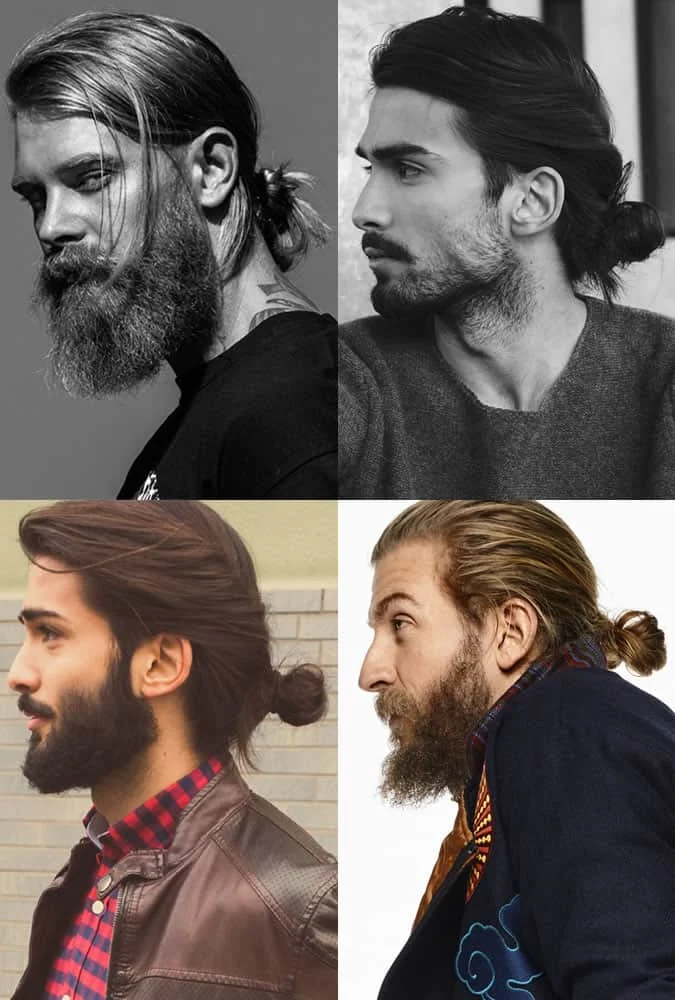
The modern landscape of male grooming has undergone significant evolution over the past two decades, with long hairstyles transitioning from counter-cultural statements into mainstream stylistic choices. Among these trends, the man bun—and its elevated counterpart, the topknot—remains one of the most polarizing aesthetic subjects in contemporary fashion. Despite facing persistent cultural skepticism and being frequently associated with transient micro-trends, the style has maintained structural staying power, largely due to careful adaptation, historic precedent, and endorsement from prominent public figures.
Defining the Man Bun and Its Variations
To understand the mechanics of the hairstyle, industry professionals categorize the man bun as any configuration of long hair gathered into a ponytail or secured knot positioned along the crown or occipital bone of the head. When the hair is collected high on the skull, it is commonly designated as a topknot.

The aesthetic execution of the style varies widely. The "full bun" relies on a shaggy, voluminous volume of long hair pulled back into a loose, relaxed knot, frequently paired with complementary facial hair to balance the facial geometry. Conversely, undercut variations establish stark contrasts by keeping the crown length substantial while shaving or tightly clipping the back and sides. This execution ranges from a subtle fade to a fully disconnected undercut, where the demarcation line between short and long hair is sharply defined.
Historical Context and Evolution
While public perception often links the origin of the man bun to the 2100s hipster movement in urban epicenters like Williamsburg, historical records indicate that bundled male hair is a tradition spanning millennia. Archeological evidence confirms that the practice dates back at least 2,000 years, most notably observed across the thousands of ceramic figures comprising China’s Terracotta Army, many of which feature intricate, braided topknots.
In East Asia, the style achieved profound cultural significance during Edo-period Japan. Samurai warriors adopted the chonmage, a specialized topknot designed to keep traditional helmets securely in place during combat while the rest of the scalp was shaved clean. This functional military adaptation was later mirrored by sumo wrestlers, cementing the silhouette as a symbol of physical strength and discipline.

Conversely, Western societies historically viewed the topknot through a lens of cultural otherness. During the Roman Empire, similar bundled hairstyles were dismissed as the domain of eastern European and Scandinavian "barbarians," and were actively excluded from polite societal norms. This skepticism persisted into modern times, where the look was occasionally lampooned when adopted haphazardly by athletes or subcultural stereotypes.
However, the late 2000s marked a turning point in Western fashion acceptance. International style icons—including David Beckham, Jared Leto, Chris Hemsworth, Leonardo DiCaprio, and Orlando Bloom—began incorporating variations of the length into their public appearances. The endorsement of these figures helped legitimize the look, shifting public discourse away from ridicule and toward technical execution and grooming standards.
Anatomical Considerations: Face Shape and Hair Density
Grooming specialists emphasize that the success of a man bun depends heavily on biological factors such as facial structure and hair typology. Professional stylists advise that the style does not universally flatter all demographics.

According to Carley McGuire, a stylist at Pall Mall Barbers, topknots are particularly advantageous for individuals with less-defined bone structures. "The topknot suits people with a less defined bone structure, as it can make the face appear longer," McGuire notes. "This slims your facial features too, and the topknot pairs well with a beard that’ll masculinise the style."
Conversely, hair density dictates mechanical feasibility. London-based stylist Jamie Stevens cautions against extremes on either end of the density spectrum. "Both ends of the density spectrum should avoid the man bun," Stevens states. "Really thick hair can be a lot harder to control, giving the illusion of a more rounded face shape. This can make your head appear larger than it actually is." On the opposing end, very fine hair or advanced receding hairlines can be exacerbated by tension-based pulling, exposing areas of sparse coverage that compromise the integrity of the look. Consequently, individuals with moderate hair density and healthy follicles are positioned as ideal candidates for the hairstyle.
Cultivation and Maintenance Protocols
Achieving an acceptable man bun requires a dedicated commitment to hair cultivation, as insufficient length results in unkempt styling that fails to meet professional grooming standards. The transition phase—often characterized by awkward intermediate lengths—demands structured maintenance to prevent structural damage.

Stylists recommend incorporating regular trim schedules into a long-term growth plan. Although trimming hair during a growth phase appears counterintuitive, professionals explain that removing split ends prevents fraying from traveling up the hair shaft, which ultimately causes breakage and stunts overall progress.
Nutritional and topical hydration are equally critical. Post-shampoo conditioning must target the ends of the hair to preserve moisture balance. Industry experts advocate for natural oils—such as coconut, palm, and jojoba oil—which nourish the scalp and hair cuticles without causing chemical irritation or pore obstruction. Specialized deep-conditioning masks and leave-in treatments further assist in managing dry ends and reducing friction-induced frizz.
Technical Execution and Styling Methodology
Once the hair reaches the requisite length—typically a minimum of shoulder-length for a balanced silhouette—precise styling techniques are required to secure the look without appearing unpolished.
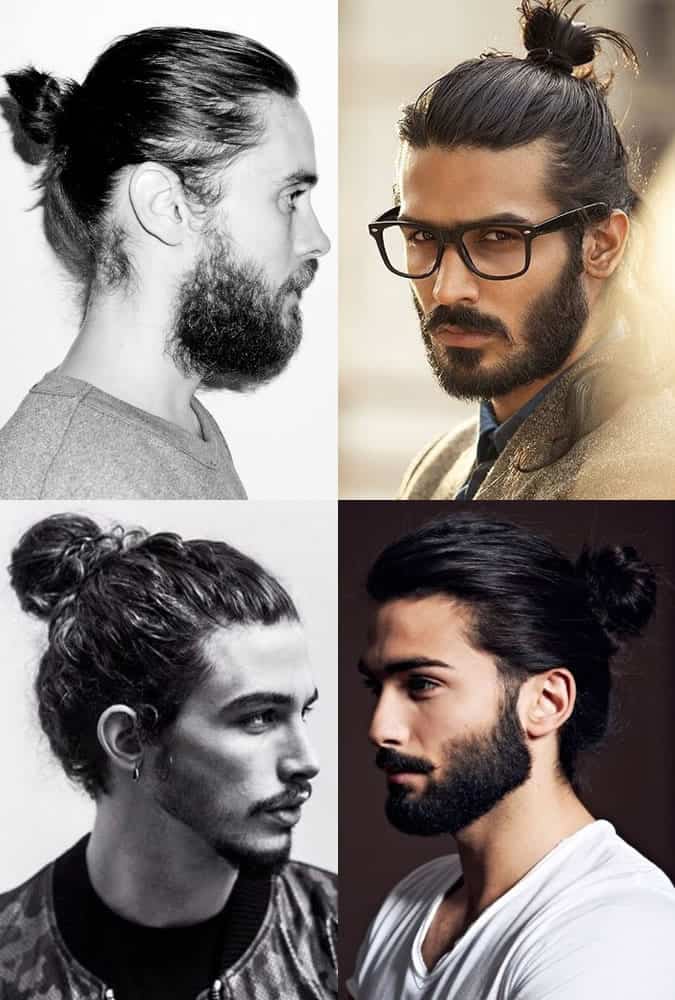
Nat Angold, a stylist at the London-based barbering chain Ruffians, outlines the step-by-step procedure for a professional finish. "Starting at the temple, brush the first section of hair back to the point where you want your bun to sit," Angold instructs, emphasizing that placement should target the crown to avoid awkward aesthetic proportions.
Using a reliable elastic hair band, practitioners create a loose ponytail, twisting it once before looping it over. Rather than pulling the hair completely through on the final pass, the ends are partially tucked or wrapped around the base of the hair tie to create a neat, contained knot.
To maintain the style throughout the day, professionals recommend specific product layering. Lightweight sea salt mists provide foundational texture and flexible hold, while a small amount of matte clay tames flyaways and stray hairs around the temples and nape.
Long-Term Maintenance and Barbering Integration

Adopting a man bun does not eliminate the need for professional barber visits. On the contrary, maintaining sharp lines around the sideburns and neckline is essential for distinguishing an intentional aesthetic from an unmanaged oversight. Stylists recommend scheduling maintenance trims every nine weeks, particularly for formal occasions where a slicked-back, stray-free appearance is mandatory.
Industry Analysis and Future Outlook
From an economic and industry perspective, the sustained interest in long male hairstyles has driven increased demand for specialized men’s hair care products, including high-end conditioners, sea salt sprays, and matte styling clays. Market analysts note that male grooming sectors continue to expand as societal barriers surrounding aesthetic maintenance dissolve.
Ultimately, while the man bun remains a high-risk stylistic choice with little room for error, adherence to proper face-shape matching, rigorous hair care, and precise execution allows men to successfully navigate one of modern fashion’s most debated trends.