











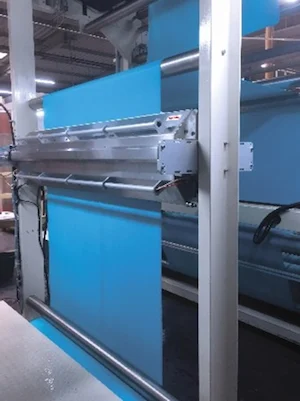
As the global textile machinery sector converges on Shanghai for the highly anticipated ITMA ASIA exhibition this November, the Swedish textile technology landscape is undergoing a period of intense evolution. Members of the Swedish Textile Machinery Association (TMAS) are responding to a volatile global environment—characterized by shifting geopolitical trade routes, stringent new sustainability regulations, and the rapid integration of artificial intelligence—by doubling down on high-tech manufacturing, facility expansion, and sustainable innovation.
The textile industry is currently grappling with a complex trifecta of challenges: the need for rapid decarbonization, the demand for circularity in garment production, and the imperative to increase automation to counter rising labor costs and supply chain instability. Against this backdrop, the Swedish cohort has moved beyond mere hardware manufacturing, positioning itself as a provider of intelligent, resource-efficient solutions.
A Chronology of Strategic Expansion (2025–2026)
The recent trajectory of TMAS members reflects a sector shifting from recovery to proactive growth. Following a record-breaking performance in 2025, several firms initiated capital-intensive projects that have come to fruition throughout the current year.
In early 2026, ACG Kinna finalized a major strategic pivot by inaugurating a 1,000-square-metre expansion at its Skene headquarters. This facility was specifically designed to meet the ballooning demand for bespoke automation in finished product lines. By integrating robotics and automated handling, the company is addressing the "bottleneck" effect often seen in the final stages of textile manufacturing, where labor-intensive manual work historically slowed down production.
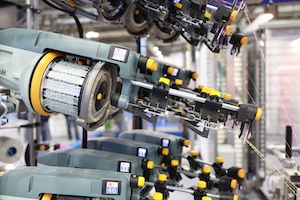
Simultaneously, the industry has seen the maturation of Imogo’s industrial spray dyeing technology. Imogo, which began its journey with a prototype in 2019, successfully transitioned to industrial-scale implementation by 2021. The opening of their new Kinnahult showroom and test center in 2026 marks a significant milestone, allowing manufacturers to move from lab-based testing to full-scale commercial production in a single location. This facility, which can process fabrics up to 2.4 meters wide at a capacity of 3 tons per day, serves as a tangible example of the industry’s shift toward "lean" dyeing processes.
Technological Innovations and Resource Efficiency
The core focus for Swedish firms in 2026 has been the reduction of "wet processing" footprints. Traditional dyeing and finishing processes are notoriously water-intensive and chemically demanding, often contributing to a significant portion of a textile mill’s environmental impact.
BW Converting’s Baldwin TexCoat G4 platform stands at the forefront of this shift. By replacing traditional bath-based immersion with precision, non-contact spray application, the system achieves a reduction in wet pick-up by as much as 50%. This not only conserves water but also dramatically reduces the energy required for the drying process—a critical factor as energy costs remain high across global manufacturing hubs.
Furthermore, the introduction of the "Corona Pure" system addresses the industry’s difficult transition away from C6 fluorocarbon-based water repellents. As manufacturers pivot toward environmentally friendly C0 chemistries, which can sometimes underperform compared to their predecessors, the Corona Pure technology enhances fabric absorbency and improves the overall efficacy of these newer, greener chemical formulations.
Automation has also reached the sewing and assembly floor. The P12-PB Automatic Lock Stitch Quilting Unit from Automatex represents a twofold increase in productivity for home textile manufacturers. By automating the quilting process, the system reduces the reliance on manual labor, which has become increasingly scarce in traditional textile-producing regions.
Digitalization and the Circular Economy
One of the most profound shifts in 2026 is the adoption of AI-driven sorting in the circular economy. Eton Systems has made significant strides with its aUPS module, which utilizes the company’s "ETONingenious" Factory 4.0 software to automate the grading of used garments.
The implications for the textile recycling industry are immense. By utilizing AI to identify garment color, size, manufacturer, and even potential damage, the system can calculate a resale price or determine the best recycling route for a given item. This effectively bridges the gap between post-consumer waste and industrial feedstock, a critical step for brands struggling to meet mandatory EU textile waste regulations.
Supporting this, ReSpin has integrated its mechanical recycling technology into Sweden’s first industrial-scale spinning mill for recycled fibers. The RespinJenny system allows for the mechanical conversion of textile waste into high-quality fibers that can be spun back into new yarn, creating a closed-loop system that reduces reliance on virgin cotton and polyester.
Official Perspectives on Market Dynamics
Therese Premler-Andersson, Secretary General of TMAS, emphasizes that these investments are not merely aesthetic; they are survival strategies in a hyper-competitive market. "This has been a very positive year for TMAS members," Premler-Andersson stated. "However, there is no question that the competitive landscape is changing. The influx of competition from China, combined with the pressure of AI integration and regulatory compliance, means that our members cannot stand still. The answer is to double down on specialist know-how and customer-centric innovation."
From the perspective of industry analysts, the Swedish approach—focusing on high-value, low-waste machinery—is a strategic hedge against the mass-market competition emanating from Southeast Asia. By selling "efficiency" rather than just "machinery," these companies are creating long-term value for their clients, who are increasingly judged on their ESG (Environmental, Social, and Governance) scores by investors and regulators.
Looking Toward ITMA Asia 2026
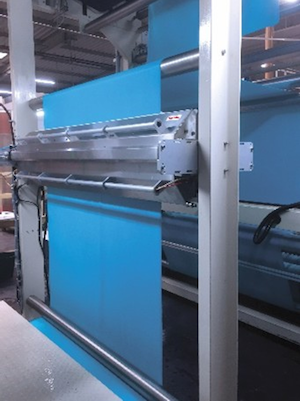
The industry’s focus now turns to Shanghai, where ITMA Asia 2026 (November 20–24) will serve as the primary stage for these technologies to be validated by the global market.
Vandewiele Sweden and Eltex are poised to highlight the importance of "intelligent connectivity" in high-speed manufacturing. Eltex will showcase its ACT-MULTI system, which provides individual yarn tension monitoring during the heat-setting process. This level of granular control is essential for stabilizing synthetic yarns, ensuring that they maintain their integrity through the punishing speeds of modern weaving and tufting looms.
Vandewiele’s presentation will focus on data-ready weft feeders, emphasizing that the future of the factory floor is digital. By embedding intelligence into the weft feeding process, manufacturers can gain real-time visibility into production quality, allowing for proactive rather than reactive maintenance.
Broader Implications and Future Outlook
The global textile industry is currently in a state of flux. As of late 2026, the convergence of regulatory pressures—such as the Digital Product Passport (DPP) requirements in the EU—and the physical limitations of current manufacturing technologies, has created a "technology gap."
Swedish firms are attempting to fill this gap by providing modular, scalable, and data-transparent solutions. The move toward digitalization is no longer a luxury but a requirement for any manufacturer seeking to export to Western markets. As the industry looks toward 2027, the success of these Swedish firms will depend on their ability to scale these high-tech solutions to markets in Asia and the Americas, where the scale of production is significantly larger than in Scandinavia.

The events of 2026 suggest that the "Swedish Model" of textile manufacturing—prioritizing sustainability, precision, and digital integration—is proving to be a robust framework. Whether these innovations can be adopted at the scale required to shift the entire global industry remains the primary question for the coming year. For now, the machinery being showcased in Shanghai serves as a clear indicator of where the industry is headed: toward a future where the textile mill is as much a digital data center as it is a place of mechanical production.