








The global fashion industry is currently navigating a period of unprecedented structural change, driven by the relentless pace of digital-native "ultra-fast fashion" entities and a consumer base that demands near-instantaneous trend realization. In response to this pressure, Raspberry AI, a New York-based startup, has successfully raised $24 million in a Series A funding round to scale its generative AI platform designed specifically for fashion designers and retailers. The investment, led by the prominent venture capital firm Andreessen Horowitz (a16z), marks a significant milestone for the two-year-old company and underscores the growing institutional appetite for vertical-specific artificial intelligence solutions.
Joining Andreessen Horowitz in the round were several high-profile existing investors, including Greycroft, Correlation Ventures, and MVP Ventures. This latest capital infusion comes just ten months after Raspberry AI closed a $4.5 million seed round, bringing its total capital raised to date to approximately $28.5 million. The rapid succession of funding rounds reflects the startup’s aggressive growth trajectory and the immediate market fit it has found among major global apparel brands and manufacturers.
The Evolution of the Fashion Design Lifecycle
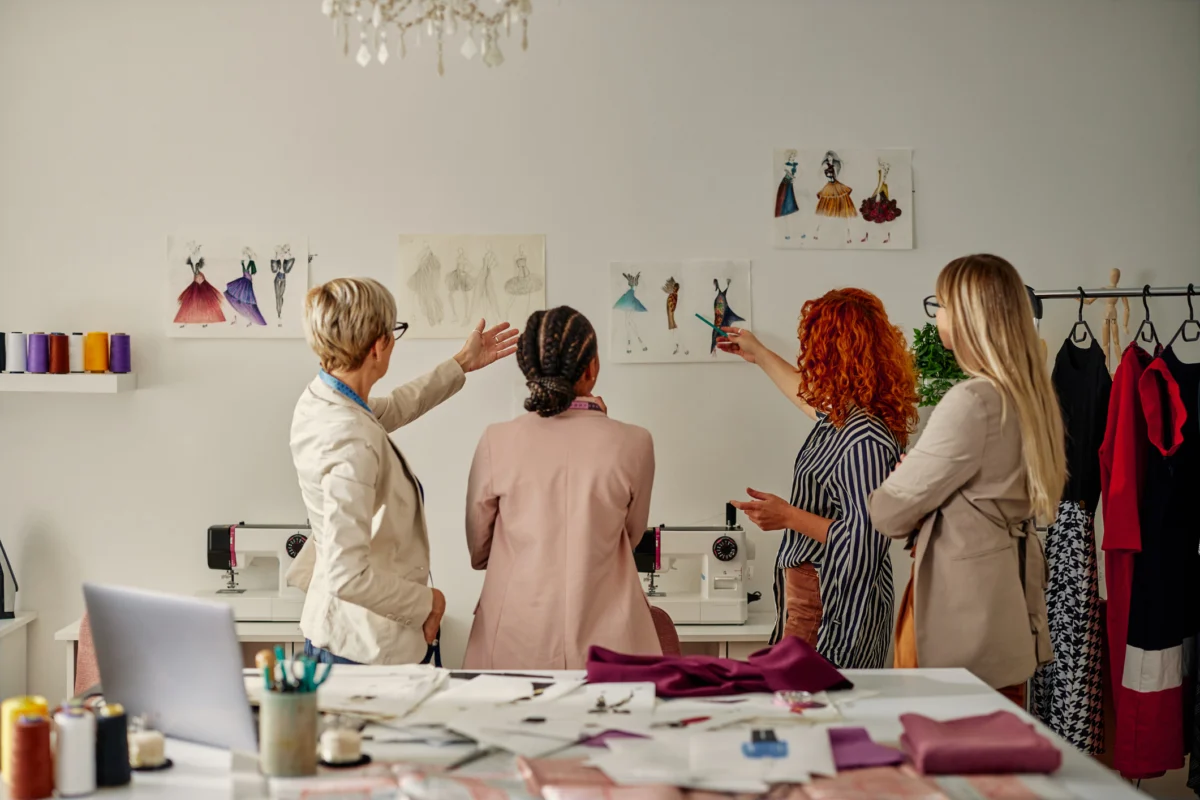
To understand the necessity of Raspberry AI’s technology, one must examine the traditional workflow of the fashion industry. For decades, the product development cycle was a linear, time-intensive process that relied heavily on physical prototyping. Designers would move from hand-drawn sketches or basic Computer-Aided Design (CAD) files to the creation of physical samples. These samples, often manufactured in overseas facilities, would take weeks to arrive, only to be iterated upon and re-ordered multiple times before a final design was approved for production.
In the current retail climate, defined by the "Shein effect," where companies like Shein, H&M, and Zara update their inventories on a weekly or even daily basis, the traditional multi-week sampling cycle has become a competitive liability. Retailers are no longer designing for two or four seasons per year; they are designing for 52 "micro-seasons." This shift has created a desperate need for tools that can compress the time between a creative spark and a shelf-ready product.
Raspberry AI addresses this bottleneck by providing a text-to-image and sketch-to-image platform that allows designers to visualize and iterate on their ideas in seconds. By inputting descriptive text or uploading a rough concept sketch, a designer can generate photorealistic images that mimic the exact aesthetic of a brand’s e-commerce photography. This capability allows internal stakeholders to make go/no-go decisions on products before a single yard of fabric is cut.
A Vertical Approach to Generative Artificial Intelligence
The inception of Raspberry AI coincides with the broader explosion of generative AI that began in late 2022. Founder Cheryl Liu, a former private equity analyst at KKR with a focus on retail and subsequent experience at Amazon and DoorDash, recognized a specific gap in the market. While general-purpose image generators like OpenAI’s DALL-E and Midjourney were gaining popularity, they lacked the precision and technical vocabulary required for professional fashion design.
Liu noted that while a general model might understand the concept of a "sweater," it often fails to grasp the nuances of technical construction, specific knit patterns, or industry-standard silhouettes. Raspberry AI was built to bridge this gap by integrating industry-specific terminology into its underlying models. For instance, when a designer uses the platform to create a "fuzzy sweater," the AI understands the specific textile properties and drape associated with that description in a commercial context—details that a general model might interpret as mere visual texture without structural logic.
"For the first time in history, you could rapidly create hundreds of designs in a way that you could never do before," Liu stated. The platform’s ability to generate 50 different iterations of a single foundational piece—varying materials, prints, and hardware—allows brands to explore the full potential of a design without the prohibitive cost and waste associated with physical sampling.
Rapid Market Adoption and Strategic Partnerships
The effectiveness of this vertical AI approach is evidenced by Raspberry AI’s rapid client acquisition. Within just two years of its founding, the company has secured a portfolio of 70 major customers. These include the American athletic wear giant Under Armour, the luxury fashion house MCM Worldwide, and Gruppo Teddy, a massive Italian manufacturer and retailer that operates over 8,800 stores across 39 countries.
The involvement of a partner like Gruppo Teddy is particularly illustrative of the platform’s utility for large-scale operations. For a manufacturer managing thousands of storefronts, the ability to streamline the design-to-production pipeline even by a small percentage can result in millions of dollars in saved overhead and reduced time-to-market.

Bryan Kim, a partner at Andreessen Horowitz, highlighted the strength of Raspberry’s client list as a primary factor in the firm’s decision to lead the Series A. "We had met with multiple companies and got excited about Cheryl as a founder and how she approaches building a company," Kim noted. He emphasized that the combination of a visionary founder and a roster of "marquee clients that are very, very large and important" positioned Raspberry as a leader in the emerging field of industrial generative AI.
Financial and Operational Chronology
The growth of Raspberry AI represents a textbook example of the "move fast" mentality prevalent in the current AI era. The company’s timeline highlights a focused execution strategy:
- Late 2022: Cheryl Liu identifies the potential for generative AI in fashion following the release of foundational image models.
- Early 2023: Raspberry AI is founded, focusing on building a proprietary layer of fashion-specific intelligence on top of existing generative frameworks.
- Early 2024: The company secures a $4.5 million seed round to build out its initial product and begin pilot programs with major brands.
- Mid-2024: Rapid adoption by 70 global customers, including Under Armour and MCM.
- January 2025: Raspberry AI announces its $24 million Series A, signaling a transition from early-stage development to global scaling.
With the new funding, the company plans to aggressively expand its workforce, specifically targeting talent in engineering, sales, and marketing. Furthermore, Raspberry AI intends to move beyond the apparel sector, applying its generative technology to related industries such as home goods, furniture design, and cosmetics.
Industry Implications: Sustainability and Efficiency
Beyond the immediate financial benefits for retailers, the adoption of AI-driven design tools like Raspberry AI has significant implications for the fashion industry’s environmental footprint. The apparel industry is frequently cited as one of the world’s most wasteful, with a substantial portion of that waste occurring during the sampling and prototyping phase. By shifting the majority of the iteration process to a digital, AI-powered environment, brands can significantly reduce the amount of physical waste generated during development.
Furthermore, the data generated by these AI tools can help brands better predict consumer trends, potentially reducing the overproduction that leads to unsold inventory and landfill waste. When a brand can visualize 50 iterations of a product and use AI to test those visuals against market data before manufacturing, the likelihood of a product’s commercial success increases, leading to a more efficient and less wasteful supply chain.
Analysis of the Competitive Landscape
While Raspberry AI occupies a strong position, it operates in an increasingly crowded field. It competes not only with general-purpose giants like Adobe—which has integrated its Firefly AI into Photoshop and Illustrator—but also with other specialized startups and legacy fashion tech companies like Browzwear and Clo3D.
The differentiator for Raspberry AI appears to be its focus on the "top of the funnel" creative process. While legacy CAD tools are excellent for technical pattern-making and 3D draping, they often require significant technical expertise and time to produce a single rendering. Raspberry’s "text-to-realistic-image" approach targets the earlier, more fluid stage of design, where speed and volume of ideas are paramount.
The strategic pivot toward "Vertical AI"—AI models trained on the specific data and language of a single industry—is a trend that analysts believe will define the next wave of enterprise software. By mastering the specific "language" of fashion, from the drape of a silk-charmeuse to the specific stitching of a performance legging, Raspberry AI is positioning itself as an indispensable tool in the modern designer’s kit.
Looking Ahead: The Future of AI in Product Design
As Raspberry AI looks toward the future, its expansion into home decor and cosmetics suggests a vision of becoming a universal design engine for consumer goods. The logic remains the same: any industry that relies on visual aesthetics and rapid iteration can benefit from a tool that turns conceptual sketches into photorealistic prototypes instantly.
The $24 million Series A provides the runway necessary to refine these cross-industry models and build a robust sales infrastructure to support its growing list of global enterprise clients. As the fashion world continues to accelerate, the success of Raspberry AI may well serve as a blueprint for how traditional industries can integrate cutting-edge technology to survive and thrive in a high-speed digital economy.