










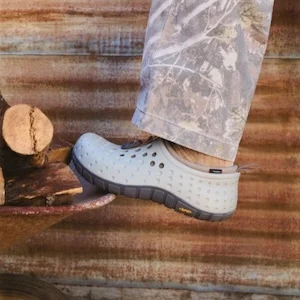
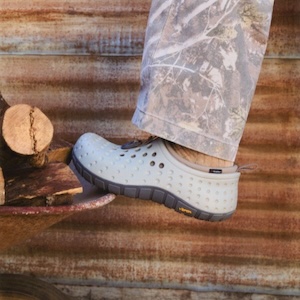
SPARTANBURG, S.C. — In a strategic convergence of textile science, high-performance rubber engineering, and unconventional footwear design, Polartec, a Milliken & Company brand, and Vibram have announced their latest partnership with Crocs. The result of this tripartite alliance is the Tembo II RO, a technical evolution of the existing Tembo silhouette, specifically engineered to navigate the transition into colder, more demanding fall and winter environments. This launch marks a significant shift for the brands involved, as they seek to transition from specialized outdoor gear to versatile, everyday lifestyle footwear that does not sacrifice technical integrity.
The Technical Anatomy of the Tembo II RO
The Tembo II RO distinguishes itself through a multi-layered construction philosophy. While the Crocs brand is historically defined by its proprietary Croslite material, the Tembo II RO integrates a modular design to enhance its utility. The central component of this winter-ready upgrade is the removable inner bootie, constructed from Polartec Micro Series fleece. This material is widely recognized in the outdoor apparel industry for its superior warmth-to-weight ratio, hydrophobic properties, and high breathability, ensuring that the wearer maintains thermal regulation without the bulk typically associated with winter footwear.
The outsole features Vibram’s XS TREK EVO compound, a technical rubber formulation developed to provide consistent performance across varying terrains. According to technical specifications provided by the collaborators, the XS TREK EVO is designed to offer an optimal balance of traction and durability. This is particularly relevant for the "RO" (Rugged Outdoor) designation, as the shoe is intended to withstand the mechanical stresses of uneven surfaces while maintaining a grip profile that performs reliably in wet or icy conditions. By utilizing a nylon ladder system to secure the bootie, the design allows for easy removal and cleaning, addressing the common durability challenges associated with integrated fleece liners in footwear.
Chronology of the Partnership and Development
The trajectory toward the Tembo II RO began with the initial success of the Crocs and Vibram collaboration, which sought to introduce more technical, performance-oriented outsoles to the iconic Crocs design language. Over the past twenty-four months, the partnership has evolved from experimental prototypes to a refined commercial strategy.
- Early 2025: Conceptual discussions between Crocs, Vibram, and Polartec begin, focusing on the intersection of "indoor comfort" and "outdoor ruggedness."
- Q2 2025: Initial prototyping of the fleece-integrated bootie system. Engineers test the material compatibility between the synthetic fleece and the Croslite base.
- Late 2025: Finalization of the slimmer, sneaker-inspired silhouette, which deviates from the wider, traditional Crocs profile to better accommodate winter layering and aesthetic trends.
- September 17, 2026: Official global unveiling of the Tembo II RO, signaling the commencement of the product’s retail rollout for the upcoming winter season.
This timeline reflects a deliberate, phased approach to product development, prioritizing the rigorous testing of the Vibram outsole’s bonding to the Crocs chassis and the long-term maintenance of the Polartec fleece’s loft and insulation properties under foot-pressure conditions.
Market Context and Strategic Implications
The introduction of the Tembo II RO occurs within a broader market trend known as "gorpcore," where high-performance outdoor materials are increasingly adopted into mainstream fashion and everyday wear. Data from industry analysts suggest that consumer demand for "hybrid footwear"—shoes that function as both comfortable house slippers and durable outdoor commuters—has seen a compound annual growth rate (CAGR) of approximately 7.2% over the last three years.
By incorporating Polartec and Vibram, Crocs is leveraging the "ingredient brand" strategy. This approach relies on the reputation of the component manufacturers to validate the performance of the final product. For Polartec, a brand synonymous with the development of synthetic fleece in the early 1980s, this move represents a pivot toward the footwear category, expanding its footprint beyond traditional jackets and mid-layers. For Vibram, the partnership solidifies its dominance in the footwear supply chain, moving beyond traditional hiking boots and into the mass-market casual sector.
Official Perspectives on the Collaboration
Industry leaders have emphasized that the success of the Tembo II RO hinges on the unique synthesis of three disparate corporate cultures. Karen Beattie, Director of Product Management at Polartec, noted that the project serves as a case study for material versatility. "Crocs has always approached design in its own unmistakable way, and that makes this partnership particularly exciting for Polartec," Beattie stated. "The Tembo II RO shows how trusted fleece performance can take on a completely different role when it is placed in the hands of a creative partner. We’re proud that Crocs chose Polartec Micro Series to bring warmth and comfort to this new silhouette."
From the perspective of the footwear manufacturer, the partnership is not merely a design exercise but a functional upgrade. The inclusion of the removable bootie system suggests an emphasis on product longevity. By allowing users to remove and wash the liner, the brands are directly addressing the sustainability concerns of the modern consumer, who increasingly prioritizes modular, repairable, and long-lasting goods.
Future Applications and Industry Expansion
The scope of this collaboration extends beyond the retail consumer. Both Crocs and Vibram have indicated that the technological framework established for the Tembo II RO has potential applications in specialized sectors, such as the hospitality and service industries. In these environments, professionals require footwear that offers the comfort of a clog, the traction of a mountain-ready sole, and the hygienic benefits of a washable liner.
Analysis of the current supply chain suggests that if the Tembo II RO achieves high adoption rates, the collaboration could serve as a blueprint for future "all-terrain" footwear. The integration of high-performance technical components into mass-produced silhouettes allows for a democratization of technical gear, making attributes like high-traction rubber and thermal-regulating fleece accessible to a wider demographic of consumers who may not traditionally frequent outdoor specialty retailers.
Fact-Based Analysis of Performance Metrics
The choice of Polartec Micro Series specifically is significant. Unlike heavier wool or down alternatives, the Micro Series is engineered to maintain its structural integrity under compression. This is a critical factor in footwear, where the weight of the wearer constantly exerts pressure on the insulating layer. The ability of the material to retain its "loft"—the thickness that traps air and provides warmth—ensures that the shoe does not lose its insulating value after several weeks of wear.
Simultaneously, the Vibram XS TREK EVO compound is characterized by its "non-marking" property, which is essential for footwear intended for indoor use in the hospitality or home settings. This prevents the rubber from leaving residue on interior flooring, while the aggressive tread pattern ensures that the user maintains stability on exterior surfaces such as slick pavement or snow-dusted entryways.
Conclusion: A Shift in Footwear Paradigms
The launch of the Tembo II RO underscores a changing landscape where the lines between professional-grade outdoor equipment and casual daily wear are increasingly blurred. By combining the distinctive, high-volume manufacturing capabilities of Crocs with the specialized, high-performance R&D of Polartec and Vibram, the resulting product addresses a specific gap in the footwear market: the need for a shoe that provides winter-ready performance in a lightweight, accessible, and easily maintained package.
As the industry moves toward 2027, the success of this collaboration will likely be measured by the durability of the bootie system and the market’s acceptance of the "ruggedized" Crocs aesthetic. However, the foundational intent is clear: to prove that technical performance is not the exclusive domain of extreme mountaineering, but a necessary component for the comfort and safety of the everyday explorer. With this release, the three brands have set a new standard for collaborative innovation in the footwear space, proving that even the most established silhouettes can be transformed through the strategic application of advanced material science.