









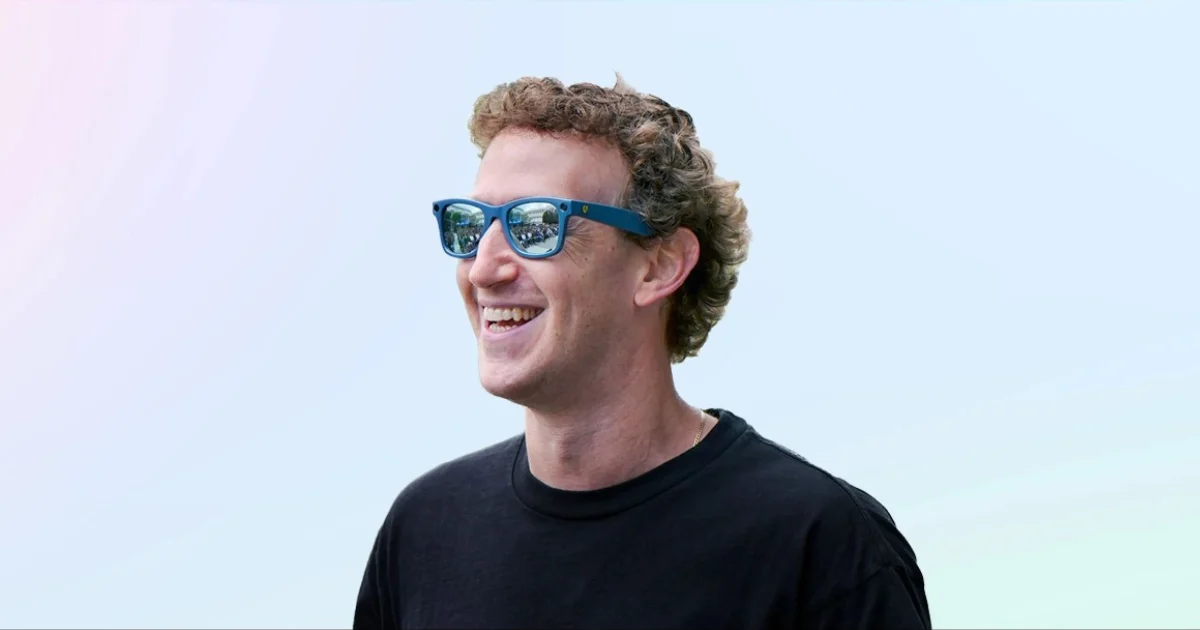
The intersection of high fashion and wearable technology reached a new milestone on Thursday as Meta Platforms CEO Mark Zuckerberg and his wife, Priscilla Chan, took prominent front-row seats at Prada’s Fall/Winter 2026 fashion show in Milan. The appearance of the social media executive at one of the world’s most prestigious fashion events has fueled intense industry speculation regarding the next phase of Meta’s hardware strategy. Zuckerberg was observed in close conversation with Lorenzo Bertelli, Prada Group’s Chief Merchandising Officer and the son of lead designer Miuccia Prada, suggesting that the long-rumored collaboration between the Silicon Valley giant and the Italian luxury house may be approaching a formal unveiling.
While Zuckerberg has undergone a notable public image transformation in recent years—trading his signature minimalist gray t-shirts for high-end streetwear and curated "athleisure"—analysts suggest his presence in Milan transcends personal style. The visit aligns with a broader strategic push by Meta to integrate its artificial intelligence and augmented reality hardware into the global luxury market. As Meta seeks to transition its smart glasses from niche tech gadgets to essential lifestyle accessories, a partnership with a brand of Prada’s caliber represents a critical step in achieving mainstream cultural saturation.
The Evolution of Meta’s Eyewear Strategy
Meta’s foray into smart eyewear began in earnest with the 2021 launch of Ray-Ban Stories, a collaboration with EssilorLuxottica, the world’s largest eyewear company. While the initial iteration saw modest adoption, the second generation—rebranded as Ray-Ban Meta—achieved significant commercial momentum. By late 2025, the partnership had expanded to include Oakley, a brand synonymous with performance and athletics, further diversifying Meta’s hardware portfolio.
According to data released by EssilorLuxottica in early February 2026, the company sold over 7 million units of Meta-powered AI glasses in 2025 alone. This represents a more than 250% increase from the 2 million units sold in 2024. The surge in sales is attributed to improved AI capabilities, including real-time translation, multimodal search, and enhanced audio quality, all housed within frames that are indistinguishable from traditional eyewear. The addition of the Oakley brand catered to the "active" demographic, but the "luxury" segment has remained a missing piece in Meta’s market architecture.
A Prada-branded version of the Meta AI glasses would target a different tier of consumer: the high-fashion enthusiast. By leveraging Prada’s design language and brand equity, Meta aims to bypass the "glasshole" stigma that plagued earlier attempts at smart eyewear, such as Google Glass. For Prada, the collaboration offers a way to maintain relevance in a digital-first world, providing its clientele with a fusion of craftsmanship and cutting-edge utility.
Strengthening the EssilorLuxottica Alliance
The logistical foundation for a Prada-Meta collaboration is already firmly in place. Prada and EssilorLuxottica recently finalized a ten-year licensing renewal for eyewear under the Prada and Miu Miu brands. The previous agreement, which concluded at the end of 2025, was extended through December 31, 2030, with a provision for further renewal until 2035.
This long-term stability allows for the complex research and development cycles required to embed sophisticated electronics into luxury frames. EssilorLuxottica’s vertical integration—controlling everything from design and manufacturing to global distribution—makes it the indispensable bridge between Meta’s software and the fashion industry’s hardware. Industry insiders suggest that the Prada AI glasses will likely utilize the same underlying technology as the Ray-Ban and Oakley versions but will feature premium materials, exclusive finishes, and the iconic Prada triangle branding.
Strategic Implications of a Luxury Pivot
From a corporate strategy perspective, Meta’s move into the luxury space serves several purposes. First, it allows for higher price points and healthier margins. While Ray-Ban Meta glasses typically retail between $299 and $379, a Prada version could easily command a price tag exceeding $600 or $800, aligning with the brand’s existing non-smart eyewear pricing.
Second, luxury partnerships act as a "halo" for the entire product line. When a brand like Prada validates a technology, it shifts the public perception of that technology from "nerdy" to "aspirational." This was a strategy successfully employed by Apple with the Apple Watch Hermès edition, which helped position the device as a fashion statement rather than just a fitness tracker.
Third, the move secures Meta’s position against competitors like Apple and Snap Inc. While Apple’s Vision Pro focuses on high-end spatial computing in a bulky headset format, Meta is doubling down on "all-day wearable" glasses. By capturing the fashion-conscious consumer, Meta is building an ecosystem where the hardware is socially acceptable to wear in any setting, from a corporate boardroom to a high-end restaurant.
The Growing Conflict: Surveillance and Social Backlash
Despite the commercial success of Meta’s eyewear, the company faces a burgeoning cultural and regulatory backlash. The proliferation of cameras and microphones in everyday objects has led to increased concerns over privacy and the "normalization" of constant surveillance.
Reports from early 2026 indicate a rising trend of consumer resistance against smart home and wearable surveillance devices. In various urban centers, incidents of individuals disabling Ring doorbells or damaging Flock safety cameras have been documented, signaling a "surveillance fatigue" among the public. In this climate, the introduction of high-fashion AI glasses—which are designed to look exactly like normal glasses—has drawn criticism from privacy advocates.
The controversy was further ignited by a recent report from The New York Times suggesting that Meta is exploring the addition of facial-recognition features to its smart glasses. Such a feature would allow a wearer to identify strangers in real-time by cross-referencing their faces with social media profiles. While Meta has not officially confirmed these plans, the mere possibility has prompted defensive technological responses. One developer recently released a mobile application designed to detect the Bluetooth signals emitted by smart glasses, warning users if they are being recorded or monitored by someone in their immediate vicinity.
Meta’s challenge will be to balance the "utility" of AI—such as remembering the name of a person you met once at a conference—with the "creep factor" of ubiquitous facial recognition. If the Prada collaboration is to be successful, Meta must navigate these ethical waters carefully to avoid a PR disaster that could tarnish both its own brand and that of its luxury partner.
Technical Prospects: What to Expect from Prada AI
Technologically, the Prada Meta glasses are expected to build upon the "Orion" prototype architecture that Zuckerberg has teased in various interviews. Key features likely to be included are:
- Multimodal AI Integration: Users can ask the glasses questions about what they are seeing in real-time, such as identifying a landmark or translating a menu.
- Heads-Up Display (HUD): While current Ray-Ban Meta glasses lack a visual display, rumors suggest the luxury tier might introduce micro-LED projection to show notifications or navigation prompts directly on the lens.
- Advanced Audio: Utilizing bone-conduction or directional speakers to provide a private audio experience without the need for earbuds.
- Seamless Social Integration: The ability to livestream directly to Instagram or Facebook, a feature that has already proven popular among influencers using the Ray-Ban models.
The "Prada Edition" would likely emphasize the "see what I see" aspect of Meta’s AI, marketed as a tool for "curating a life of style and intelligence."
Market Outlook and Competitive Landscape
The smart glasses market is projected to grow exponentially through the end of the decade. Market research firms estimate that the wearable AI segment could be worth over $50 billion by 2030, with smart eyewear making up a significant portion of that total.
Meta currently holds a first-mover advantage in the "smart-looking glasses" category. While Snap’s Spectacles have struggled to find a mass audience and Apple’s rumored "Apple Glass" remains years away from a consumer release, Meta’s partnership with EssilorLuxottica has given it a massive head start in distribution and design.
The addition of Prada to the Meta ecosystem would likely be followed by other LVMH or Kering-owned brands if the venture proves successful. This could lead to a future where "smart" is a standard feature across all mid-to-high-end eyewear, much like how "smart" became the standard for cellular phones.
Conclusion
Mark Zuckerberg’s presence at Prada’s Milan show is more than a mere celebrity sighting; it is a signal of intent. As Meta continues to pivot from a social media company to a "metaverse" and AI hardware company, its ability to win over the fashion elite is paramount. The 7 million units sold in 2025 demonstrate that there is a clear appetite for wearable AI, but to reach the next level of global influence, Meta needs the prestige that only a brand like Prada can provide.
However, the path forward is fraught with tension. The company must reconcile its ambition for "frictionless" AI interaction with a public that is increasingly wary of the "always-on" camera. Whether the Prada Meta glasses become the ultimate status symbol of 2026 or a lightning rod for privacy debates remains to be seen. For now, the tech and fashion worlds wait for an official announcement that could redefine the boundaries between what we wear and how we interact with the digital world.