








The intersection of high fashion and wearable technology reached a new milestone on Thursday as Meta Platforms Inc. CEO Mark Zuckerberg and his wife, Priscilla Chan, took prominent front-row seats at Prada’s Fall/Winter 2026 Fashion Week presentation in Milan. The appearance has intensified industry speculation regarding an imminent expansion of Meta’s augmented reality and artificial intelligence eyewear portfolio into the ultra-luxury segment. During the event, Zuckerberg was observed in extended conversation with Lorenzo Bertelli, Prada Group’s Chief Merchandising Officer and the son of lead designer Miuccia Prada, suggesting a deepening relationship between the Silicon Valley giant and the Italian fashion house.
While the Meta executive has undergone a highly publicized stylistic evolution in recent years—transitioning from his signature gray t-shirts to custom-designed streetwear and high-end tailoring—analysts suggest the Milan visit was driven by strategic corporate interests rather than a personal affinity for the runway. The presence of the Meta leadership team at a Prada flagship event aligns with emerging reports that the two companies are nearing the public phase of a collaborative hardware project.
A Strategic Pivot Toward High-Fashion Integration
The groundwork for a Prada-branded Meta device has been laid over several years of shifting corporate strategy. In June 2025, reports first surfaced indicating that Prada AI smart glasses were in active development, following the successful trajectory of Meta’s partnership with EssilorLuxottica. While Meta has not officially confirmed the specific details of a Prada-branded product, the timing of Zuckerberg’s appearance in Milan, coupled with recent licensing milestones, provides a compelling narrative for the next phase of Meta’s hardware roadmap.
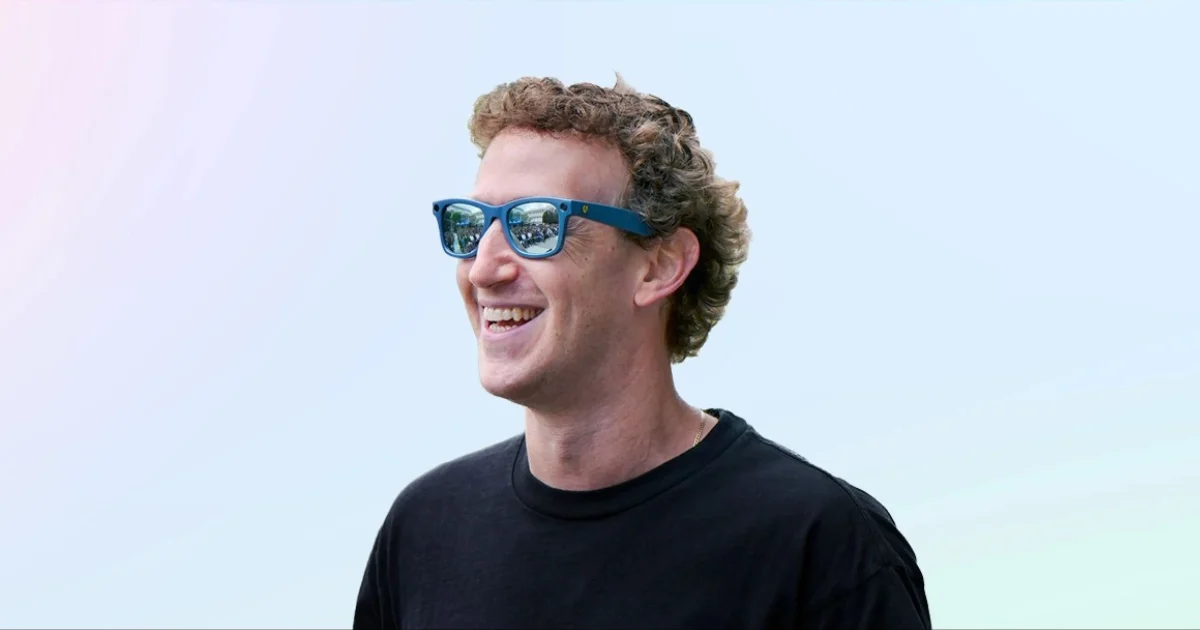
The collaboration represents a significant move for Meta as it seeks to transcend the "early adopter" demographic. By aligning with Prada, Meta aims to position its AI-driven hardware as a legitimate fashion accessory rather than a purely utilitarian gadget. This strategy mirrors the successful deployment of the Ray-Ban Meta collection, which leveraged the timeless appeal of the Wayfarer silhouette to mask the complex sensors and processors housed within the frames.
The Evolution of the Meta-EssilorLuxottica Partnership
To understand the potential for Prada AI glasses, one must look at the foundational partnership between Meta and EssilorLuxottica, the French-Italian conglomerate that dominates the global eyewear market. The relationship began with the launch of "Ray-Ban Stories" in 2021, a first-generation product focused primarily on photo and video capture. While the initial reception was modest, the subsequent iteration, the Ray-Ban Meta AI glasses, saw a dramatic surge in consumer interest.
Internal data and recent financial disclosures highlight the accelerating momentum of this partnership:
- Sales Growth: In February 2026, EssilorLuxottica announced that it had sold over 7 million units of AI-enabled glasses during the 2025 calendar year. This represents a more than threefold increase from the 2 million units sold in 2024.
- Market Diversification: The 2025 sales figures were bolstered by the introduction of Oakley Meta glasses, a line specifically engineered for the performance athletics and outdoor markets.
- Licensing Longevity: Prada and EssilorLuxottica recently finalized a ten-year renewal of their licensing agreement, covering both the Prada and Miu Miu brands. The previous contract, set to expire at the end of 2025, was extended through 2030, with a further provision to carry the partnership through 2035.
This long-term stability between the manufacturer and the fashion house provides the necessary infrastructure for Meta to integrate its technology into Prada’s high-fashion frames. By utilizing EssilorLuxottica’s existing production lines and distribution networks, Meta can scale luxury AI hardware with significantly lower overhead than if it attempted to enter the fashion market independently.
Technical Ambitions and the Luxury Symbol
A Prada version of Meta’s AI glasses would likely serve as the "prestige" tier of the company’s wearable lineup. Industry insiders anticipate that such a device would feature the same core architecture as the Ray-Ban and Oakley versions—including multimodal AI capabilities, open-ear audio, and high-resolution cameras—but with premium materials and exclusive design elements synonymous with the Prada aesthetic.
The inclusion of multimodal AI is a critical selling point. This technology allows the glasses to "see" what the wearer sees, providing real-time translation, object identification, and contextual information via voice prompts. For the luxury consumer, this offers a seamless blend of utility and status. Establishing the device as a luxury symbol could also insulate Meta against the cyclical nature of consumer electronics, turning the glasses into a "Veblen good" where high demand is driven by the brand’s prestige.
Privacy Concerns and the Growing Consumer Backlash
Despite the commercial success of Meta’s eyewear, the prospect of more pervasive AI-equipped cameras has met with significant societal resistance. As Meta eyes a luxury expansion, it must navigate an increasingly hostile environment regarding public surveillance.
Recent months have seen a documented uptick in consumer pushback against smart home and surveillance devices. Reports have emerged of citizens disabling Ring doorbells and destroying Flock surveillance cameras in various metropolitan areas, citing concerns over data privacy and the "normalization of the panopticon."
This atmosphere of skepticism has direct implications for Meta’s hardware development:
- Facial Recognition: Recent reports from The New York Times suggest that Meta has considered adding facial-recognition features to its smart glasses. Such a feature would theoretically allow a wearer to identify strangers in real-time, a prospect that has drawn fierce criticism from civil liberties groups.
- Anti-Surveillance Technology: The rise of AI glasses has birthed a secondary market for privacy-preserving tools. At least one developer has released an application designed to alert users if someone wearing smart glasses is in their immediate vicinity, utilizing Bluetooth signal detection to identify the hardware.
- Regulatory Scrutiny: European regulators, particularly in Italy and France where Prada and EssilorLuxottica are headquartered, maintain some of the world’s strictest data protection laws (GDPR). Any Prada-branded device would need to meet rigorous standards regarding how visual data is processed and stored.
The Role of Lorenzo Bertelli and Prada’s Digital Future
The interaction between Zuckerberg and Lorenzo Bertelli in Milan is particularly noteworthy given Bertelli’s role in Prada’s modernization. As the heir apparent to the Prada empire, Bertelli has been the driving force behind the group’s digital transformation and sustainability initiatives. Under his guidance, Prada has embraced e-commerce, blockchain for product authentication, and now, potentially, wearable AI.
Bertelli’s background suggests a leader who views technology not as a threat to luxury heritage, but as a necessary evolution. For Prada, a partnership with Meta offers a way to capture the attention of Gen Z and Alpha consumers, who value technological integration as much as brand heritage.
Market Analysis: The High-Fashion Tech Niche
Financial analysts view the potential Prada-Meta deal as a move to corner a niche that competitors like Apple and Google have yet to fully exploit. While the Apple Vision Pro offers high-end spatial computing, its bulky form factor prevents it from being a fashion statement. Meta’s strategy is the inverse: prioritize the form factor and social acceptability first, then incrementally improve the technology.
"Meta is playing a long game in the eyewear space," says market analyst Elena Rossi. "By starting with Ray-Ban and moving toward Prada, they are solving the ‘social friction’ problem that killed Google Glass. If you can make the technology invisible—or better yet, make it a status symbol—the privacy concerns become secondary for a large segment of the consumer base."
Conclusion and Future Outlook
As of late February 2026, Meta has remained silent regarding the specifics of the Milan meeting, issuing no formal statement in response to inquiries about Zuckerberg’s presence at the Prada show. Prada Group has similarly maintained a focus on its seasonal collection, though the presence of the world’s leading social media executive in the front row spoke volumes to the industry.
The trajectory of Meta’s hardware division suggests that an official announcement regarding the Prada collaboration could occur at the next Meta Connect conference. If successful, the Prada AI glasses will not only represent a new revenue stream for the company but will serve as a litmus test for whether high technology can truly be woven into the fabric of luxury fashion without triggering a definitive public revolt over privacy. For now, the sight of Zuckerberg and Bertelli in Milan serves as a potent preview of a future where the line between the digital and the physical is increasingly blurred by the lenses of a designer frame.