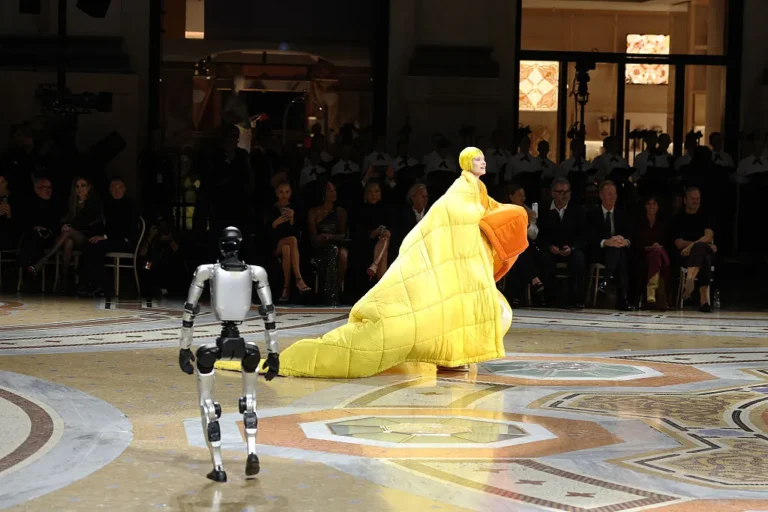








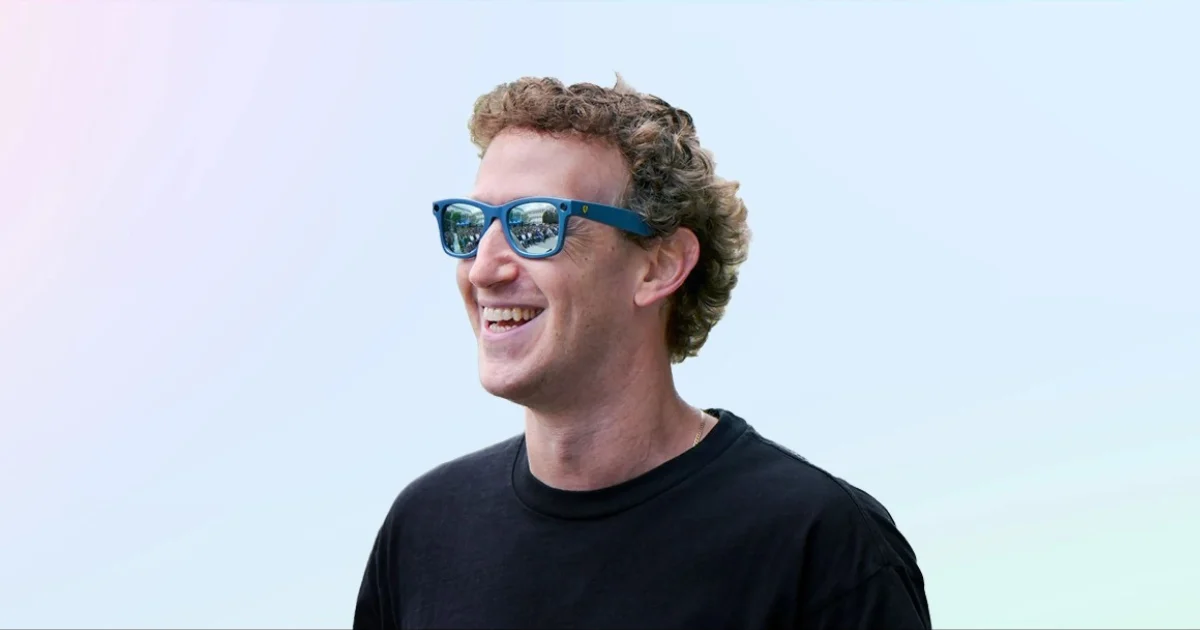
Mark Zuckerberg’s prominent front-row appearance at Prada’s Fall/Winter 2026 Fashion Week presentation in Milan has intensified industry speculation regarding an impending luxury collaboration between Meta Platforms and the storied Italian fashion house. Seated alongside Lorenzo Bertelli, Prada’s chief merchandising officer and son of head designer Miuccia Prada, the Meta chief executive officer was captured deep in conversation, prompting analysts and fashion insiders alike to look beyond the runway and toward Silicon Valley.
While the tech executive’s public-facing persona has undergone a noticeable stylistic evolution in recent years—featuring elevated wardrobe choices that many industry watchers attribute to a carefully managed rebrand—his presence in Milan is widely viewed by market analysts as a strategic positioning rather than a casual outing. Reports first surfaced in mid-2025 indicating that Meta was actively developing a line of luxury AI-powered smart glasses bearing the Prada brand name. Although Meta has thus far declined to issue an official statement or respond to direct inquiries regarding Zuckerberg’s Milan itinerary, the convergence of high fashion and wearable technology signals a calculated move to capture a lucrative demographic that has historically remained indifferent to traditional consumer electronics.
The Evolution of Meta’s Smart Eyewear Portfolio
Meta’s foray into the smart eyewear market began in earnest with the introduction of Ray-Ban Stories, developed in partnership with EssilorLuxottica, the French-Italian multinational eyewear conglomerate. What started as an experimental foray into augmented audio and camera-enabled frames has rapidly matured into a formidable commercial category. According to financial disclosures released by EssilorLuxottica in February 2026, sales of Meta-powered AI glasses reached a remarkable milestone, surpassing 7 million units sold throughout the previous calendar year. This figure represents more than a threefold increase compared to the roughly 2 million units sold during the prior period.
This expansive product ecosystem now includes both the flagship Ray-Ban Meta line and the athletic-focused Oakley Meta glasses, which cater specifically to fitness enthusiasts and outdoor athletes. By branching into distinct lifestyle segments, Meta and EssilorLuxottica have successfully dismantled the historical resistance consumers have shown toward facial-mounted technology. However, while Ray-Ban and Oakley occupy the casual, streetwear, and athletic niches, a gap remains at the apex of the luxury retail market. A potential collaboration with Prada would bridge this divide, establishing smart eyewear not merely as a utilitarian tech accessory, but as a coveted symbol of high fashion and status.
The Foundation of a Luxury Partnership
The structural groundwork for a Prada-branded Meta device has already been established at the corporate level. EssilorLuxottica and the Prada Group successfully negotiated a ten-year licensing renewal agreement, extending their long-standing partnership for eyewear production under both the Prada and Miu Miu brands. The previous licensing agreement, which was scheduled to expire on December 31, 2025, has been extended through the end of 2030, with built-in provisions allowing for a further extension through December 31, 2035.
This decade-long commitment provides EssilorLuxottica with the industrial stability required to manufacture complex, technology-integrated luxury frames. Manufacturing smart glasses demands a delicate balance between miniaturized electronic components—such as micro-speakers, batteries, and high-resolution cameras—and the rigorous aesthetic standards expected of luxury Italian craftsmanship. Integrating sophisticated AI capabilities without compromising the lightweight frame design or the distinct design language of a house like Prada represents both an engineering challenge and a significant commercial opportunity.
Market Implications and the Luxury Consumer Segment
The introduction of Prada AI smart glasses would grant Meta unprecedented entry into the luxury retail sector, a domain characterized by high profit margins and brand loyalty. Luxury consumers are often willing to pay a substantial premium for design pedigree, craftsmanship, and exclusivity—attributes that standard consumer electronics manufacturers struggle to replicate independently.
By positioning smart glasses as a high-fashion accessory rather than an overt piece of computing hardware, Meta could accelerate mainstream adoption among demographics that prioritize personal aesthetics over raw technological specifications. Furthermore, a successful luxury partnership could elevate the perception of Meta’s entire hardware portfolio, altering how consumers view wearable AI devices.
Societal Pushback, Privacy Concerns, and Surveillance Anxiety
Despite the commercial momentum enjoyed by EssilorLuxottica and Meta, the expansion of camera-equipped and AI-integrated eyewear unfolds against a backdrop of mounting public skepticism regarding digital surveillance. In early 2026, a broader cultural and consumer backlash against ubiquitous monitoring devices has manifested in tangible ways. Public frustration has increasingly translated into physical actions against domestic and public surveillance infrastructure, evidenced by reports of consumers disconnecting or destroying Ring doorbell cameras and community-monitoring Flock cameras across the United States.
This growing apprehension regarding personal privacy has directly impacted the discourse surrounding smart glasses. Recent investigative reports published by major news organizations indicate that Meta is exploring the integration of advanced facial-recognition capabilities into its future smart eyewear generations. The prospect of continuous, wearable facial recognition in public spaces has drawn immediate scrutiny from civil liberties advocates, privacy researchers, and consumers alike.
The reaction to these proposed features has been swift, leading to grassroots resistance within the tech community. Independent developers have recently launched localized warning applications designed to alert smartphone users when individuals wearing AI-enabled smart glasses are nearby. This friction highlights a central tension in the wearable technology sector: while consumers increasingly embrace convenience and hands-free connectivity, the societal threshold for passive, unconsented data collection in public spaces is becoming increasingly strained.
Strategic Considerations for Meta’s Next Phase
As Meta navigates the transition from experimental tech developer to a dominant force in wearable computing, the potential integration of high fashion introduces a complex set of public relations and strategic variables. On one hand, aligning with Prada offers an undeniable avenue for brand elevation and market expansion, transforming utilitarian gadgets into desirable luxury goods. On the other hand, associating elite fashion branding with a product category increasingly scrutinized for surveillance capabilities may amplify public debate regarding the ethics of persistent, wearable artificial intelligence.
Industry observers note that Meta’s ability to successfully launch a Prada-branded device will depend heavily on how the company addresses escalating privacy concerns. Clear data governance policies, visible indicator lights for recording, and transparent user controls will be critical in mitigating the growing cultural resistance against camera-enabled hardware.
For now, neither Meta nor the Prada Group has formally confirmed the launch date, technical specifications, or pricing structure of the rumored collaboration. However, with Zuckerberg’s high-profile appearance in Milan and EssilorLuxottica’s reinforced licensing framework securely in place, the groundwork for the next evolution in luxury wearable technology appears to be firmly established. The coming months will reveal whether this high-fashion gamble can successfully navigate the widening chasm between consumer desire for advanced AI integration and society’s demand for personal privacy.