










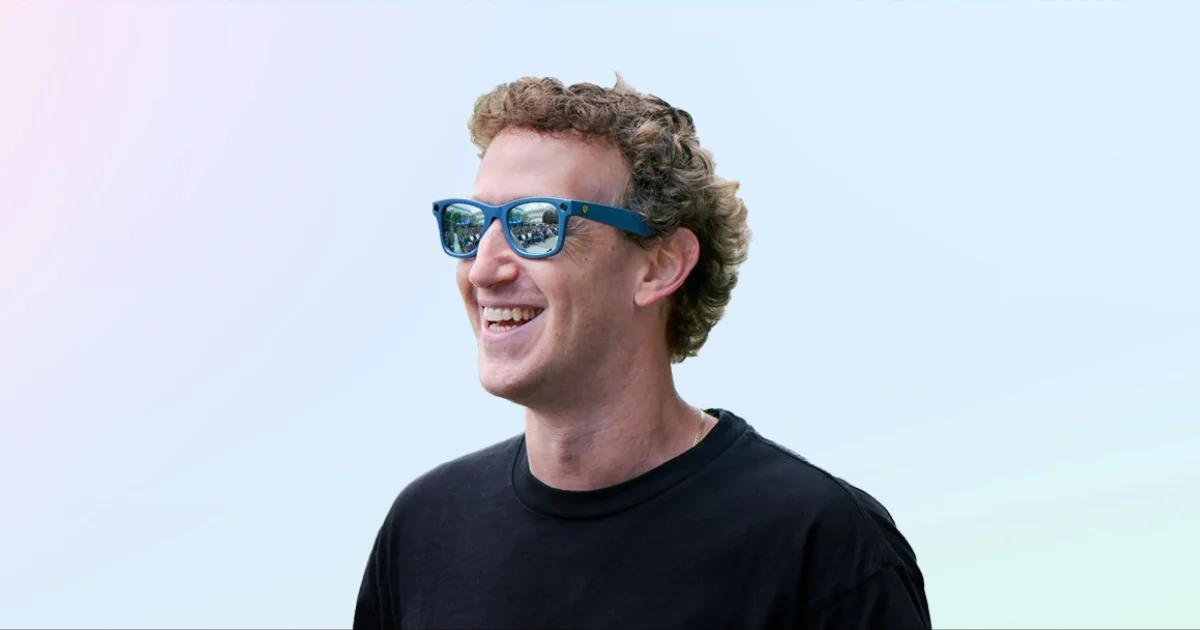
The presence of Meta Platforms Inc. Chief Executive Officer Mark Zuckerberg at the Prada Fall/Winter 2026 fashion show in Milan has ignited intense industry speculation regarding the next phase of the social media giant’s wearable technology strategy. Zuckerberg, accompanied by his wife, Dr. Priscilla Chan, was observed in the front row of the prestigious event on Thursday, engaging in high-level discussions with Lorenzo Bertelli, Prada Group’s Chief Merchandising Officer and the heir apparent to the luxury house founded by his mother, Miuccia Prada. This public appearance, occurring at a critical juncture for both the technology and luxury sectors, suggests that a high-fashion iteration of Meta’s AI-powered smart glasses may be imminent.
While Zuckerberg has undergone a well-documented personal aesthetic transformation in recent years—shifting from his signature utilitarian gray t-shirts to curated designer apparel—analysts suggest his attendance in Milan was driven by strategic business objectives rather than a newfound interest in seasonal trends. The intersection of Silicon Valley and European luxury has become increasingly crowded, and Meta appears poised to leverage the prestige of the Prada brand to move its hardware beyond the mid-market appeal of its existing partnerships.
The Evolution of Meta’s Eyewear Strategy
The journey toward a potential Prada-branded AI device is rooted in Meta’s long-standing partnership with EssilorLuxottica, the French-Italian eyewear conglomerate that controls a dominant share of the global market. The collaboration began in earnest with the 2021 launch of "Ray-Ban Stories," a first-generation device that allowed users to take photos and videos. While the initial product saw modest adoption, the subsequent release of the "Ray-Ban Meta" smart glasses in late 2023 represented a significant leap in both hardware and consumer interest.
The integration of Meta AI, which allows users to interact with a voice assistant and utilize multimodal AI to "see" what the wearer is seeing, has transformed the glasses from a novelty camera into a functional computing platform. This technological maturation was reflected in the company’s 2025 performance metrics. According to data released by EssilorLuxottica in February 2026, the company sold over 7 million units of AI-enabled eyewear in 2025, a dramatic increase from the 2 million units sold in 2024. This 250% year-over-year growth demonstrates a rapidly expanding consumer appetite for head-mounted AI.
To sustain this momentum, Meta has sought to diversify its offerings. In mid-2025, the company introduced Oakley Meta glasses, targeting the performance and athletic demographic. However, the high-fashion "luxury" segment remains the final frontier for Meta’s eyewear portfolio. A partnership with Prada would serve as the ultimate bridge between functional technology and aspirational status symbols.
A Timeline of the Prada-Meta Speculation
The rumors regarding a Prada collaboration are not entirely new but have gained significant weight following recent corporate maneuvers. In June 2025, reports first surfaced via CNBC and industry insiders suggesting that Meta was actively developing a "luxury tier" of smart glasses. These reports specifically identified Prada as a primary candidate for this expansion.
The logistical framework for such a partnership is already in place. Prada Group and EssilorLuxottica have maintained a fruitful licensing relationship for decades, covering both the flagship Prada line and the Miu Miu brand. In a strategic move late last year, the two companies renewed their licensing agreement for an additional ten years. The previous contract, which was set to expire on December 31, 2025, has been extended through 2030, with an option for further renewal until 2035. This long-term stability provides the necessary runway for the complex research and development required to integrate Meta’s sophisticated hardware into Prada’s delicate and high-fashion frames.
Zuckerberg’s conversation with Lorenzo Bertelli in Milan is seen as a "soft launch" of the concept to the public. Bertelli, who has been instrumental in Prada’s digital transformation and sustainability initiatives, is widely regarded as a tech-forward executive capable of navigating the cultural divide between Menlo Park and Milan.
Market Positioning and Brand Synergies
For Meta, the benefits of a Prada partnership extend beyond simple unit sales. The company is currently engaged in a broader effort to shed its image as a utilitarian social media provider and reposition itself as a leader in the "Metaverse" and artificial intelligence. By associating its AI technology with a brand synonymous with sophistication and exclusivity, Meta can combat the "tech-bro" stigma that often plagues wearable devices.
From a market perspective, Prada AI glasses would allow Meta to command a significantly higher price point. While Ray-Ban Meta glasses typically retail between $299 and $379, a Prada-branded version could easily exceed $600 to $1,000, aligning with the pricing of the luxury house’s standard eyewear collections. This move would mirror Apple’s strategy with the Apple Watch Hermès, which successfully positioned a mass-market tech product as a high-end fashion accessory.
Furthermore, the "Prada" aesthetic offers a different design language. While Ray-Bans are iconic for their classic, rugged styles like the Wayfarer, Prada is known for avant-garde shapes and premium materials. This variety is essential for Meta to achieve its goal of "ubiquitous computing," where smart glasses are as common and varied as traditional prescription lenses.
The Privacy Paradox and Consumer Backlash
Despite the commercial potential, Meta’s expansion into luxury eyewear comes at a time of heightened public sensitivity regarding surveillance and privacy. The very features that make the glasses innovative—outward-facing cameras and always-on microphones—are the same features that have sparked a growing "anti-surveillance" movement.
In early 2026, reports of consumers disabling or destroying public and private surveillance devices became a headline-grabbing trend. This includes the high-profile "smashing" of Flock safety cameras in several American suburbs and a wave of homeowners disconnecting their Ring doorbells following concerns over data sharing with law enforcement. In this climate, the prospect of millions of people walking around with cameras embedded in their Prada frames has drawn sharp criticism from privacy advocates.
The controversy was further exacerbated by a February 2024 report from The New York Times, which claimed Meta was exploring the addition of facial-recognition features to its smart glasses. Such a feature would theoretically allow a wearer to identify a stranger on the street by cross-referencing their face with social media profiles. Although Meta has not officially confirmed the deployment of facial recognition for the general public, the mere possibility has led to a technological arms race. One independent developer recently released a mobile application designed to detect the Bluetooth signals emitted by Meta glasses, providing a "warning" to individuals nearby that they may be being recorded.
Meta must navigate these concerns carefully. A luxury product like Prada AI glasses relies on social acceptance; if wearing the glasses makes the user a social pariah or a target for privacy advocates, the "luxury" appeal will vanish.
Technical Hurdles and the Future of Wearable AI
Developing a Prada-branded device also presents unique engineering challenges. High-fashion frames are often thinner and use more diverse materials than the robust plastic used in Ray-Bans. Fitting the necessary battery, processors, and camera modules into these frames without compromising the "Prada look" requires significant miniaturization.
Industry analysts expect that any Prada Meta device would utilize the latest iteration of the Qualcomm Snapdragon AR1 Gen 2 platform, optimized for power efficiency and thermal management. The integration of "Project Nazare"—Meta’s internal code name for its true augmented reality (AR) glasses—may also play a role. While current Meta glasses are primarily "smart" (audio and camera), the next generation is expected to include "heads-up" displays that overlay digital information onto the real world.
Conclusion: A Strategic Convergence
As of now, Meta has declined to comment on Zuckerberg’s presence in Milan or the status of a Prada partnership. However, the circumstantial evidence is compelling. The 7 million units sold in 2025 prove that the market for smart eyewear has moved beyond the "early adopter" phase and into the mainstream. To capture the highest end of that market, Meta needs a partner with the heritage and design authority of Prada.
The meeting in Milan signifies more than just a potential product launch; it represents the ongoing convergence of our digital and physical identities. As artificial intelligence becomes an increasingly intimate part of daily life, the devices that house it must move beyond being mere gadgets. They must become objects of desire. Whether the public is ready for the privacy implications of "Prada AI" remains to be seen, but Mark Zuckerberg’s front-row seat suggests that Meta is ready to bet on a future where high fashion and high tech are indistinguishable.