

The Louis Vuitton Spring/Summer 2027 menswear collection was unveiled at the Cité Internationale Universitaire de Paris, drawing a massive international delegation of celebrities, industry insiders, and brand ambassadors. The event, held within a venue noted for its architectural grandeur but lack of modern climate control, presented a unique intersection of high-fashion aesthetics and the practical challenges of a Parisian heatwave. Under the creative direction of Pharrell Williams, the show continued the brand’s trajectory of blending luxury heritage with contemporary streetwear and global cultural motifs. The front row served as a curated gallery of the collection’s versatility, featuring a diverse array of silhouettes ranging from breathable tailored shorts to heavy, experimental outerwear.

Context and Venue Significance
The choice of the Cité Internationale Universitaire de Paris as the backdrop for the Spring 2027 show was a deliberate nod to the brand’s theme of global community and academic elegance. Founded in the wake of World War I to provide a residence for international students, the location aligns with the "LVERS" philosophy established during Williams’ tenure, which emphasizes travel, unity, and the exchange of ideas. However, the historic nature of the building meant that attendees faced significant temperatures without the aid of air conditioning, a factor that influenced the reception of the garments worn by the high-profile guests.
Historically, Louis Vuitton’s menswear shows have transitioned from traditional runway presentations into massive cultural "happenings." This particular season saw a reinforcement of that strategy, as the brand leveraged its massive marketing budget to secure a front row that represented the most influential markets in modern luxury: North America, Europe, and East Asia.
Chronology of the Event
The event commenced with a highly publicized arrival sequence, where brand ambassadors and "Friends of the House" were photographed against the backdrop of the university’s historic facades. The arrivals began approximately one hour before the show’s scheduled start, with a strictly managed "step and repeat" process.
By 2:30 PM local time, the interior of the hall had reached peak capacity. Despite the rising heat, the atmosphere remained focused on the upcoming presentation. The show itself featured a soundtrack curated by Williams, further bridging the gap between the music industry and high fashion. Following the runway presentation, the focus shifted back to the front-row attendees, whose attire provided an immediate real-world application of the brand’s current and upcoming seasonal trends.

Strategic Adaptation to Seasonal Climates
The attire of the attendees provided a case study in how luxury consumers navigate the tension between brand identity and environmental comfort. Several notable figures opted for looks that prioritized breathability and summer-appropriate silhouettes.
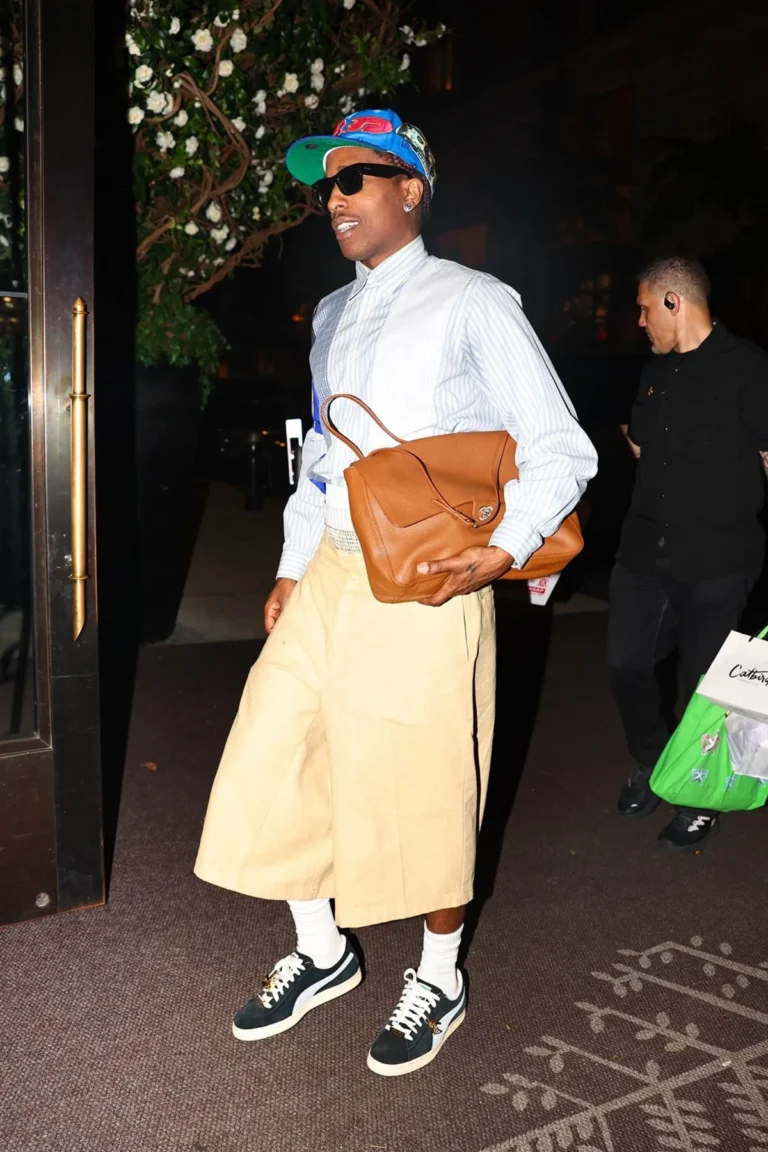
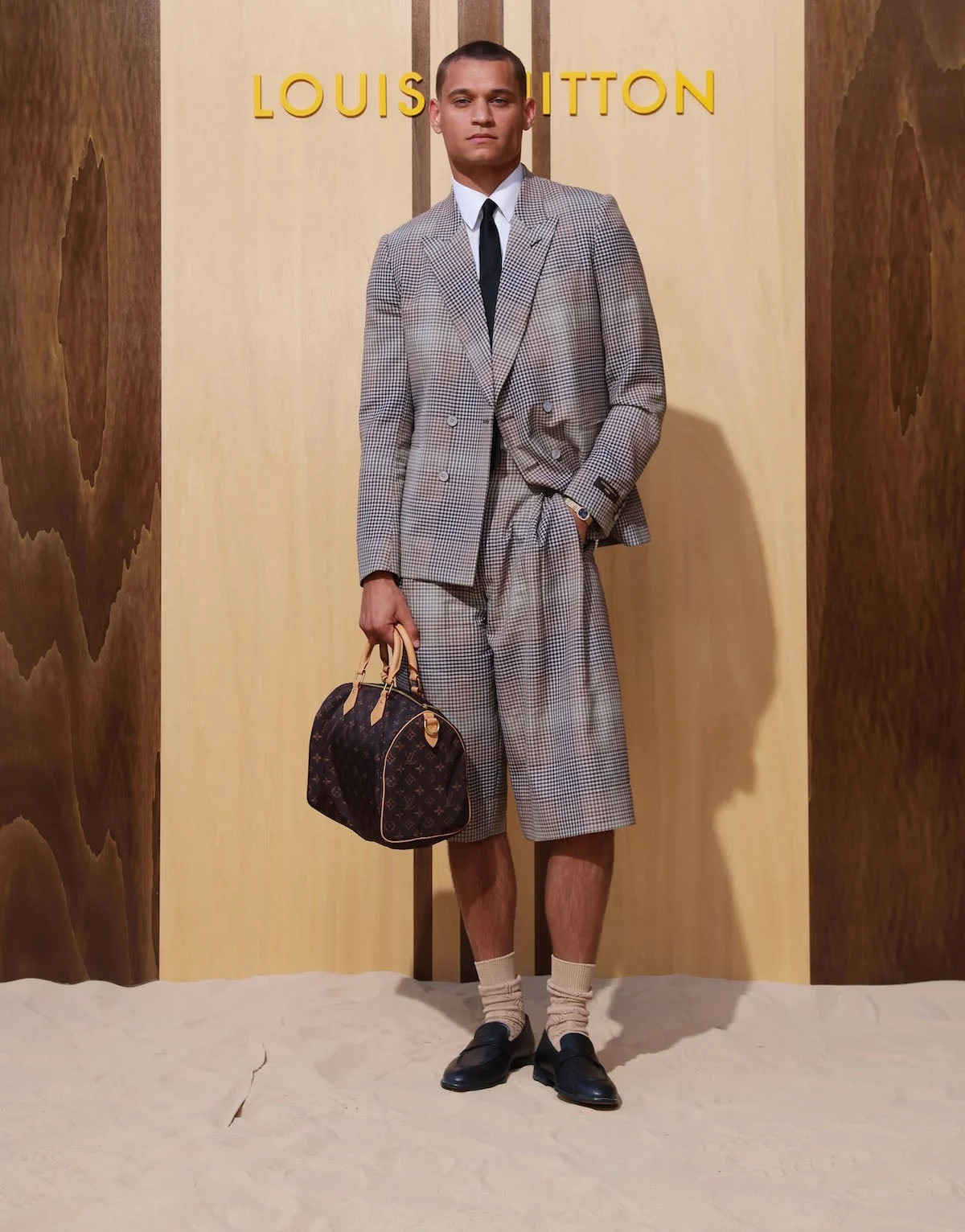
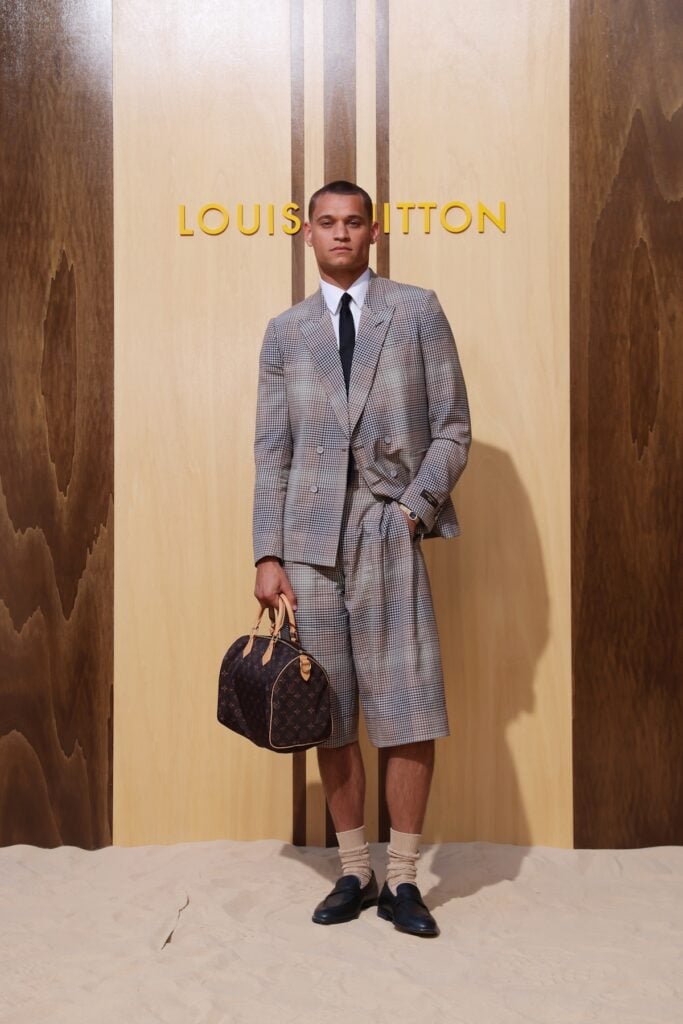
Tyriq Withers emerged as a standout example of practical tailoring. He appeared in a coordinated set featuring tailored shorts, a garment that has become increasingly central to the Louis Vuitton menswear identity under Pharrell Williams. The ensemble utilized a neutral palette, though the choice of beige hosiery sparked discussion among fashion critics regarding the balance of traditional "preppy" aesthetics with modern street style.
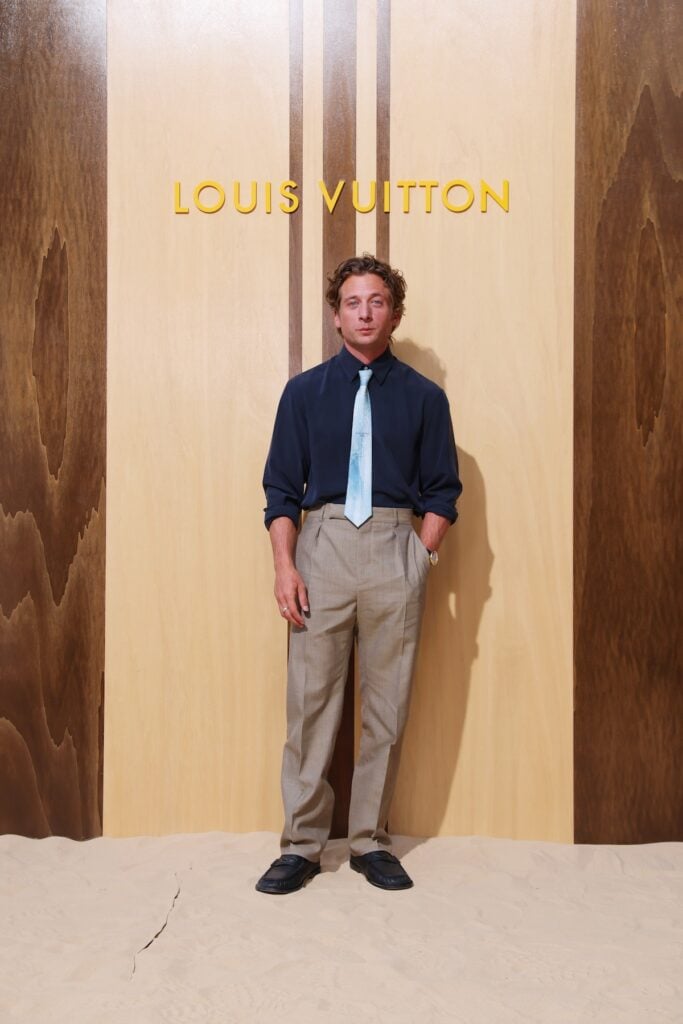
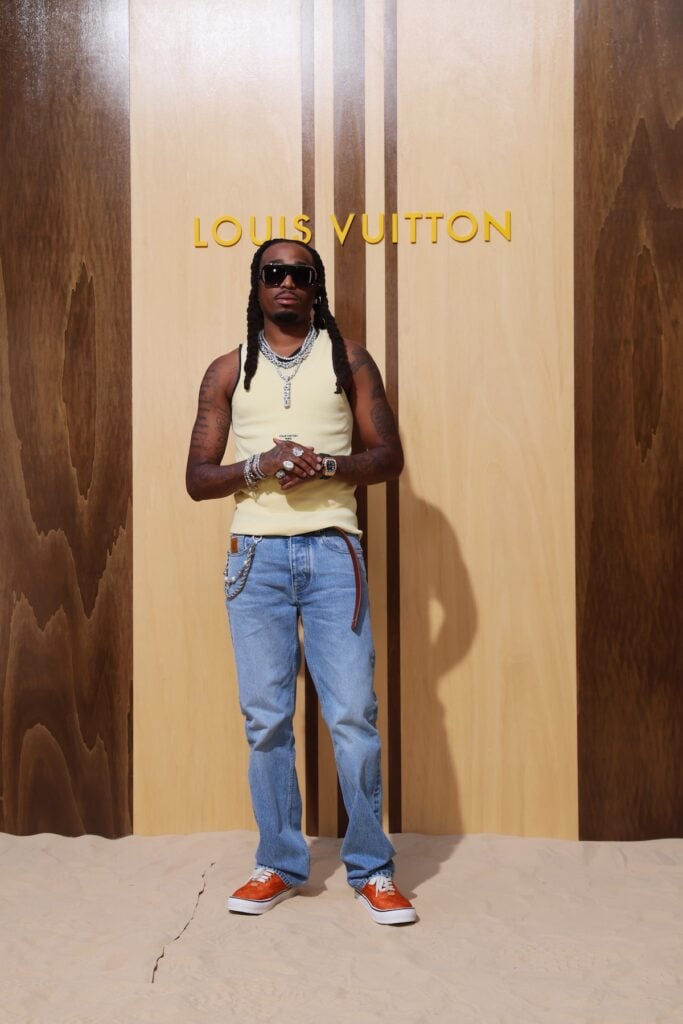
Similarly, Jeremy Allen White and Quavo adopted a "stripped-back" approach. White, known for his association with minimalist luxury, deviated from his typical monochromatic black-and-ivory Louis Vuitton palette in favor of lighter tones. Quavo’s appearance sans blazer or heavy knitwear underscored a shift toward "resort-ready" luxury, emphasizing the brand’s ability to cater to high-temperature environments without sacrificing its signature branding.
The Intersection of Outerwear and Editorial Fashion
In contrast to those who prioritized comfort, several attendees utilized the event to showcase the brand’s more structured and experimental outerwear. This decision highlighted the "editorial" nature of the front row, where the visual impact of a garment often takes precedence over its immediate utility.
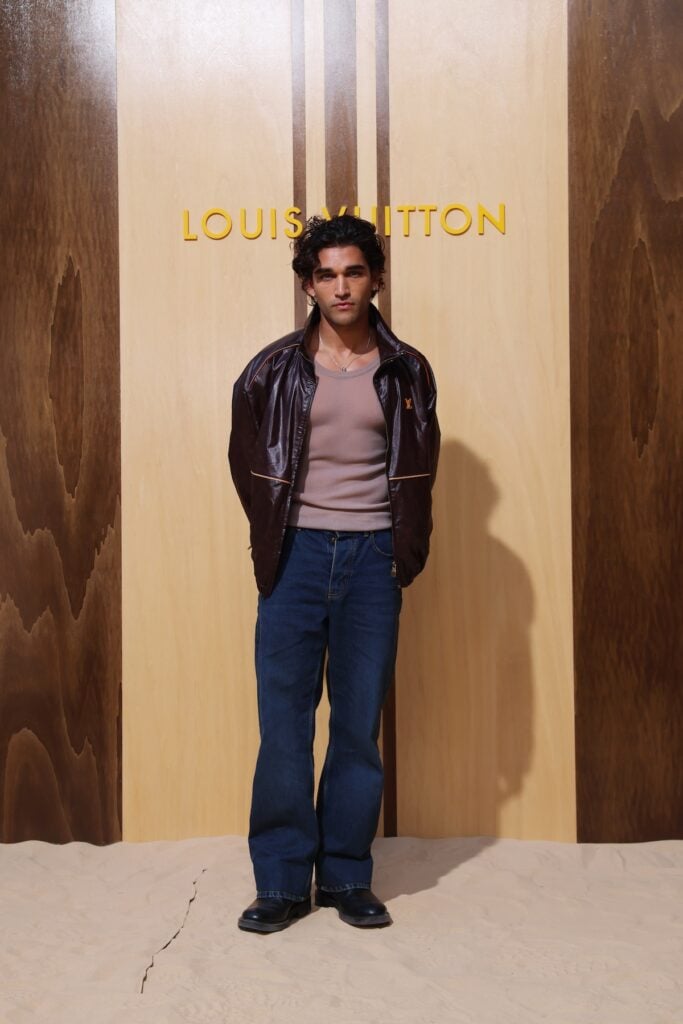
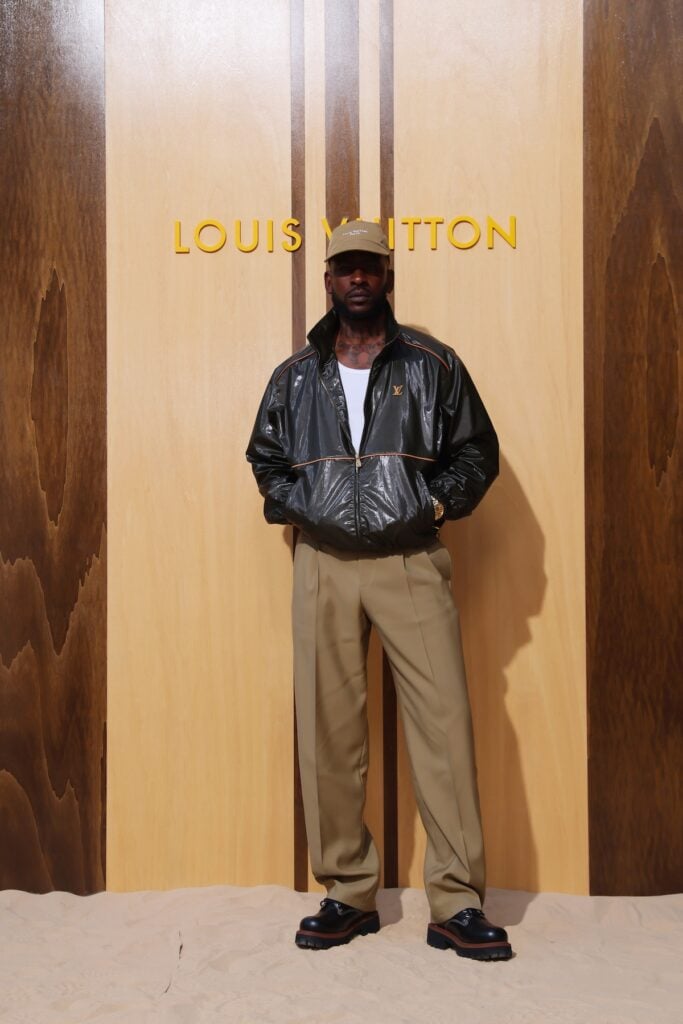
British rapper Skepta and actor Josh Heuston both appeared in coated Louis Vuitton jackets. While these pieces represented the pinnacle of the house’s technical craftsmanship—utilizing treated fabrics and intricate hardware—they were noted by observers as being particularly challenging to wear given the lack of air conditioning. Industry analysts suggest that the presence of such heavy garments in a spring/summer show context serves to remind the market of the brand’s year-round versatility and its dominance in the lucrative leather goods and outerwear categories.
Charles Melton’s ensemble represented a middle ground, featuring a structured jacket paired with lighter elements. However, the combination of disparate pieces led some critics to view the look as a reflection of the "maximalist" trend that has defined recent seasons, where individual high-value items are layered to create a complex, if not always cohesive, silhouette.
Global Ambassadorship and Market Influence
The Spring 2027 show underscored the critical importance of the Asian market to LVMH’s bottom line. The presence of K-pop icons and C-drama stars was not merely a matter of celebrity attendance but a strategic deployment of brand ambassadors with massive digital reach.
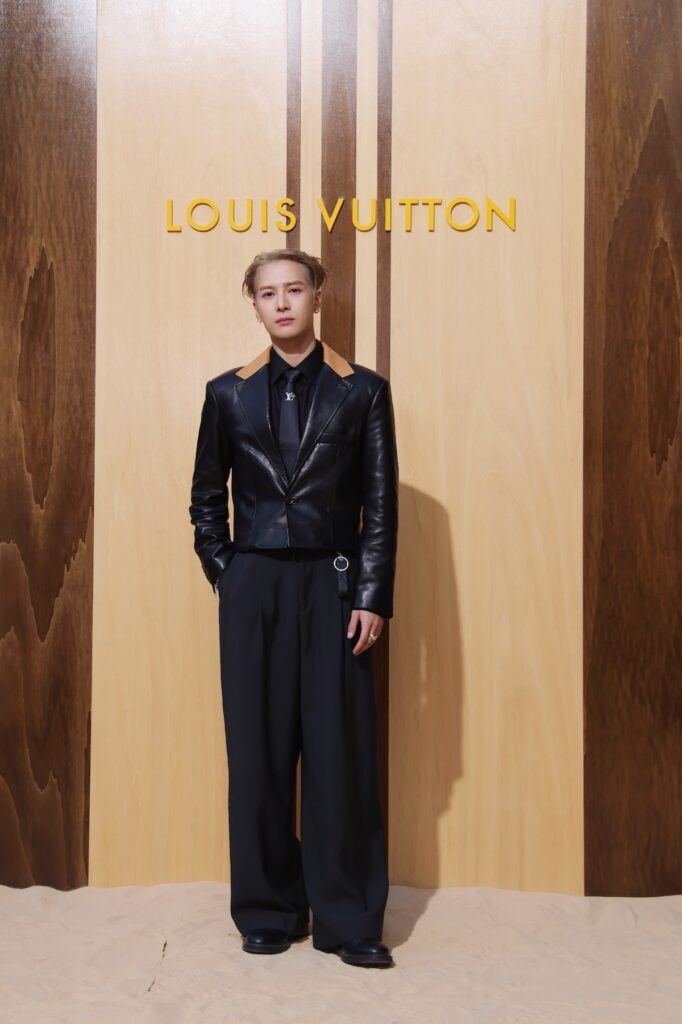
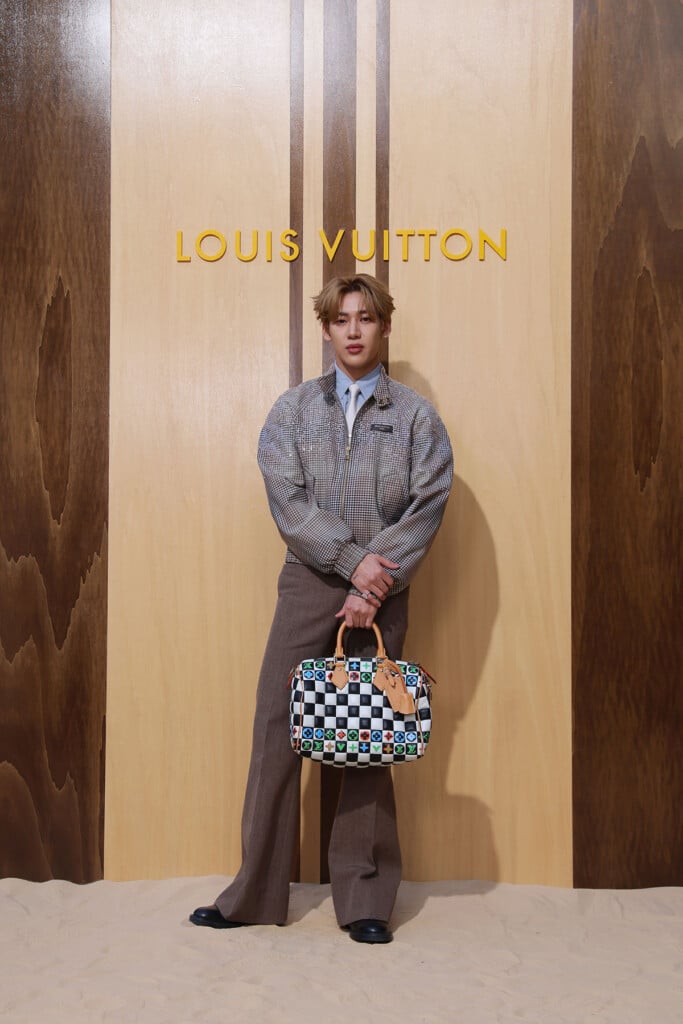
Jackson Wang and BamBam, both influential figures in the global music scene, demonstrated the "new formal" aesthetic. Both incorporated ties into their looks, but styled them in a way that removed the corporate connotations usually associated with the accessory. This "contemporary sharpening" of the silhouette is a key pillar of the current Louis Vuitton menswear strategy, aimed at a younger demographic that values both status and subversion of traditional dress codes.
Gong Jun and J-Hope provided further evidence of the brand’s range in tailoring. Gong Jun’s look was characterized by soft, understated lines, appealing to a classic luxury sensibility. Conversely, J-Hope’s pinstriped suit, accessorized with a snakeskin-print tie, trainers, and a statement bag, exemplified the "high-low" mix that has become a hallmark of the Pharrell Williams era. This approach successfully integrates heritage patterns with high-energy, modern accessories.
Analysis of Proportions and Silhouettes
The final major theme observed in the front row was the continued exploration of volume and proportion. This trend has been a dominant force in menswear for several seasons, moving away from the "slim-fit" era of the 2010s.
Missy Elliott, a long-time pioneer of oversized fashion, appeared in a suit that pushed the boundaries of scale. While the oversized look is a signature of Elliott’s personal brand, it also reflects Louis Vuitton’s commitment to gender-neutral, voluminous tailoring. In contrast, actor Daniel Brühl demonstrated a more restrained version of this trend. His ensemble featured oversized elements but maintained a sense of traditional proportion, suggesting that the "relaxed" look is being refined for a broader, more conservative luxury audience.
Broader Implications for the Luxury Sector
The Louis Vuitton Spring 2027 show serves as a barometer for the health of the luxury sector and the direction of global fashion. According to recent data from Bain & Company, the luxury menswear market is expected to continue its growth, driven largely by "experiential" fashion and the influence of celebrity-led design.
The event at the Cité Internationale Universitaire de Paris confirmed several key industry shifts:
- The Convergence of Entertainment and Fashion: The show was as much a media event as it was a trade presentation, with the front row generating "earned media value" (EMV) that often exceeds traditional advertising reach.
- The De-Formalization of Luxury: The prevalence of shorts, trainers, and tie-less suits among the world’s elite suggests that the definition of "formal" is being permanently rewritten.
- Climate-Conscious Design: While some attendees wore heavy jackets, the overall collection and the reactions to the venue’s heat highlight a growing need for luxury houses to innovate in lightweight, breathable fabrics as global temperatures rise.
Official Responses and Industry Reception
While Louis Vuitton has not issued a formal statement regarding the venue’s temperature, the brand’s social media channels focused heavily on the "unfiltered energy" of the event. Post-show reports from major fashion outlets have praised Williams for his ability to maintain a consistent brand voice while appealing to a fragmented global audience.

Industry analysts note that the Spring 2027 collection successfully balances the "commercial" (wearable basics, logo-driven accessories) with the "aspirational" (heavy outerwear, experimental tailoring). As the luxury market faces economic headwinds in certain regions, Louis Vuitton’s reliance on a star-studded, globally diverse front row remains its most potent tool for maintaining brand heat and cultural relevance.
The show concluded with a final walkthrough by the models, followed by a brief appearance by Pharrell Williams, marking another successful chapter in the brand’s ongoing transformation into a global cultural powerhouse. The attendees, despite the heat, remained for a series of post-show activations, further solidifying the event as a landmark moment in the 2027 fashion calendar.