





The global fashion industry is currently grappling with a profound technological shift as generative artificial intelligence begins to replace human talent in advertising and e-commerce. What began as an experimental novelty has rapidly matured into a commercial strategy, sparking intense debate over authenticity, labor rights, and the future of diversity. This transition reached a flashpoint in the summer of 2025, when a high-profile advertisement in Vogue magazine—the industry’s most prestigious publication—featured a model that appeared human but was entirely synthesized by a computer. The incident has forced a reckoning among photographers, stylists, and models who fear that the "silicon fingers" of AI are poised to dismantle the traditional creative economy.
The Vogue Controversy and the Normalization of Synthetic Beauty
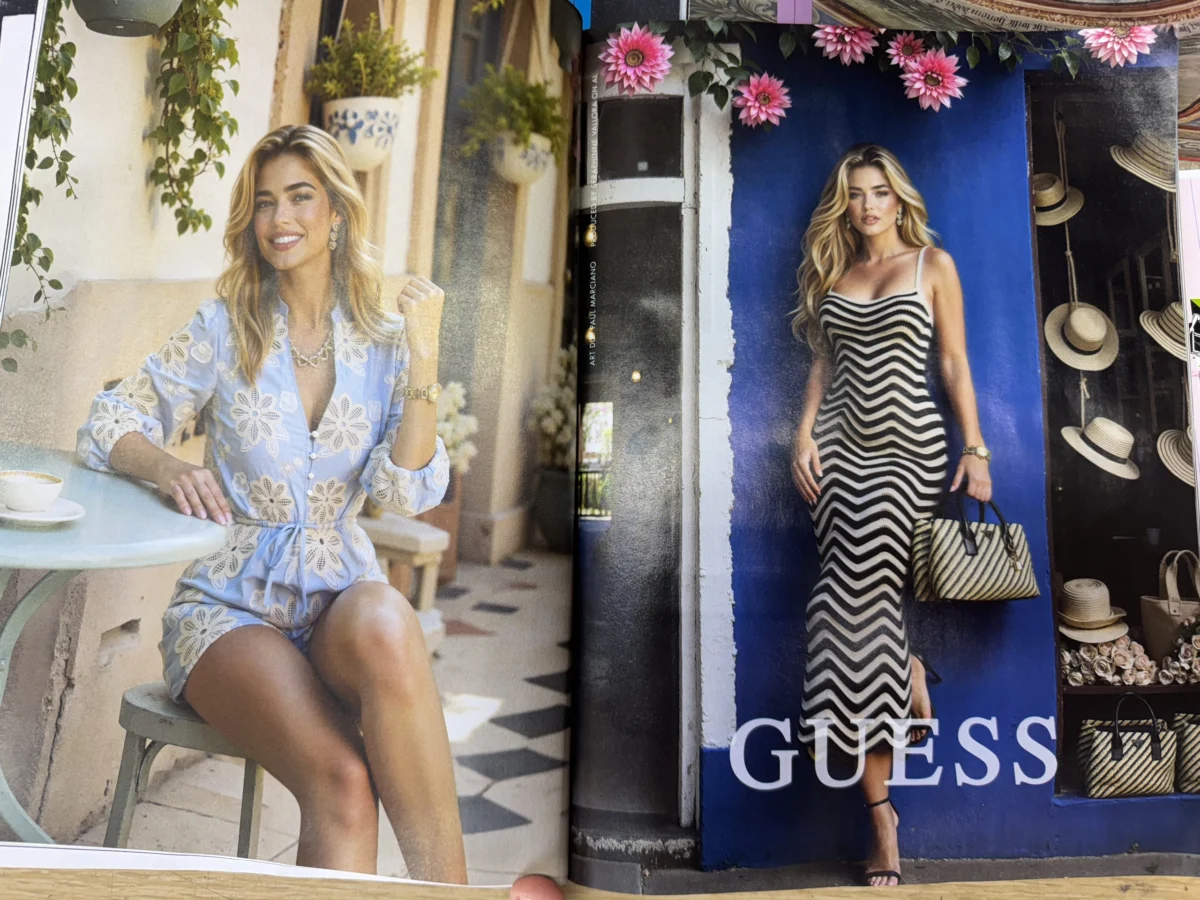
The latest controversy centered on the July print edition of Vogue, which included a full-page advertisement for the brand Guess. The image featured a model embodying the brand’s signature aesthetic: blonde, statuesque, and polished to a high-gloss finish. However, as eagle-eyed readers and digital forensic experts quickly noted, the model was an AI-generated creation by the agency Seraphinne Vallora. While Vogue clarified that the image was a paid advertisement and not part of its editorial content, the distinction mattered little to industry professionals.
For many, the appearance of an AI model in the "fashion bible" signaled a stamp of institutional approval. Fashion historian and biographer Amy Odell noted that Vogue’s gatekeeping role is unparalleled; once the magazine features a personality or a technology, it effectively moves from the fringe to the mainstream. This normalization mirrors previous industry shifts, such as the initial resistance to—and eventual embrace of—reality television stars in high fashion. The concern now is that if synthetic models are deemed "Vogue-standard," the incentive to hire human models for high-budget campaigns will diminish significantly.

A Chronology of Artificial Diversity: From Levi’s to the Present
The current tension is rooted in a series of events that began several years ago. In 2023, the iconic denim brand Levi Strauss & Co. announced a partnership with Lalaland.ai, a digital studio that creates hyper-realistic AI models. Levi’s stated that the move was intended to increase "diversity" by showing their clothing on models of various body types, ages, and skin tones that might not be available during a traditional shoot.
The backlash was immediate. Critics, including New York Magazine, labeled the initiative "artificial diversity," arguing that the brand was using technology to bypass the actual hiring of marginalized human models. Sarah Murray, a professional commercial model, recalled the exhaustion she felt seeing a digital woman of color in a Levi’s denim dress. To Murray and her peers, the message was clear: the industry wanted the appearance of inclusion without the responsibility of providing employment to diverse communities.
Despite the criticism, the trend has only accelerated. Major retailers including H&M, Mango, Calvin Klein, and the French e-commerce giant Veepee have all integrated virtual or AI-enhanced models into their workflows. While early iterations in 2013 utilized static virtual mannequins, the current generation of AI uses sophisticated diffusion models—such as those developed by Black Forest Labs—to create images that are virtually indistinguishable from reality.
The Economic Imperative: Scale and Cost Efficiency
The primary driver behind the adoption of AI modeling is economic. In the traditional fashion photography model, a brand must hire a model, a photographer, a hair and makeup artist, a stylist, and a set designer. They must also rent a studio or travel to a location. A single day of shooting might yield a dozen high-quality images.

In the modern digital landscape, however, the demand for content has skyrocketed. PJ Pereira, co-founder of the AI advertising firm Silverside AI, explains that the marketing industry was built for an era where brands produced four major campaigns per year. Today, social media and e-commerce platforms require anywhere from 400 to 400,000 pieces of content to remain relevant.
AI allows brands to take a "flat-lay" photo of a garment and instantly project it onto a photorealistic virtual model in any setting imaginable—from a Parisian street to a tropical beach. This process costs a fraction of a traditional shoot and can be completed in minutes. For small brands with limited budgets and large retailers managing thousands of SKUs (Stock Keeping Units), the cost-saving potential is irresistible.
The Erosion of the "Bread and Butter" Sector
While "supermodels" on the runways of Milan and Paris may remain safe for now due to their celebrity status, the vast middle class of the modeling world is under direct threat. This sector, known as e-commerce modeling, involves posing for the catalogs and websites of everyday retailers.
Sinead Bovell, a model and founder of the WAYE organization, describes e-commerce as the "bread and butter" of the profession. While it lacks the prestige of a Vogue cover, it provides the financial security that allows models to maintain their careers. As brands automate these roles, the path to a sustainable career in fashion is narrowing. Bovell has warned of "robot cultural appropriation," where brands generate diverse digital identities to tell a story without actually supporting the people those identities represent.

The threat extends beyond models. If a shoot is entirely digital, there is no need for a lighting technician, a caterer, or a wardrobe assistant. The entire ecosystem of creative labor that supports the fashion industry is being squeezed by the efficiency of generative algorithms.
Legal Frontiers and the Fashion Workers Act
The rapid rise of AI has outpaced existing labor laws, leaving models vulnerable to exploitation. Many models have reported seeing new clauses in their contracts that grant brands the right to use their "digital likeness" or "biometric data" to train AI systems. Without strict regulation, a model could be paid for a single day of work, only to have their digital twin used in hundreds of future campaigns without additional compensation.
In response, advocacy groups like the Model Alliance, led by founder Sara Ziff, are pushing for legislative protections. The Fashion Workers Act, currently under consideration in the New York State Legislature, aims to close these loopholes. The bill would require management agencies and brands to obtain clear, written consent before creating or using a model’s digital replica. It also seeks to ensure that models are fairly compensated for the use of their likeness in the digital realm.
Some technologists, like Paul Mouginot, argue that digital replicas could actually benefit high-demand models by allowing them to "appear" at multiple shoots simultaneously. However, even Mouginot admits that while a few top-tier models might gain a new revenue stream, the majority of the workforce will see their opportunities vanish as human labor is replaced by synthetic avatars.

The "AI Artisan" and the Search for Imperfection
Despite the surge in AI usage, there remains a significant hurdle for technology: the "uncanny valley." Many AI-generated models appear too perfect—their skin is too smooth, their features too symmetrical, and their expressions too static. In fashion, beauty is often found in imperfection—a gap in the teeth, a unique gaze, or a specific "attitude" that a computer cannot yet replicate.
Sandrine Decorde, CEO of the creative studio Artcare, refers to her team as "AI artisans." They focus on fine-tuning datasets to ensure that AI models have a touch of human-like "imperfection." Interestingly, Decorde has found a niche in creating AI-generated children and babies. Given the strict labor laws and ethical complexities surrounding the employment of minors in fashion, many brands are turning to AI as a way to market children’s clothing without the logistical and ethical challenges of a live shoot with toddlers.
Industry Outlook: A Multi-Tiered Future
As the industry moves forward, experts predict a fractured landscape. Luxury heritage brands, which rely on the "sensual reality" of their products and deep human connections, are expected to be the slowest to adopt fully synthetic models. For these brands, the "human touch" is a core part of their value proposition.
Conversely, fast fashion and mass-market retailers are likely to move toward a near-total automation of their digital storefronts. The data suggests that while social media users often leave negative comments on AI-generated ads, the actual engagement and conversion rates remain high. PJ Pereira noted that in one test, an AI-generated video saw 30 times more click-throughs than complaints, leading to a significant spike in sales.

For human models, the advice from veterans like Bovell is to lean into their "humanity." This involves building personal brands, engaging in storytelling, and diversifying into fields like podcasting or brand endorsements where a unique human perspective is required.
The Vogue Guess ad may have been a singular moment of controversy, but it represents a permanent shift in the fashion landscape. The industry is no longer just about fabric and form; it is now a battleground for the definition of identity in the age of the algorithm. Whether the "fashion bible" continues to endorse this digital evolution will likely determine if the future of the runway is made of flesh and bone or zeros and ones.