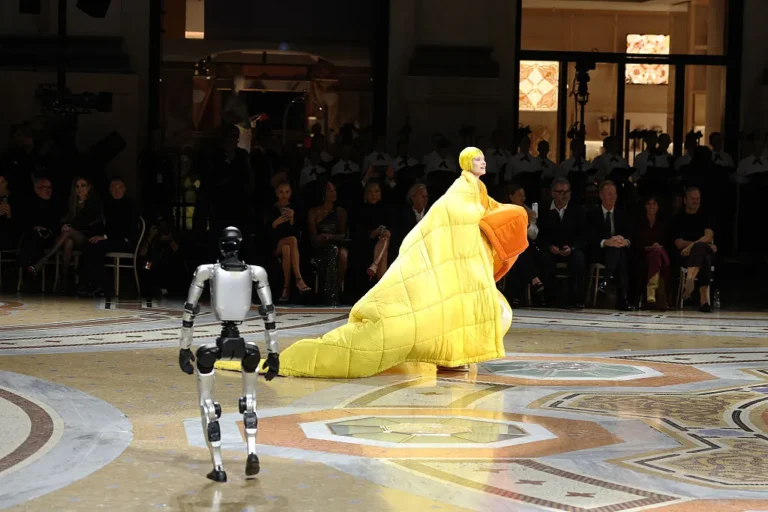










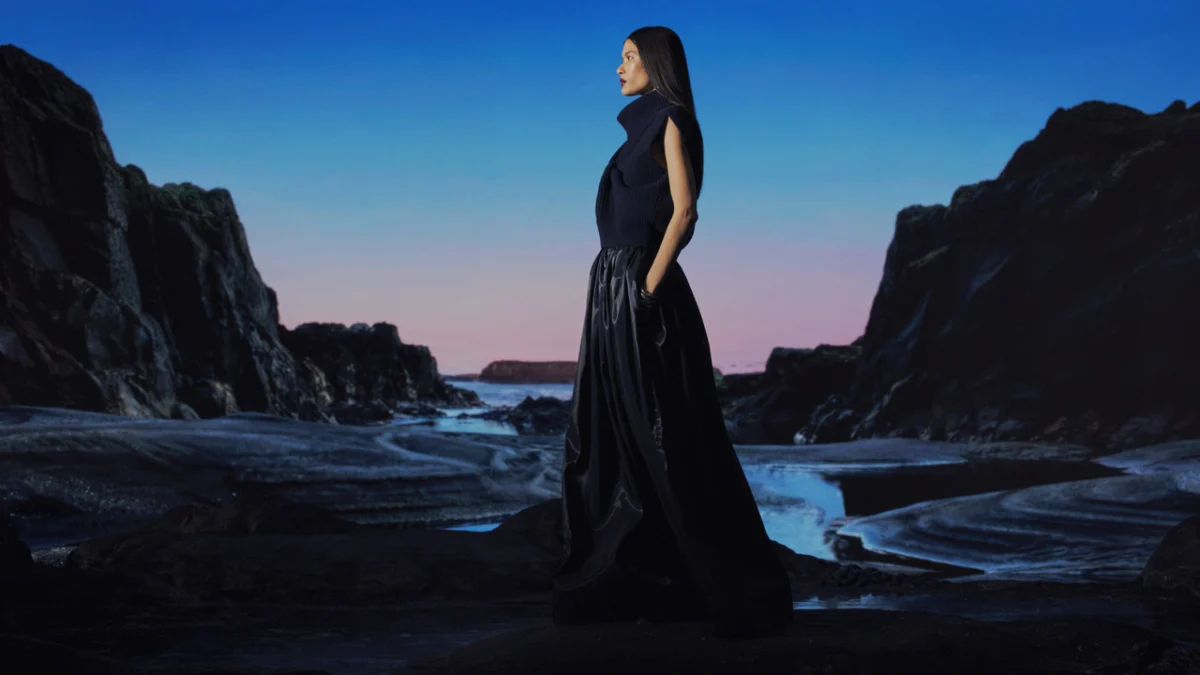
The intersection of high fashion and frontier technology reached a new milestone this Saturday at New York Fashion Week (NYFW) as designer Kate Barton unveiled her latest collection. Moving beyond the traditional runway format, Barton introduced a sophisticated technological layer to her presentation through a strategic partnership with Fiducia AI and IBM. The collaboration resulted in the deployment of a multilingual artificial intelligence agent, engineered on the IBM watsonx platform and hosted on IBM Cloud, designed to serve as a digital bridge between the physical garments and the audience’s interactive experience. This activation allows guests to identify specific pieces from the collection in real-time, engage in multilingual inquiries, and participate in photorealistic virtual try-ons, signaling a shift in how luxury brands approach consumer engagement in a post-digital era.
The Convergence of Sculptural Design and Generative Intelligence
Kate Barton has established a reputation within the fashion industry for her sculptural approach to eveningwear, often utilizing unconventional materials and geometric silhouettes that challenge the boundaries of wearable art. For her latest presentation, Barton sought to extend this experimentation into the digital realm. The designer articulated a vision where technology serves as a "portal" into the collection’s creative universe rather than a mere novelty. According to Barton, the objective was to utilize AI as a tool for expanding the narrative surrounding the clothing, creating a sense of curiosity and a "double take" moment for the observer.
The integration of AI into the NYFW showcase was not a superficial addition but a production-grade activation. Ganesh Harinath, the founder and CEO of Fiducia AI, spearheaded the technical implementation. The system utilizes a visual AI lens built with IBM watsonx, which is capable of detecting and identifying specific textile patterns, cuts, and silhouettes from Barton’s new collection. Beyond simple identification, the AI agent is equipped with natural language processing (NLP) capabilities, allowing it to respond to guest inquiries via voice or text in multiple languages. This functionality addresses the global nature of New York Fashion Week, where international buyers, editors, and influencers often face language barriers during high-pressure presentations.
Technical Architecture: Orchestration over Optimization
The backend of this fashion-tech integration relies on a robust stack of enterprise-grade tools. Harinath noted that the primary challenge in developing the Barton AI agent was not the refinement of individual models, but the complex orchestration of various AI components. By leveraging IBM watsonx, IBM Cloud, and IBM Cloud Object Storage, the team was able to manage the high computational demands of photorealistic virtual reality (VR) try-ons.
Virtual try-on technology has historically struggled with "uncanny valley" effects or poor fabric physics. However, by utilizing IBM’s cloud infrastructure, the Fiducia AI team could process the heavy graphical data required to simulate how Barton’s specific fabrics—often stiff, metallic, or uniquely textured—would drape on a digital avatar. This level of "visual intelligence" represents a significant step forward from the standard chatbots currently utilized by many retail brands.
The use of IBM watsonx is particularly noteworthy. As an enterprise-ready data and AI platform, watsonx provides the governance and scale necessary for a high-stakes environment like NYFW. For Barton, the choice of a professional-grade platform was essential to avoid the "reputational risk" she associates with less sophisticated, "black box" AI applications. The designer emphasized that the goal was "invention rather than avoidance," ensuring that the technology enhanced the human craft rather than obscuring it.
A Chronological Shift: From Digital Skepticism to AI Inevitability
The fashion industry’s relationship with technology has followed a predictable, albeit slow, trajectory. Barton’s current project is part of a broader chronology of experimentation. Last season, the designer collaborated with Fiducia AI to experiment with AI-generated models, a move that sparked discourse regarding the future of human talent in the industry. This year’s shift toward an interactive, consumer-facing AI agent suggests an evolution from experimental aesthetics to functional utility.
Barton draws a historical parallel between the current AI boom and the early days of the internet. In the late 1990s and early 2000s, many luxury houses were hesitant to establish a web presence, fearing that the accessibility of the internet would dilute the exclusivity of their brands. Eventually, the conversation shifted from "should we be online" to "is our online presence any good?" Barton suggests that AI is currently at a similar inflection point. While many brands are currently using AI "quietly" for back-end operations—such as supply chain optimization and inventory management—few have been willing to make it a centerpiece of their public-facing brand identity.
Industry analysts suggest that by 2028, AI integration in fashion presentations will be normalized. By 2030, experts like Harinath predict that AI will be deeply embedded into the operational core of the retail sector. The differentiator for brands moving forward will not be the possession of the technology itself—as much of it is already available—but the ability to assemble the right partners and build teams capable of operationalizing AI in a responsible and creative manner.

Market Analysis and Strategic Implications
The implications of Barton’s AI-driven presentation extend beyond the runway. In a competitive luxury market, the ability to connect product intelligence with real-time engagement offers a measurable competitive advantage. Dee Waddell, Global Head of Consumer, Travel and Transportation Industries at IBM Consulting, highlighted that when inspiration and engagement are linked through AI, the technology moves from being a static feature to a "growth engine."
From a retail perspective, the data gathered by such AI agents could be invaluable. A multilingual AI agent that tracks which pieces are most frequently "tried on" virtually or which garments prompt the most questions provides designers with real-time market research. This data can inform "smarter production decisions," allowing brands to align their manufacturing more closely with actual consumer interest, thereby reducing waste—a perennial issue in the fashion industry.
Furthermore, the virtual try-on component addresses a major pain point in the luxury e-commerce sector: the high rate of returns. By providing a photorealistic preview of how a garment fits and moves, brands can increase consumer confidence and decrease the logistical costs associated with returned goods. For a designer like Barton, whose clothes are often architecturally complex, the ability for a consumer to visualize the "fit" before a physical fitting is a significant technological leap.
Ethics, Craft, and the Human Element
Despite her embrace of high-tech tools, Kate Barton remains vocal about the necessity of maintaining the human element in fashion. The discourse surrounding AI often centers on the fear of displacement—specifically the replacement of designers, models, and craftspeople with automated systems. Barton’s stance is one of "augmented creativity" rather than "automated fashion."
"If the technology is used to erase people, I am not into it," Barton stated during her interview with TechCrunch. She argued that audiences are sophisticated enough to distinguish between genuine technological invention and the use of AI to cut costs or avoid human labor. For Barton, the most exciting future for the industry involves using new tools to heighten craft and deepen storytelling.
This philosophy aligns with a growing movement within the tech and creative sectors that advocates for "clear discourse, clear licensing, and clear credit." As AI models are trained on vast datasets of existing imagery, the question of intellectual property and the "flattening" of human creativity remains a point of tension. Barton’s approach emphasizes that human creativity should not be viewed as an "annoying overhead cost" but as the essential ingredient that makes fashion "worth wearing."
Conclusion: The New Standard for Fashion Presentations
The Kate Barton NYFW presentation serves as a case study for the responsible and innovative use of generative AI in a creative industry. By partnering with established technology leaders like IBM and Fiducia AI, Barton has demonstrated that AI can be more than a gimmick; it can be a functional, immersive, and sophisticated extension of a brand’s world.
As the fashion world looks toward 2025 and beyond, the success of this activation likely signals a shift in the industry’s standard operating procedures. The transition from "quiet" operational AI to "loud" experiential AI marks a new era where the digital and physical realms are no longer separate entities but are woven together to enhance the consumer’s journey. While the tension between automation and artisan craft persists, Barton’s "portal" suggests a path forward where technology serves to bring more people into the experience without diminishing the human hands that create it.
The Saturday unveiling was not just a display of new garments, but a demonstration of a new retail infrastructure—one that is multilingual, data-driven, and deeply interactive. As other brands observe the fallout and success of such high-profile integrations, the question for the next season of New York Fashion Week will likely not be whether to use AI, but how to use it to tell a better story.