









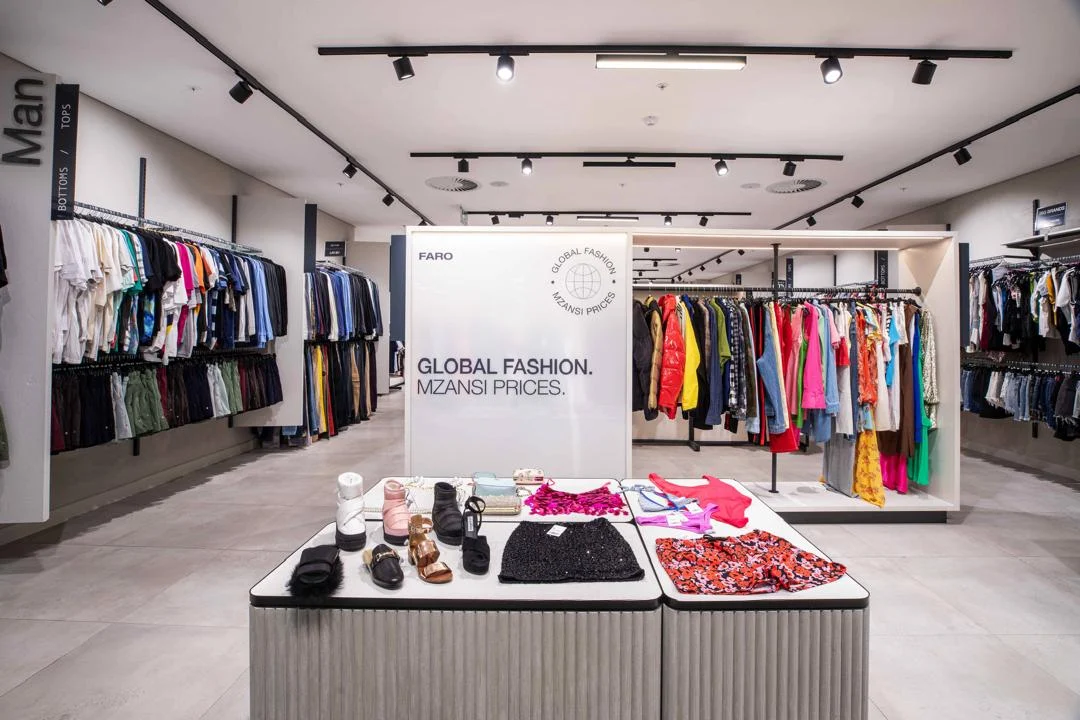
The global fashion industry is currently grappling with a logistical and ethical crisis of unprecedented scale, as billions of dollars in unsold inventory pile up in warehouses across the United Kingdom, Europe, and North America. In a strategic move to address this surplus while tapping into the burgeoning "recommerce" sector, South African startup FARO has announced a $6 million seed funding round led by JP Zammitt, president of Bloomberg. The investment marks a significant vote of confidence in a business model that seeks to bridge the gap between the excess of the Global North and the high demand for quality, affordable apparel in emerging markets.
FARO’s entrance into the market comes at a pivotal moment. According to industry projections, the global resale market is expected to reach approximately $350 billion by 2027. However, the current flow of clothing from developed nations to the African continent is fraught with inefficiency and environmental degradation. While emerging markets rely heavily on secondhand imports, data suggests that between 30% and 40% of these items are unusable upon arrival, often ending up in landfills or polluting water bodies in countries like Ghana and Kenya. FARO aims to disrupt this cycle by sourcing high-quality overstock and "B-grade" returns directly from global brands, reconditioning them, and selling them through a structured, high-value retail environment.
The Paradox of Surplus and Scarcity in Global Fashion
The fashion industry’s inventory problem is a byproduct of fast-fashion cycles and the rising rate of e-commerce returns. Major retailers like ASOS, Zara, and H&M frequently find themselves with massive volumes of stock that cannot be sold at full price. To protect their brand equity and prevent "market cannibalization"—a phenomenon where discounted goods in a core market reduce the demand for full-priced items—these brands often avoid local liquidations. In extreme cases, brands have been known to incinerate unsold goods to maintain exclusivity, a practice that has drawn sharp criticism from environmental advocates.
Simultaneously, consumers in African markets possess a strong desire for authentic, branded products from labels such as Calvin Klein, Tommy Hilfiger, and Levi’s. However, the economic reality in many of these regions does not support the price points of traditional flagship retail stores. This creates a market void that has historically been filled by the informal secondhand clothing trade. FARO’s model identifies an arbitrage opportunity within this paradox: by acquiring brand-authorized overstock and returns, the company can offer authentic goods at a fraction of their original retail price while ensuring the items are in wearable condition.
Operational Strategy: Reconditioning and Fixed-Margin Retail
FARO’s business model is built on a sophisticated supply chain that transforms rejected inventory into retail-ready products. The startup specifically targets consumer returns that may have minor defects—such as a missing button or a slight smudge—which brands typically find too expensive to process in high-labor-cost markets. FARO acquires these items at ultra-low prices, sometimes as low as £1 (approximately $1.25) per piece.
Once the inventory reaches South Africa, it undergoes a rigorous reconditioning process at FARO’s specialized facilities. These centers are equipped with industrial-grade laundries and steam tunnels. By leveraging more affordable labor markets in South Africa, FARO can economically repair and clean these garments, adding significant value before they reach the sales floor.
David Torr, co-founder and co-CEO of FARO, explains that the company operates on a transparent, fixed-margin model. The startup targets a 45% margin after all processing, logistics, and labeling costs are accounted for. In instances where margins exceed this target due to lower acquisition costs, Torr notes that the surplus is reinvested into lowering prices for the consumer rather than inflating corporate profits. This "customer-centric" approach is designed to build long-term brand loyalty in a price-sensitive market.
Chronology of Growth and the Road to 1,000 Stores
FARO’s trajectory from a pilot project to a venture-backed scale-up has been remarkably swift. The company’s timeline reflects a high demand for its specific retail proposition:
- Early 2023: FARO launched an experimental pop-up store in South Africa to test the viability of selling reconditioned global brands. The store generated $100,000 in revenue in its first month, far exceeding internal projections.
- Mid-2023: Based on traditional retail benchmarks, the founding team estimated that seven stores would be required to reach an annual revenue run rate of $2 million.
- Late 2023: FARO achieved $2.3 million in revenue with only four physical locations, representing 20x year-on-year growth.
- Early 2024: The company secured $6 million in funding to fuel its expansion across South Africa and eventually into other emerging markets.
- The Decade Outlook: FARO has set an ambitious goal of opening 1,000 stores over the next ten years, targeting urban hubs not only in Africa but also in South America, Asia, and the Middle East.
Currently, FARO’s inventory is a mix of 40% reconditioned returns and 60% brand overstock. The company has established partnerships with several major global players, including ASOS, Boohoo, G-Star, Jack & Jones, and Levi’s. These partnerships allow FARO to offer discounts of up to 70% off the original retail price, making high-status brands accessible to a broader demographic.
Technological Innovation: Moving Beyond the Excel Era
One of the most significant hurdles in the off-price retail sector is the complexity of inventory management. Unlike traditional retail, where a buyer might order 10,000 units of a single SKU, off-price retail involves "one-of-a-kind" manifests. A single shipment might contain thousands of unique items, each with different sizes, colors, and conditions.
Historically, even massive global retailers like TJX (the parent company of T.J. Maxx and Marshalls) have relied on labor-intensive manual processes, with planners managing massive spreadsheets in Excel. Torr points out that some global brands employ thousands of people at the head-office level simply to manipulate this data.
To solve this, FARO is developing proprietary AI-powered agents. These tools are designed to automate complex buyer workflows, breaking down massive manifests into manageable micro-tasks. According to Torr, these AI models can process data in seconds that would take a human team hours or days, with a significantly higher degree of accuracy. This technological edge is expected to be a primary driver of FARO’s ability to scale across multiple continents and diverse inventory types.
The South African Context and the Threat of Ultra-Fast Fashion
South Africa serves as a unique proving ground for FARO. Unlike many other African nations, South Africa possesses a highly developed formal retail infrastructure, boasting over 2,000 shopping centers. This makes it an ideal environment for physical off-price retail. FARO’s decision to remain primarily offline is a strategic one; the cost of digitizing and photographing unique, single-item returns for e-commerce often exceeds the potential profit margin.
However, the landscape is becoming increasingly competitive. The rise of Chinese ultra-fast-fashion giants like Shein and Temu has disrupted the South African market. These platforms offer extremely low prices and have successfully navigated the logistical hurdles that previously stymied e-commerce in the region.
FARO’s counter-strategy focuses on the "aspirational" value of established global brands. While Shein and Temu provide trendy, unbranded, or lesser-known label goods, FARO provides the prestige of recognized names like Tommy Hilfiger at a similar price point. Furthermore, by operating physical stores in urban and mid-market centers, FARO provides an immediate, tactile shopping experience that e-commerce cannot replicate, while avoiding the "last-mile" delivery costs that plague African e-commerce giants like Jumia and Takealot.
Broader Implications for the Circular Economy
The success of FARO could signal a shift in how global brands view their waste streams. By providing a structured, brand-safe channel for excess inventory, FARO offers a more sustainable alternative to incineration or the unregulated secondhand market.
From an environmental standpoint, the "recommerce" model extends the lifecycle of garments, reducing the need for new textile production—an industry responsible for roughly 10% of global carbon emissions. If FARO succeeds in scaling to 1,000 stores, it will not only be a retail powerhouse but also a critical component of the global circular economy, diverting millions of tons of textiles from landfills.
The $6 million investment, supported by a diverse group of VCs including Presight Capital, Gharage Ventures, and E4E Africa, as well as individual tech veterans from Flink, Cars24, and Razor Group, suggests that the financial community sees FARO as more than just a local retail play. It is a data-driven solution to a global supply chain failure. As the company eyes expansion into Kenya, Nigeria, and beyond, its ability to localize its pricing profiles and adapt to regional consumer preferences will be the ultimate test of its "customer-centric" vision. For now, FARO stands as a rare example of a startup turning a global environmental liability into a scalable economic asset.