






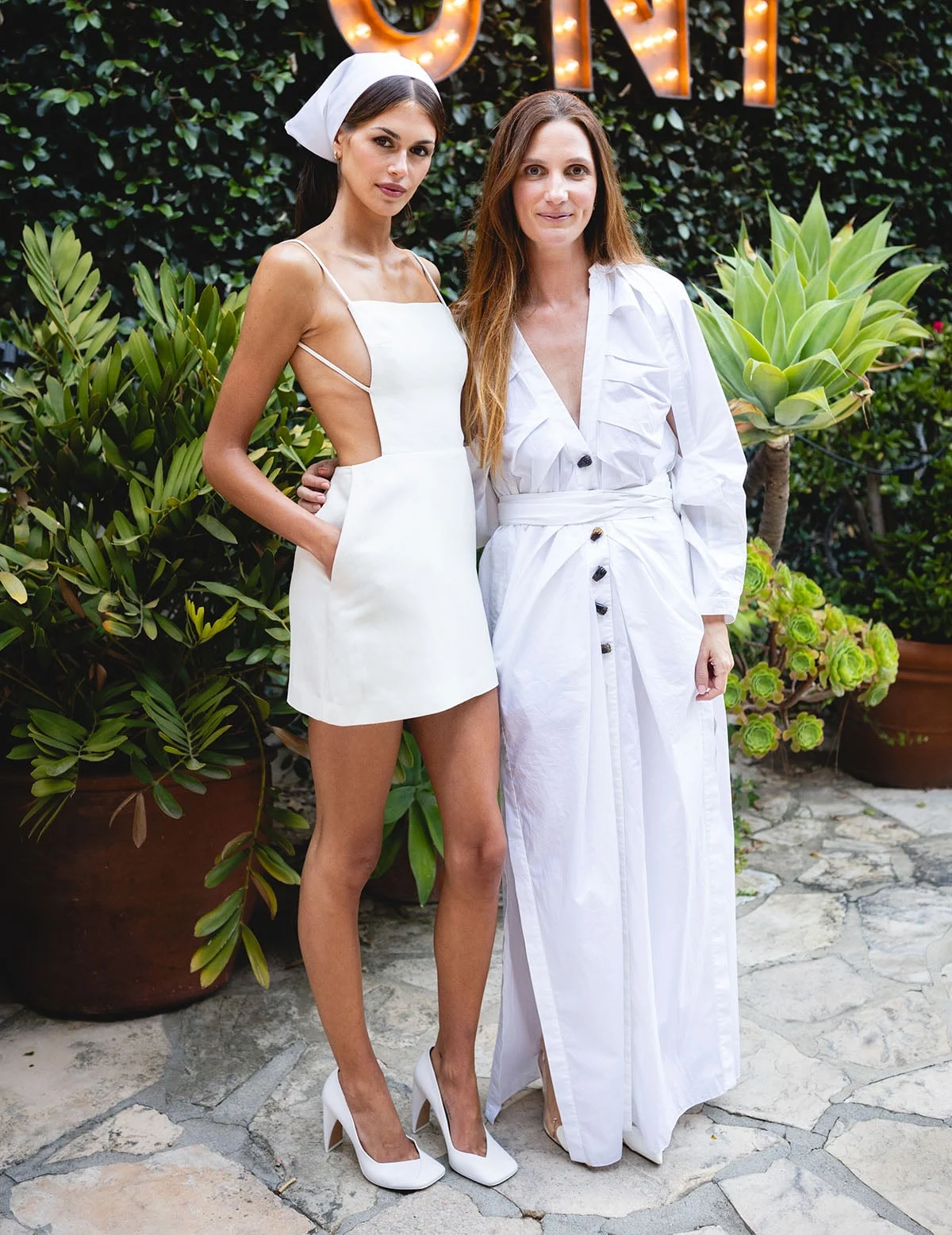
Kaia Gerber, the internationally recognized model and actress, co-hosted the high-profile Summer Uni Party in Los Angeles on Thursday, appearing alongside Alexandra Keating, the founder of the sustainable body care brand We Are Uni. The event, which served as a convergence of the fashion and beauty industries, showcased Gerber in a standout ensemble from the Calvin Klein Collection’s Spring 2026 line. The appearance has drawn significant attention from fashion analysts and industry observers, not only for its aesthetic precision but also for its strategic alignment with current minimalist trends dominating the mid-2020s luxury market. Gerber’s choice of attire—the Henrietta backless mini dress—marks a pivotal moment for the Calvin Klein brand as it continues to re-establish its footprint in the high-fashion "Collection" space under its current creative trajectory.
Event Context and the Intersection of Beauty and Sustainability
The Summer Uni Party was organized to celebrate the growth of We Are Uni, a brand that has gained significant traction for its commitment to closed-loop, refillable body care products. Alexandra Keating, a prominent figure in the tech and beauty sectors, has frequently utilized high-profile social gatherings to bridge the gap between environmental consciousness and luxury lifestyle. By co-hosting with Kaia Gerber, a figure synonymous with Gen Z and Millennial style leadership, the event successfully positioned sustainable consumption as a core component of the modern "it-girl" lifestyle.
The setting, a private garden estate in Los Angeles, provided a curated backdrop that complemented the "effortless ease" of the seasonal transition. Industry experts note that these types of boutique events are increasingly replacing traditional large-scale product launches, favoring intimate networking among influencers, designers, and entrepreneurs. The guest list included a mix of entertainment figures and sustainability advocates, reflecting a broader shift in the Los Angeles social circuit toward purpose-driven gatherings.
Detailed Analysis of the Henrietta Ensemble
The centerpiece of the evening’s fashion discourse was Gerber’s Calvin Klein Collection Spring 2026 Henrietta backless mini dress. The garment is characterized by its clean, architectural silhouette, which pays homage to the 1990s minimalism that originally defined the house of Calvin Klein. The dress features an ivory hue, a structured yet fluid mini-length hemline, and an open back secured by "barely-there" spaghetti straps. The technical construction of the dress emphasizes a departure from the maximalist trends of previous seasons, opting instead for a focus on textile quality and precise tailoring.
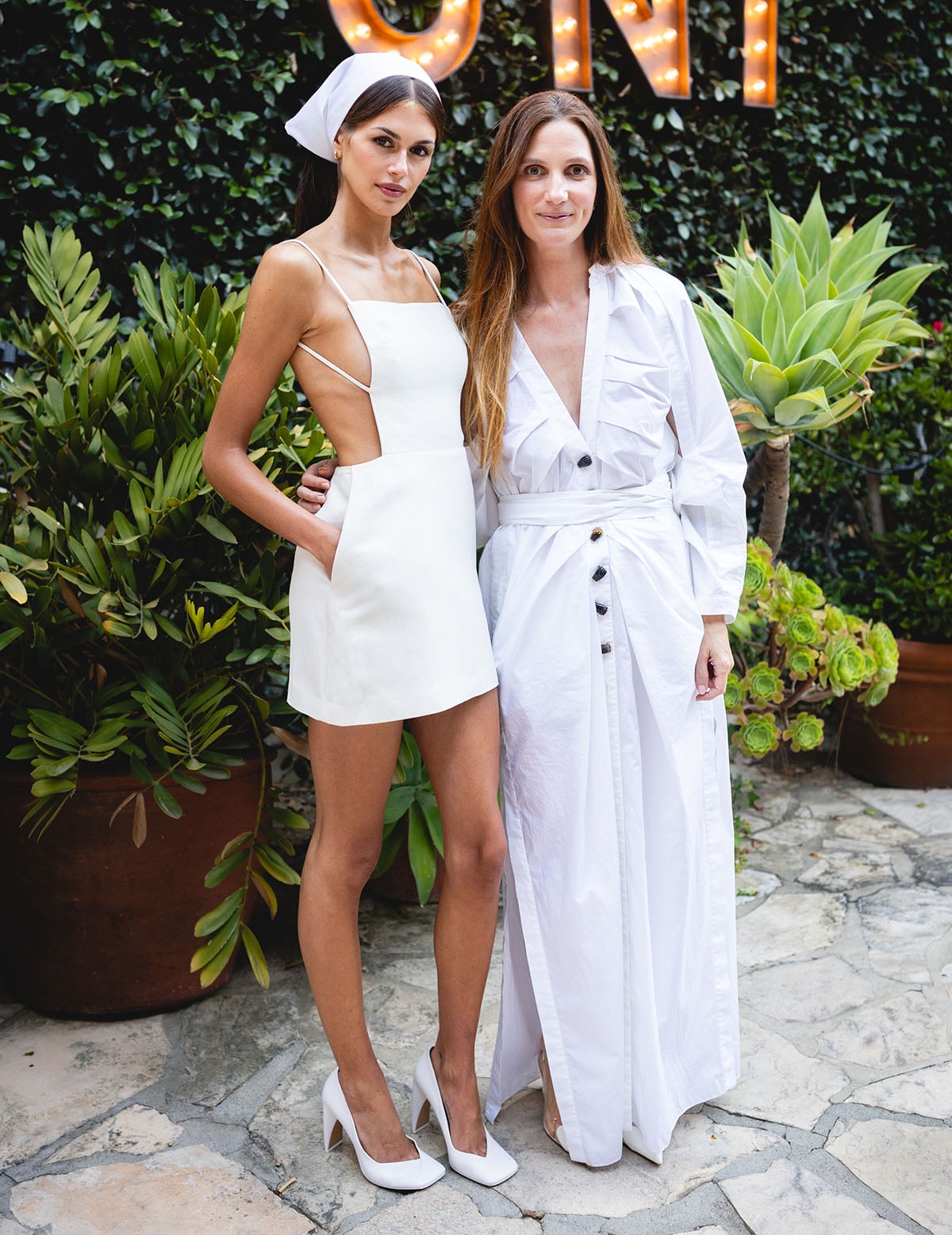
A defining element of the look was the inclusion of a matching headscarf, a styling choice that has seen a resurgence on global runways. In the context of the Spring 2026 collection, the headscarf serves as a cohesive extension of the dress, transforming a standard minimalist piece into a directional fashion statement. While the dress itself provides a versatile base, the accessory adds a layer of vintage-inspired sophistication, reminiscent of mid-century resort wear but updated with contemporary fabrication.
To ground the look, Gerber opted for chunky white pumps rather than the minimalist sandals or mules she is typically known for. This footwear choice provided a visual weight that balanced the light, airy nature of the dress and headscarf. Fashion critics have noted that this specific combination prevented the outfit from appearing overly casual, ensuring it remained appropriate for a co-hosting role at a high-end corporate social event.
Comparative Stylistic Trajectory
The appearance of the Henrietta dress at the Summer Uni Party follows a series of high-profile outings for the Calvin Klein Spring 2026 collection. Notably, actress Renate Reinsve previously wore a full-length version of the same design to the 2026 European Film Awards. However, the reception of Reinsve’s look was mixed; some analysts argued that the relaxed, architectural nature of the design was slightly mismatched with the rigid formality of a European awards ceremony.
In contrast, Gerber’s adaptation of the mini-dress version is being cited as a more successful application of the garment’s intent. The Los Angeles garden party setting allowed the "effortless ease" of the Calvin Klein aesthetic to resonate more naturally. Furthermore, Gerber’s retention of the runway-styled headscarf drew comparisons to Hunter Schafer’s widely discussed Prada headscarf moment at the 2024 Cannes Film Festival. These comparisons highlight a growing trend among stylists to use headwear as a tool for creating a "distinct point of view" within minimalist frameworks.
Economic and Brand Implications for Calvin Klein
The visibility of the Spring 2026 collection on a figure like Gerber is a strategic win for Calvin Klein. Since the brand began revitalizing its "Collection" tier—the high-end, runway-focused arm of the business—there has been a concerted effort to recapture the "Quiet Luxury" market. By dressing Gerber for a contemporary, eco-conscious event, the brand aligns itself with modern values of sustainability and "less is more" consumption.
Data from recent retail trend reports suggests that celebrity placements in "lifestyle" settings—such as garden parties or intimate dinners—often yield higher engagement rates on social media platforms compared to traditional red-carpet appearances. The "attainable luxury" feel of a summer party encourages consumers to seek out similar silhouettes, driving demand for the brand’s ready-to-wear lines. For Calvin Klein, this move signals a robust return to form, prioritizing the "clean girl" aesthetic that has become a dominant force in the 2024-2026 fashion cycle.
Chronology of the Spring 2026 Collection’s Rollout
The rollout of the Calvin Klein Spring 2026 collection has followed a carefully choreographed timeline designed to maximize prestige and consumer interest:
- September 2025: Initial debut of the collection during New York Fashion Week, where the Henrietta dress and its variations were first introduced to buyers and the press.
- January 2026: Renate Reinsve debuts the floor-length iteration at the European Film Awards, marking the collection’s first major international awards show appearance.
- March – May 2026: Editorial features in major fashion publications (Vogue, Harper’s Bazaar) begin showcasing the "architectural minimalism" theme of the season.
- June 2026: Kaia Gerber’s co-hosting appearance at the Summer Uni Party serves as the primary "real-world" application of the mini-dress variant, signaling the start of the summer retail season.
This timeline demonstrates a shift from high-concept runway presentation to prestigious awards appearances, and finally to high-society social events, ensuring the collection remains relevant across different market segments for the duration of the season.
Official Statements and Industry Reaction
While official statements from Calvin Klein regarding the specific event were brief, the brand’s social media channels highlighted the "purity of form" represented by Gerber’s look. A spokesperson for We Are Uni commented on the synergy between the two brands, stating, "Our mission has always been about the beauty of simplicity and the importance of high-quality, sustainable design. Having Kaia Gerber co-host our Summer Uni Party in a look that mirrors those exact values—minimalism, precision, and timelessness—was a perfect alignment."
Stylists and fashion editors have also weighed in on the impact of the headscarf. "The headscarf is the pivot point," noted one senior fashion editor from a leading New York daily. "Without it, the dress is a beautiful example of minimalist tailoring. With it, the outfit becomes an editorial moment that defines the season’s direction. It moves the conversation from ‘what is she wearing’ to ‘how is she wearing it,’ which is the hallmark of a successful fashion icon."

Broader Impact on Summer 2026 Fashion Trends
Kaia Gerber’s appearance is expected to influence the "Summer Garden Party" aesthetic for the remainder of the 2026 season. Key takeaways that are likely to permeate the fast-fashion and contemporary markets include:
- The Return of the Headscarf: Expect to see an increase in matching silk and crepe headwraps paired with monochromatic dresses.
- Architectural Mini-Dresses: A shift away from floral prints and ruffles toward clean lines and structured "ivory" or "off-white" fabrics.
- The "Chunky" Footwear Contrast: A move toward heavier pumps or loafers to contrast with light summer fabrics, providing a more "grounded" and modern look than traditional sandals.
- Eco-Conscious Accessorizing: An emphasis on brands that align with sustainability, as seen through the partnership with We Are Uni.
As the fashion industry continues to navigate the balance between heritage branding and modern consumer values, events like the Summer Uni Party serve as a blueprint for successful brand integration. Kaia Gerber’s choice of Calvin Klein not only reinforces her status as a premier fashion ambassador but also underscores the enduring power of minimalist design when executed with a clear and distinct point of view. The Henrietta dress, in both its long and short forms, has now established itself as a definitive piece of the 2026 fashion lexicon.