








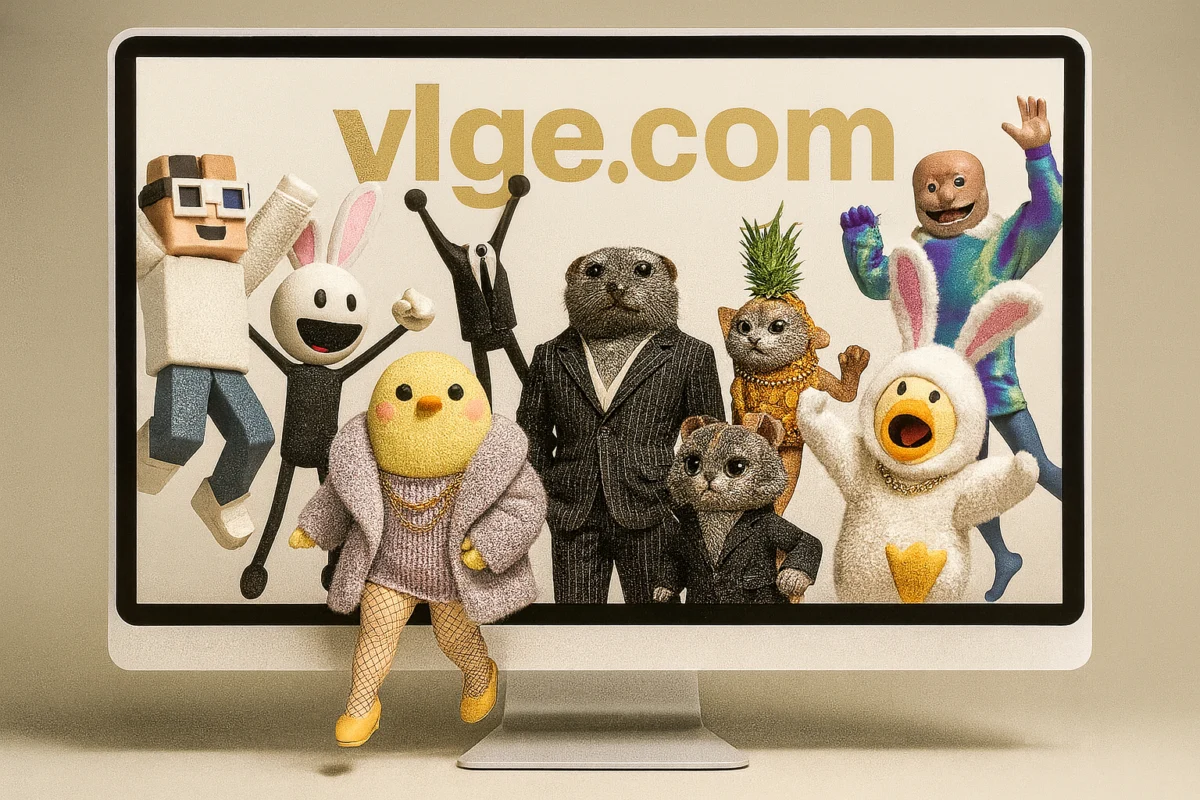
The intersection of fashion and technology has long been characterized by extravagant runways, carbon-heavy logistics, and physical wastage that runs contrary to modern environmental awareness. Early in her career, founder and CEO Evelyn Mora recognized a glaring contradiction within the apparel industry: while fashion designers were increasingly dedicated to sustainable practices, the traditional mechanics of staging large-scale, physical fashion shows remained inherently resource-intensive and environmentally taxing. This realization set off a chain of events that would eventually culminate in the creation of VLGE, an immersive world-building and gaming platform designed to reshape how brands interact with the next generation of consumers.
Founded in 2021, VLGE emerged as a pioneering infrastructure play aimed at solving a modern retail dilemma. Rather than forcing labels to rely solely on physical catwalks, photoshoots, and traditional marketing campaigns, the platform empowers brands to construct their own virtual worlds, populate them with interactive content and minigames, and seamlessly export these digital environments to mainstream gaming ecosystems like Roblox. By bypassing the physical constraints of traditional fashion weeks, VLGE is redefining the future of commerce, transforming passive shopping experiences into active, gamified engagements tailored specifically for Gen Z.
The Evolution of Immersive Fashion Infrastructure
The journey from a conceptual realization to a fully functional platform required navigating the complex intersection of software engineering, gaming architecture, and high fashion. In its foundational years, VLGE focused on proving its technological viability, culminating in high-profile industry partnerships and notable early validation. To date, the company has successfully raised $5 million in venture capital. This funding round attracted a prestigious roster of investors, including Lammot J. du Pont of the historical du Pont family, the L’Oréal Group, and the British Fashion Council.
These strategic investments signaled a broader industry acknowledgment that digital spaces are no longer mere novelties, but essential revenue-generating frontiers. VLGE quickly established its credibility by collaborating with household names and luxury institutions such as Lancôme, Charlotte Tilbury, and Vogue Scandinavia. These early activations laid the groundwork for the platform’s most ambitious milestone to date: hosting the world’s first 3D and gamified fashion week.
Democratizing Virtual World-Building for Global Brands
Building upon the initial success of its digital showcases, VLGE made a major strategic announcement regarding the rollout of World Fashion Week. Powered entirely by VLGE’s proprietary technology, the initiative serves as a bridge for creators and labels to launch shoppable games across external platforms, starting with Roblox. This large-scale activation marks the first time that a cohort of 50 distinct fashion brands will simultaneously deploy cross-browser, real-time interactive worlds.
While Roblox has undeniably cemented its status as the most powerful youth frontier for contemporary fashion, entering the space has historically been an exclusionary endeavor. Historically, brands wishing to establish a presence on Roblox had to enlist specialized third-party agencies, facing steep financial barriers ranging from $10,000 to upwards of $100,000 per project. Furthermore, these bespoke developments often required months of technical overhead, deep familiarity with Roblox’s proprietary coding languages, and complex software pipelines.
VLGE has systematically dismantled these barriers. By providing an intuitive infrastructure layer, the platform allows brands to launch immersive, shoppable environments on Roblox instantly, without requiring specialized technical knowledge or massive up-front capital investments.
“This is significant because Roblox has become fashion’s most powerful youth frontier, yet until now, world-building there has been costly, technical, and complex,” Evelyn Mora explained in an interview. “We make it instant, affordable, scalable, and interoperable, bridging the gap between e-commerce, gaming, and cultural creation.”

Technical Versatility and Financial Tiering
Beyond its primary integration with Roblox, VLGE’s technical architecture is engineered for broad compatibility. The platform is already fully compatible with Unreal Engine, allowing for high-fidelity graphics and sophisticated physics engines. Additionally, the company is actively developing compatibility integrations for Meta Horizon Worlds, ensuring that brands building on VLGE can future-proof their digital assets across multiple spatial computing and virtual reality environments.
To accommodate a wide spectrum of users—ranging from independent emerging designers to multinational luxury conglomerates—VLGE has structured its business model around four distinct payment tiers. These include a Freemium tier alongside three paid subscription options tailored specifically for individual creators, small businesses, and enterprise-level corporations. This democratic pricing strategy ensures that virtual real estate and gamified commerce are accessible beyond just elite multi-billion-dollar luxury houses.
The Future of Gamified Commerce and the Creator Economy
Looking ahead, VLGE is positioning itself at the epicenter of the shifting retail landscape. Mora is banking heavily on the thesis that gamified commerce represents the definitive next wave of fashion consumption. As part of this long-term vision, the company plans to launch an integrated e-tail store dedicated to selling both physical merchandise crafted by emerging independent brands and corresponding 3D digital assets capable of being exported directly into Roblox and other virtual worlds.
This dual-market approach highlights a profound paradigm shift in how consumers perceive value. For younger demographics, digital identity holds equal, if not greater, significance compared to physical wardrobes. By bridging physical manufacturing with digital twin assets, VLGE provides a functional blueprint for brands attempting to navigate the complexities of modern consumer engagement.
“This moment isn’t just about fashion; it’s about the infrastructure that will power the next generation of commerce for the new generation,” Mora emphasized.
Broader Economic and Environmental Implications
The implications of platforms like VLGE extend far beyond marketing novelty. From an environmental perspective, the scaling of virtual fashion weeks and digital-first retail environments offers a tangible solution to the fashion industry’s staggering carbon footprint. Physical fashion weeks require massive international travel for editors, buyers, and models, alongside the construction and subsequent demolition of temporary venues, and the mass production of runway samples that often end up discarded. By shifting a significant percentage of promotional activations into real-time 3D environments, brands can drastically reduce their physical waste while expanding their global reach instantaneously.
From an economic standpoint, the democratization of virtual world-building opens up entirely new revenue streams for independent designers who were previously priced out of high-end digital marketing. When technical barriers are lowered from months of custom coding to instantaneous deployment, creativity rather than capital expenditure becomes the primary driver of market success.
As the lines between physical reality, e-commerce, and interactive gaming continue to blur, companies providing the foundational plumbing for these digital ecosystems will likely dictate the terms of modern retail engagement. Through its focus on interoperability, affordability, and rapid scalability, VLGE is not merely participating in the virtual fashion movement—it is actively constructing the infrastructure upon which the future of commerce will be built.