








Fleek, a London-based technology startup, has successfully closed a combined $20.4 million in funding to accelerate the digitization of the global secondhand clothing supply chain. The capital injection includes a recently finalized $14.8 million Series A round and a previously unannounced $5.6 million seed round, signaling strong investor confidence in the rapidly expanding circular economy. By building a specialized Business-to-Business (B2B) marketplace, Fleek aims to bridge the gap between massive wholesale suppliers in the Global South and the burgeoning community of retail resellers across Western markets. This investment comes at a pivotal moment as the secondhand apparel sector shifts from a niche "thrifting" culture into a multi-billion-dollar global industry driven by environmental consciousness and digital-native entrepreneurs.
The funding round was led by HV Capital, with significant participation from prominent venture capital firms including Andreessen Horowitz (a16z), which led the startup’s initial seed round, and the startup accelerator Y Combinator, where Fleek participated in the Winter 2022 cohort. The investment roster also features a notable group of strategic individual backers, including Shopify President Harley Finkelstein, former Depop CEO Maria Raga, and Postmates co-founder and CTO Sean Plaice. These figures bring deep expertise in e-commerce, resale platforms, and logistics, providing Fleek with a robust advisory network as it seeks to professionalize a historically fragmented and analog industry.
The Evolution of the Secondhand Clothing Market
The rise of Fleek is inextricably linked to the meteoric growth of the secondhand fashion sector. According to data from GlobalData and ThredUp, the global secondhand apparel market is projected to reach $350 billion by 2028, growing three times faster than the overall global apparel market. This shift is largely fueled by Gen Z and Millennial consumers, who prioritize sustainability and unique aesthetics over mass-produced "fast fashion." In the United Kingdom, a key market for Fleek, research from ECDB suggests that approximately 68% of younger consumers purchased at least one secondhand item in the past year.
Historically, the secondhand trade was a localized, charitable endeavor focused on redistributing donated goods to low-income populations. However, the modern "vintage" movement has transformed used clothing into a high-demand commodity. This transformation has created a new class of professional resellers who operate on platforms such as eBay, Vinted, Poshmark, and Depop. While these consumer-facing platforms have revolutionized the way used clothes are sold to the public, the "upstream" supply chain—the process of sourcing thousands of items from wholesalers—remained stuck in the 20th century. Fleek was founded to solve this specific bottleneck.
Origins and Chronology: From Brick Lane to a Global Platform
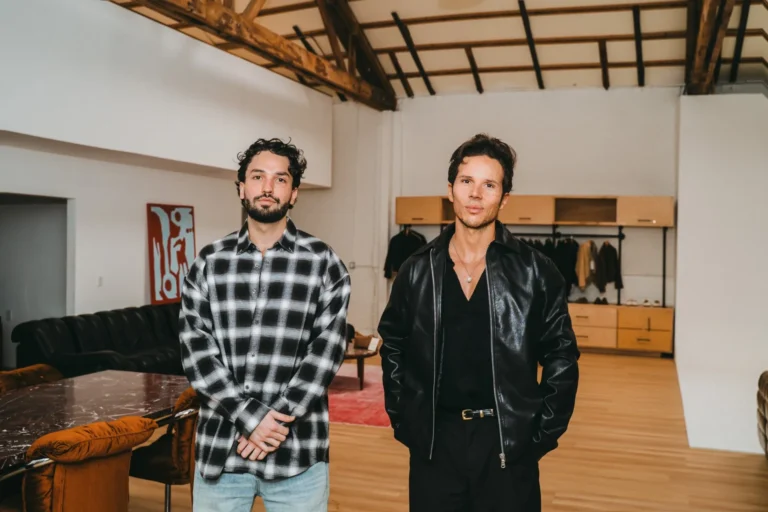
Fleek was founded in 2021 by Abhi Arora and Sanket Agarwal, two friends who recognized a systemic inefficiency in how secondhand inventory was sourced. The inspiration for the company began with a personal observation: the mother of Agarwal’s partner at the time was a reseller on Poshmark and was struggling to maintain consistent inventory due to pandemic-related supply chain disruptions. Simultaneously, Arora, a graduate of the University of Cambridge’s MBA program, began investigating the vintage shops of London’s Brick Lane.
Through conversations with shop managers, Arora discovered that the standard industry practice for sourcing was highly manual. Retailers would often have to travel internationally to massive warehouses, spending days physically sorting through piles of unsorted garments—a process Arora described as "heads down, bums up." When the COVID-19 pandemic restricted international travel, these wholesalers began using rudimentary digital tools like Instagram and video calls to show their stock to buyers.
Arora and Agarwal, the latter a former software engineer at Google, realized that the industry was ripe for a centralized digital marketplace. Their backgrounds provided a unique advantage: both founders grew up in India and were fluent in the languages of the regions where the world’s largest textile recycling and wholesale hubs are located. This cultural and linguistic connection allowed them to build trust with large-scale wholesalers in Pakistan, India, and Dubai, who handle upwards of 400,000 kilograms of clothing daily.
The Fleek Business Model and Operational Scale
Fleek functions as a curated marketplace that brings transparency and efficiency to the wholesale transaction. The platform allows retailers—ranging from individual side-hustlers on Depop to established high-street boutiques—to browse and purchase inventory from over 1,000 verified suppliers. Items can be bought in bulk by weight or specifically curated by brand, style, era, and material. This level of granularity is a significant departure from the traditional "mystery bale" approach, where buyers would pay for a large quantity of clothes without knowing the exact quality or composition of the shipment.
To date, Fleek has facilitated the movement of over 2.5 million items of secondhand clothing, serving 10,000 resellers across 70 countries. The company generates revenue through a commission structure based on the total value of the transaction, with fees typically deducted from the payments made to wholesalers. By providing a secure payment gateway and standardized descriptions, Fleek mitigates the risks associated with international B2B trade, such as fraud or inconsistent quality.
Leveraging Technology to Solve Industry Challenges
The $20.4 million in new funding is earmarked for technological development, specifically in the areas of predictive analytics and quality control. One of the primary challenges in the secondhand industry is the unpredictability of supply. Unlike new clothing manufacturers, wholesalers cannot "order" specific styles from a factory; they must sort through whatever donations or textile waste they receive. Fleek is developing AI-driven tools to help wholesalers better categorize their intake and help retailers forecast which vintage trends are likely to surge in popularity.
Furthermore, the company is addressing the persistent issue of counterfeiting. As the value of vintage "grails"—rare and highly sought-after items from brands like Levi’s, Nike, or high-end luxury labels—increases, so does the prevalence of sophisticated fakes. Fleek intends to implement enhanced verification protocols and AI-assisted authentication to ensure that its marketplace remains a trusted source for authentic goods. Logistics also remains a core focus, with the startup seeking to streamline the shipping process between international hubs and domestic retailers, reducing lead times and costs.
Impact on Sustainability and the Circular Economy
The growth of platforms like Fleek has significant implications for the global sustainability movement. The fashion industry is currently responsible for approximately 10% of global carbon emissions and 20% of global wastewater. By extending the lifecycle of existing garments, the secondhand trade directly reduces the demand for new textile production. Fleek’s ability to digitize the wholesale market makes the circular economy more scalable, allowing used clothing to flow more efficiently to where demand is highest.
However, the industry also faces criticism regarding the export of textile waste to the Global South. Critics argue that many "donated" clothes from the West end up in landfills in countries like Ghana or Chile. Fleek’s model aims to counteract this by creating a more intentional and profitable market for these goods. By connecting wholesalers in these regions directly with Western buyers who are willing to pay a premium for specific vintage items, Fleek incentivizes the sorting and mending of clothes that might otherwise be discarded.
Official Responses and Strategic Vision
The investment from HV Capital and a16z underscores a broader trend of venture capital entering the "re-commerce" space. Investors are increasingly viewing secondhand trade not as a peripheral market, but as a fundamental shift in how global commerce operates. The involvement of Shopify’s Harley Finkelstein is particularly telling, as Shopify has been at the forefront of the "direct-to-consumer" revolution. His support suggests that the next frontier of e-commerce will be defined by sustainable, circular supply chains.
In a statement following the funding announcement, CEO Abhi Arora emphasized that the company’s mission is to empower entrepreneurs on both sides of the marketplace. For wholesalers in developing economies, Fleek provides a portal to high-margin Western markets. For retail resellers in Europe and North America, it provides the reliable inventory needed to build a sustainable business.
As Fleek continues to expand, it joins a growing ecosystem of startups—including AI-powered search engines for thrifting and specialized logistics providers—that are collectively professionalizing the secondhand world. With $20.4 million in the bank and a footprint in 70 countries, Fleek is well-positioned to remain the dominant B2B infrastructure for the vintage revolution, turning the "heads down, bums up" manual labor of the past into a streamlined, data-driven digital future.