








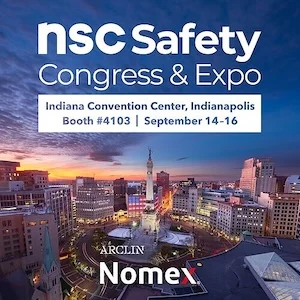
ALPHARETTA, Ga. — Arclin, a prominent leader in materials science and specialized chemical solutions, has announced its participation in the 2026 National Safety Council (NSC) Safety Congress and Expo. The event, scheduled for September 14–16 at the Indiana Convention Center in Indianapolis, serves as a pivotal stage for the company to highlight its latest advancements in personal protective equipment (PPE) components, specifically those utilizing the high-performance Nomex and Kevlar fiber technologies. Arclin, which maintains a strategic presence at booth #4103, intends to demonstrate how its material innovations address the increasingly complex safety requirements of modern industrial workforces.
The Significance of the NSC Safety Congress and Expo
The NSC Safety Congress and Expo is widely regarded as the largest annual gathering of environmental, health, and safety (EHS) professionals in the world. Historically, the event serves as a bellwether for the industrial safety sector, attracting thousands of attendees from global manufacturing, utility, and construction firms. For exhibitors like Arclin, the congress is more than a trade show; it is an essential venue for gathering feedback from frontline safety managers and procurement officers who oversee the implementation of protective gear.
In 2026, the focus of the expo centers heavily on the intersection of human-centric design and material durability. As workplace hazards evolve—ranging from the high-heat demands of green energy infrastructure to the sophisticated cut-protection needs in advanced aerospace manufacturing—the demand for materials that offer both comfort and life-saving performance has never been higher. Arclin’s presence at the expo underscores its role as a bridge between foundational fiber science and the practical, daily needs of the industrial worker.
A Legacy of Protection: Evolution of Nomex and Kevlar
The Nomex and Kevlar brands carry a storied history in the protective textiles market, spanning nearly six decades. Nomex, a meta-aramid fiber, is globally recognized for its inherent heat and flame resistance, while Kevlar, a para-aramid fiber, is synonymous with exceptional cut, abrasion, and ballistic protection. Under Arclin’s stewardship, these legacy brands have transitioned from their original applications toward more nuanced, high-performance solutions.
The evolution of these materials has been a gradual process of engineering refinement. Early iterations of these fibers prioritized raw protection, sometimes at the expense of garment weight or breathability. Modern advancements, however, have focused on the "user experience" of safety. By altering the molecular structure and weaving techniques, Arclin and its partners have successfully developed materials that allow for greater mobility, moisture-wicking capabilities, and improved thermal regulation. This is critical in industries such as petrochemical refining, where workers are often exposed to extreme ambient temperatures while simultaneously requiring flame-resistant barriers to mitigate the risk of flash fires.
Industry Data and the Demand for Advanced PPE
The impetus for Arclin’s latest material releases is rooted in shifting industrial statistics. According to data from the U.S. Bureau of Labor Statistics (BLS), injuries involving thermal burns and lacerations remain significant contributors to lost-time accidents in the industrial sector. Furthermore, the rise of the "smart factory" has introduced new hazards, including high-voltage electrical environments related to battery production and the increased use of automated machinery that requires more robust cut-resistant interfaces.
Market research from the broader protective textiles industry suggests a compound annual growth rate (CAGR) of over 5% for the flame-resistant (FR) clothing market through 2030. This growth is driven by stricter Occupational Safety and Health Administration (OSHA) compliance standards and a cultural shift toward "Safety Culture 2.0," which emphasizes the psychological benefit of comfortable, reliable PPE. When workers feel physically restricted or overheated by their equipment, compliance rates often drop. Arclin’s current research and development (R&D) trajectory aims to eliminate the trade-off between protection and comfort, ensuring that safety gear is worn consistently rather than only when supervisors are present.

Perspectives from Industry Leadership
Trey Roy, Arclin’s North American Market Leader for Personal Protection, emphasized that the company’s return to the NSC platform is a strategic commitment to the safety community. "Protecting people in demanding environments requires us to continually look for ways to improve how materials perform when workers need them most," Roy stated. "Nomex and Kevlar have protected workers for generations, and at Arclin, we are building on that foundation with new technologies designed to address the evolving needs of today’s workforce. Returning to NSC is an opportunity to connect with the safety community and demonstrate how we are continuing to advance personal protection."
From the perspective of EHS professionals, the ability to interact directly with the material scientists behind the brands is a significant value add. "Safety managers are no longer just buying fabric; they are buying systems," noted an independent industry analyst. "They need to understand the lifecycle of the material—how it washes, how it resists degradation, and how it holds up after three years of daily use. Arclin’s presence at the expo suggests a move toward greater transparency and technical education for the end-user."
Applications Across Vertical Markets
The versatility of the Nomex and Kevlar portfolios allows Arclin to support a diverse array of industrial verticals, each with unique performance requirements:
- Utilities and Electrical: Workers in these fields face the threat of arc flash, an electrical explosion that can generate temperatures exceeding 35,000 degrees Fahrenheit. The focus here is on non-conductive, inherent flame resistance that does not wash out over time.
- Aerospace and Manufacturing: The assembly of composite materials and the use of high-speed CNC machinery require superior cut protection. Kevlar-based solutions are currently being optimized to provide this protection while maintaining the dexterity required for fine motor tasks.
- Petrochemical and Oil & Gas: Beyond flash fire protection, workers in these environments require chemical splash resistance and comfort in hot, humid climates. Arclin’s research into lightweight, high-breathability aramids is a direct response to these specific environmental stressors.
The Impact of Material Innovation on Global Standards
The advancements showcased by Arclin at the 2026 NSC Expo reflect a broader industry trend toward high-performance technical textiles. As international standards like NFPA 2112 (Standard on Flame-Resistant Clothing for Protection of Industrial Personnel Against Short-Duration Flame Exposures) become more stringent, manufacturers are forced to iterate more rapidly. Arclin’s integration of the ArmorCell trademark—a brand centered on innovative cell-structure technology—suggests that the company is looking beyond traditional fiber blends toward more complex, multi-layered protective systems.
The implications of these advancements are twofold. First, they enhance the physical safety of the workforce, potentially reducing the severity of injuries during workplace incidents. Second, they contribute to the economic efficiency of corporations. By providing more durable materials that withstand industrial laundering processes, Arclin helps companies reduce their total cost of ownership (TCO) regarding PPE programs. When garments last longer without losing their protective properties, the replacement cycle is extended, resulting in significant savings for large-scale operations.
Looking Toward the Future of Workplace Safety
As the 2026 NSC Safety Congress and Expo unfolds in Indianapolis, the focus remains on the nexus of reliability and innovation. Arclin’s team, comprised of technical specialists and market experts, is positioned to address the nuances of these material applications. Their presence signals a commitment to the "Safety-First" philosophy that has defined the industrial landscape for decades, while simultaneously embracing the technological potential of the future.
The transition from traditional protective gear to sophisticated, engineered material systems is expected to accelerate in the coming years. By leveraging the historical success of Nomex and Kevlar while investing in the next generation of material science, Arclin is securing its place as a cornerstone provider for the safety-critical industries of tomorrow. As safety professionals gather in Indianapolis to discuss the challenges of the coming year, the focus on high-performance materials will undoubtedly remain at the forefront of the conversation, ensuring that the legacy of protection continues to adapt to the realities of an evolving industrial world.