




The modern landscape of men’s fashion has undergone a seismic shift, largely driven by the dismantling of rigid corporate dress codes and the widespread adoption of hybrid work models. Among the traditional tailoring mainstays experiencing a contemporary renaissance is the pinstripe trouser. Historically confined to the uniform-heavy environments of 1920s Wall Street banking halls and Prohibition-era organized crime syndicates, the fine-line pattern has evolved from a symbol of corporate conformity into an unexpected cornerstone of relaxed streetwear and elevated smart-casual style.
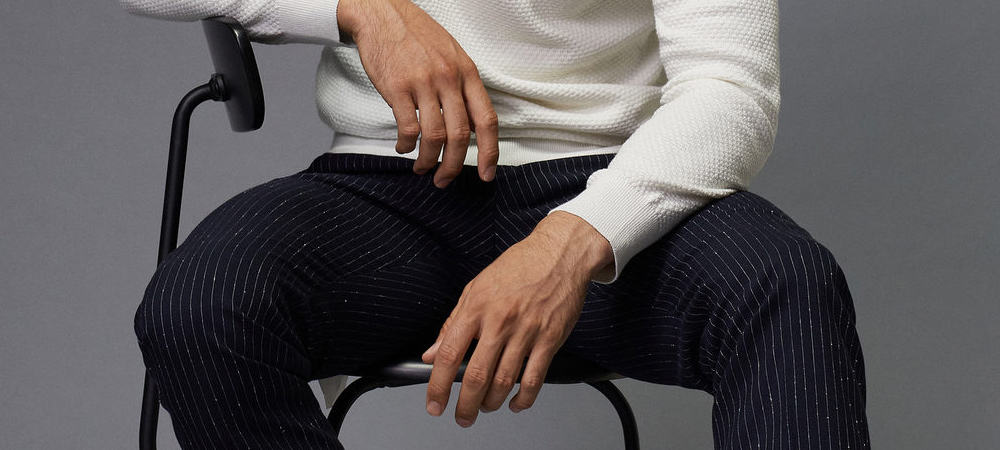
As contemporary menswear trends increasingly favor fluid silhouettes, hybridized wardrobes, and the blurring of formal and casual boundaries, style analysts note a 35% year-on-year increase in consumer interest surrounding patterned legwear. This sartorial evolution reflects a broader societal movement away from restrictive attire toward individualistic expression, prompting designers and everyday consumers alike to rethink how traditional textiles are integrated into daily wardrobes.
Historical Evolution: From Corporate Uniforms to Counter-Culture Statements
The origins of the pinstripe trace back to early twentieth-century London banking institutions. Originally utilized as a subtle identifier to distinguish employees belonging to specific financial houses amidst the crowded business district, the pattern quickly morphed into a universal symbol of corporate authority and financial prowess. Throughout the decades, this association was reinforced by Hollywood depictions of ruthless financiers and mob bosses, cementing the pinstripe as the ultimate expression of rigid, high-stakes power dressing.
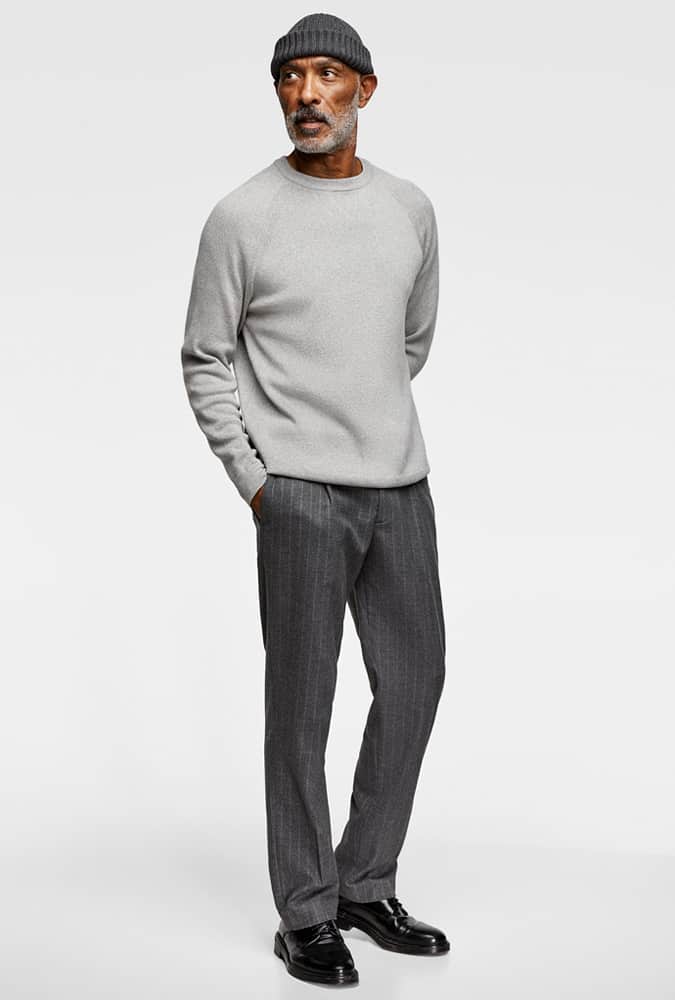
However, the twenty-first century has witnessed a systematic dismantling of these sartorial codes. According to industry trend forecasts, the post-pandemic acceleration of casualization in the workplace forced a complete re-evaluation of heritage garments. Designers began experimenting with deconstructed tailoring, introducing heritage prints to unexpected silhouettes such as athletic jerseys, relaxed-fit shirting, and slouchy legwear. By stripping the pinstripe of its intimidating corporate context, modern menswear has successfully repurposed the motif, transforming it into a versatile instrument for contemporary styling.
Modern Styling Rules: Navigating the Pinstripe Renaissance
Integrating pinstripe trousers into a contemporary wardrobe requires a nuanced understanding of proportion, color theory, and balance. Because the fine-line pattern inherently draws the eye, it functions as the definitive focal point of any ensemble.
Industry experts recommend adhering to two foundational styling rules to prevent visual clutter. First, wearers should strictly avoid pairing pinstripe bottoms with patterned or striped upper garments, as conflicting linear graphics create an overwhelming visual tension. Second, the surrounding color palette must remain minimal and pared-back. Muted, earthy, and classic tones—such as off-white, heather gray, charcoal, and deep navy—serve to anchor the look, allowing the trouser’s texture and pattern to stand out without appearing garish.
Furthermore, silhouette selection has modernized significantly. Moving away from the slim-cut, rigid tailoring of the past, contemporary pinstripe trousers favor a looser, more relaxed drape around the leg. This generous cut introduces a subtle wave to the linear pattern, immediately softening the garment’s formality and aligning it seamlessly with modern streetwear sensibilities.
Five Essential Ways to Style Pinstripe Trousers
To maximize the versatility of pinstripes across various social and professional settings, stylists advocate for five distinct outfit architectures that bridge the gap between formal heritage and modern ease.
1. The Scandi-Inspired Minimalist Layer
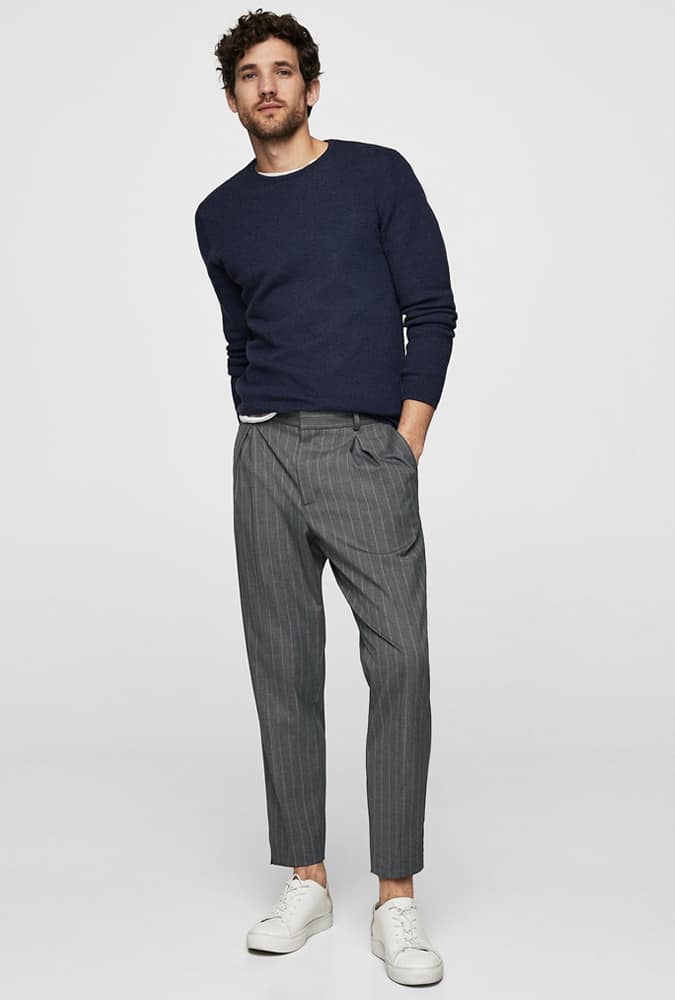
For everyday wear, pairing a straight-leg gray pinstripe trouser with fundamental basics offers an effortless entry point. By omitting socks and pairing the trousers with pristine, low-profile white leather trainers, the lower half of the outfit maintains a clean, grounded aesthetic. Up top, a lightweight navy crew-neck jumper layered over a crisp white t-shirt delivers a Scandinavian-inspired approach to smart-casual dressing that feels both intentional and unpretentious.
2. Off-Duty Tailoring
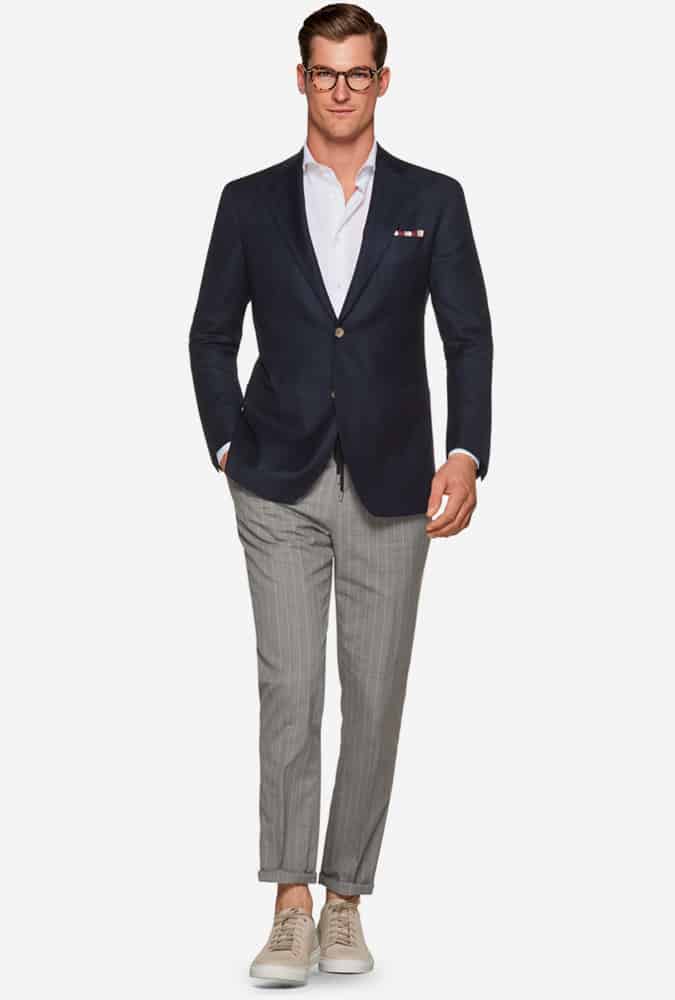
To soften the inherent formality of a tailored aesthetic, wearers can swap out traditional oxford shoes for minimalist sneakers and gently roll the trouser cuffs. Leaving a crisp white shirt unbuttoned at the collar and layering it underneath a structured, dark navy blazer creates an effective contrast. The deeper tone of the blazer anchors the upper body, drawing a sophisticated visual balance against the patterned lower half without requiring a necktie.
3. Dressed-Down Winter Knitwear
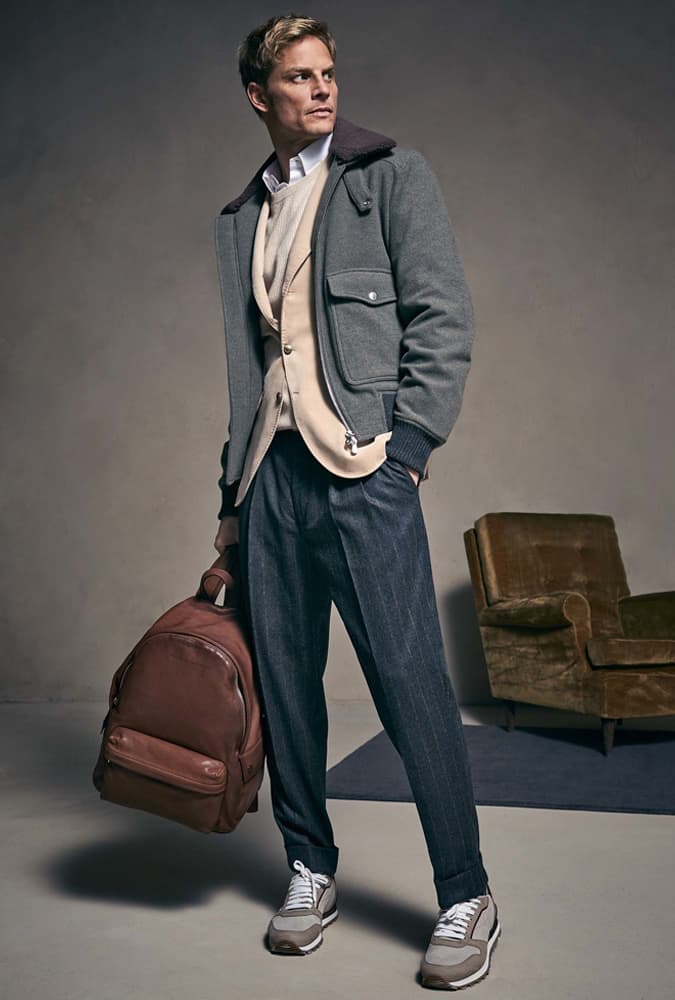
Cold-weather dressing provides an ideal canvas for multi-textural layering. A successful winter ensemble incorporates three to four distinct layers, graduating from lighter tones near the body to darker shades outward. Starting with a white shirt beneath a cream-colored knit sweater, wearers can add a beige tailored blazer topped with a gray shearling-lined overcoat. Each garment introduces a unique cut and shade, while slate-gray pinstripe trousers visually elongate the legs, terminating cleanly at a pair of minimalist trainers.

4. The Overcoat Integration
Demonstrating the true versatility of relaxed tailoring, pairing baggy pinstripe trousers with box-fresh white sneakers creates a contemporary streetwear silhouette. Layering a dark gray overcoat over a rich blue lightweight sweatshirt introduces a sophisticated element of business wear to an otherwise relaxed outfit. Tucking in the sweatshirt breaks up the monochromatic gradient, elevating the trousers to the undisputed centerpiece of the look.
5. The Modern Two-Piece
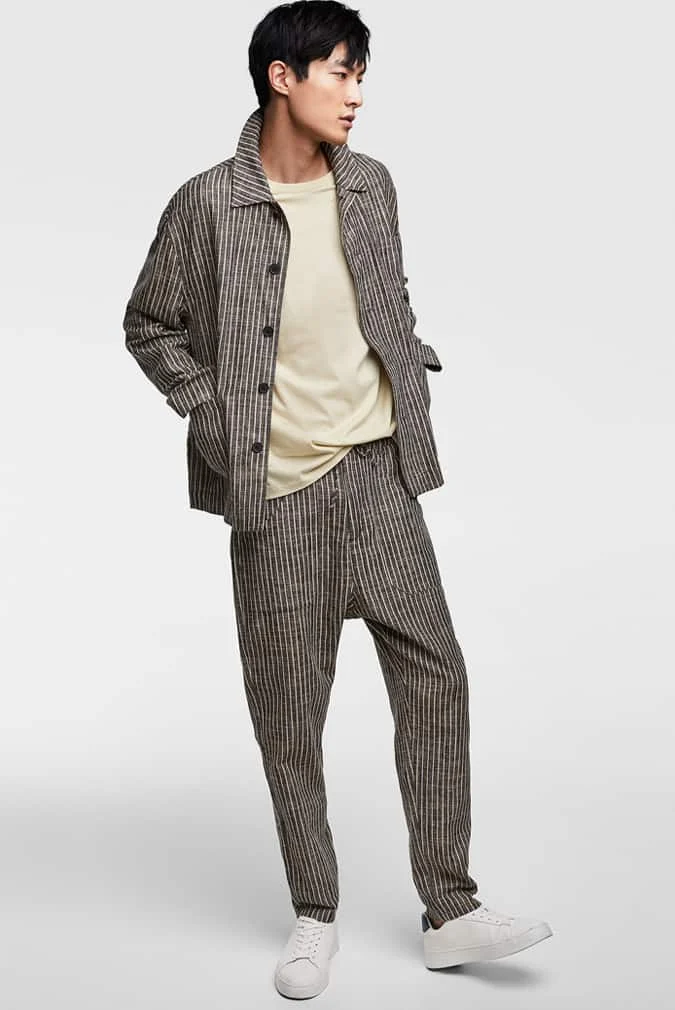
For those who prefer a cohesive outfit without the stiffness of a traditional suit, a relaxed-fit pinstripe matching set offers an ideal alternative. Crafted from lighter, breathable fabrics like linen or lightweight wool blends, a slouchy pinstripe trouser paired with a matching overcoat or shirt—left open over an off-white tee—provides an effortless, modern uniform. Paired with clean trainers, this look redefines contemporary tailoring for warmer climates and creative workspaces.

Market Landscape: What to Buy
Retail data indicates robust consumer demand spanning two distinct categories: casual comfort wear and elevated smart tailoring.
In the casual sector, high-end and contemporary brands have introduced pinstripe patterns to elasticated waistbands, track pants, and drawstring loungewear. Notable market offerings include wool-blend jogging trousers from labels like Philipp Plein, relaxed pull-on styles from Golden Goose, and distinctive streetwear interpretations by Denim Tears. These pieces successfully merge athletic comfort with heritage tailoring aesthetics, appealing to younger demographics seeking elevated comfort.

Conversely, the smart sector continues to honor traditional craftsmanship while incorporating modern tailoring nuances. High-end houses such as Brunello Cucinelli, Dolce & Gabbana, and PT Torino offer premium virgin wool and chalk-stripe trousers featuring tapered legs and pleated fronts. These items remain essential investments for corporate environments, boardrooms, and formal evening settings, proving that the pinstripe retains its commanding presence when executed with precision tailoring.
Economic and Industry Implications
The resurgence of the pinstripe trouser highlights a larger economic and cultural transformation within the global fashion market. As traditional office spaces continue to downsize formal dress code requirements, heritage textile mills and luxury houses are forced to innovate, pivoting away from uniform manufacturing toward adaptable, multi-functional garments.

Retail analysts project that the demand for hybrid menswear will continue to expand through the decade’s end, driven by consumers who prioritize longevity, versatility, and comfort in their purchasing decisions. By successfully bridging the divide between corporate history and modern leisure, the pinstripe trouser has cemented its status not merely as a cyclical trend, but as a permanent fixture in the evolving taxonomy of modern menswear.