




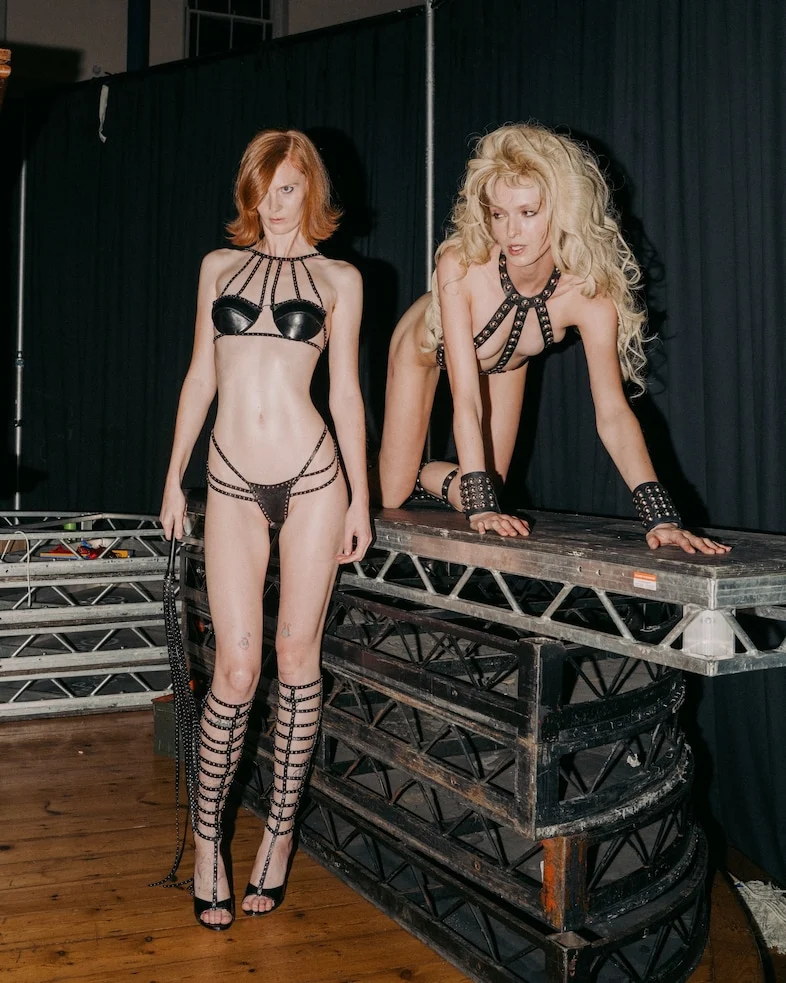
London Fashion Week has long maintained a global reputation for harboring avant-garde designers, punk-rock sensibilities, and boundary-pushing presentations that consistently challenge the traditional constraints of the luxury fashion establishment. On the evening of September 16, this ethos was advanced further by R&M Leathers, a specialized fetishwear brand that staged its inaugural runway show inside the historic Round Chapel in Clapton, East London. Founded in 2018 by designer Ruby Mariani, the brand has spent nearly a decade cultivating an underground reputation as the premier destination for high-end alternative leather and bondage apparel in the United Kingdom.
The debut presentation, financially backed by adult entertainment platform Pornhub, represented a significant milestone in the brand’s commercial and cultural trajectory. Entitled Miss Leathers—a deliberate homage to Versace’s iconic Autumn/Winter 1992 collection, Miss S&M—the event merged the high-gloss production values of traditional beauty pageants with the explicit aesthetics of contemporary fetish subcultures. By taking over a consecrated 19th-century religious venue for a showcase explicitly rooted in eroticism, the brand delivered a calculated provocation designed to challenge conventional boundaries between sacred architecture and modern fashion expression.
Chronology of Growth and Celebrity Adoption
The path to the brand’s first official catwalk presentation has been marked by a steady accumulation of high-profile endorsements and rapid mainstream penetration. Established in 2018, R&M Leathers initially operated within niche digital circles and specialized alternative retail spaces, catering to a clientele seeking bespoke leather garments that prioritized uncompromising fit, structural integrity, and uncompromisingly dark aesthetics.
Throughout the early 2020s, the brand transitioned from an underground secret to a red-carpet staple, largely driven by the adoption of its pieces by globally recognized musicians and style icons. The commercial viability and cultural resonance of the label reached a distinct peak in 2023 and 2024. During this period, garments designed by Mariani were worn by major pop figures including Charli xcx, Addison Rae, Miley Cyrus, and Olivia Rodrigo. This heavy integration into modern pop culture iconography elevated the brand’s profile, providing both the financial backing and the cultural capital necessary to execute a full-scale runway production during London Fashion Week.
The timing of the September 16 show coincided with a broader industry-wide resurgence of interest in subversive dressing, alternative subcultures, and tactile materials. As traditional luxury houses increasingly look toward edge and authenticity to capture younger demographics, independent labels specializing in extreme craftsmanship—such as latex, PVC, and heavy leather—have found themselves operating at the vanguard of contemporary style discussions.
The Collection: Miss Leathers and Aesthetic Analysis
The Miss Leathers collection served as a comprehensive synthesis of pageantry and kink, utilizing traditional tailoring techniques to construct garments that subvert conventional feminine archetypes. The narrative of the runway presentation unfolded through a series of distinct character studies, each exploring a different facet of dark femininity.
The show opened with a striking centerpiece: a pageant queen outfitted entirely in black leather. Every component of her traditional regalia, typically rendered in sparkling metals and fabrics, was reconstructed in heavy-grain leather, including a molded leather sash, a rigid leather tiara, and a leather riding crop fashioned to resemble a victorious royal scepter.
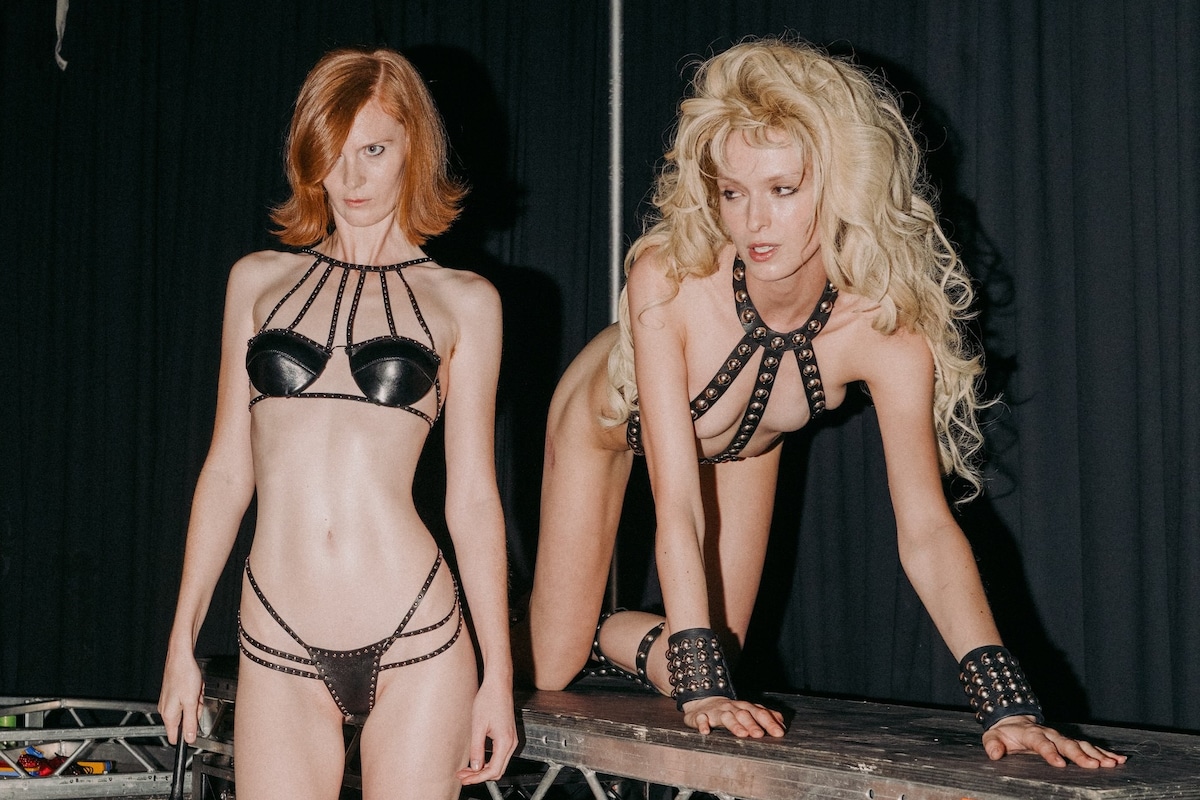
Subsequent looks drew heavily from historical silhouettes, reinterpreted through a contemporary fetishistic lens. Tudor necklines, structured peplum silhouettes, and heavy leather chokers offered a dark, kinky homage to figures like Anne Boleyn, blending Renaissance court dress with modern bondage hardware. Other archetypes brought to life on the runway included a runaway bride styled in the vein of the 1996 film Barb Wire, classic cabaret showgirls, and subversive waitresses draped in functional leather harnesses.
The material palette relied heavily on heavy-gauge leather, molded latex accents, tasseled two-pieces, and structured baby-doll dresses. A commercial element was introduced via branded merchandise, notably T-shirts featuring the unmistakable Pornhub logo integrated into the apparel lineup. The presentation culminated in a theatrical moment when two models paused mid-runway to share an extended kiss, evoking memories of pop history touchstones such as Britney Spears and Madonna’s performance at the 2003 MTV Video Music Awards.
Production, Funding, and Venue Dynamics
The choice of the Round Chapel in Clapton as the venue for the debut was central to the conceptual framing of the event. Built in the late 19th century, the Grade II*-listed building provided a grandiose backdrop characterized by soaring Corinthian columns, a vast central rotunda, and intricate architectural detail. By juxtaposing this traditional religious architecture with a collection explicitly celebrating sin, sex, and subversion, the design team created an intentional dialogue between institutional authority and countercultural expression.
The production was made possible through a strategic partnership with Pornhub, whose financial backing allowed for elevated production values, intricate lighting design, and a fully realized runway setup that is rarely accessible to independent labels staging their first shows. In an industry where rising production costs frequently price emerging designers out of the official calendar, alternative corporate sponsorships have become an increasingly vital mechanism for funding independent creative visions without artistic compromise.
Industry Implications and Broader Fashion Context
The successful staging of the R&M Leathers debut holds several implications for the future of London Fashion Week and the broader luxury market. Historically, London has functioned as an incubator for raw talent that prioritizes conceptual disruption over immediate commercial polish. Brands like R&M Leathers demonstrate that there is a robust, highly lucrative market for garments that challenge polite taste, provided they are executed with high-level technical precision and strong styling narratives.
Furthermore, the mainstream adoption of fetishwear—once strictly relegated to underground sex clubs and specialist boutiques—signals a permanent shift in how contemporary consumers approach eveningwear and red-carpet fashion. As pop stars and public figures increasingly normalize the aesthetic markers of BDSM and alternative subcultures, brands that once operated on the fringes are now defining the aesthetic parameters of mainstream pop culture.
With Miss Leathers, Ruby Mariani and her team have successfully transitioned from a cult-favorite accessories and apparel label into a fully realized fashion house capable of commanding the attention of the international press. As the brand looks toward its next commercial cycles, the challenge will lie in scaling production while maintaining the uncompromising, dark-minded identity that first captured the loyalty of London’s alternative elite and global pop royalty alike.