







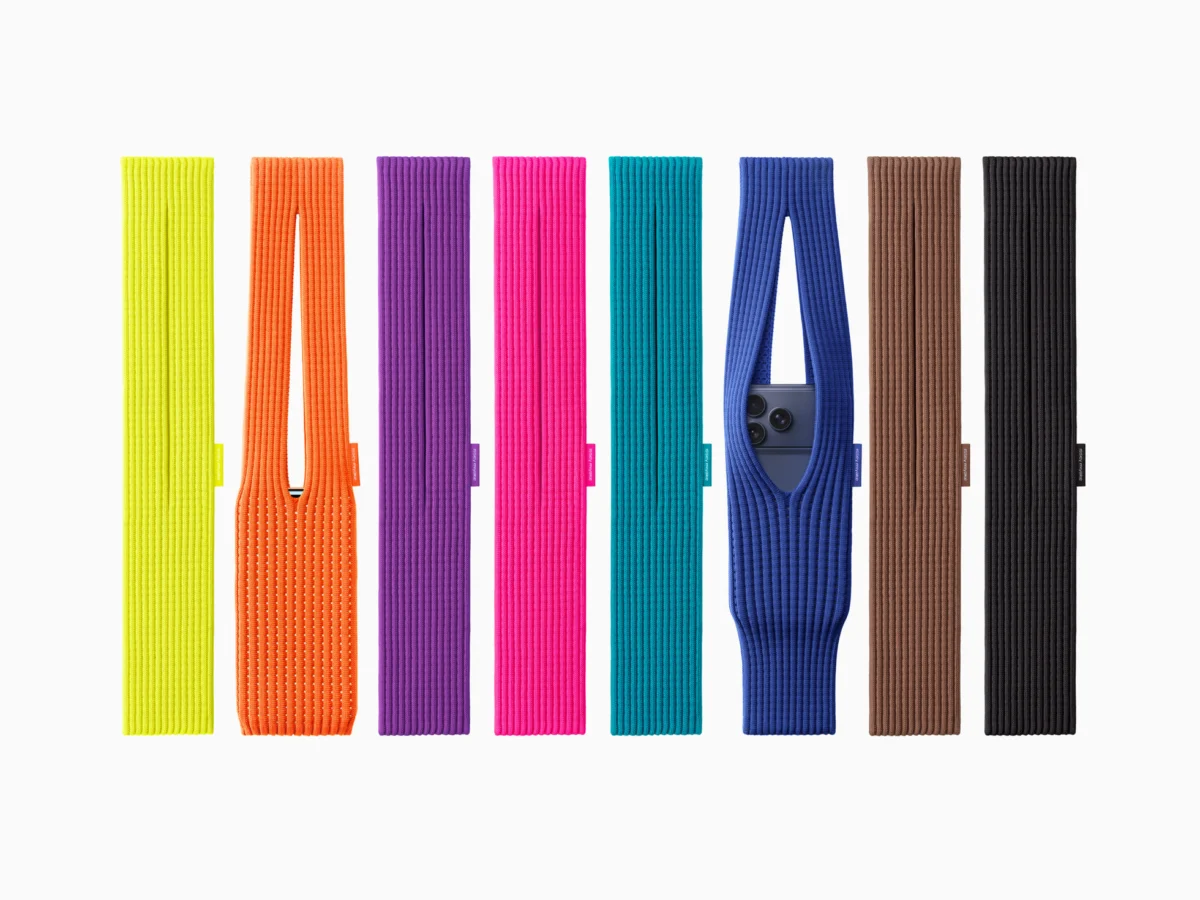
Apple Inc. has expanded its footprint in the luxury accessories market with the release of the limited-edition iPhone Pocket, a textile sling designed in collaboration with the renowned Japanese fashion label Issey Miyake. Available in two distinct iterations—a short size retailing for $149.95 and a long crossbody version priced at $229.95—the product merges consumer technology with avant-garde garment design.
The launch follows a history of high-end lifestyle accessories from Apple, including the $19 polishing cloth and various proprietary leather and woven bands. However, the iPhone Pocket represents a more direct crossover into contemporary apparel trends, leaning into the conceptual framework of minimalist design and the growing market for micro-accessories.
Design Philosophy and the Issey Miyake Heritage
The iPhone Pocket draws heavily from the design principles established by the late Japanese designer Issey Miyake, who revolutionized the fashion industry in 1997 with the introduction of the A-POC ("A Piece Of Cloth") concept. This methodology utilized advanced manufacturing techniques to create garments from a single continuous tube of fabric, minimizing waste and emphasizing structural integrity through textiles.
According to product descriptions provided by Apple, the iPhone Pocket utilizes a ribbed mesh structure that incorporates the signature pleating techniques long associated with the Miyake label. The textile is engineered to stretch, allowing users to view the device’s display through the open weave while maintaining a secure enclosure.

While Miyake passed away in August 2022, the collaboration bridges a longstanding ideological synergy between the designer and Apple’s co-founder, Steve Jobs. During the 1990s, Jobs sought to implement a standardized corporate uniform for Apple employees, inspired by practices observed at Japanese electronics firm Sony. Although Apple employees ultimately rejected the proposal, Jobs formed a lasting friendship with Miyake, who subsequently designed the black mock-neck sweaters that became Jobs’ signature personal uniform.
Market Context and the Rise of Wearable Tech Accessories
The release of the iPhone Pocket arrives amid a broader cultural shift toward hands-free device management and micro-accessorization. As mobile phones increasingly serve as primary tools for identification, payment, and daily logistics, consumers have gravitated toward carriers that reduce the need for traditional handbags.
Crossbody phone straps and dedicated device pouches have seen a steady rise in popularity across both mass-market and luxury sectors. Earlier this year, Apple introduced its own $59 crossbody strap, entering a market populated by specialized brands such as Bandolier. While photographic and utilitarian applications have driven demand for functional straps, aesthetic-driven accessories have simultaneously dominated consumer retail.
Industry analysts have noted parallels between the short version of the iPhone Pocket and the broader trend of decorative objectification in fashion—most notably exemplified by the craze surrounding Pop Mart’s Labubu art toys, miniature charms, and customized water bottle accessories. The short iPhone Pocket functions not merely as a protective sleeve, but as an accent piece intended to be affixed to larger handbags, aligning with a consumer preference for layered, customizable personal gear.
Pricing and Availability
The tiered pricing structure positions the accessory firmly in the luxury tier of tech-adjacent fashion.

- Short Size: Retailing at $149.95, this model is designed for handheld portability or attachment to larger bags, and is offered in an expanded color palette including a vibrant lemon yellow.
- Long Crossbody Size: Retailing at $229.95, this version is offered in a more limited range of three neutral colorways, intended for direct wear across the torso.
The product is available through select retail channels and online storefronts as a limited-edition release. Given the price point, market researchers anticipate the product will appeal primarily to design enthusiasts and collectors of both Apple hardware and Issey Miyake garments rather than the general consumer base.
Implications for the Tech and Fashion Sectors
The convergence of consumer electronics and luxury fashion is not a new phenomenon, but partnerships between original equipment manufacturers (OEMs) and high-fashion houses remain relatively rare outside of bespoke smartwatch bands. By collaborating conceptually with the Issey Miyake label, Apple continues to position its hardware as lifestyle artifacts rather than mere utility devices.
This strategy reinforces Apple’s long-standing emphasis on industrial design, signaling to the market that mobile devices are central components of personal presentation and style. As consumers increasingly view technology through the lens of fashion, products like the iPhone Pocket test the boundaries of price elasticity and brand equity, opening potential avenues for future cross-industry collaborations.