









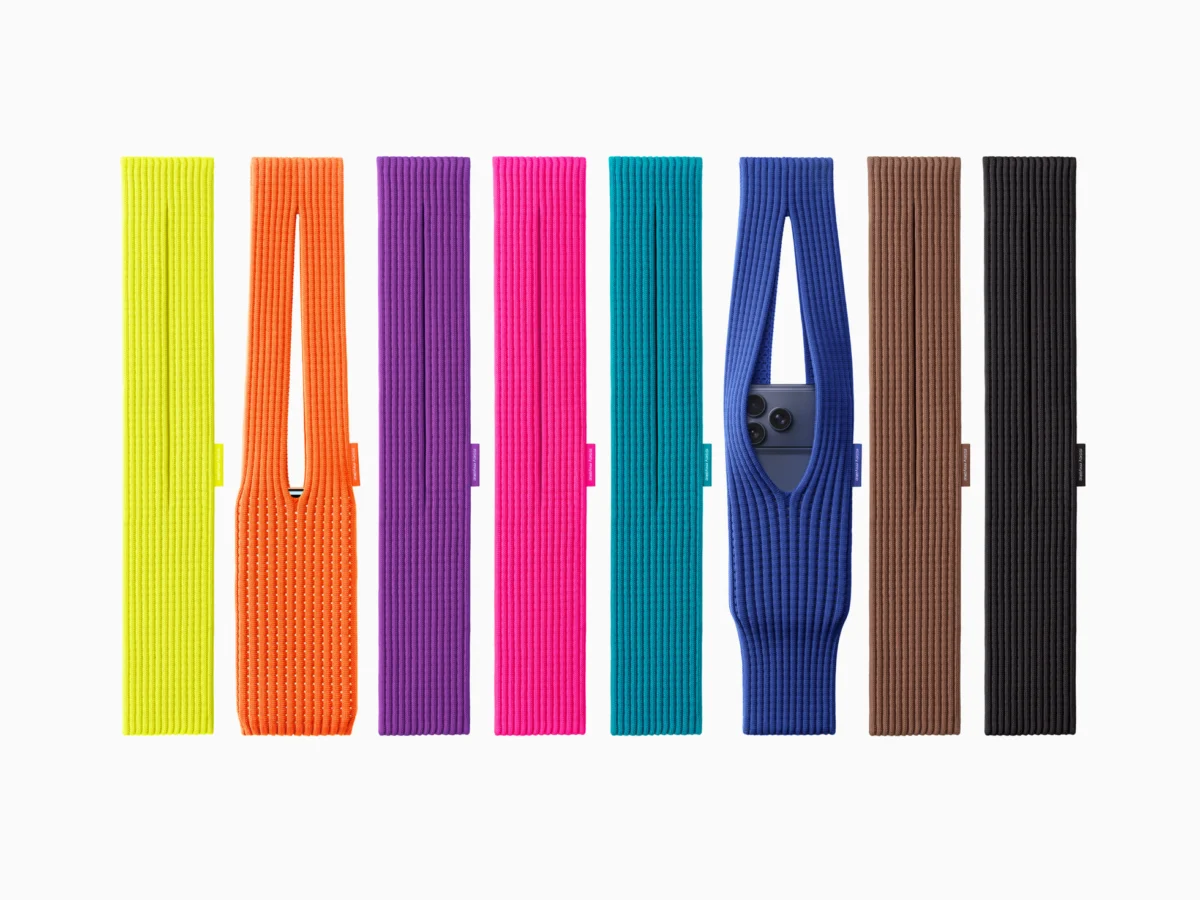
Apple has officially expanded its portfolio of premium accessories with the introduction of the iPhone Pocket, a minimalist cloth sling designed in collaboration with the Issey Miyake label. The product, which is currently available as a limited edition release, has sparked significant discussion within both the technology and fashion industries due to its unconventional design and premium pricing structure. The iPhone Pocket is offered in two primary configurations: a "short" size intended for handheld or bag-attachment use, retailing for $149.95, and a "long" crossbody version priced at $229.95.
The accessory is constructed from a specialized ribbed mesh textile that utilizes Issey Miyake’s signature "A Piece of Cloth" (APOC) design philosophy. According to product specifications released by Apple, the material is engineered to be both flexible and durable, featuring a unique open-weave structure that allows the iPhone’s display to remain partially visible while the device is encased. The launch marks a rare instance of Apple partnering with a high-fashion house for a dedicated textile accessory, signaling a continued push into the luxury lifestyle market.
Technical Design and the APOC Philosophy
The iPhone Pocket is more than a simple fabric sleeve; it is rooted in a revolutionary manufacturing process developed by the late Japanese designer Issey Miyake. Introduced in 1997, the APOC concept focuses on creating garments and accessories from a single, continuous piece of fabric. This method utilizes computer-controlled knitting machines to produce finished products with minimal waste and no traditional seams.
The iPhone Pocket utilizes a ribbed mesh structure that mirrors the iconic pleats associated with the Miyake brand. This design serves a dual purpose: providing a tactile, aesthetic appeal while offering a functional, expandable grip on the device. When the fabric is stretched, the "open textile" reveals the silhouette of the iPhone, allowing for notification glances and ambient light to pass through. The short version of the pocket is available in a wide spectrum of vibrant colors, including a "Lemon" yellow, while the long crossbody version is limited to a more conservative palette of three colors.
A Historical Collaboration: The Jobs-Miyake Legacy
The partnership between Apple and the Issey Miyake label is built upon a historical foundation that dates back to the early 1980s. Following a visit to Sony’s headquarters in Japan, Apple co-founder Steve Jobs became enamored with the concept of a corporate uniform. Sony’s employees wore functional, stylish jackets designed by Miyake, which Jobs believed could foster a sense of unity at Apple.

Although Apple employees famously rejected the idea of a mandated uniform, the relationship between Jobs and Miyake persisted. Jobs eventually commissioned Miyake to design a personal uniform for him, resulting in the creation of the iconic black mock-neck sweater that became synonymous with Jobs’ public persona and Apple’s brand identity.
While Issey Miyake passed away in 2022, his design studio continues to operate under his established principles. The iPhone Pocket represents the first formal product collaboration between the two entities available to the general public. Industry analysts suggest that this release is a tribute to the long-standing mutual respect between the tech giant and the fashion house, bridging the gap between Silicon Valley utility and Tokyo’s avant-garde aesthetic.
Pricing Analysis and the "Luxury Tax" Controversy
The pricing of the iPhone Pocket has drawn immediate comparisons to previous controversial Apple accessories, most notably the $19 polishing cloth released in 2021. At $149.95 and $229.95, the iPhone Pocket enters a price bracket usually reserved for high-end electronics or designer leather goods.
Market data indicates that Apple’s "Wearables, Home, and Accessories" segment has become an increasingly vital component of its quarterly revenue. In the fiscal year 2024, this category contributed significantly to the company’s bottom line, driven by high-margin items such as the Apple Watch and AirPods. The iPhone Pocket appears to target a specific demographic of "ultra-premium" consumers who prioritize brand heritage and design exclusivity over raw utility.
Critics argue that the product is a form of "lifestyle inflation," where the brand name carries more weight than the material cost of the item. However, proponents of the collaboration point out that Issey Miyake’s APOC items often retail for several hundred dollars in luxury boutiques, making the Apple-branded version consistent with the fashion label’s existing market positioning.
Chronology of Apple’s Specialized Accessories
The iPhone Pocket is the latest entry in a two-decade history of Apple experimenting with fabric and lifestyle accessories. To understand the context of the iPhone Pocket, it is necessary to look at the timeline of Apple’s accessory evolution:

- 2004: The iPod Socks. Apple released a set of six multi-colored cotton socks for the iPod, priced at $29. While initially mocked, they became a cult classic and remained in production until 2012.
- 2015: Hermes Apple Watch Straps. Apple’s first major foray into the luxury fashion world involved a partnership with the French house Hermes, introducing leather straps that cost more than the watch itself.
- 2021: The Polishing Cloth. A $19 micro-fiber cloth for cleaning Pro Display XDR and iPhone screens. Despite the price, it faced significant backorders upon launch.
- 2023: FineWoven Cases. Apple attempted to replace leather with a sustainable "FineWoven" fabric. The move was met with mixed reviews regarding durability and texture.
- 2024: The Crossbody Strap. Earlier this year, Apple released a $59 utilitarian crossbody strap. While functional, it was criticized for its "fiddly" attachment mechanism.
- 2025: The iPhone Pocket by Issey Miyake. The current release represents a shift from utilitarian fabric to high-fashion textile art.
The "Accessory for an Accessory" Market Trend
The iPhone Pocket arrives at a time when the consumer market is increasingly fixated on "accessorizing accessories." This trend is exemplified by the global popularity of items like Labubu—a designer art toy from Pop Mart that consumers frequently attach to high-end handbags. Labubu charms, which retail for approximately $30 at base price, can reach resale values of up to $10,000 for rare editions.
Similarly, the "Stanley Cup" craze saw consumers purchasing specialized pouches, charms, and even tiny backpacks specifically to fit onto their water tumblers. This cultural shift suggests that consumers are no longer satisfied with the primary product alone; they seek to customize and "dress" their technology and daily-use items.
The short version of the iPhone Pocket is designed to be tied to larger bags, such as the popular Telfar shopper or the Lululemon belt bag, serving as a decorative "pocket" rather than a primary carrying case. This aligns with the "mini-bag" trend seen in collections from brands like Baggu, Free People, and IKEA, all of which have released miniature keychain versions of their flagship products.
Market Implications and Future Outlook
The release of the iPhone Pocket suggests that Apple is exploring a future where the iPhone is not just a tool, but a piece of apparel. With the ubiquity of "Tap to Pay" and digital keys, the need for a traditional wallet or large handbag has diminished for many urban consumers. A "phone-only" lifestyle is becoming increasingly viable, creating a market vacuum for high-fashion "wearable" phone cases.
Industry analysts expect the iPhone Pocket to have a polarizing impact on Apple’s brand perception. On one hand, it reinforces Apple’s status as a luxury tastemaker capable of collaborating with the world’s most respected designers. On the other, it risks alienating the segment of the user base that views the company through a lens of practical engineering and value.
The limited-edition nature of the product suggests that Apple may be using the iPhone Pocket as a "market probe" to gauge interest in higher-priced textile collaborations. If successful, it could pave the way for more integrated fashion partnerships, potentially including apparel or larger-scale carry solutions. As the holiday shopping season approaches, the iPhone Pocket is positioned to be a high-visibility gift item, serving as a litmus test for the intersection of high tech and high fashion in 2026 and beyond.