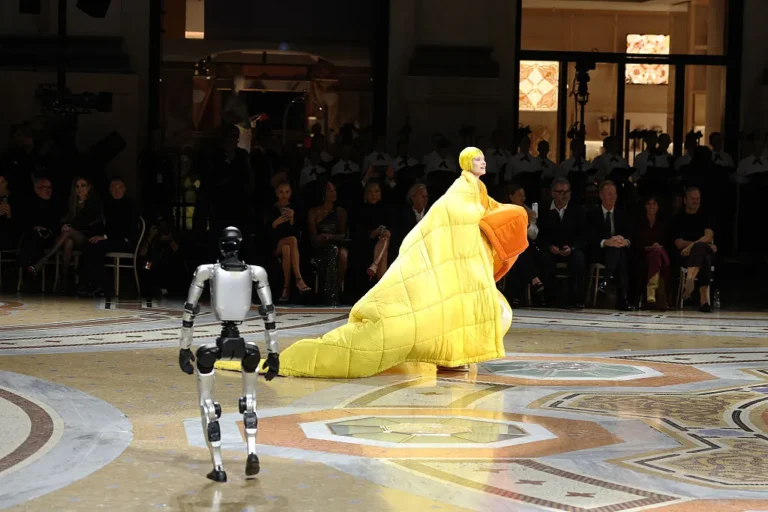










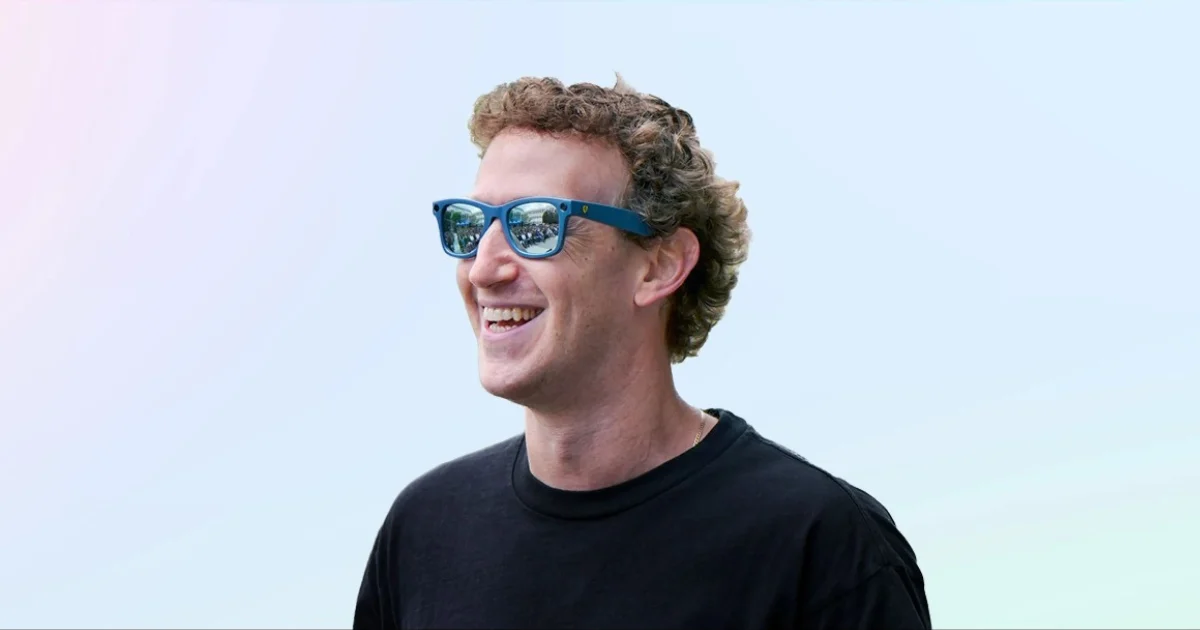
The convergence of high fashion and wearable technology reached a new milestone on Thursday as Meta Platforms CEO Mark Zuckerberg and his wife, Priscilla Chan, took a prominent position in the front row of Prada’s Fall/Winter 2026 Fashion Week show in Milan. The appearance has intensified industry speculation regarding a forthcoming luxury collaboration between the social media giant and the storied Italian fashion house. During the event, Zuckerberg was observed in a lengthy conversation with Lorenzo Bertelli, Prada Group’s Chief Merchandising Officer and the son of lead designer Miuccia Prada, suggesting that the relationship between the two entities has evolved beyond casual attendance into a strategic dialogue.
While Zuckerberg has undergone a public-facing aesthetic transformation in recent years—trading his signature minimalist gray t-shirts for tailored designer apparel and gold chains—analysts suggest his presence in Milan was motivated by business objectives rather than a burgeoning interest in seasonal silhouettes. The meeting follows a series of reports indicating that Meta is actively diversifying its smart glasses portfolio to include high-end luxury options, aiming to capture a demographic that remains underserved by the current athletic and casual offerings in the wearable tech market.
A Chronology of the Meta-Prada Strategic Alignment
The foundation for a Prada-branded Meta device was laid in the summer of 2025. In June of that year, reports from CNBC and other financial outlets indicated that Meta was in the early stages of developing AI-integrated eyewear with Prada, alongside other premium brands. This followed the relative success of Meta’s existing partnership with EssilorLuxottica, the French-Italian conglomerate that controls a dominant share of the global eyewear market, including the Ray-Ban and Oakley brands.
The timeline of Meta’s hardware journey provides essential context for the current Milan appearance. In 2021, Meta launched "Ray-Ban Stories," its first foray into smart glasses. While the product faced criticism for limited functionality and privacy concerns, it established the framework for the "Ray-Ban Meta" collection launched in late 2023. This second generation incorporated advanced Artificial Intelligence, allowing users to interact with Meta AI via voice commands and utilize the camera for multimodal tasks, such as translating text or identifying landmarks in real-time.
By June 2025, Meta expanded its reach into the sports performance sector with the unveiling of Oakley Meta glasses. The potential addition of Prada to this lineup represents the third pillar of Meta’s hardware strategy: the luxury fashion segment. The existing licensing agreement between Prada and EssilorLuxottica further facilitates this transition. In early 2024, the two companies renewed their partnership for the design, production, and distribution of eyewear under the Prada and Miu Miu brands. The agreement, which was set to expire at the end of 2025, was extended through December 31, 2030, with a provision for a further extension to 2035. This long-term stability provides a clear legal and operational runway for Meta to integrate its technology into Prada’s frames.
Market Performance and the Shift to AI Wearables
The financial and consumer data surrounding Meta’s wearable division suggests a rapidly maturing market. In February 2026, EssilorLuxottica reported a significant surge in demand for Meta-powered devices. According to the company’s annual sales report, it sold over 7 million units of AI-integrated glasses in 2025, a nearly fourfold increase from the 2 million units sold in 2024.
This growth is attributed to the increasing sophistication of on-board AI. Unlike earlier iterations that functioned primarily as wearable cameras, the 2025 models leveraged Meta’s Llama-based AI models to provide utility that consumers found more compelling. The "Oakley Meta" line, specifically, found a niche among athletes and outdoor enthusiasts who utilized the glasses for hands-free navigation and performance tracking.
However, the "Ray-Ban Meta" and "Oakley Meta" products occupy the mid-range and performance price tiers, respectively. A Prada version would likely command a significant premium, positioning the device as a status symbol rather than a utilitarian gadget. For Meta, this shift into the luxury tier is essential for brand elevation. By associating its AI technology with Prada’s heritage of craftsmanship and exclusivity, Meta seeks to shed the "Big Tech" utilitarian image and move toward becoming a lifestyle brand.
The Strategic Importance of Lorenzo Bertelli
The choice of Zuckerberg’s seatmate in Milan is of particular significance to industry observers. Lorenzo Bertelli, who joined the Prada Group in 2017, has been instrumental in the company’s digital transformation and sustainability initiatives. As the designated successor to the Prada empire, Bertelli has focused on bridging the gap between traditional luxury and the modern digital economy.
His dialogue with Zuckerberg suggests a partnership that involves more than just placing a Meta chip inside a Prada frame. Analysts speculate that the collaboration could involve bespoke AI features tailored for the luxury consumer, such as concierge-style AI assistants or integration with high-end retail experiences. Neither Meta nor Prada has officially confirmed the details of their discussions, and Meta has not yet responded to formal requests for comment regarding the Milan meeting.
Privacy Concerns and the Growing Consumer Backlash
Despite the commercial success of Meta’s hardware, the prospect of a Prada-branded device arrives at a time of heightened public sensitivity regarding surveillance. The expansion of smart glasses into the fashion mainstream has coincided with a visible "tech-lash" against pervasive monitoring.
In early 2026, reports emerged of widespread consumer resistance to home and public surveillance technologies. In various urban centers, citizens have been documented disabling or destroying "Ring" doorbells and "Flock" license-plate reading cameras. This sentiment has created a challenging environment for Meta, which is reportedly considering the addition of facial-recognition software to its wearable devices.
A recent report by The New York Times indicated that Meta has explored the technical feasibility of using smart glasses to identify individuals in real-time by cross-referencing their images with social media profiles. The news sparked immediate condemnation from privacy advocates and civil liberties groups. In response to these concerns, at least one independent developer has released a mobile application designed to detect the Bluetooth and Wi-Fi signals emitted by Meta’s glasses, effectively warning bystanders when they are in the vicinity of a recording-capable device.
If Meta proceeds with a Prada collaboration, the company must navigate the delicate balance between high-fashion desirability and the ethical implications of "always-on" hardware. Luxury consumers, who often prioritize discretion and privacy, may be hesitant to adopt technology that is increasingly viewed as a tool for invasive data collection.
Broader Implications for the Tech and Fashion Industries
The potential Meta-Prada partnership signals a broader trend of "technological couture," where Silicon Valley and European fashion houses are forced to collaborate to maintain relevance. For Meta, the hardware is a vessel for its AI software; the more people wear the glasses, the more data Meta collects to train its models and the more entrenched its ecosystem becomes in daily life.
For Prada, the partnership offers a way to lead the luxury market in innovation. As competitors like LVMH and Kering explore the metaverse and digital collectibles, Prada’s focus on functional, high-tech hardware could provide a more tangible value proposition to its clientele.
Furthermore, the success of Meta’s 7 million units sold in 2025 suggests that the "glass" form factor is winning the race for the next major consumer platform, outpacing more cumbersome mixed-reality headsets like the Apple Vision Pro. The emphasis on lightweight, fashionable frames that look like traditional eyewear—an area where Prada excels—is proving to be the key to mass-market (and luxury-market) adoption.
Future Outlook
As Milan Fashion Week continues, the industry awaits an official announcement. If the Prada AI glasses follow the development cycle of the Oakley Meta line, a launch could be expected as early as the holiday season of 2026 or the spring of 2027.
The success of such a product will likely depend on three factors: the seamlessness of the AI integration, the aesthetic appeal of the frames, and Meta’s ability to address the burgeoning privacy crisis. While the 2025 sales figures demonstrate a clear appetite for smart eyewear, the move into the front rows of Milan suggests that Meta is no longer content with just being a tech provider; it is aiming to become a fixture of the global luxury landscape. For now, the sight of Mark Zuckerberg in the front row of a Prada show remains the strongest signal yet that the future of Meta is not just in the cloud, but on the faces of the fashion elite.