






The premiere of Na Hong-jin’s highly anticipated film Hope at the 79th Cannes Film Festival marked a definitive shift in the aesthetic trajectory of this year’s red carpet, pivoting away from high-octane avant-garde experimentation toward a more restrained and refined elegance. As the sun set over the Croisette, the Palais des Festivals became a tableau of timeless black-tie dressing, delicate couture craftsmanship, and a sophisticated color palette dominated by whites, silvers, and blush tones. This year’s premiere was not merely a celebration of South Korean cinema’s continuing global ascendancy but also a showcase for the enduring power of historical fashion houses to reinvent classic silhouettes for a modern, global stage.
The Cinematic Context: Na Hong-jin’s Return to the Global Stage
The atmosphere surrounding the premiere was charged with significant industry expectation, as Hope represents the first directorial effort from Na Hong-jin since his 2016 masterpiece The Wailing. A sprawling, high-concept science fiction thriller, Hope was filmed in both South Korea and Europe, featuring a prestige international cast that reflects the increasingly borderless nature of contemporary cinema. The film follows the residents of a remote harbor town who make a mysterious discovery on the outskirts of their village, leading to a desperate struggle for survival against an unknown entity.
The presence of the film’s lead actors—Taylor Russell, Hoyeon, Michael Fassbender, and Alicia Vikander—drew massive crowds to the red carpet, signaling the film’s status as one of the festival’s most significant "out of competition" or "special screening" events. Industry analysts have noted that the production of Hope involved substantial investment from both Korean and international financiers, marking it as one of the most expensive projects in recent South Korean film history. This scale was mirrored in the fashion choices of the evening, which leaned heavily into the "High Jewelry" and "Haute Couture" tiers of the luxury market.
Taylor Russell and the Evolution of Dior Haute Couture
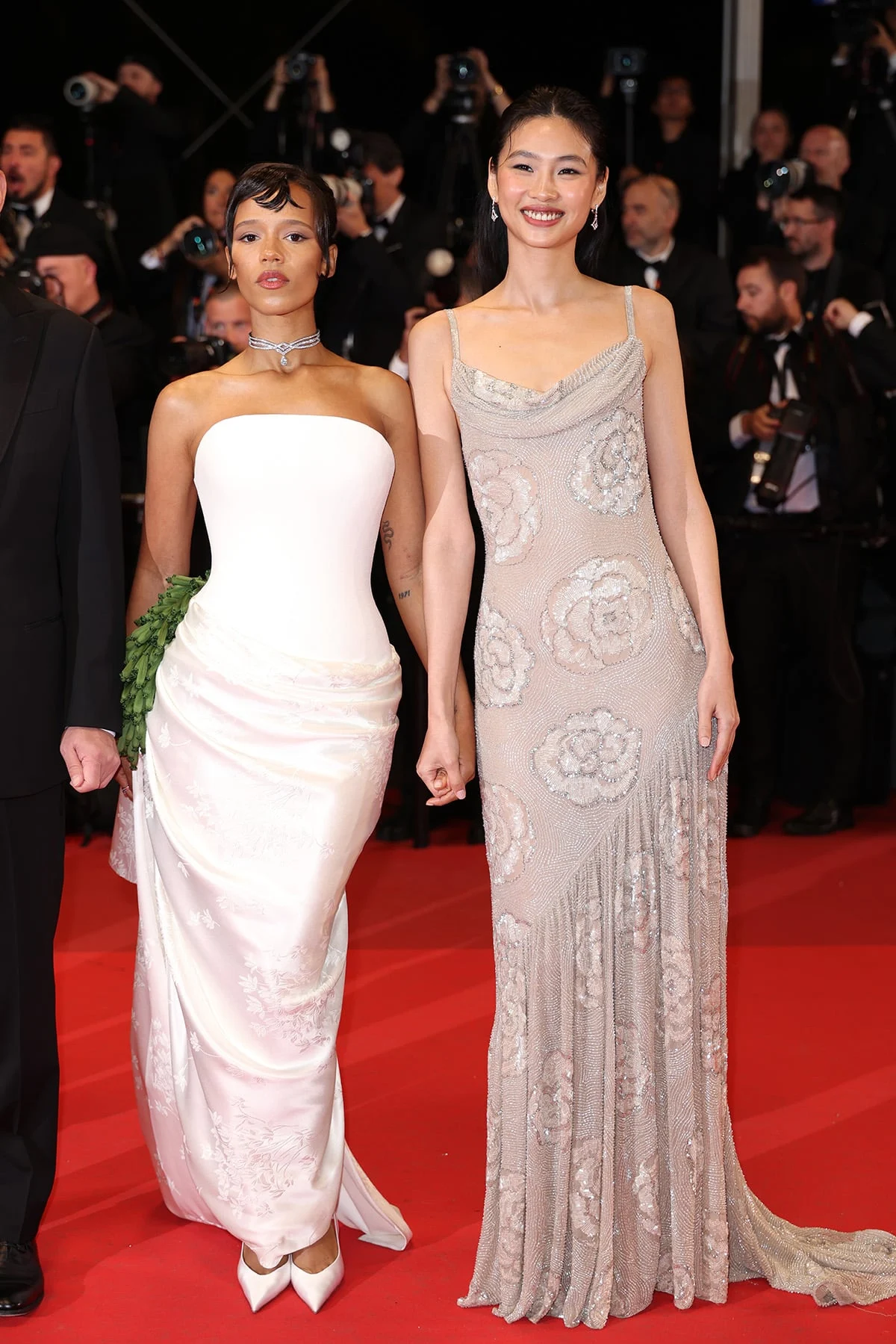
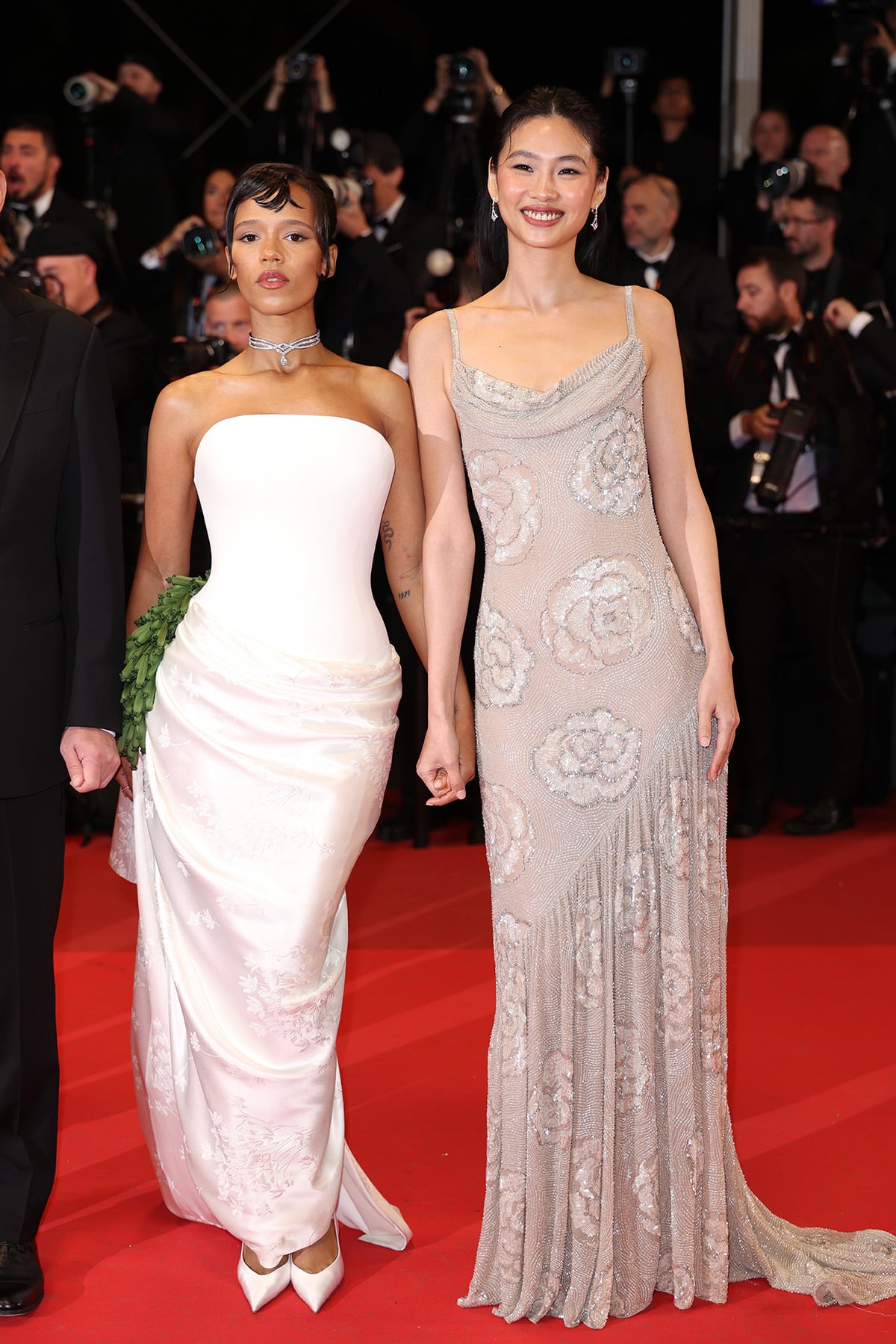
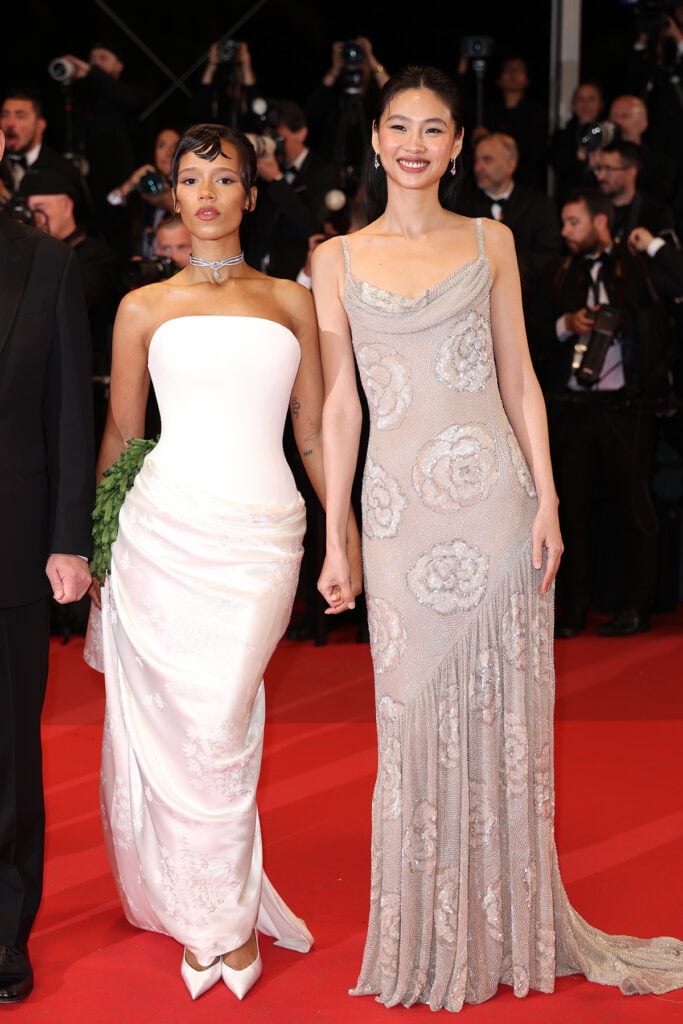
One of the evening’s most discussed arrivals was Taylor Russell, whose return to the red carpet has been a subject of intense interest among fashion critics. Russell, who rose to prominence not only for her acting but also for her experimental style as a long-term collaborator with Jonathan Anderson at Loewe, appears to be entering a new chapter of her sartorial narrative. For the Hope premiere, she opted for a custom Dior Haute Couture creation that emphasized architectural purity over the sculptural eccentricity she has previously favored.
The gown, a pristine white bustier silhouette, was a masterclass in the technical capabilities of the Dior ateliers. It featured shibori passementerie embroidery—a complex technique that involves intricate knotting and dyeing to create textured, three-dimensional patterns. While other stars, such as Greta Lee, have recently worn more voluminous iterations of this technique from Dior’s Spring 2026 Haute Couture collection, Russell’s version was notably streamlined. By placing the embroidery strategically at the hip, the design maintained a sleek, columnar profile that elongated the actress’s frame.
The look was finished with Chaumet jewelry, including high-jewelry earrings that caught the flashbulbs of the international press. Fashion historians note that Russell’s move toward Dior represents a broader trend of "classicization" among Gen Z and millennial icons, where the goal is to create "timeless" images that will remain relevant in archives for decades.
Hoyeon and the Louis Vuitton Romanticism
Hoyeon, the South Korean actress and model who became a global phenomenon following Squid Game, continued her long-standing relationship with Louis Vuitton. However, the gown she selected for the Hope premiere deviated from the rigid, futuristic, and often utilitarian aesthetic that creative director Nicolas Ghesquière has popularized over the last decade.
The silver embellished gown featured fluid beading and a softly draped neckline that suggested a lighter, more romantic sensibility. Observers noted that the camellia floral embroidery initially suggested the visual language of Chanel, but the construction remained quintessentially Louis Vuitton, utilizing high-tech metallic threads and a silhouette that balanced fluidity with structural integrity. The gown’s shimmer was designed to interact with the evening light of the French Riviera, creating a liquid-metal effect as Hoyeon ascended the famous red-carpeted steps.
This aesthetic pivot is indicative of a larger shift within Louis Vuitton’s evening wear strategy, which has begun to embrace softer, more feminine tropes while maintaining the brand’s reputation for technical innovation. Hoyeon’s role in the film Hope is said to be a pivotal one, and her choice of a gown that felt both ethereal and "armored" in silver reflected the high-stakes nature of the film’s plot.
The Power Couple: Michael Fassbender and Alicia Vikander
The premiere also served as a rare joint appearance for Michael Fassbender and Alicia Vikander, who both star in the film. The couple, known for their understated approach to celebrity, brought a sense of "old-school movie-star mystique" to the event.
Michael Fassbender adhered to the strictest codes of black-tie dressing, wearing a sharply tailored black double-breasted tuxedo. The choice of a double-breasted jacket is a nod to classic mid-century tailoring, providing a broader shoulder line and a more formal presence than the standard single-breasted variety. The addition of dark sunglasses during the initial arrival phase added a layer of "cool" that contrasted with the high-glamour gowns of his co-stars.
Alicia Vikander, a fellow Louis Vuitton ambassador, chose a pale blush gown that exemplified "understated elegance." The garment skimmed the body with precision before transitioning into sheer pleated panels through the skirt. This design allowed for significant movement, a quality that is highly prized on the Cannes red carpet, where the walk from the car to the theater is long and highly photographed. Vikander’s look was accessorized with Louis Vuitton High Jewelry and styled with soft, natural waves, reinforcing the "effortless" beauty standard that has become her trademark.
Chronology of the Evening
The event followed the traditional, rigorous schedule of a Cannes premiere:
- 18:30: The red carpet opened to invited guests and festival attendees, with the first wave of international influencers and minor cast members arriving.
- 19:15: The "Hope" lead cast arrived via a motorcade of official festival vehicles. Taylor Russell was the first of the main quartet to emerge, followed by Hoyeon.
- 19:30: Michael Fassbender and Alicia Vikander arrived together, pausing for an extended period at the base of the stairs to accommodate the global press corps.
- 19:45: The cast gathered at the top of the stairs for the traditional group photo with director Na Hong-jin and festival director Thierry Frémaux.
- 20:00: The screening commenced inside the Grand Théâtre Lumière, preceded by a five-minute standing ovation for Na Hong-jin as he entered the hall.
Technical Analysis and Supporting Data
The fashion on display at the Hope premiere represents a significant economic investment. According to industry data, a custom Haute Couture gown of the type worn by Russell or Hoyeon can require between 400 and 1,200 hours of manual labor at an atelier in Paris. The estimated market value of such garments, should they be available for retail, ranges from $150,000 to over $400,000, excluding the cost of high jewelry.
Furthermore, the "Earned Media Value" (EMV) generated by these appearances is a critical metric for brands like Dior and Louis Vuitton. Data from previous Cannes festivals suggests that a single viral red-carpet moment for a star of Hoyeon’s caliber can generate upwards of $10 million in EMV within the first 48 hours, as images are distributed across social media, digital news outlets, and print fashion magazines.
The choice of "Hope" for such a high-profile fashion showcase is no coincidence. The South Korean film market has become the fourth largest in the world by box office revenue, and Korean stars currently hold some of the most lucrative brand ambassadorships in the luxury sector. The premiere served as a nexus where the economic power of the Korean film industry met the marketing machinery of French luxury conglomerates.
Broader Impact and Implications
The Hope premiere reinforces several key trends that are likely to dominate the remainder of the 2026 awards season. First is the return of "refined" dressing. After several years of "chaos dressing" and viral, meme-ready fashion, the industry appears to be gravitating back toward garments that prioritize fabric quality, tailoring, and heritage techniques.
Second, the event highlights the maturing of the "Brand Ambassador" model. Rather than simply wearing a dress from a collection, stars like Russell and Vikander are working with designers to create looks that align with their personal brand and the specific project they are promoting. This collaborative approach results in a more cohesive and authentic visual narrative.
Finally, the reception of Hope itself suggests that international audiences are hungry for high-budget, auteur-driven genre cinema. As the lights came up in the Palais, the early reactions from critics indicated that Na Hong-jin has delivered another visceral, thought-provoking work. The combination of high-fashion glamour and high-concept cinema ensures that Hope will remain a central topic of conversation as it moves toward its global theatrical release.
The evening concluded with a private dinner hosted by the production company, where the cast and select industry figures celebrated the film’s successful launch. For Cannes, the night was a reminder that while the films are the heart of the festival, the red carpet remains its most visible and influential pulse.