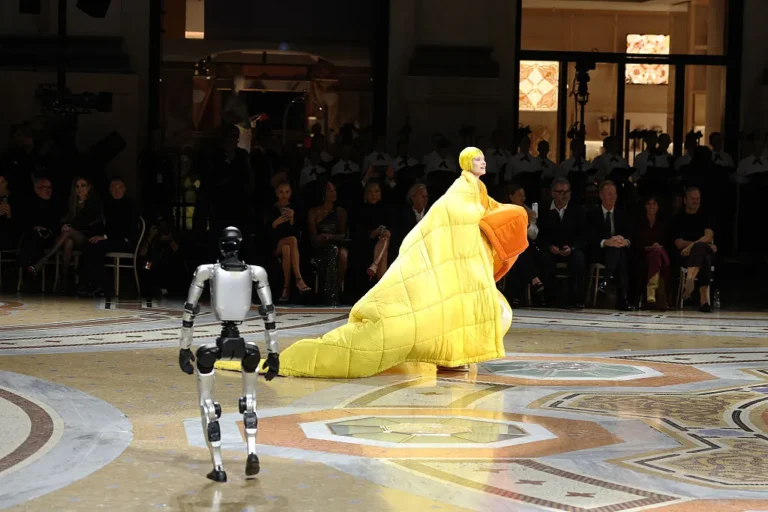











The presence of Meta Platforms Inc. Chief Executive Officer Mark Zuckerberg at the Prada Fall/Winter 2026 fashion show in Milan has fueled intense industry speculation regarding the next phase of the social media giant’s wearable technology strategy. Zuckerberg, accompanied by his wife, Priscilla Chan, was observed in the front row of the prestigious event on Thursday, engaging in high-profile discussions with Lorenzo Bertelli, Prada’s Chief Merchandising Officer and the son of the fashion house’s lead designer, Miuccia Prada. While Meta has not officially confirmed a formal product development agreement with the Italian luxury brand, the high-visibility interaction aligns with previous reports indicating that Meta is seeking to expand its smart eyewear portfolio into the ultra-luxury segment.
This appearance comes at a pivotal moment for Zuckerberg’s public persona and Meta’s hardware ambitions. Over the past two years, Zuckerberg has undergone a notable aesthetic transformation, moving away from his trademark grey t-shirts in favor of curated, high-end fashion choices. However, industry analysts suggest that his presence in Milan transcends personal branding. The meeting with Bertelli serves as the strongest visual evidence to date that Meta is moving closer to a partnership with Prada, a move that would bridge the gap between Silicon Valley technology and European high fashion.
The Strategic Alliance with EssilorLuxottica
The foundation for a potential Meta-Prada collaboration lies in Meta’s existing and highly successful partnership with EssilorLuxottica, the French-Italian eyewear conglomerate that owns Ray-Ban and Oakley. EssilorLuxottica has been the manufacturing and design engine behind Meta’s smart glasses since the debut of "Ray-Ban Stories" in 2021. The relationship was further solidified in early 2026 when EssilorLuxottica announced record-breaking sales figures for its AI-integrated eyewear.
According to financial reports released in February 2026, the company sold over 7 million units of Meta-powered AI glasses in 2025, a significant jump from the 2 million units sold in 2024. These figures include both the mainstream Ray-Ban Meta collection and the more recently launched Oakley Meta line, which caters to the performance and athletic markets. The tripling of sales suggests that consumer appetite for "invisible" wearable technology—devices that look like traditional accessories but house advanced computing power—is reaching a mass-market tipping point.
Prada and EssilorLuxottica already maintain a deep-rooted commercial relationship. The two companies recently renewed their licensing agreement for eyewear under the Prada and Miu Miu brands, extending the partnership through at least December 31, 2030, with an option to continue until 2035. Given that EssilorLuxottica already manages the production of Prada’s standard optical and sun frames, the infrastructure to integrate Meta’s internal hardware into Prada-designed frames is already largely in place.
A Chronology of Meta’s Wearable Ambitions
The trajectory of Meta’s entry into the eyewear market reveals a calculated move from experimental hardware to lifestyle integration.
- September 2021: Meta (then Facebook) launches Ray-Ban Stories. The first-generation glasses focused primarily on photography and video capture, lacking sophisticated AI or augmented reality (AR) features.
- September 2023: The launch of Ray-Ban Meta smart glasses introduces "Meta AI," allowing users to interact with a voice assistant. This model saw a marked improvement in audio quality and camera resolution.
- June 2025: CNBC and other financial outlets report that Meta is actively developing smart glasses prototypes with both Oakley and Prada.
- September 2025: Meta officially unveils the Oakley Meta line, targeting the "gorpcore" and outdoor enthusiast demographic with rugged, sports-oriented frames.
- February 2026: Sales data confirms the commercial viability of the product category, with 7 million units shipped globally in the previous calendar year.
- Late February 2026: Zuckerberg’s appearance at the Prada show in Milan signals that the "luxury" tier of the product line is nearing a public reveal.
Expanding the Market: The Luxury Pivot
For Meta, a partnership with Prada represents more than just a new frame style; it is a strategic move to capture the "High Fashion" demographic that has historically remained skeptical of wearable technology. While Ray-Ban appeals to a broad, mid-tier consumer base and Oakley captures the utility-focused athlete, Prada offers Meta access to the luxury market and the cultural prestige associated with Milanese design.
Market analysts believe that establishing smart glasses as a luxury symbol is essential for overcoming the "tech-first" stigma that hindered previous industry attempts, such as Google Glass. By embedding Meta’s multimodal AI—which can see, hear, and translate the wearer’s environment in real-time—into a Prada frame, Meta positions the device as a status symbol rather than a mere gadget. This "stealth tech" approach allows the hardware to disappear into the aesthetic, making the technology more palatable to fashion-conscious consumers who prioritize style over technical specifications.
Privacy Concerns and the Surveillance Backlash
Despite the commercial success and the potential for a Prada collaboration, Meta’s hardware expansion is occurring against a backdrop of increasing consumer resistance to surveillance technology. The proliferation of smart glasses, which can record video and take photos with minimal visual notification to bystanders, has sparked a renewed debate over public privacy.
In early 2026, reports emerged of a growing "anti-surveillance" movement in several major U.S. and European cities. This movement has manifested in the destruction of Flock surveillance cameras and the widespread disconnecting of Ring doorbells. The "always-on" nature of AI glasses has made them a primary target for privacy advocates.
Criticism intensified following a report by The New York Times in February 2026, which claimed Meta is exploring the addition of facial-recognition features to its smart glasses. Such a feature would theoretically allow a wearer to identify strangers in real-time by cross-referencing their faces with social media profiles. The backlash was immediate, leading to the development of third-party mobile applications designed to detect the Bluetooth and Wi-Fi signals emitted by Meta glasses, effectively warning nearby individuals that they may be under surveillance.
Meta has remained cautious in its public statements regarding facial recognition, emphasizing that any such features would be subject to strict regulatory compliance and "privacy-first" design. However, the potential for a Prada-branded device—which would be even more indistinguishable from standard eyewear—heightens concerns that "surveillance fashion" could become a permanent fixture of urban life.
Industry Implications and Future Outlook
The potential launch of Prada AI glasses would likely trigger a response from Meta’s primary competitors, most notably Apple and Alphabet (Google). While Apple has focused its efforts on the high-end "Vision Pro" spatial computing headset, rumors persist that the company is working on a lighter, more consumer-friendly "Apple Glass" product. A Prada-Meta partnership would give Meta a significant head start in the "fashion-forward" wearable space, a niche that Apple typically dominates through its Apple Watch collaborations with brands like Hermès.
From a technical perspective, the Prada version of Meta’s glasses is expected to utilize the third-generation Meta AI architecture. This system features improved multimodal capabilities, allowing the AI to provide context-aware suggestions based on what the user is looking at. For example, a user at a museum could ask the glasses for the history of a specific painting, or a traveler in Milan could receive real-time translation of menus and street signs projected via audio or a small heads-up display.
The financial implications for EssilorLuxottica are equally significant. By successfully transitioning from a traditional manufacturer to a tech-integrated hardware partner, the company has insulated itself against the stagnation of the traditional eyewear market. The 7 million units sold in 2025 represent a new, high-margin revenue stream that leverages Meta’s R&D budget while utilizing EssilorLuxottica’s global distribution network.
As of this report, Meta has not responded to requests for comment regarding Zuckerberg’s meeting with Prada executives or the timeline for a potential product release. However, the optics of the Milan visit suggest that an official announcement may be imminent, possibly coinciding with Meta’s annual "Connect" developer conference later this year.
If successful, the Prada Meta AI glasses will serve as a litmus test for the luxury tech market. They represent a gamble that consumers are willing to pay a premium for a device that blends high-status branding with the intrusive, yet convenient, power of artificial intelligence. Whether the public will embrace these devices as the next essential accessory or reject them as an encroachment on personal privacy remains the defining question for the future of Meta’s hardware division.