








The intersection of high fashion and generative artificial intelligence reached a significant milestone during the recent New York Fashion Week as Alta, the fashion-technology startup founded by Jenny Wang, unveiled its first major brand integration. By partnering with the storied New York City label Public School, Alta has transitioned from a standalone consumer application into a sophisticated enterprise solution, effectively bringing the long-imagined "digital closet" technology popularized by the 1995 film Clueless into the modern e-commerce era. This move follows a period of rapid scaling for the company, which secured $11 million in a Series A funding round led by Menlo Ventures last year, signaling a shift in how consumers interact with digital apparel and how brands conceptualize the online shopping journey.
The Evolution of Digital Wardrobes: From Movie Screen to Mobile App
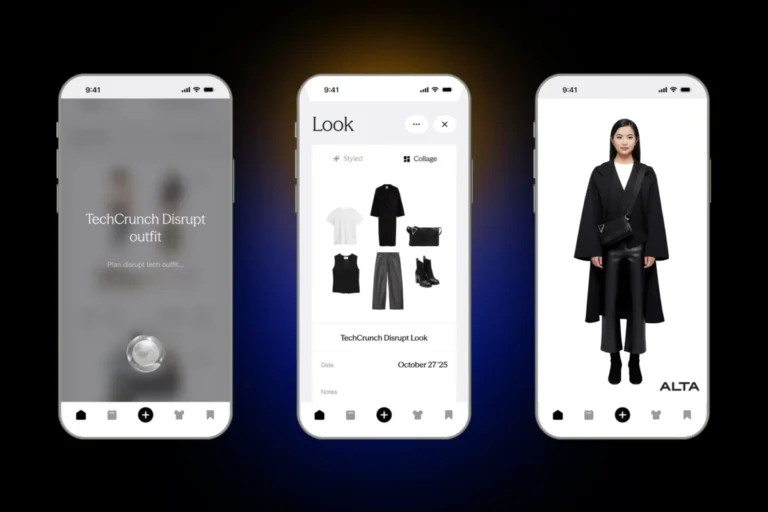
For decades, the fashion industry has sought to replicate the seamless, computerized outfit-planning interface used by the character Cher Horowitz in Clueless. While various attempts at virtual try-on (VTO) technology have surfaced over the last decade, many were hampered by uncanny-valley graphics, slow processing speeds, and a lack of personalization. Alta’s approach leverages contemporary advancements in generative AI and 3D modeling to allow users to create highly accurate virtual avatars that reflect their own physical likeness and body proportions.
Since its official launch in 2023, Alta has experienced exponential growth. According to founder Jenny Wang, the platform has facilitated the generation of more than 100 million outfits. This level of engagement helped the app earn accolades from prestigious publications such as Time and Vogue, which recognized it as one of the premier technological innovations of the year. The platform’s ability to allow users to "digitize" their existing physical closets while simultaneously trying on new items from thousands of partner brands has created a unique hybrid ecosystem of utility and inspiration.
Financial Milestones and Strategic Backing
Alta’s trajectory was significantly accelerated by its $11 million funding round. The participation of Menlo Ventures, a firm known for its early bets on transformative technologies, provided the capital necessary to refine Alta’s AI engine. However, the diversity of the investor pool was perhaps more telling of the company’s broad appeal. The round included the Anthology Fund (the venture arm of AI research giant Anthropic), highlighting the technical rigor of Alta’s backend.
The fashion industry’s endorsement was equally robust. Investors included world-renowned models Karlie Kloss and Jasmine Tookes, as well as Jenny Fleiss, the co-founder of Rent the Runway. The presence of these figures suggests a belief that Alta’s technology addresses a fundamental pain point in the fashion cycle: the gap between seeing a garment and understanding how it will actually look on a specific individual. By providing a personalized avatar, Alta aims to reduce the friction of online shopping, which traditionally suffers from high return rates due to fit and styling uncertainty.
Technical Superiority: Redefining the Virtual Try-On Experience
In a competitive landscape where giants like Zara and luxury houses like Balmain have already experimented with digital avatars, Alta has sought to distinguish itself through technical efficiency. Wang notes that while earlier iterations of virtual try-on tech—such as those utilized by Zara—often limited users to trying on four items at a time with a processing delay of up to two minutes, Alta’s engine can render at least eight items simultaneously in a matter of seconds.
This speed is critical for maintaining consumer engagement in an "instant-gratification" digital economy. The technical hurdle of "layering" digital garments—ensuring that a jacket sits correctly over a sweater without graphical clipping—is a complex computational task. Alta’s ability to handle multiple layers in real-time allows for "complete look" styling, a feature that more closely mimics the physical experience of dressing up. This capability is what Wang describes as the "Clueless" closet experience, evolved for a generation that expects seamless mobile integration.
A Landmark Collaboration: Public School New York’s Digital Re-debut
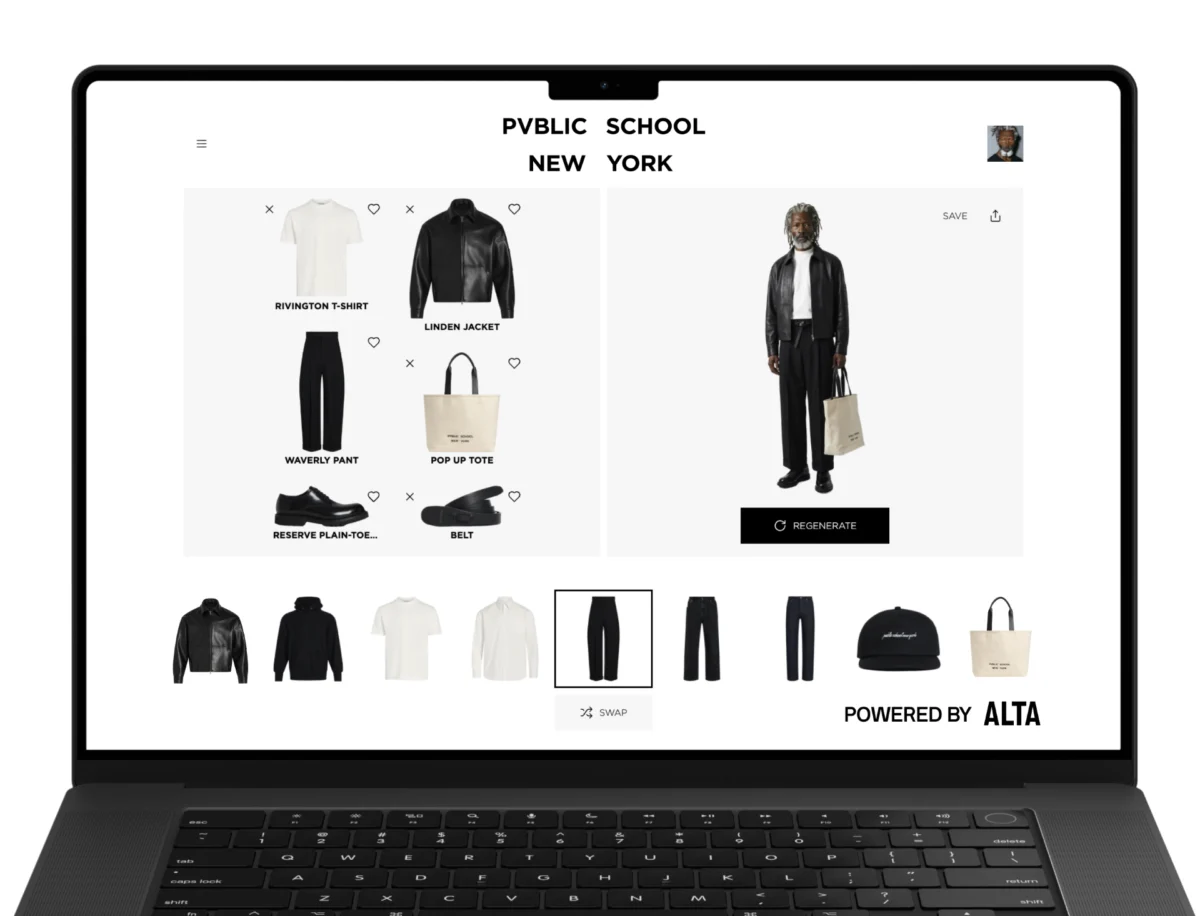
The partnership with Public School New York (PSNY) represents a strategic pivot for Alta toward enterprise-level integration. Public School, led by designers Dao-Yi Chow and Maxwell Osborne, recently returned from a multi-year hiatus, using New York Fashion Week as a platform for their grand re-debut. The collaboration marks the first time a designer has embedded Alta’s personal avatar and styling technology directly into their own e-commerce website.

The integration manifests as a "Style with Alta" icon on the Public School product pages. When clicked, shoppers are transported to an interface where they can style the brand’s latest collection on their pre-existing Alta avatar. This bridge between the brand’s storefront and the user’s digital identity is a significant departure from traditional e-commerce, where the shopper is usually a passive observer of professional model photography.
Dao-Yi Chow emphasized the necessity of this shift, stating that the current landscape requires viewing technology as a core business partner rather than a secondary tool. "It’s not 2015 anymore," Chow remarked, acknowledging that AI should be used to extend brand storytelling and allow consumers to experience the brand’s aesthetic even if they cannot visit a physical boutique. The connection between the two companies was facilitated by the founder of Poshmark, an angel investor in both entities, illustrating the tight-knit nature of the fashion-tech ecosystem.
Chronology of Alta’s Development
The path to the Public School integration follows a clear timeline of strategic growth:
- 2023: Alta launches its standalone consumer app, focusing on personal closet digitization and social styling.
- Late 2023: The company surpasses 50 million outfit generations and begins forming partnerships with major industry bodies, including the Council of Fashion Designers of America (CFDA).
- Early 2024: Alta secures $11 million in Series A funding, bringing in a mix of Silicon Valley VCs and fashion icons.
- Mid 2024: Partnership with Poshmark is announced, allowing users to cross-reference their digital closets with the massive resale marketplace.
- February 2025 (NYFW): Alta unveils the "enterprise experience" with Public School New York, marking its transition into website-embedded technology.
The Rise of Agentic Commerce and the Personal Identity Layer
Looking beyond simple styling, Jenny Wang views Alta as a foundational element for what she calls "agentic commerce." In this vision, AI agents will eventually handle many aspects of shopping, from finding the best deals to ensuring a garment fits a user’s specific wardrobe and body type. To make this work, there must be a "data layer" that contains a comprehensive understanding of the shopper’s preferences, past purchases, and physical likeness.
"We need a data layer that understands the shopper’s style preferences, such as their closet, past purchases, and their avatar, likeness, and body, which is Alta," Wang explained. By acting as this "personal identity layer," Alta aims to become the central hub for a consumer’s digital fashion life. If a user’s body measurements and existing wardrobe are already stored within an Alta avatar, the AI can proactively suggest new items that not only fit the user’s body but also complement what they already own.
Broader Market Implications and the Future of Retail
The implications of Alta’s growth extend to the sustainability and profitability of the fashion industry. High return rates—often exceeding 30% for online apparel sales—are a massive financial and environmental burden for brands. By providing a high-fidelity virtual try-on experience, Alta could significantly mitigate the "size and fit" issues that drive these returns.
Furthermore, the data generated by 100 million outfit combinations provides brands with unprecedented insights into how consumers want to style their pieces. Instead of relying solely on sales data, designers can see which items are frequently paired together in the virtual world, informing future collections and inventory management.
As Alta prepares to announce more brand partnerships in the coming months, the focus remains on making the technology ubiquitous. The goal is to move toward a future where a shopper’s digital avatar follows them across the internet, allowing for a consistent and personalized experience on any retailer’s site. The successful integration with Public School New York serves as a proof of concept for this vision, suggesting that the era of the "one-size-fits-all" digital storefront may be coming to an end, replaced by a highly personalized, AI-driven "Clueless" closet for every consumer.