





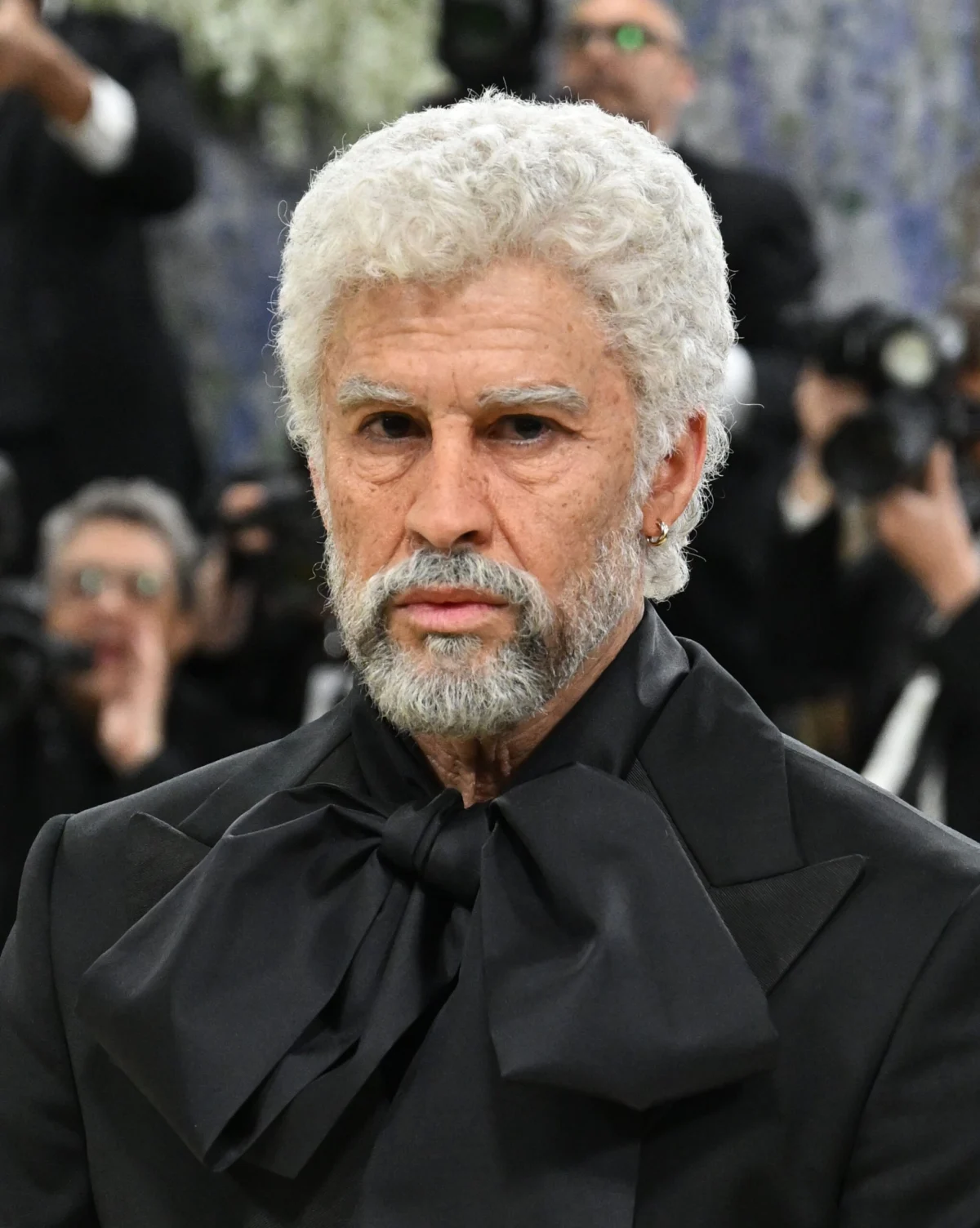
Fifty-three years, Bad Bunny quipped, was the comical duration of his "old-age transformation" for the 2026 Met Gala. In reality, the intricate process of embodying a distinguished elder statesman for fashion’s most anticipated night demanded approximately three hours of application by prosthetics designer Mike Marino, followed by a laborious half-hour of removal. This immersive artistry, however, was the culmination of six weeks of meticulous preparation: digital scanning, conceptual design, precise sculpting, and skilled sewing to create a series of hyper-realistic prosthetic pieces that would redefine the artist’s presence on the iconic steps.
Bad Bunny, born Benito Antonio Martínez Ocasio, is no stranger to challenging conventions. For his Met Gala appearance, he deliberately chose to engage with a specific facet of the exhibition’s "Costume Art" theme, focusing on bodies historically marginalized or overlooked in both fashion and art. His intention was to explore aging as a form of artistic expression. To achieve this ambitious vision, his team sought out Marino, an acclaimed prosthetic designer whose extensive portfolio includes breathtaking work on films such as The Batman and The Irishman, and series like The Penguin and True Detective. Marino is also famously the creative force behind Heidi Klum’s elaborate Halloween transformations for over a decade, demonstrating his unparalleled ability to craft convincing illusions of altered physicality.
The Artistic Vision: Aging as a Canvas
Marino, whose past projects include digitally aging The Weeknd for his Dawn FM album cover and completely metamorphosing Heidi Klum into a marble statue just hours before Bad Bunny’s appointment, recognized the unique demands of this particular commission. For the Met Gala, he felt a departure from the typical portrayal of age was necessary. Instead of depicting a weary or stooped figure, Marino opted for a more realistic, almost regal, interpretation of aging. "The fact that he’s distinguished and well-groomed is on purpose," Marino explained. He believed that presenting a decrepit image would be incongruous with the celebratory and glamorous nature of the Met Gala.
This approach aligned with a long-standing tradition in art history, where idealized representations of individuals and the human form have been prevalent. Marino drew parallels to the works of renowned portrait artists like John Singer Sargent and Diego Velázquez, who often enhanced their subjects’ appearances to convey greater beauty, vibrancy, or power. "If you think about famous portrait painters like [John Singer] Sargent and [Diego] Velázquez, they were often painting an idealized image of the subject, manipulating how they look to make them look more beautiful, or more colorful, more powerful in that portrait," Marino stated. He specifically referenced Velázquez’s portrait of King Philip IV and the propagandistic paintings of Napoleon I as examples of artistic license used to elevate the subject. Marino felt that Bad Bunny’s carefully cultivated distinguished look, achieved through meticulous grooming and the prosthetic aging, evoked the essence of a Velázquez or Sargent portrait brought to life.
The Science and Art of Realistic Aging
To achieve this nuanced portrayal of aging, Marino meticulously studied octogenarian Puerto Ricans, drawing inspiration from their natural signs of time. Simultaneously, he analyzed Bad Bunny’s existing facial structure and skin texture, understanding that a deep comprehension of facial anatomy is as crucial for a prosthetic designer as it is for a plastic surgeon. However, the objective was not to diminish the signs of aging but to artfully accentuate them. "I look at how he might age—that’s how I approach makeup," Marino elaborated on his process. "I look at signals; for instance, I might see a little line [on the face] and then exploit that line, or I think, maybe this eye-bag will develop this way if he maintains his healthy lifestyle. I’m like someone’s worst nightmare," he added with a laugh, highlighting the precise and almost prescient nature of his craft.
The creation of Bad Bunny’s prosthetics involved a complex, multi-stage process. This included specialized pieces for the neck, cheeks, eye bags, forehead, eyelids, and even earlobes and hands. The journey began with Marino taking precise skin color samples and conducting a 3D laser scan of Bad Bunny’s face and head. These detailed digital scans served as the blueprint for a 3D-printed model of the singer’s head. Upon this model, Marino sculpted clay, meticulously shaping every line, crease, and pore to achieve the desired aged appearance. "I sculpt every line, every crease, every pore into the clay and that’s what you’ll see on the prosthetics," Marino explained, emphasizing the painstaking detail involved.
From Clay to Skin: The Craftsmanship of Prosthetics
The subsequent steps involved transforming these miniature clay sculptures into tangible prosthetic pieces. This intricate process included creating molds from the clay sculpts and then casting them using a supersoft, ultra-thin silicone. These silicone pieces were the actual prosthetics that would be adhered to Bad Bunny’s skin. Recognizing that this was Bad Bunny’s first experience with prosthetics, Marino prioritized comfort and realism. "Because Benito had never worn prosthetics before, the pieces were very thin," Marino noted. "I thought it would probably be easier if they were very soft, thin pieces so that you could still feel somewhat normal [wearing them]." This thoughtful consideration ensured that the artist could move and perform with a degree of naturalness, despite the extensive application.
Once the silicone prosthetic pieces were cast, Marino employed an airbrush to meticulously apply every detail intended to age the skin. This included subtle freckles, pores, visible blood vessels, dark circles, and liver spots, all contributing to a convincing illusion of advanced age. For Bad Bunny’s hands, the airbrush was used to accentuate tendons, veins, and knuckles, lending them a subtly arthritic appearance, as Marino described.
The Crown of White: Hair and Beard Artistry
A pivotal element of the "Old Bunny" persona was his striking white hair, eyebrows, mustache, and beard. Each of these components required painstaking hand-knotting onto fine lace nets, a labor-intensive undertaking that consumed weeks of work for Marino and his dedicated team, which included accomplished wigmaker Diana Choi and renowned hairstylist Carla Farmer. To perfectly replicate Bad Bunny’s natural hair texture and pattern, Marino captured 360-degree photographs from all angles. This detailed analysis allowed them to create a white-haired version that seamlessly integrated with the singer’s own hair once a bald cap was applied. "We took 360-degree photographs from above and below to determine his hair texture and pattern, and then made a white-haired version of that so that once his bald cap was on, it went right on top," Marino explained. "And he had eyebrows, too," he added, underscoring the comprehensive nature of the transformation.
The Day of the Gala: A Seamless Transformation
The day of the 2026 Met Gala saw the commencement of Bad Bunny’s transformation with the careful flattening of his natural hair and the precise application of a bald cap. This was followed by the meticulous gluing of the prosthetic pieces using a potent, medical-grade adhesive. "Every centimeter of it was glued on, and so when he moved, the pieces moved with him," Marino confirmed, highlighting the secure and integrated nature of the application. Over the prosthetics, Marino then adhered the meticulously crafted eyebrows, beard pieces, and mustache, culminating in the placement of the custom-made wig.
Public Reaction and Societal Reflection
The moment Bad Bunny ascended the Met Gala steps, his transformed appearance immediately ignited a wave of reactions. The prevailing sentiment was one of awe and admiration for the artistry involved. However, the striking visual also prompted deeper reflection. Val Monroe, a 75-year-old contributor to Allure, observed the stark contrast between the societal appreciation for Bad Bunny’s aged persona and the often-unflattering treatment of actual elderly individuals. "I think it’s fun that Bad Bunny showed up in an old-age costume… but I’d love for him to keep his costume on for a week, so I could watch his response to the inevitable ageism, the slights small and large, likely to confound him as he traveled in his older (young) body," she wrote in a poignant op-ed. "The most fun thing about his costume? He can take it off."
This observation about societal hypocrisy was not lost on Marino. He acknowledged the immense pressure, particularly within Hollywood, to maintain a youthful appearance. "It’s hard for a celebrity to look in the mirror and see flaws, because in today’s world, that’s exploited and [certain types of media] can be mean-spirited and write articles showing them at their worst," he stated. For Marino, his collaboration with Bad Bunny on this project held significant meaning, serving as a powerful artistic statement on the Met Gala’s grand stage. "There’s a beauty to aging, and Benito put that on display. He was trying to show people, ‘This is what it will be like and see how good I look.’ And I think that’s a very cool thing," he concluded, emphasizing the artist’s intention to celebrate, rather than conceal, the natural progression of time.
The 2026 Met Gala, themed around the evolution of fashion and its relationship with societal perceptions, provided a unique platform for Bad Bunny to engage with themes of aging, beauty, and the often-unseen realities of the elderly. Marino’s masterful creation not only served as a stunning visual spectacle but also sparked a vital conversation about how age is perceived, represented, and treated in contemporary society. The enduring impact of "Old Bunny" lies not just in his memorable appearance, but in the critical dialogue it initiated about the beauty and dignity inherent in every stage of life.
Further insights into the 2026 Met Gala’s beauty trends and inspirations are available.
Discover the behind-the-scenes preparations for NINGNING’s Met Gala beauty look.