







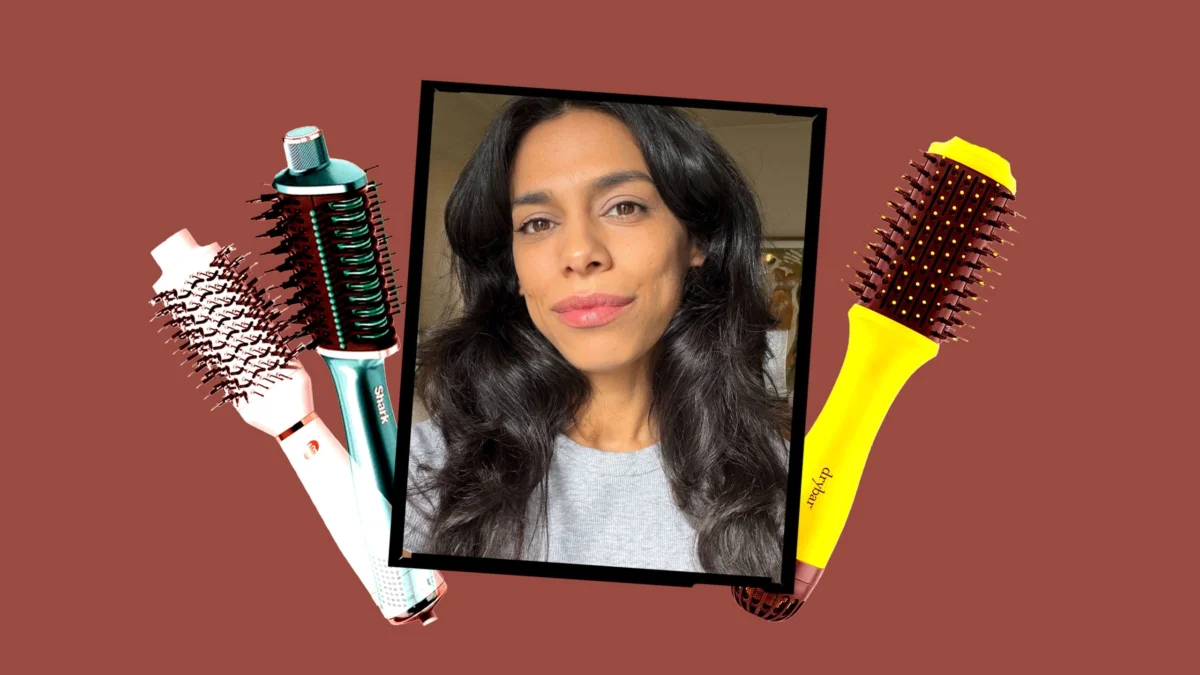
The modern beauty landscape is continuously shaped by innovative tools that promise to simplify complex styling routines. Among these, the hair-dryer brush has emerged as a significant player, offering a hybrid approach that combines the drying power of a traditional hairdryer with the shaping capabilities of a round brush. This versatile device has garnered widespread popularity for its potential to deliver salon-quality blowouts with reduced effort and time. However, achieving optimal results and ensuring hair health requires a nuanced understanding of its application and maintenance. Industry experts and product testing methodologies shed light on how consumers can maximize the benefits of this popular styling tool.
The Art of the Perfect Blowout: Preparation is Paramount
Achieving a "glorious blowout" with a hair-dryer brush, as emphasized by New York City-based hairstylist Takisha Sturdivant-Drew, hinges on meticulous preparation. The foundation of any successful style begins with clean, thoroughly detangled hair that is towel-dried to a damp state. The application of a leave-in conditioner is a crucial first step, providing a slip that aids in detangling and imparts essential moisture, thereby creating a smoother canvas for styling.
"Start at the root and work your way down to the ends without putting too much heat or tension on the hair," Sturdivant-Drew advises, underscoring a technique that prioritizes hair integrity. This method ensures that the heat is distributed evenly and avoids concentrating stress on any single section, which can lead to breakage.
For those seeking added volume, particularly individuals with straight or wavy hair textures, a specific technique involving the rotation of the dryer brush is recommended. "Twist the dryer as you go in a circular motion to add volume if that’s what you are looking for," suggests Sturdivant-Drew. This dynamic movement helps to lift the roots and create body.
For individuals with curly or coily hair textures aiming for a sleek finish, the hair-dryer brush can be a valuable tool, often used in conjunction with other styling aids. Following up with a flatiron can further refine the look. Alternatively, for a softer finish or to manage frizz, the brush can be used with the heat turned off, effectively smoothing the hair cuticle. Sturdivant-Drew elaborates on this for curly hair: "If you want it straight, you should use the blow-dryer brush and, right under it, use another brush to smooth those kinky strands all the way out." This multi-tool approach highlights the adaptability of the hair-dryer brush within diverse styling regimens.
Mitigating Heat Damage: A Proactive Approach to Hair Health
The inherent nature of heat styling tools necessitates a focus on minimizing potential damage. Experts agree that the most effective strategy involves selecting a hair-dryer brush equipped with multiple temperature settings. This feature allows users to tailor the heat intensity to their specific hair type and condition, a critical factor as not all hair can withstand the same level of heat.
"Not all hair types call for the same heat level," states a cosmetic chemist Ginger King. She emphasizes the importance of "paying attention to how your hair reacts to different temperature settings as you become more familiar with the tool." This observational approach empowers users to learn their hair’s unique needs and adjust their styling accordingly.
The application of a heat protectant product is another cornerstone of damage prevention. These formulations, often containing ingredients like meadowfoam seed oil, light polymers, or silicones, create a protective barrier on the hair shaft. "If you’re using heat styler or any heat products directly on hair, using a heat protectant… can help to minimize damage as they can form a coating on hair," King explains. This coating acts as a buffer, absorbing and dispersing heat more evenly, thus reducing the direct impact on the hair’s protein structure.
Ultimately, the most potent defense against heat damage remains the judicious use of heat. While hair-dryer brushes offer convenience, prolonged or excessive exposure to high temperatures can compromise hair health. Moderation and mindful styling practices are key to maintaining the integrity and vitality of the hair.
User-Friendliness: Revolutionizing Home Styling
The ease of use of hair-dryer brushes is a frequently cited advantage, distinguishing them from traditional blow-drying methods. Professional hairstylists and everyday consumers alike have lauded their intuitive design.
"Blow-dry brushes are so incredibly user-friendly—you can achieve a great blow-dry at home without needing pro-level skills," remarks hairstylist Baker. The integrated design eliminates the need to juggle a separate dryer and brush, streamlining the styling process. "They take about half the time compared to juggling a dryer and a round brush," Baker adds, highlighting a significant time-saving benefit.
Furthermore, for individuals experiencing physical limitations, such as pain or reduced mobility in their hands or arms, the hair-dryer brush presents a highly accessible alternative. "Because they’re easier to maneuver, you’re less likely to tire out your arms or need a second round of styling with a flat iron or curling iron," Baker notes. This enhanced maneuverability makes professional-looking results achievable for a broader demographic.
However, it is essential to commence styling on hair that is approximately 70% dry or has been given a preliminary rough dry with a traditional blow-dryer. "Starting on damp strands helps prevent breakage and ensures a smoother, frizz-free finish, as these tools aren’t designed for sopping-wet hair," a crucial caveat for optimal performance and hair safety.
Maintaining Peak Performance: The Importance of Cleaning
The longevity and effectiveness of a hair-dryer brush are directly linked to its cleanliness. Regular maintenance ensures that the tool operates at its full potential and prevents the transfer of product buildup to the hair.
New York City-based hairstylist Devin Toth advises, "Every brand has different features, but if yours has a filter, remove the dust from it every week." Clogged filters can impede airflow, reducing drying efficiency and potentially overheating the device.
Removing trapped hair from the bristles is another essential cleaning step. Toth suggests using a comb or a specialized boar bristle brush cleaner for this purpose. This not only keeps the brush tidy but also ensures that the bristles can effectively grip and style the hair.
Product residue, such as from hairsprays, mousses, or serums, can accumulate on the bristles over time. Los Angeles-based hairstylist Cherin Choi recommends wiping down the brush with a damp cloth to remove such buildup. For more stubborn residue, a small amount of rubbing alcohol can be employed to dissolve and lift stubborn product remnants.
The impact of neglecting cleaning is significant. Atlanta-based hairstylist Tukia Allen emphasizes that "product/hair buildup can prevent your tools from working at full capacity." Similarly, Brian O’Connor, a Nashville-based hairstylist, warns that a dirty hot tool can lead to "uneven heating of the hair," resulting in inconsistent styling and potential damage. Therefore, consistent cleaning is not merely a cosmetic concern but a functional necessity for maintaining the tool’s performance and safeguarding hair health.
The Rigorous Process Behind Product Recommendations
The selection of recommended hair-dryer brushes, as with all beauty products featured in reputable publications, is underpinned by a comprehensive testing and review process. This methodology is designed to provide consumers with reliable, evidence-based guidance.
The testing protocols acknowledge the diversity of hair types, textures, and concerns. Unlike some beauty categories where a single product might serve a broad audience, hair-care products and tools are often formulated or designed to address specific needs. For instance, a product intended for fine, color-treated hair might not perform optimally for thick, coarse, or curly textures. Therefore, a multi-faceted testing approach is adopted.
For reviews of hair-dryer brushes, a diverse panel of editors, writers, contributors, and professional stylists is enlisted. This group represents a wide spectrum of hair characteristics, including varying lengths, curl patterns, thicknesses, and natural and treated colors. Their testing experiences encompass different hair-drying techniques and desired styling outcomes.
Performance is evaluated across key categories: efficacy, which assesses how well the tool achieves its primary function (e.g., drying, smoothing, volumizing); versatility, its ability to perform various styles or adapt to different hair types; ease of use, the intuitive nature of its operation; and value, the overall worth in relation to its price point. This holistic evaluation ensures that recommendations are well-rounded and consider practical application alongside performance metrics.
A Commitment to Inclusivity in Product Testing
The philosophy behind product testing and editorial recommendations extends to a commitment to inclusivity. The aim is to ensure that any product endorsed by the publication genuinely serves the needs of its diverse readership. This principle is particularly relevant in the beauty industry, where individual experiences and results can vary significantly.
The editorial teams themselves comprise individuals from a wide range of ages, skin tones, hair textures, genders, and backgrounds. This internal diversity is considered essential for fair and comprehensive product assessment. The question posed is critical: can a product truly be deemed "the best" for a specific demographic if it has not been rigorously tested by individuals within that demographic?
For example, a skincare product recommended for mature skin would be considered inadequate if its testing pool consisted solely of individuals under 30. Similarly, a hair tool claimed to be effective for curly hair would lack credibility if it had never been tested on natural curls. By actively seeking opinions from a broad array of outside testers and industry experts, publications strive to provide recommendations that are not only accurate but also reflective of the varied experiences and needs of their audience. This dedication to diverse testing ensures that consumers can trust the recommendations, knowing they are based on real-world application across a wide spectrum of users.