







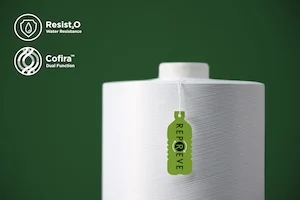
GREENSBORO, N.C. — UNIFI, Inc., the global textile innovator recognized for its industry-leading REPREVE® recycled fiber brand, has officially unveiled two major technological advancements designed to reshape the landscape of synthetic textiles: Cofira™ and Resist2O™ Pro. Announced in early October 2026, these product lines represent a strategic pivot toward multifunctional, high-performance materials that address the dual demands of sustainability and technical utility in the global supply chain. The launch, timed to precede major industry gatherings in Munich and Portland, underscores UNIFI’s commitment to providing manufacturers with versatile tools that simplify the complex production requirements of modern apparel, industrial gear, and home furnishings.
The Technological Breakthrough of Cofira
Cofira™ represents a significant departure from traditional yarn construction. By engineering a hybrid structure that fuses the desirable physical traits of both filament and spun yarns, UNIFI has created a versatile material that bridges a long-standing gap in textile manufacturing. Historically, brands have had to choose between the structural integrity and moisture-wicking efficiency of continuous filament yarns and the soft, tactile aesthetics of spun yarns.
Cofira disrupts this binary by delivering the "best of both worlds." The yarn provides the enhanced performance characteristics of filament—such as tensile strength, consistent diameter, and efficient dye uptake—while simultaneously offering the natural, comfortable hand-feel typically associated with spun fibers. This versatility allows designers to utilize a single yarn source for a wide array of end-use applications, ranging from high-motion performance apparel and athletic footwear to heavy-duty upholstery and outdoor equipment.
By integrating synthetic, blended, and functional fiber technologies directly into the yarn, Cofira provides a modular platform for fabric manufacturers. This means that mills can customize the yarn’s performance profile early in the production cycle, reducing the reliance on secondary finishing processes that often increase costs and carbon footprints.
Resist2O Pro: The Future of Durable Water Resistance
Alongside the introduction of Cofira, UNIFI has expanded its chemical-free performance offerings with the debut of Resist2O™ Pro. This technology addresses one of the most critical challenges in the modern textile industry: achieving high-level water resistance without the use of per- and polyfluoroalkyl substances (PFAS) or other persistent topical coatings.
The textile industry has faced immense pressure from global regulatory bodies to phase out fluorinated chemistries due to their environmental persistence. Conventional water-repellent treatments often rely on these "forever chemicals," which pose long-term risks to aquatic ecosystems and human health. Resist2O Pro offers a radical alternative by building water resistance directly into the fiber structure. Because the protective properties are engineered at the molecular level rather than applied as a surface finish, the water resistance is inherently more durable. It does not wash off, abrade away, or lose efficacy after repeated laundry cycles, ensuring that the finished garment maintains its performance integrity for a significantly longer lifecycle.
A Chronology of Innovation and Strategic Positioning
UNIFI’s announcement follows a multi-year trajectory of R&D focused on circularity and high-performance engineering. Since the widespread adoption of REPREVE, which has diverted billions of plastic bottles from landfills, UNIFI has sought to apply the same rigorous scientific standards to the functional performance sector.
The following timeline illustrates the strategic development of these technologies:
- Early 2024: UNIFI identifies market gaps in "dual-function" yarns and non-fluorinated water repellents.
- Late 2024–2025: Laboratory prototyping of the hybrid filament-spun structure that would become Cofira.
- Early 2026: Field testing of Resist2O Pro prototypes with key partners in the outdoor apparel sector to ensure durability in extreme weather conditions.
- September 30, 2026: Official corporate announcement of the product launch.
- October 13–14, 2026: Global showcase at Performance Days Munich.
- October 26–28, 2026: North American debut at the Functional Fabric Fair in Portland, Oregon.
Industry Context and Market Implications
The global synthetic yarn market is currently experiencing a period of intense transformation. Data from recent textile trade reports indicate that manufacturers are increasingly prioritizing "all-in-one" fiber solutions to mitigate supply chain volatility. By streamlining the number of raw materials needed for complex fabric construction, UNIFI is positioning itself as an essential partner for brands aiming to reduce complexity in their logistics and procurement chains.
Furthermore, the emphasis on recycled materials within the Cofira and Resist2O Pro lines aligns with the broader environmental, social, and governance (ESG) goals of global apparel giants. As sustainability reporting becomes mandatory in several jurisdictions—including the European Union under the Ecodesign for Sustainable Products Regulation (ESPR)—the demand for materials that are both functional and traceable is at an all-time high.
"These new products bring true innovative solutions through their multifunctional capabilities," said Eddie Ingle, CEO of UNIFI. "They help reduce the complexities associated with high-performance products. Engineered with recycled materials, these high-performance tech yarns are both versatile and sustainable."
Technical Analysis: Performance Through Engineering
The integration of recycled materials into high-performance textiles has historically been viewed as a compromise. Earlier iterations of recycled fibers often faced hurdles regarding tensile strength and dye consistency. However, UNIFI’s latest developments suggest that the gap between virgin and recycled fibers has been effectively closed.
Cofira’s ability to support various functional technologies means that it can serve as a "base layer" for moisture management, anti-microbial treatments, or thermal regulation. From an engineering standpoint, this reduces the number of distinct yarns a manufacturer must stock. Instead of holding inventory for five different yarn types, a mill can hold one core Cofira platform and customize it via specific fiber additives, significantly optimizing inventory turnover and reducing waste.
Resist2O Pro, meanwhile, changes the manufacturing workflow for water-resistant fabrics. Traditionally, fabrics are woven or knitted and then subjected to a "wet" finishing process, where chemicals are applied to the surface. This process requires significant water usage and energy for drying. By incorporating the performance at the fiber level, UNIFI allows manufacturers to skip the topical application stage entirely, resulting in a cleaner, more efficient manufacturing process that consumes less water and energy.
Broader Impact and Future Outlook
The introduction of these technologies is poised to influence several key segments of the textile industry:
- Athletic Apparel: The demand for gear that performs in varied conditions—from high-intensity training to casual wear—makes Cofira a natural fit for sportswear designers.
- Outdoor and Industrial Gear: With the durability of Resist2O Pro, manufacturers of tents, backpacks, and industrial tarps can offer long-lasting, water-resistant products that meet modern environmental standards.
- Home Textiles: The comfort aspect of Cofira makes it ideal for the soft-furnishings market, where consumers are increasingly demanding furniture fabrics that are as durable as they are tactile.
As UNIFI prepares to present these innovations at the Performance Days Munich and Functional Fabric Fair, industry analysts expect a positive reception from the sourcing and design community. The dual-pronged approach—addressing both the aesthetic/tactile needs of the consumer and the rigorous environmental requirements of global brands—positions UNIFI as a leader in the next generation of textile manufacturing.
By focusing on the intersection of performance and sustainability, UNIFI is not merely launching new products; it is advocating for a more efficient way to build the fabrics of the future. The shift toward inherent performance, rather than added-on performance, represents a fundamental change in the manufacturing philosophy that will likely define the coming decade of textile engineering.
For manufacturers, the adoption of these technologies signifies a path toward more predictable, efficient, and sustainable production cycles. As the industry continues to move away from legacy chemistry and toward high-tech, circular alternatives, UNIFI’s portfolio expansion serves as a blueprint for how legacy manufacturers can successfully transition into a high-performance, sustainable future.