








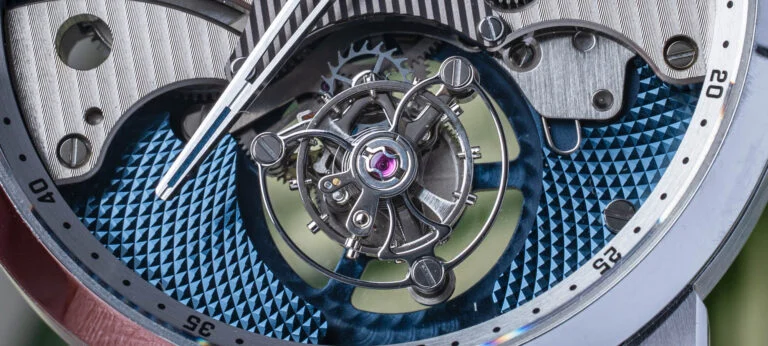
The Swiss watchmaking industry, long a bastion of tradition and intricate craftsmanship, is facing a critical juncture as the once-exclusive tourbillon complication becomes increasingly accessible. A recent press release detailing a new $25,000 watch featuring a tourbillon movement has ignited a debate about the true value proposition of such timepieces, particularly when they rely heavily on third-party components with minimal in-house modification. This development signals a significant shift in the horological landscape, prompting a re-evaluation of what constitutes genuine innovation and luxury in the modern era.
The Evolving Landscape of the Tourbillon
For decades, the tourbillon stood as the zenith of mechanical watchmaking prowess. Invented by Abraham-Louis Breguet in 1795, its primary function was to counteract the detrimental effects of gravity on the balance wheel and escapement, thereby enhancing timekeeping accuracy. This complex mechanism, requiring meticulous assembly and adjustment, became a symbol of a brand’s technical mastery and a significant differentiator in the ultra-luxury segment.
Historically, acquiring a watch with a tourbillon was an undertaking reserved for the most discerning collectors, with prices often reaching well into the six figures. Brands like Patek Philippe, Audemars Piguet, and Jaeger-LeCoultre cemented their reputations by producing exquisite tourbillon timepieces, showcasing their deep reserves of engineering talent and artisanal skill. The exclusivity of the tourbillon was intrinsically linked to its cost of production and the specialized knowledge required to create and finish such a movement.
The Rise of Accessible Tourbillons
The last decade has witnessed a dramatic "democratization" of the tourbillon. This transformation can be attributed to several key factors. Firstly, advancements in manufacturing technologies, including CNC machining and sophisticated tooling, have lowered the production costs of complex components. Secondly, the emergence of specialized movement manufacturers, such as Horage and BCP Tourbillons in Switzerland, and later, a significant influx of tourbillon movements from China, have made these complications available at a fraction of their former price.

This shift has been profound. What was once a $140,000 complication has, in some instances, become available for around $2,000-$10,000, depending on the finishing and the brand’s mark-up. This accessibility has, in turn, challenged the value proposition of brands that have historically relied on the tourbillon as their primary statement of technical achievement.
The $25,000 Tourbillon: A Case Study in Value
The press release that sparked this discussion highlighted a $25,000 watch that, upon closer inspection, utilizes a largely unmodified third-party tourbillon movement. The accompanying marketing materials, characterized by hyperbolic language, unnecessary capitalization, and scattered foreign terms, attempted to position the watch as a pinnacle of horological achievement. However, the core of the criticism lies in the brand’s apparent attempt to leverage the historical prestige of the tourbillon without undertaking significant in-house development or innovation.
The article’s author expressed frustration with the marketing’s inflated claims, likening the brand’s approach to a child boasting about a simple task. The implication is that simply casing a pre-made tourbillon movement, with minimal alterations, does not constitute a substantial achievement in watchmaking, especially at a premium price point. The lack of transparency regarding the edition size, further fueling the "scarcity" narrative, also drew criticism.
Industry Reactions and Implications
While specific statements from the brand in question are not available in the provided text, the industry often responds to such critiques in various ways. Brands that genuinely innovate with tourbillons, such as Jaeger-LeCoultre with its multi-axis gyrotourbillons or Greubel Forsey with its inclined tourbillons, often highlight their proprietary research and development. These brands focus on the engineering, the unique complications derived from the tourbillon, and the intricate finishing that sets their creations apart.
The proliferation of accessible tourbillons has forced these high-end brands to evolve. They are no longer able to rely solely on the presence of a tourbillon to justify exorbitant prices. Instead, they are compelled to innovate further, developing more complex and original complications, employing novel materials, or offering unparalleled levels of hand-finishing. This competitive pressure, while challenging for some, ultimately benefits the consumer by pushing the boundaries of what is possible in watchmaking.

The implications of this trend extend beyond the luxury market. For aspiring watch enthusiasts, the availability of affordable tourbillons offers a tangible entry point into appreciating complex mechanical movements. However, it also necessitates a more informed approach to purchasing, encouraging buyers to look beyond the mere presence of a tourbillon and to investigate the brand’s genuine contribution to the watch’s creation.
The Future of the Tourbillon
The tourbillon’s journey from a scientific necessity to a decorative complication, and now to a widely accessible feature, is a fascinating testament to technological progress and market dynamics. While its original purpose of enhancing accuracy has been largely superseded by modern watchmaking techniques, its appeal as a mechanical spectacle endures.
The challenge for brands moving forward will be to differentiate themselves in a crowded market. For those selling tourbillon watches at premium prices, this means demonstrating genuine value through in-house innovation, unique design, exceptional craftsmanship, and compelling brand narratives. Simply presenting an off-the-shelf tourbillon movement in an expensive case is likely to be met with increasing scrutiny from a more educated consumer base.
The $25,000 watch, in this context, serves as a poignant example of the ongoing dialogue between tradition and innovation, exclusivity and accessibility, and perceived value versus intrinsic worth in the world of haute horlogerie. As the industry continues to evolve, the true measure of a tourbillon watch will increasingly lie not just in its spinning cage, but in the ingenuity and dedication that went into its creation.