









The 2026 FIFA World Cup, set to be hosted by the United States, Canada, and Mexico, is fast approaching, but its journey to kick-off is already overshadowed by a series of profound controversies, challenging the very essence of FIFA’s campaign slogan, "Football Unites the World." The choice of the US as a primary host, amidst a political backdrop marked by contentious issues such as mass deportations and widely debated military engagements, creates an incongruous setting for an event that purports to embody global unity and fair play. This stark juxtaposition has prompted significant criticism, with the New Republic drawing a particularly unsettling historical parallel, suggesting the tournament "threatens to be a modern-day taste of Hitler’s 1936 Summer Olympics, when Germany hosted the global games while aiming at the same time to highlight Nazi domination."
With former President Donald Trump assuming the influential role of chair of the US task force for the tournament, concerns have mounted that the 2026 World Cup could descend into one of the most compromised events in the competition’s storied history. This is a substantial claim, especially when considering FIFA’s well-documented past marred by scandal.
A History of Scandal: FIFA’s Troubled Past
FIFA, the global governing body of football, has long struggled with perceptions of corruption and ethical lapses, a reputation that predates the current controversies. Its past is littered with incidents that have significantly eroded public trust.
The most prominent example is the "FIFAgate" scandal of 2015. This seismic event saw an extensive investigation by the US Federal Bureau of Investigation (FBI) culminate in the US Department of Justice indicting nine FIFA officials and five corporate executives on a litany of charges, including racketeering, wire fraud, and money laundering. The probe uncovered a decades-long scheme involving bribes and kickbacks totaling hundreds of millions of dollars, linked to the awarding of media and marketing rights for various tournaments. Key figures implicated included high-ranking officials such as then-FIFA Vice-President Jeffrey Webb and long-serving CONCACAF General Secretary Chuck Blazer, whose cooperation with authorities was instrumental in unveiling the scale of the corruption. The scandal led to the downfall of then-FIFA President Sepp Blatter and UEFA President Michel Platini, both banned from football for ethics violations, fundamentally reshaping the leadership and governance of the organization. The revelations sent shockwaves through the football world, exposing a culture of entrenched corruption and prompting calls for radical reform.
Beyond financial malfeasance, the ethical integrity of World Cup hosting bids has also been severely questioned. The previous tournament, the 2022 World Cup in Qatar, became a global focal point for human rights concerns. Reports from organizations like Amnesty International and The Guardian revealed that more than 6,500 migrant workers from South Asian countries such as India, Pakistan, Nepal, Bangladesh, and Sri Lanka had tragically died in Qatar in the decade following its controversial award of hosting rights. These deaths were often attributed to harsh working conditions, extreme heat, and inadequate safety measures during the rapid construction of stadiums and infrastructure required for the tournament. Despite Qatar’s government asserting that only a fraction of these deaths were work-related, the sheer scale of the fatalities and the conditions faced by migrant laborers drew widespread international condemnation, casting a long, dark shadow over the tournament and raising profound questions about FIFA’s due diligence and commitment to human rights in its selection processes.
Given this fraught history, the involvement of a figure as politically polarizing as Donald Trump in the 2026 World Cup’s planning has intensified scrutiny, making allegations of undue influence and dishonest conduct increasingly difficult to dismiss. Below, we delve into some of the primary controversies that have emerged around the tournament thus far.
The 2026 World Cup: A Confluence of Concerns
Controversy 1: The Inaugural FIFA Peace Prize and its Recipient
In a move that bewildered and angered many observers, Donald Trump was awarded the inaugural FIFA Peace Prize in 2025. FIFA President Gianni Infantino presented the award, ostensibly "in recognition of his extraordinary actions to promote peace and unity around the world." During the presentation, Infantino laudatorily stated that Trump "definitely deserves the first FIFA Peace Prize," further adding, "You can always count, Mr President, on my support, on the support of the entire football community – or ‘soccer’ community – to help you make peace and make the world prosper all over the world."
-
A "Peace Prize" Amidst Conflict:
The timing and rationale for this award immediately sparked widespread disbelief and condemnation. The Trump administration has consistently sought to portray its leader as a figure of peace, a narrative underscored by his well-documented frustration over not receiving a Nobel Peace Prize during his previous term. Indeed, after the 2025 Nobel Peace Prize was awarded to Venezuelan opposition leader María Corina Machado, she publicly dedicated it in part to Trump, thanking him for his support of her cause, further intertwining the political narrative with the symbolic gesture from FIFA.However, the notion of Trump as a global peacemaker stands in stark contrast to his administration’s foreign policy record. During his tenure, both past and projected, he has shown a demonstrable willingness to employ American military force abroad. In 2026 alone, his administration launched or authorized deadly strikes in regions such as Iran, Nigeria, and Somalia, alongside military actions in Venezuela and other hot zones. These actions, often characterized by unilateral decisions and an assertive projection of power, include specific incidents like targeted drone strikes in Somalia against Al-Shabaab militants, increased military aid and operations in Nigeria against Boko Haram, and retaliatory strikes against Iranian-backed groups. Such a foreign policy trajectory, marked by military engagements and geopolitical tensions, made the bestowal of a "peace prize" on Trump by a global sports body seem profoundly ironic and politically motivated.
-
Reactions and Implications:
The announcement of the FIFA Peace Prize for Trump drew immediate and severe criticism from a broad spectrum of international organizations, human rights advocates, political analysts, and sports commentators. Critics lambasted FIFA for what they perceived as a cynical and "pathetic attempt to butter up the host nation," particularly its most prominent political figure. Many viewed the award as a desperate public relations stunt designed to curry favor with a powerful leader, further compromising FIFA’s already fragile ethical standing. Human rights groups pointed to the Trump administration’s policies on immigration, including mass deportations and the separation of families at the border, as fundamentally antithetical to any genuine notion of "peace and unity." The incident underscored the pervasive concern that FIFA, despite its rhetoric of promoting global values, often prioritizes political expediency and commercial interests over ethical principles. It raised serious questions about the organization’s judgment and its susceptibility to political influence, especially from host nations.
Controversy 2: Presidential Intervention in Disciplinary Matters
Following the FIFA Peace Prize debacle, a clear impression emerged: when Trump speaks, FIFA listens. This perception was significantly reinforced by a subsequent incident involving a US national team player’s disciplinary action.
-
The Balogun Red Card Reversal:
During a crucial 2026 World Cup group stage match between the United States and Bosnia and Herzegovina, US player Folarin Balogun was shown a red card, triggering an automatic one-match suspension under FIFA’s disciplinary code. This meant Balogun would miss the upcoming Round of 16 clash against Belgium. Shortly after the match, reports emerged that the White House, under Trump’s direction, had contacted FIFA. Official statements from the White House indicated that the calls were made to "understand" the rationale behind Balogun’s suspension.In an astonishing turn of events, FIFA swiftly responded by suspending Balogun’s automatic one-match ban, thereby allowing him to participate in the critical knockout match against Belgium. This decision, unprecedented in its timing and context, caused immediate and widespread outrage across the football community. Despite Balogun playing, the US ultimately lost the game 4-1, but the controversy persisted far beyond the result.
-
Backlash and Erosion of Trust:
The Royal Belgian Football Association, whose team was directly affected by the reversal, publicly criticized the ruling, arguing that it fundamentally contravened FIFA’s own established disciplinary code. Under standard FIFA regulations, a direct red card typically results in an automatic suspension for the team’s subsequent match, with appeals only considered under very specific and limited circumstances, usually involving mistaken identity or severe refereeing error. The lack of such clear grounds, combined with the perception of political pressure, led many to view FIFA’s decision as a blatant case of bias and undue influence. Pundits, former players, and fans alike decried the ruling as a severe blow to the integrity of the tournament and the impartiality of FIFA’s disciplinary processes. The incident solidified the belief that the rules of football, supposedly sacrosanct and universally applied, could be bent or broken when sufficient political pressure was exerted by a powerful host nation. This created a dangerous precedent, further eroding trust in FIFA’s ability to govern the sport fairly and independently.
Controversy 3: Unequal Application of Justice
The Balogun incident set a troubling precedent, prompting other national federations to test the boundaries of FIFA’s impartiality.
-
France’s Unsuccessful Appeal:
Inspired by the successful intervention by the US, the French Football Federation (FFF) attempted a similar maneuver. Following a match between France and Paraguay, French player Michael Olise received a yellow card. With the implicit question evident – if the US could secure a reversal for a red card, why couldn’t France for a less severe yellow card? – the FFF formally appealed to FIFA, requesting that Olise’s booking be rescinded. Such appeals are common in football, but their success often depends on compelling evidence of refereeing error.However, on July 8, FIFA dismissed the French appeal, confirming that Olise would remain one booking away from suspension. This decision, while seemingly routine in isolation, became highly contentious when juxtaposed with the Balogun case.
-
The Double Standard Debate:
The disparity in FIFA’s responses to the American and French appeals ignited a fierce debate among commentators and fans regarding a perceived double standard. Critics argued that FIFA’s actions demonstrated a clear bias, suggesting that one set of rules applied to the powerful host nation, particularly one with a politically influential leader, while another, stricter set of rules governed everyone else. This inconsistency further fueled accusations that FIFA had lost control over its own tournament, allowing political leverage to dictate sporting outcomes. The incident reinforced the narrative that the integrity of the World Cup was being compromised, transforming it from a celebration of pure sporting competition into a stage where political maneuvering and national influence could sway crucial decisions.
Controversy 4: Allegations Surrounding Argentina
The reigning champions, Argentina, found themselves at the center of a storm of controversy, particularly following a contentious match and subsequent financial scrutiny.
-
The Egypt Match: VAR, Penalties, and Conspiracy Theories:
Argentina’s match against Egypt became a lightning rod for "fixing" allegations, fueling widespread conspiracy theories about FIFA’s alleged favoritism towards the South American giants. During the game, VAR (Video Assistant Referee) controversially disallowed a goal by Mostafa Ziko, ruling it out after midfielder Marwan Attia was penalized for stepping on Lisandro Martínez’s foot at the very start of the attacking move. This decision, while technically within VAR’s purview, was met with strong objections, as many felt the contact was minimal and did not warrant nullifying a goal.Adding to the furor, Egypt also vehemently argued that Mohamed Salah had been fouled in the Argentina penalty area, a potential penalty incident that was not reviewed on-field by the referee. Crucially, Argentina scored almost immediately after this contested play, turning what could have been a different outcome into a 3-2 victory for the holders. The cumulative effect of these contentious decisions during a single match intensified suspicions of bias.
-
FIFA’s Defense and Broader Concerns:
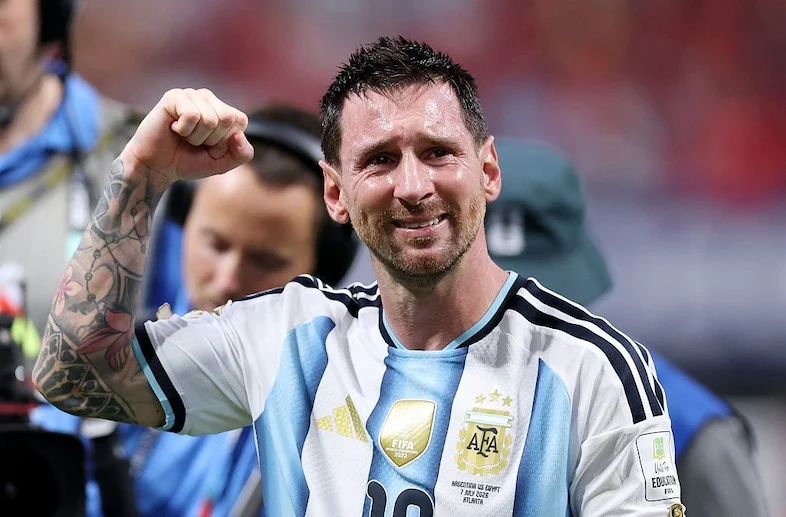
The Egyptian Football Association (EFA) subsequently filed an official complaint with FIFA, specifically questioning the fairness and consistency of the refereeing decisions in the Argentina match. In response, Pierluigi Collina, FIFA’s highly respected refereeing chief, publicly rejected allegations of bias, insisting that the match officials had acted independently and professionally. Collina’s defense emphasized the complexity of VAR decisions and the human element in officiating, while firmly denouncing the "unfounded allegations" that he warned "have no place in our sport." He also highlighted a critical caveat: such unsubstantiated accusations of fixing could lead to serious threats against officials and their families, underscoring the real-world dangers of online misinformation and fan outrage.Despite Collina’s strong rebuttal, the "noise" around Argentina persisted, particularly fueled by an intriguing conspiracy theory circulating online. This theory posits that FIFA would prefer to see Lionel Messi, a universally adored and generally apolitical figure, receive the trophy from Donald Trump, creating a visually appealing and politically neutral photo opportunity. This preference, the theory suggests, might stem from a desire to avoid a potentially more politically outspoken figure like Kylian Mbappé, who could use the global platform of the trophy presentation to make a statement critical of political figures or global events, thereby complicating FIFA’s carefully curated image. While purely speculative, such theories highlight the deep-seated distrust that many have developed towards FIFA’s impartiality.
-
FBI Scrutiny of the Argentine Football Association:
Further complicating Argentina’s tournament narrative, it was reported on July 9 that the FBI had opened a preliminary investigation into the financial operations of the Argentine Football Association (AFA) within the United States. This probe is reportedly examining whether specific transactions linked to the AFA could constitute money laundering or fraud under American law.The news of an FBI investigation immediately invoked echoes of the FIFAgate scandal, underscoring the ongoing vulnerability of football’s governing bodies to allegations of financial impropriety. A preliminary investigation indicates that the FBI has found sufficient reason to explore potential wrongdoing, though it does not imply a formal indictment or guilt. However, the mere existence of such an investigation casts a significant shadow over the AFA and, by extension, over Argentina’s participation and any potential success in the tournament. It suggests a broader systemic issue within global football, where financial dealings remain susceptible to scrutiny and legal challenges, further eroding public confidence in the sport’s integrity.
Conclusion: The Future of Football’s Integrity
The confluence of these controversies surrounding the 2026 FIFA World Cup—from the dubious "Peace Prize" to alleged political interference in disciplinary matters, perceived double standards, and persistent allegations of favoritism and financial impropriety involving a major contender—paints a concerning picture. FIFA’s stated mission that "Football Unites the World" appears increasingly challenged by its own actions and associations.
The historical parallels drawn to the 1936 Olympics serve as a potent reminder of how major sporting events can be co-opted for political agendas, potentially undermining their core values of fair play, unity, and universal sportsmanship. For FIFA, navigating these turbulent waters will be crucial. The organization faces the immense task of not only delivering a logistically successful World Cup across three nations but also, more importantly, restoring its battered credibility and reaffirming its commitment to ethical governance and sporting integrity. The scrutiny is intense, and the football world watches to see whether the beautiful game can truly unite the world, or if it will continue to be overshadowed by the political and ethical complexities of its administration.