

For a show that ignites the screen with fire-breathing dragons and blood-soaked battles, one might assume that hair and makeup would be mere afterthoughts. However, for HBO’s critically acclaimed series, House of the Dragon, set approximately 200 years before the events of Game of Thrones and based on George R.R. Martin’s Fire & Blood, the beauty looks are not just decorative; they are an integral component of the show’s intricate storytelling. The subtle yet powerful influence of medieval braids and meticulously crafted wigs underscores the narrative depth and character evolution within the Targaryen dynasty and its rivals.
A Legacy of Dragons and Hair Design
The daunting task of creating and maintaining the elaborate hairstyles for a show featuring as many as 20-30 principal characters, many of whom are adorned with extensive wigs, falls upon the shoulders of the dedicated hair department. Leading this charge is Rosalia Culora, a seasoned professional whose extensive experience includes working on all eight seasons of the original Game of Thrones. This deep familiarity with the Game of Thrones universe, particularly the iconic Targaryen blonde, and the practicalities of managing hair through intense battle sequences, positions Culora as an expert in bringing Westerosi aesthetics to life. As the third season of House of the Dragon continues to captivate audiences, Culora offers a behind-the-scenes glimpse into the thoughtful artistry that shapes the show’s visual identity.
.jpg)
H2: Weaving Stories: Character Arcs Through Hair
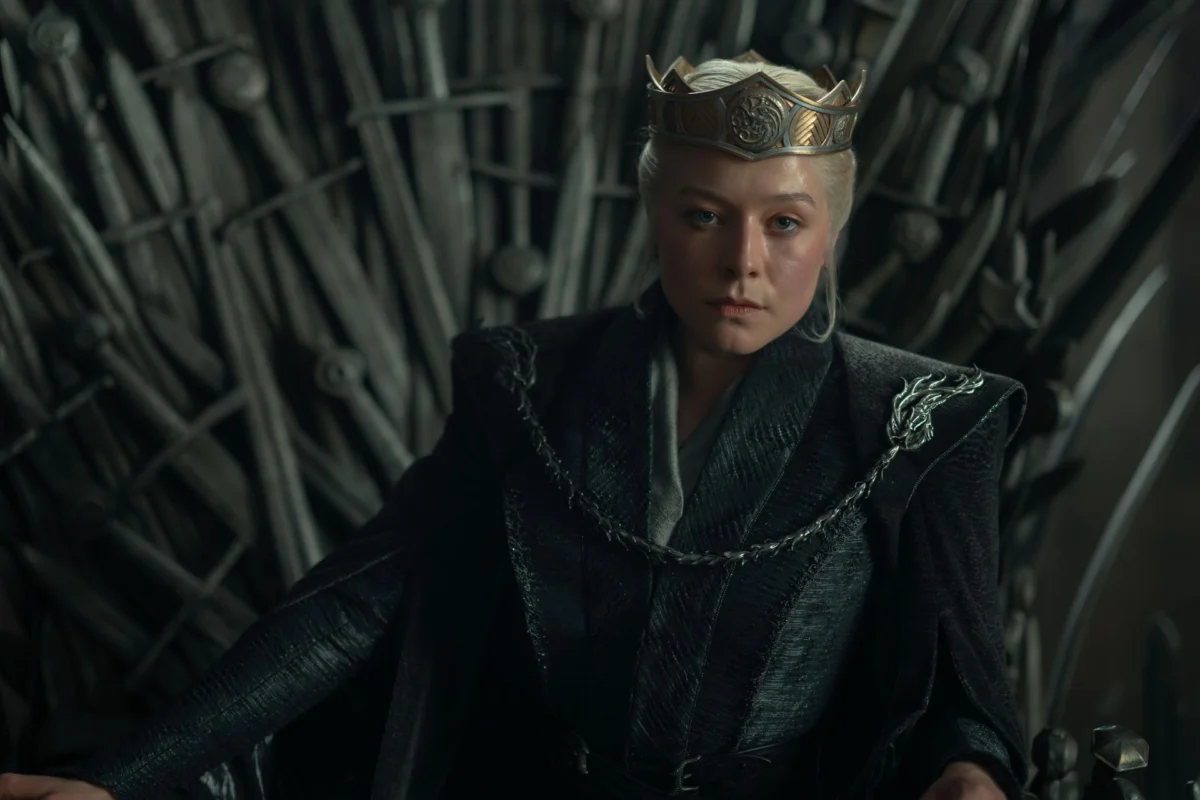
According to Culora, the hairstyles in House of the Dragon are far from superficial embellishments. Each look is designed to reflect a character’s personal journey and evolving identity. "Each look has a backstory to it," Culora explains, highlighting the transformation of Princess Rhaenyra Targaryen, portrayed by Emma D’Arcy. Rhaenyra’s trajectory from a youthful princess to a formidable warrior vying for the Iron Throne is visually mirrored in her evolving hairstyles.
"When we first meet Rhaenyra in season one, there’s a vulnerability… her hair’s down quite a lot," Culora notes. This softer, more uninhibited style signifies her early days, less burdened by the weight of succession and warfare. As Rhaenyra embraces her destiny as a dragon rider and asserts her claim to the throne, her hair undergoes a significant transformation. "Then, as she becomes more of that dragon rider [and moves] into her own identity, the hair becomes more armored," Culora elaborates. This shift is characterized by increasingly intricate braiding, a visual cue that signifies her growing strength, resilience, and readiness for conflict. Culora emphasizes that for characters who engage in aerial combat and fierce battles, their hairstyles become a crucial part of their "armor," offering both protection and a symbolic representation of their warrior spirit.
The inspiration for these "armored" styles is as organic as the creatures they represent. Culora draws parallels to a specific tree in Sicily, whose roots form a natural, interwoven structure. "The organic quality and the binding [of the roots]… there’s an element of that that I like to put into the hairstyles," she shares. This natural inspiration is further translated through a close study of actual chainmail and various fabrics, aiming to replicate their textures and interwoven patterns within the hair itself. "It’s all about that texture and trying to create that texture in a hairstyle," Culora states, underscoring the tactile and visual depth of the designs.

H3: The Unraveling of Power: Shifting Styles for Alicent and Helaena
In contrast to Rhaenyra’s ascendance and hardening, other characters experience a decline in their perceived power and influence, a narrative arc also reflected in their hair. For Queen Alicent Hightower (Olivia Cooke) and Princess Helaena Targaryen (Phia Saban), the current season marks a period of diminishing authority and increasing isolation within the Red Keep.
"There’s no trust in [The Red Keep] and it’s like they don’t want the handmaidens near them," Culora observes, explaining the rationale behind their altered styles. The hairstyles for Alicent and Helaena are deliberately crafted to appear as though they have been styled by themselves, without the usual assistance of royal attendants. This lack of meticulous grooming signifies their frayed mental states and their perceived loss of control. "You can tell that their hair isn’t as regal as previous seasons, and we do see a lot more hair down and a lot more disheveled," she adds. This visual representation of their unraveling circumstances serves as a poignant reminder of the precarious nature of power in Westeros and the psychological toll it can take.
H2: Hidden Signatures and Evolving Aesthetics

Beyond the overarching character arcs, Culora injects a layer of subtle artistry and personal touch into her work, weaving in hidden "Easter eggs" for those with a keen eye. In the initial episodes of the third season, a discreet "three" was braided into the hair of several characters, a nod to the current season. This practice is not new; Culora employed a similar technique at the end of season two, incorporating an "eight" into hairstyles for the eighth and final episode.
"I do these hidden things that no one really knows about in their hair," Culora reveals with a smile. Her most personal signature appears at the end of episodes, where she artfully incorporates her initials, an "R" and a "C," into the hairstyles. "It’s like a signature," she explains, a subtle mark of her contribution to the visual tapestry of Westeros.
Looking ahead, Culora hints at even more dramatic transformations, particularly for Baela and Rhaena Targaryen, the twin daughters of Daemon Targaryen. While details remain under wraps, she suggests these changes signify a potential loss of identity for the characters. "It’s almost like they’re losing part of their identity a little bit," she foreshadows, leaving audiences to anticipate the visual cues that will accompany these significant narrative shifts.
H3: The Dragon Rider’s Silhouette: Practicality Meets Cinematics

The practicalities of dragon riding heavily influence the design of hairstyles, especially for characters like Rhaenyra and the Velaryon twins. Culora notes that the silhouettes of the hairstyles often echo the curves and lines of the dragons themselves, creating a harmonious visual connection between rider and beast. "It just creates this beautiful bit of cinema… and also it’s not distracting," she states, highlighting the dual purpose of these designs.
The prevalence of half-up, half-down styles is another deliberate choice rooted in functionality. "It’s a practicality, but it opens up the face and it just allows the cast to essentially act and not think about what’s going on on top of their head," Culora explains. This approach ensures that the actors can fully embody their characters without being hindered by their hair.
As the show progresses, the emphasis on practicality intensifies. While season two saw some dragon-themed ornamentation, Culora has completely eliminated such embellishments in season three, particularly for Rhaenyra. "It has to be practical and if they’re on a dragon, it’s got to be bound," she asserts, reflecting the evolution from decorative elements to purely functional styling for characters actively engaged in dragon flight and combat.
H2: The World of Wigs: Craftsmanship and Character

The sheer scale of wig production for House of the Dragon is staggering. Culora estimates that hundreds of wigs are utilized throughout the series, with nearly every principal character sporting custom hairpieces. Even for characters who appear to have their natural hair styled, such as Olivia Cooke’s Alicent Hightower, a three-quarter wig is often employed. "We used about two inches of Olivia’s own hair front," Culora reveals, illustrating the seamless integration of wigs into the actors’ natural hair.
The intricate wig-making process is handled by Alex Rouse, a London-based company with a long-standing relationship with the franchise, having supplied all wigs for Game of Thrones as well. These custom pieces are meticulously crafted using human hair and advanced lace-front techniques, ensuring a natural and believable appearance.
For Rhaenyra’s character alone, Culora cycles through three distinct wigs. One particular wig has earned the moniker of Rhaenyra’s "blood" wig, a testament to its enduring role in some of the show’s most visceral scenes. The difficulty in removing fake blood from the pristine white-blonde hue, which often results in stubborn pink stains, necessitates dedicated wigs for such demanding sequences. "I could write a book about that wig," Culora exclaims, recalling its use in pivotal moments like the intense birthing sequence and young Rhaenyra’s encounter with a boar, scenes fraught with peril and bloodshed.
H3: The Rigorous Care of Westerosi Hair

The upkeep of these elaborate wigs is a meticulous and ongoing process. While not washed nightly, they adhere to a strict regimen of care to maintain their integrity and appearance throughout the demanding production schedule. "We have to be really careful about where we dry the wigs and how we wash the wigs," Culora emphasizes. The washing technique is carefully executed at an angle to preserve the style and structure. "I wash them at an angle. You have to keep on top of it, especially because the seasons are so long and a character, like [Rhaenyra], does a lot. Their working days are long and they’re in many scenes," she explains, highlighting the constant attention required.
Special attention is paid to wigs featuring locs, which are worn by many characters from House Velaryon. These styles demand regular maintenance. "They do need regular upkeep and maintenance," Culora states. The challenges are amplified during intense sequences, such as the Battle of the Gullet featured in the season’s premiere. "When we got blood in the locs, I actually had to remove them and we had standby locs in place to stitch in," she recounts, underscoring the logistical hurdles faced by the hair department.
H2: The Elusive Targaryen Blonde: A Color of Legend
While Daenerys Targaryen was the sole prominent figure with the iconic silvery-blonde hair of her ancestors in Game of Thrones, House of the Dragon centers on the Targaryen dynasty, leading to a cast replete with white-blonde characters. This distinctive hue, however, is not easily replicated. The original formula for this legendary "Targaryen blonde" was developed back in 2009 for the very first season of Game of Thrones and has undergone subtle refinements over the years.

"In theory, it’s kind of the same recipe," Culora explains, revealing that the color is a complex blend. "There’s seven different colors in that wig. It has evolved and each wig is ever so slightly different." Achieving this ethereal shade requires meticulous control not only of the wig itself but also of the actor’s natural hair underneath.
H3: The Canvas Beneath the Wig: Bald Caps and Color
To create the illusion of natural Targaryen hair, the cast undergoes a preparation process that includes bald capping. "That’s why we bald cap the cast," Culora says. "That way you see partings, you see scalp, you’re not seeing hair [underneath]." This technique ensures that the wigs sit seamlessly and realistically. Furthermore, a significant amount of hair color product is sometimes applied to the actor’s natural hair beneath the wig to ensure a cohesive look, even for characters with darker natural hair colors.
Gayle Rankin, who portrays Alys Rivers, required her natural hair to be colored to match her character’s dark chocolate brown tone, as her own hair was lighter. "Sometimes the stocking cap is not going to cut it," Culora admits. "You have to almost use [the actor’s] own head and hair as a canvas in the prep and color it up to help sell the wig."

While specific product details are kept confidential to prevent unauthorized replication, Culora shares a vital insight into the most indispensable item in the hair trailer. Despite the prevalence of white-blonde wigs, the most frequently used product is not a platinum blonde dye. Instead, the team relies heavily on "lots and lots and lots of leave-in conditioner." This essential product ensures the health and manageability of the vast collection of wigs and the actors’ hair, a testament to the fact that even in a world of dragons and magic, basic hair care remains paramount.
The artistry and dedication of the hair department, led by Rosalia Culora, are fundamental to the immersive experience of House of the Dragon. Through intricate braids, meticulously crafted wigs, and subtle narrative cues, the hair becomes a silent, yet powerful, storyteller, deepening the audience’s connection to the characters and the epic saga of the Targaryen dynasty.