








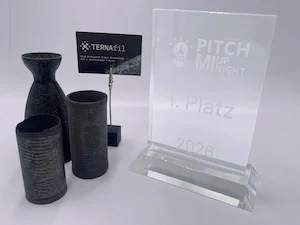
The landscape of high-performance materials witnessed a significant milestone on May 21, 2026, as TERNAfil, a dynamic spin-off from the prestigious RWTH Aachen University, was awarded the first-place prize at the PitchMiUp Night in Minden. The recognition centers on the company’s flagship innovation, MAXCarbon, a high-performance hybrid fiber engineered to bridge the gap between traditional carbon fiber capabilities and the extreme environmental resilience of ceramic materials. This development marks a pivotal advancement in materials science, offering a solution to long-standing limitations in the aerospace, energy, and high-performance composite sectors.
The Genesis and Mechanics of MAXCarbon Technology
The core of TERNAfil’s success lies in the successful synthesis of two traditionally distinct material classes. Carbon fibers have long been the gold standard for high-strength, low-weight applications due to their exceptional mechanical properties and tensile strength. However, carbon fibers face significant degradation when exposed to high temperatures in oxygen-rich environments, often beginning to oxidize at temperatures as low as 400 to 500 degrees Celsius. Conversely, ceramic fibers offer unparalleled resistance to heat and chemical corrosion but often lack the specific mechanical ductility and cost-efficiency required for broad industrial adoption.
MAXCarbon represents a hybrid approach that integrates these two profiles. By combining the structural integrity of carbon with the thermal and oxidative stability of ceramics, TERNAfil has created a material capable of maintaining its mechanical performance under conditions that would typically cause standard carbon composites to fail. The technology utilized by the spin-off is noted for its scalability, a critical factor for moving from laboratory-scale prototypes to industrial-scale manufacturing. This scalability ensures that the benefits of MAXCarbon—specifically its ability to withstand extreme temperatures and corrosive environments—can be integrated into large-scale infrastructure and high-volume production lines.
Recognition at PitchMiUp Night in Minden
The PitchMiUp Night, hosted by the Bielefeld University of Applied Sciences (HSBI), served as the platform for this announcement. Now in its second iteration, the event has quickly established itself as a premier venue for founders and innovators within the German startup ecosystem to present their business models and technological breakthroughs to a panel of experts, investors, and industry peers. The event is designed to foster a spirit of entrepreneurship and to provide a bridge between academic research and commercial application.
During the competition, founders were evaluated not only on the technical merits of their innovations but also on the viability of their business strategies and their potential for real-world impact. TERNAfil emerged as the top performer among a competitive field of startups, securing the first-place award. The judging panel emphasized the transformative potential of MAXCarbon in addressing the material bottlenecks currently hindering advancements in propulsion systems and energy conversion technologies.
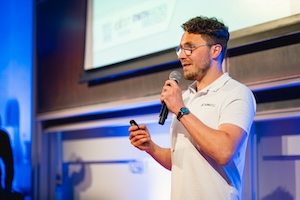
Fabian Jung, the founder of TERNAfil and a PhD student at the Institut für Textiltechnik (ITA) of RWTH Aachen University, represented the company at the event. His presentation detailed the journey of MAXCarbon from a theoretical concept within the laboratory to a functional material ready for industrial pilot programs. Jung’s success underscores a broader trend of "deep-tech" transfer, where rigorous academic research is successfully translated into commercial ventures that solve complex engineering challenges.
A Chronology of Innovation and Research
The development of MAXCarbon is the result of years of dedicated research at the Institut für Textiltechnik (ITA) in Aachen. The ITA is globally recognized for its work in fiber-based high-performance materials and textile machinery. The timeline of TERNAfil’s emergence reflects a structured approach to innovation:
- Fundamental Research Phase: Initial studies at ITA focused on the molecular and structural bonding of carbon and ceramic precursors. Researchers sought to identify a process that would allow for a homogeneous hybrid structure without compromising the tensile strength of the carbon core.
- Prototyping and Validation: Once the chemical and mechanical pathways were established, the team moved to create the first iterations of MAXCarbon. These fibers underwent rigorous testing in extreme environments, including high-temperature furnaces and corrosive chemical baths, to validate their hybrid performance.
- Spin-off Formation: With the technology validated, TERNAfil was established as a formal entity to manage the commercialization process. This allowed the team to seek external funding, establish intellectual property rights, and engage with industrial partners.
- Market Entry and Scaling: The victory at PitchMiUp Night 2026 represents a critical step in the company’s growth phase. The focus has now shifted toward scaling the production technology to meet the volume requirements of the aerospace and energy industries.
Strategic Applications in Aerospace and Energy
The implications of a carbon-ceramic hybrid fiber are particularly profound in sectors where weight reduction and heat resistance are non-negotiable.
Aerospace and Defense
In the aerospace sector, the drive for fuel efficiency and reduced emissions is directly linked to engine operating temperatures. Higher temperatures generally lead to more efficient combustion, but they also place immense strain on engine components. Current nickel-based superalloys are heavy and approaching their thermal limits. MAXCarbon offers a pathway toward Ceramic Matrix Composites (CMCs) and hybrid structures that are significantly lighter than metal alloys while providing the thermal protection necessary for next-generation turbine blades, exhaust nozzles, and heat shields.
Energy Technology
The energy sector stands to benefit from MAXCarbon through its application in high-temperature heat exchangers and carbon capture systems. As the world shifts toward hydrogen power and advanced nuclear designs, the need for materials that can withstand corrosive hydrogen environments and high thermal loads is increasing. TERNAfil’s technology provides a durable solution for these harsh conditions, potentially extending the lifespan of critical energy infrastructure and reducing maintenance costs.
High-Performance Composites
Beyond specialized niches, the broader composite industry is looking for materials that offer improved fire, smoke, and toxicity (FST) ratings. Standard carbon fiber composites often require heavy coatings or additives to meet fire safety standards in public transport and automotive applications. The inherent ceramic properties of MAXCarbon provide built-in fire resistance, potentially simplifying the manufacturing process and reducing the overall weight of the final component.
Institutional Support and the Role of RWTH Aachen
The success of TERNAfil is also a testament to the robust entrepreneurial ecosystem at RWTH Aachen University. As one of Germany’s "Universities of Excellence," RWTH has invested heavily in infrastructure that supports spin-offs. The ITA, specifically, provides researchers with access to state-of-the-art spinning plants, testing laboratories, and a network of industrial collaborators.
This "Aachen Model" of innovation emphasizes the importance of the "transfer" process—ensuring that intellectual property does not remain trapped in academic journals but is instead utilized to create jobs and drive economic growth. The recognition of Fabian Jung and his team at the PitchMiUp Night highlights the effectiveness of this model. By providing PhD students with the resources to act as entrepreneurs, the university ensures that its scientific output has a direct and measurable impact on the industrial landscape.
Analysis of Economic and Industrial Impact
From an economic perspective, the emergence of TERNAfil and MAXCarbon arrives at a time when Europe is seeking to strengthen its sovereignty in high-tech materials. The global supply chains for advanced fibers are often complex and concentrated in specific geographic regions. By developing and manufacturing a unique hybrid fiber within Germany, TERNAfil contributes to a more resilient European industrial base.
Furthermore, the environmental impact of this technology cannot be overlooked. Weight reduction in transportation remains one of the most effective levers for reducing CO2 emissions. For every kilogram of weight saved in an aircraft, thousands of gallons of fuel are saved over the vehicle’s operational life. By enabling the use of lightweight composites in "hot zones" where they were previously unsuitable, MAXCarbon acts as an enabler for the next generation of sustainable aviation and transport.
Future Outlook and Scalability
Looking ahead, TERNAfil faces the challenge of industrial integration. While the technology is described as scalable, the transition from a pilot plant to a full-scale production facility requires significant capital investment and rigorous quality control certifications, particularly for the aerospace market. The "exciting discussions and new contacts" mentioned by Fabian Jung following the award ceremony are likely to play a crucial role in securing the partnerships necessary for this next phase.
The company’s focus will likely remain on refining the MAXCarbon manufacturing process to optimize the ratio of carbon to ceramic, allowing for "tunable" properties based on specific customer needs. This customization will be key to capturing diverse market segments, from high-end racing and sports equipment to critical industrial valves and aerospace components.
In conclusion, the first-prize win for TERNAfil at the 2026 PitchMiUp Night is more than just a victory for a single startup; it is a validation of a new category of material. As industries continue to push the boundaries of temperature and strength, the hybrid approach pioneered by the RWTH Aachen spin-off may well become the new standard for high-performance engineering. The journey of MAXCarbon from the laboratory to the winner’s podium in Minden serves as a blueprint for how technical excellence and entrepreneurial vision can combine to address the most demanding material challenges of the 21st century.