










Understanding the fundamental differences between chemical and mineral sunscreens is paramount for effective sun protection, a fact underscored by leading dermatologists and supported by evolving scientific understanding. While both formulations aim to shield the skin from the sun’s harmful ultraviolet (UV) radiation, their mechanisms of action, ingredient profiles, and suitability for different skin types diverge significantly. This distinction is not merely a matter of ingredient preference but impacts everything from skin sensitivity and environmental consciousness to regulatory considerations.
The Fundamental Mechanism of Sunscreen Protection
At its core, sunscreen functions by either absorbing or reflecting UV rays before they can penetrate the skin and cause damage. This damage can manifest in the short term as sunburn, characterized by redness, inflammation, and discomfort, and in the long term as premature aging (fine lines, wrinkles, hyperpigmentation) and an increased risk of skin cancer, including melanoma.
Chemical Sunscreens: These formulations utilize organic compounds that absorb UV radiation. Once absorbed, the UV energy is converted into heat and then released from the skin. Common active ingredients in chemical sunscreens include oxybenzone, avobenzone, octinoxate, and octisalate. These filters are designed to penetrate the upper layers of the skin, where they can effectively neutralize UV rays.
Dr. Hadley King, a New York City-based board-certified dermatologist, explains that chemical UV filters "absorb onto skin." This absorption process means the ingredients become part of the skin’s cellular matrix during application, allowing for a more seamless and often cosmetically elegant feel. The efficacy of chemical sunscreens lies in their ability to provide broad-spectrum protection, covering both UVB rays (primarily responsible for sunburn) and UVA rays (linked to aging and deeper skin damage).
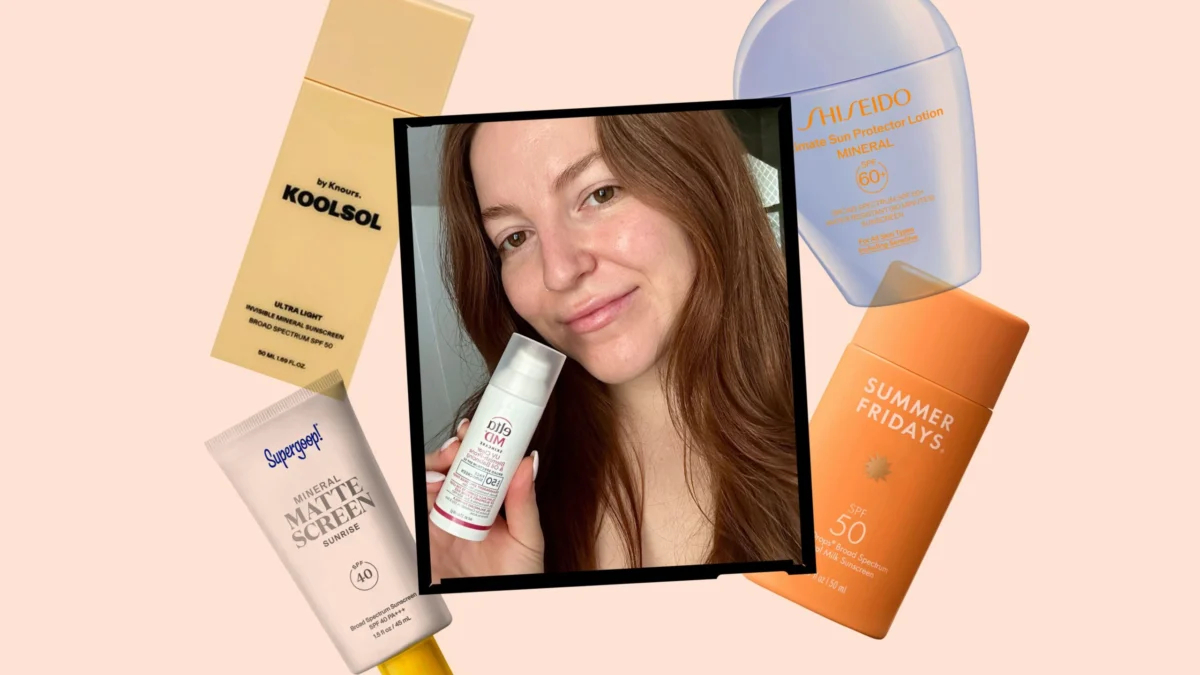
Mineral Sunscreens: In contrast, mineral sunscreens, also known as physical sunscreens, employ inorganic compounds to create a physical barrier on the skin’s surface. The primary active ingredients are zinc oxide and titanium dioxide. These minerals work by physically reflecting and scattering UV wavelengths away from the skin.
"Mineral sunscreens sit on the surface of your skin, physically reflecting and scattering ‘a wide range of UV wavelengths,’" Dr. King elaborates. This mechanism of action means the active ingredients do not penetrate the skin. Instead, they form a protective shield, much like a mirror. This physical barrier is effective against both UVA and UVB radiation, offering comprehensive protection.
Dr. Adarsh Vijay Mudgil, another New York City-based board-certified dermatologist, emphasizes the purity of mineral formulations: "Chemical-free sunscreens should only contain zinc oxide and/or titanium dioxide as their active ingredients." He also highlights the existence of "hybrid formulas" that combine mineral actives with chemical filters, underscoring the importance of carefully reviewing ingredient labels for consumers seeking purely mineral options.
Who Benefits Most from Mineral Sunscreens?
The choice between chemical and mineral sunscreens often hinges on individual skin sensitivity and potential allergic reactions. Chemical UV filters, while effective, can sometimes trigger adverse reactions in certain individuals.
Dr. Mudgil points out that "chemical sunscreens can be irritating and allergenic for some folks." This sensitivity is not a minor concern; according to Dr. Corey L. Hartman, a board-certified dermatologist in Birmingham, Alabama, an estimated "25% of all people" may experience such reactions. For this significant portion of the population, mineral sunscreens offer a compelling alternative.
Dr. Hartman’s statement, reported by Allure, suggests that individuals experiencing irritation or allergic responses to chemical sunscreens should strongly consider switching to physical formulations. The inert nature of zinc oxide and titanium dioxide makes them less likely to provoke an immune response. Dr. Mudgil further supports this by describing mineral sunscreen formulas as "organic, inert, and hypoallergenic," which significantly reduces the risk of skin irritation. This makes mineral sunscreens an ideal choice for individuals with sensitive skin, rosacea, eczema, or those prone to allergic contact dermatitis.
Beyond personal health benefits, mineral sunscreens also hold significant ecological advantages. The conversation around "reef-safe" sunscreens has gained considerable traction in recent years, driven by concerns about the impact of certain chemical UV filters on marine ecosystems.
"Sunscreens that don’t contain chemical protectants are generally healthier for coral reefs," Dr. Mudgil notes. This is particularly relevant given the widespread environmental damage observed in coral reefs globally. In a landmark move, Hawaii has taken regulatory action, banning the sale of products containing oxybenzone and octinoxate, two common chemical UV filters, due to their documented harmful effects on coral. While the term "reef-safe" is not currently regulated, the scientific consensus leans towards mineral-based formulas as the more environmentally responsible choice for marine life.
The Rigorous Testing and Review Process Behind Sunscreen Recommendations
Ensuring that consumers have access to effective and safe sunscreen options requires a diligent and expert-driven testing methodology. Publications like Allure employ a comprehensive approach to product evaluation, aiming to provide trustworthy recommendations.
"When Allure tests a product, our editors look at it from every angle in an effort to best serve you," the publication states. This multifaceted review process involves scrutinizing ingredient lists, validating brand claims against scientific evidence, and examining peer-reviewed medical and scientific studies. The commitment extends beyond laboratory analysis to include hands-on product testing.
In the context of selecting the best mineral sunscreens, the editorial team collaborates with experts from various fields, including dermatology and cosmetic chemistry. These specialists play a crucial role in "vetting the ingredients and formulas," ensuring that the products not only meet efficacy standards but also adhere to safety and scientific principles.
The evaluation of mineral sunscreens specifically focuses on five key performance categories:
- Product Ingredients and Efficacy: Assessing the quality and concentration of active mineral ingredients, their ability to provide broad-spectrum UV protection, and their adherence to stated claims.
- Packaging: Evaluating the usability, durability, and potential for product degradation based on packaging materials and design.
- Fragrance: Considering the presence and type of fragrances, as these can be common irritants for sensitive skin.
- Texture: Examining the feel of the sunscreen on the skin, including its spreadability, absorption, and potential for leaving a white cast, which is a common concern with mineral formulas.
- Product Wear: Observing how the sunscreen performs throughout the day, including its longevity, resistance to sweat and water, and how it interacts with makeup or other skincare products.
Every product included in Allure‘s recommendations is determined to have excelled across these categories, as judged by a diverse editorial team comprising in-house writers, editors, and external contributors. Special consideration is given to the insights provided by dermatologists, lending an authoritative voice to the recommendations. For those seeking a deeper understanding of the publication’s commitment to quality, a detailed explanation of their reporting and testing processes is available on their dedicated methodology page.
A Commitment to Diversity in Product Testing
The recognition that beauty products are intensely personal purchases drives Allure‘s commitment to a diverse testing panel. The effectiveness and user experience of a sunscreen can vary dramatically based on individual skin types, tones, and concerns.
"A beauty product is a personal purchase," the publication states, acknowledging that consumers seek products tailored to specific needs, whether it’s addressing dryness, achieving a particular aesthetic, or managing chronic skin conditions. Allure believes that a diverse team of writers, editors, and external testers is essential to ensuring that their recommendations resonate with a broad audience.
This philosophy is articulated through a series of rhetorical questions that highlight the importance of inclusivity: "Can we really say a skin-care product is the ‘best’ for people over 50 if the only testers we’ve solicited opinions from folks who have yet to hit 30? Can we honestly deem a high-end diffuser worthy of your hard-earned cash if it’s never been tested on curls?" These questions underscore a commitment to testing products across a wide spectrum of demographic and experiential backgrounds.
The Allure staff and the external testers they engage represent a wide range of ages, skin tones, hair textures, genders, and backgrounds. This comprehensive approach ensures that any beauty product considered can be fairly assessed, leading to more equitable and reliable recommendations for all consumers. This is particularly critical for sunscreens, where formulation can impact appearance (e.g., white cast), feel, and overall suitability for different users.
The Broader Implications of Sunscreen Choices
The choice between chemical and mineral sunscreens extends beyond individual skin health and environmental considerations. It touches upon public health initiatives, regulatory landscapes, and the economic impact of ingredient sourcing and manufacturing.
The increasing awareness of the potential risks associated with certain chemical UV filters has led to a growing demand for mineral-based alternatives. This shift in consumer preference can influence market trends, driving innovation and investment in the development of new and improved mineral sunscreen formulations. The challenge for manufacturers lies in creating mineral sunscreens that are cosmetically elegant, easy to apply, and free from the undesirable white cast that has historically been a barrier to adoption. Advances in micronization and nano-particle technology for zinc oxide and titanium dioxide have significantly improved the aesthetic properties of modern mineral sunscreens.
Furthermore, the global concern for marine conservation, exemplified by Hawaii’s ban on specific chemical filters, suggests a potential for broader regulatory changes in other regions. Such regulations could necessitate a significant shift in the sunscreen market, favoring mineral-based and environmentally benign formulations. This transition has implications for the chemical industry, potentially leading to reduced production of certain UV filters and increased demand for mineral ingredients.
The scientific community continues to investigate the long-term effects of both chemical and mineral sunscreen ingredients on human health and the environment. Ongoing research aims to provide a more definitive understanding of absorption rates, potential endocrine disruption from chemical filters, and the precise environmental impact of various sunscreen components. This evolving body of evidence will likely continue to shape consumer choices and regulatory policies.
In conclusion, the distinction between chemical and mineral sunscreens is a critical aspect of sun safety. Mineral sunscreens, with their physical barrier mechanism and inert ingredients, offer a gentle and effective option, particularly for sensitive skin and for those prioritizing environmental sustainability. As research progresses and consumer awareness grows, the dialogue around sunscreen formulation, efficacy, and impact will undoubtedly continue to evolve, guiding us toward more informed and responsible choices for protecting our skin and our planet.