







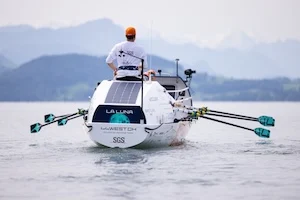
In a significant collaboration within the high-performance textile industry, the Swiss rowing team 44west has partnered with SGS, the world’s leading testing, inspection, and certification company, to verify the efficacy of UV-protective apparel used during the World’s Toughest Row – Atlantic 2026. This partnership addresses the critical need for reliable, scientifically validated protective gear in one of the most punishing environments on Earth. As the four-person crew navigated the 4,800-kilometer expanse of the Atlantic Ocean, the integrity of their technical clothing became a primary factor in maintaining physical health, operational endurance, and psychological resilience.
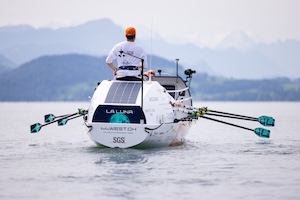
The announcement, originating from Baar, Switzerland, highlights a shift in the technical apparel sector where professional athletes are increasingly seeking independent verification to substantiate manufacturer claims. For the 44west crew, the 31-day unsupported journey from La Gomera in the Canary Islands to Antigua was not merely a test of human strength but a rigorous field trial for advanced fabric technologies. In an environment characterized by relentless solar radiation, high humidity, and constant exposure to corrosive saltwater, the distinction between standard sportswear and technical protective equipment is vital for survival and performance.
The World’s Toughest Row: A Context of Extreme Endurance
The World’s Toughest Row, formerly known as the Talisker Whisky Atlantic Challenge, is widely regarded as the premier event in ocean rowing. The 2026 edition saw teams face the daunting task of rowing more than 3,000 nautical miles. Unlike coastal rowing, ocean rowing involves navigating open swells that can reach heights of 20 to 40 feet. For the Swiss team 44west, the crossing demanded a 24-hour rowing cycle, typically involving two hours of rowing followed by two hours of rest, repeated indefinitely for over a month.
In this context, the physiological toll on the athletes is immense. Rowers can lose up to 12 kilograms of body mass during a crossing and face constant threats from sleep deprivation, salt sores, and extreme heat. However, the most persistent environmental threat is ultraviolet (UV) radiation. At sea, the risk of UV damage is compounded by the lack of shade and the high albedo of the water’s surface, which reflects a significant portion of UV rays back onto the rowers. This double exposure makes high-quality UV-protective clothing an essential component of the team’s safety protocol.
Chronology of the Verification Process
The collaboration between 44west and SGS began well before the team set foot in their boat. The timeline of the project followed a rigorous path from material selection to post-exposure analysis:
- Selection and Prototyping (Late 2025): The 44west team identified specific long-sleeved technical garments designed for high-output activity in marine environments. The primary requirement was a Ultraviolet Protection Factor (UPF) rating of 50+.
- Laboratory Testing Phase (Q1 2026): Before the race, SGS conducted comprehensive laboratory assessments at their specialized textile facilities. This phase involved baseline testing of new fabrics to ensure they met the claimed standards under ideal conditions.
- Simulated Stress Testing: To mimic the actual conditions of the Atlantic crossing, samples were subjected to accelerated weathering. This included repeated washing cycles, exposure to synthetic perspiration, and immersion in artificial seawater.
- The Atlantic Crossing (March–April 2026): The crew utilized the verified apparel during their 31-day journey. During this period, the clothing was subjected to the actual stresses of the Atlantic, including constant movement, salt crystallization, and extreme UV indices.
- Performance Validation (April 2026): Following the successful arrival in Antigua, the performance data and the physical condition of the crew served as the final validation of the apparel’s protective capabilities.
Technical Specifications and Testing Standards
To ensure the apparel provided dependable protection, SGS utilized a suite of internationally recognized textile standards. The primary focus was on AATCC TM183 and ASTM D6544. These protocols are designed to measure the transmission of UVA and UVB radiation through fabrics.
A UPF 50+ rating indicates that the fabric allows less than 1/50th (or 2%) of UV radiation to pass through, effectively blocking 98% of harmful rays. However, SGS’s testing went beyond simple transmission. Because technical garments often lose their protective qualities when stretched or wet, the testing included:
- Moisture Management and Thermoregulation: The fabrics were evaluated for their ability to wick moisture away from the skin. In a high-humidity marine environment, efficient moisture transport is crucial for preventing skin maceration and maintaining a stable core body temperature.
- Mechanical Strength and Abrasion Resistance: The repetitive motion of rowing creates significant friction at contact points. SGS tested the fabrics for pilling resistance and tensile strength to ensure the garments would not thin or tear, which would immediately compromise UV protection.
- Colorfastness and Chemical Safety: Given that the apparel is in constant contact with the skin, it was screened for restricted substances. SGS also verified that the dyes used would not bleed or degrade when exposed to salt and sweat, which can cause skin irritation.
- Microfiber Release: In alignment with modern sustainability goals, SGS evaluated the rate of microfiber shedding during laundering. This is a critical metric as the textile industry seeks to reduce the environmental impact of synthetic fibers on marine ecosystems.
Supporting Data: The Impact of Marine Exposure on UV Protection
Data from the SGS study revealed that while many "off-the-shelf" garments claim high UPF ratings, their performance can degrade by as much as 30-50% when saturated with saltwater or stretched across the shoulders and back during physical exertion. The 44west apparel, however, maintained its UPF 50+ rating even after simulated long-term exposure to salt and UV.
Research indicates that salt crystals can act as microscopic prisms, potentially focusing light onto fibers and accelerating photodegradation. By using artificial seawater treatments before UV testing, SGS confirmed that the specific polymer blend and weave density of the 44west gear remained stable. Furthermore, the drying efficiency tests showed that the fabric maintained its structural integrity and protective loft even after hundreds of hours of wear, a crucial finding for an unsupported mission where replacement gear is not an option.
Official Responses and Industry Reactions
The 44west crew expressed that the independent verification provided by SGS was a vital component of their mental preparation. "When you are 1,000 miles from the nearest land, you cannot afford to have doubts about your equipment," a team representative noted. "Knowing that our clothing had been through the SGS labs gave us the confidence to focus entirely on our rowing cadence and navigation."
SGS experts emphasized the broader importance of these tests for the consumer market. "The extreme conditions faced by the 44west team serve as the ultimate laboratory," said a spokesperson for SGS Softlines. "By validating performance in the Atlantic, we provide measurable assurance that translates to everyday outdoor enthusiasts. Our role is to bridge the gap between a manufacturer’s marketing claims and the actual safety of the end-user."
Industry analysts suggest that this collaboration reflects a growing trend in the "prosumer" market, where high-end outdoor enthusiasts demand the same level of certification as professional athletes. The success of the 44west apparel verification is expected to encourage other technical garment manufacturers to seek third-party validation for specialized features like UV protection and infrared thermoregulation.
Broader Implications for Technical Textiles and Sustainability
The results of this partnership have implications far beyond the world of competitive rowing. As global temperatures rise and UV levels become more volatile, the demand for "intelligent" clothing is increasing. The textile industry is currently seeing a surge in the development of fabrics that offer multi-functional protection—combining UV shielding with antimicrobial properties and high-durability fibers.
Furthermore, the focus on microfiber release during the SGS testing highlights a growing regulatory pressure on the textile industry. As the 44west team rowed through the Atlantic, the health of the ocean was a constant backdrop to their journey. The fact that their high-performance gear was also tested for its environmental footprint reflects a holistic approach to product development where performance does not come at the cost of ecological integrity.
The use of independent testing also serves as a defense against "greenwashing" and "performance-washing." In a market saturated with technical jargon, the involvement of a third-party entity like SGS provides a transparent benchmark. This level of scrutiny is becoming the standard for brands that wish to compete in the premium performance tier.
Conclusion: The Future of Validated Performance
The successful crossing of the Atlantic by 44west, supported by the rigorous testing protocols of SGS, underscores the critical role of science in modern exploration and sport. As the "World’s Toughest Row" continues to push the boundaries of human endurance, the equipment used by these athletes must keep pace through constant innovation and verification.
Through its global network of laboratories, SGS remains at the forefront of this evolution, offering solutions that range from chemical compliance to advanced durability analysis. For organizations like 44west, the partnership was about more than just clothing; it was about the peace of mind that comes from validated safety. As technical apparel continues to migrate from the extreme edges of sport into the mainstream, the lessons learned on the 4,800-kilometer journey across the Atlantic will undoubtedly inform the next generation of protective clothing for all.