








Basel, Switzerland – The Zero 10 sector at Art Basel 2026 has emerged as a thought-provoking cornerstone, challenging the very definition of "digital art" by showcasing a deliberate absence of traditional screens and a diverse array of mediums. Far from a minimalist display, this inaugural Basel iteration, following successful showings in Miami and Hong Kong, presents an ambitious curatorial thesis: that digital art extends far beyond luminous pixels, permeating the fabric of contemporary artistic practice. Curated by acclaimed artist Trevor Paglen and Eli Scheinman, Zero 10 compels visitors to reconsider the historical depth and pervasive influence of digital processes across all art forms, from living plant installations to algorithmic paintings and interactive sculptures.
A Broadened Horizon for Digital Art
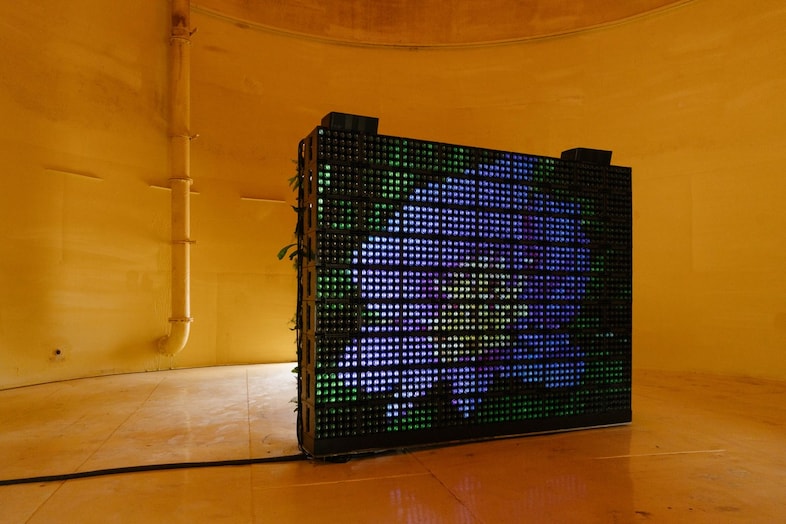
Upon entering the Zero 10 sector, visitors are immediately struck by its unconventional presentation. Hito Steyerl’s installation, for instance, eschews typical monitors for a captivating arrangement of living plants and recycled glass bottles, deceptively resembling an oversized screen. Elsewhere, the pioneering works of a godfather of computer art hang alongside interactive sculptures crafted from everyday items like backpacks and lightbulbs. Even forged iron electronic instruments are present, accompanied by video documentation of their creation, blurring the lines between craft, technology, and documentation. This deliberate subversion of expectations is central to Paglen and Scheinman’s vision.
"The thesis of the show is that most art made in the last 20 or 25 years is digital art," Paglen explained in an interview with Dazed. He elaborated on the ubiquitous integration of digital tools: "Every painter is mocking up their shit in Photoshop, every sculptor is making their thing in Blender or whatever. Every photographer, obviously, has a digital process." This statement underscores a critical shift in understanding: digital is not merely a medium but a fundamental methodology, a pervasive undercurrent shaping the creation of art across seemingly disparate disciplines. Zero 10, therefore, acts as a crucial platform for the art world to acknowledge and dissect this evolving reality.
The Genesis and Evolution of Zero 10
Art Basel, established in 1970, has long been recognized as a premier international art fair, a barometer for market trends, and a crucial space for critical discourse. Its decision to launch a dedicated "digital era" sector, Zero 10, reflects a broader institutional recognition of the growing importance and complexity of art created with or influenced by digital technologies. The initiative debuted in Miami, a vibrant hub for contemporary art and technological innovation, before moving to Hong Kong, a gateway to the burgeoning Asian art market. Each iteration has served to refine the curatorial approach and expand the understanding of what digital art encompasses.
Paglen, a pioneering artist known for his investigative and often critical use of technology, initially harbored reservations about joining the curatorial team. "I was like, ‘I don’t think so’," he recalled. However, a deeper reflection on the potential pitfalls and possibilities within the digital art space, particularly concerning the speculative excesses of certain tech trends, convinced him. "I slept on it. I was like, ‘You know, I really care about this stuff.’ And I was thinking about this space, and seeing a lot of ways it could self-destruct, and I had a theory of how to help." This perspective hints at a desire to steer the conversation away from fleeting fads and towards more substantive artistic explorations, grounding digital art within a rigorous critical and historical framework.
The curatorial framework for Zero 10 in Basel was notably stringent, designed to foster a comprehensive and nuanced historical perspective. "One third of the artists had to be dead, one third had to have had solo shows at major museums, and one third had to be cooler, younger artists who are established in a digital space but haven’t had a lot of experience with institutions," Paglen outlined. This tripartite structure ensures a dialogue across generations and career stages, juxtaposing foundational figures with contemporary innovators and those at the cusp of institutional recognition. The result is a journey through historic algorithmic drawing and net art, works from the boom-and-bust era of NFTs, and pieces that capture the dynamic currents of contemporary digital culture.
Beyond the Booth: Critical Discourse and Industry Implications
Beyond the physical artworks, Zero 10 extends its critical inquiry through a series of "iconoclastic talks" also curated by Paglen. These discussions delve into subjects often skirted by the mainstream art world, such as the practicalities of artists making a living, the disruption of traditional gatekeeping mechanisms by digital platforms, and the philosophical question of whether a future could exist with "art without any actual artists" – a provocative nod to AI’s burgeoning capabilities. These panels are not merely supplementary; they are integral to the sector’s mission, fostering a robust intellectual environment that scrutinizes the economic, social, and existential implications of the digital age on artistic practice.
The inclusion of such a sector at Art Basel, a fair that annually attracts over 90,000 visitors and generates billions in sales, signifies a major step in the institutional validation of digital art. For years, digital art often struggled for recognition within traditional art market structures, facing challenges related to authenticity, ownership, and preservation. Initiatives like Zero 10, by carefully contextualizing digital art within a broader art historical narrative and presenting it alongside established mediums, help bridge this gap. It educates collectors, gallerists, and the public on the diverse forms and critical depth of digital artistic expression, potentially expanding the collector base and driving market interest beyond speculative trends.
Highlights from Art Basel’s Zero 10 Sector, 2026
The curated selection at Zero 10 provides a compelling overview of digital art’s past, present, and potential futures:
Harold Cohen at Gazelli Art House
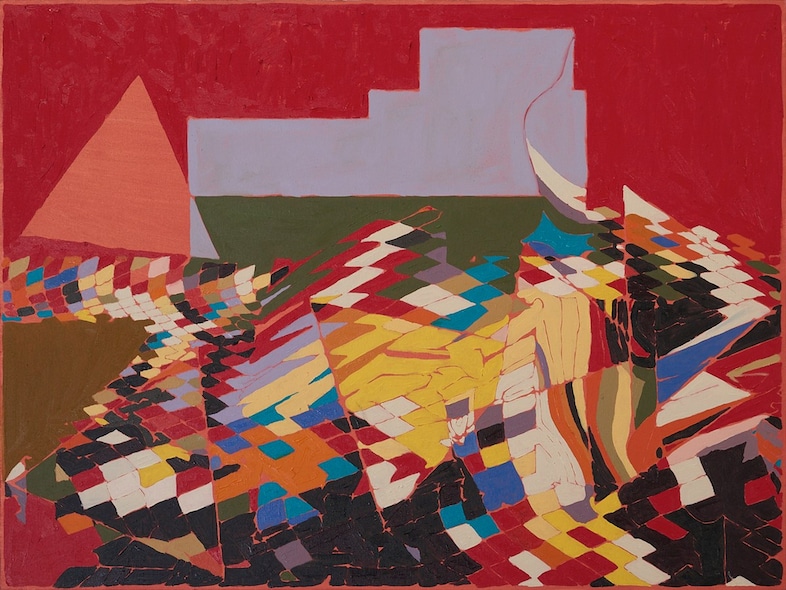
Harold Cohen (1928-2016) is a pivotal figure in the history of computer art, renowned as the creator of AARON, an autonomous computer system designed in the late 1960s to generate original drawings and paintings. Cohen tirelessly developed AARON throughout his life, exploring the very nature of creativity and machine intelligence. Gazelli Art House’s presentation offers a unique opportunity to see Cohen’s earlier, pre-AARON paintings – including works from his representation of Britain at the 1966 Venice Biennale – alongside the computer-generated artworks. This juxtaposition powerfully illustrates the trajectory of his career and his profound inquiry into man-machine collaboration, showcasing a pioneering vision that laid groundwork for subsequent generations of AI artists. His work serves as a historical anchor, demonstrating that the conversation around digital art’s autonomy and generative capabilities is decades old.
William Mapan at Art Blocks
William Mapan represents a contemporary bridge between traditional and digital artistic practices. A painter and programmer, Mapan’s work embodies the "in-between" space he seeks to explore: "Painting and drawing is emotional, programming is logical. What is in-between?" His approach involves creating many paintings by hand, en plein air, while also employing a plotter machine to translate virtual drawings into physical works using crayons. At Zero 10, his Paysages Plausible (Plausible Landscapes) series delves into a captivating ambiguity, presenting scenes from nature that are entirely fabricated, drawing inspiration from masters like Cézanne, David Hockney, and Helen Frankenthaler. Mapan’s contribution highlights the hybridity of modern artistic creation, where digital tools augment and inform traditional techniques, blurring the distinctions between the tangible and the algorithmically imagined.
Hito Steyerl at Andrew Kreps Gallery / Esther Schipper
Hito Steyerl is a critically acclaimed artist, filmmaker, and cultural theorist whose work frequently interrogates the politics of images, digital culture, and technological power structures. Her installation, Green Screen (2025), is a striking example of her "post-digital" aesthetic. It harnesses bioelectrical signals from a wall of living plants to shape AI-generated visuals and sound, all projected onto a screen composed not of pixels, but of recycled glass bottles. Paglen described it as "really beautiful, but when you look at the materials, it’s also pretty apocalyptic. Plants, and AI, and empty beer bottles, the refuse of consumer society." This 2023 artwork, despite its specific date, resonates with increasing relevance, reflecting on the intricate and often fraught interplay between biological systems, advanced AI, and the environmental consequences of consumerism. Steyerl’s work offers a potent commentary on our techno-natural future.
Rebecca Allen at ArtMeta
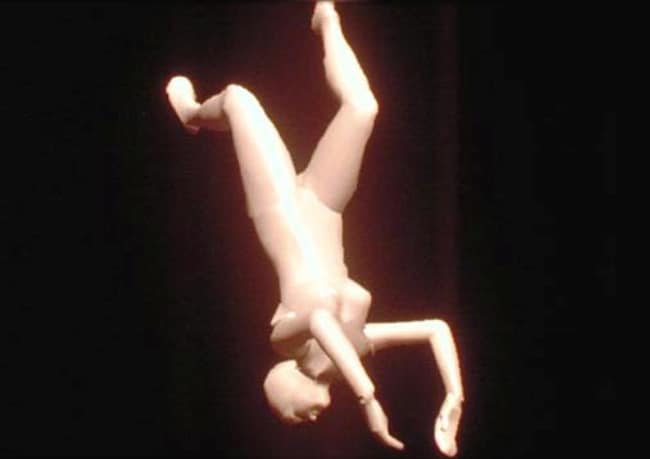
ArtMeta’s presentation, Digital Masterpieces: From Code to Canon, serves as a historical survey, tracing the entangled histories of technology and digital art back to the 1950s. Within this context, Rebecca Allen stands out as a rare female pioneer in early computer graphics and animation. Her work, Swimmer (1981), is a testament to cutting-edge inquiry into human motion simulation. At a time when computer-rendered nudes, such as Vuk Ćosić’s ASCII video of Deep Throat and the anonymous Computer Nude (1966/7), were pushing boundaries, Allen’s Swimmer offered a more profound exploration of the changing relationship between the human body and emergent machine capabilities. Her contribution is crucial not only for its technical innovation but also for diversifying the narrative of early computer art, demonstrating the intellectual and artistic rigor applied to digital forms from its inception.
Avery Singer at Hauser & Wirth
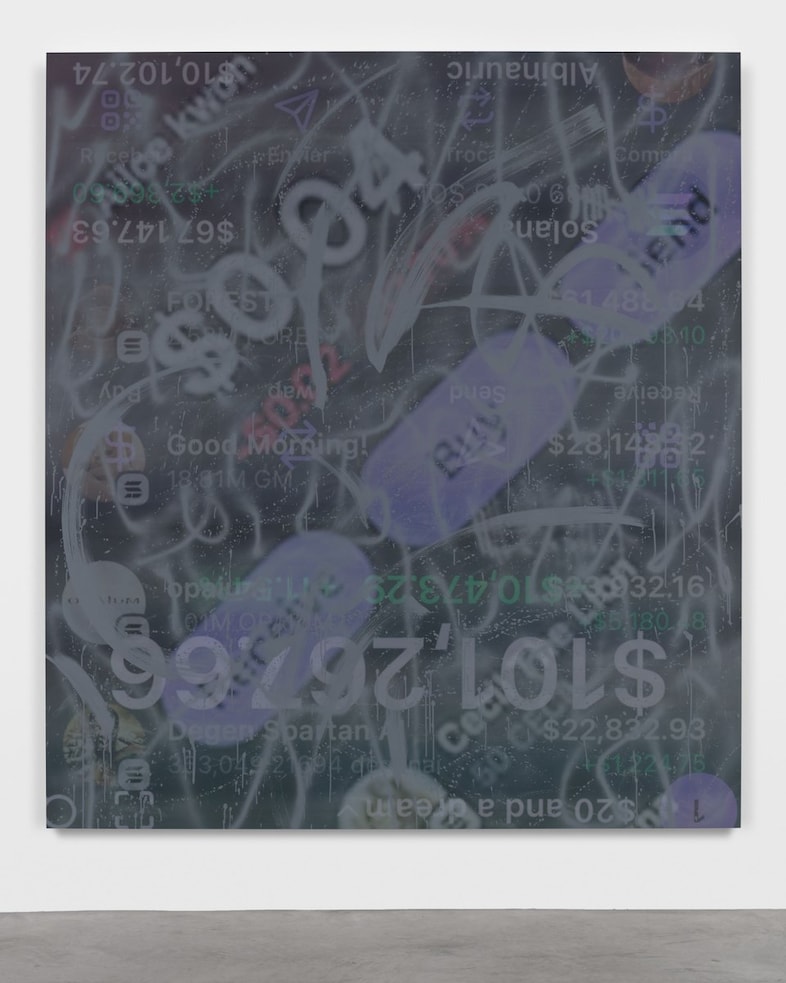
Avery Singer’s painting, "Shit Coin Maxi" (2025), exemplifies Zero 10’s aim to recontextualize digital imagery within a traditional artistic medium. Singer takes two images of digital wallets sourced from Twitter – a platform deeply embedded in contemporary digital culture – and meticulously recreates them in acrylic on canvas. The term "shitcoin" refers to a cryptocurrency token with little to no value, often associated with unethical "pump and dump" schemes prevalent in the crypto space. By translating these ephemeral digital artifacts into a tangible, painterly form, Singer invites a new perspective on the intersection of gambling, finance, and technology – forces that profoundly shape our online and offline realities today. As Paglen noted, "What happens if you change the context? It would read in a really different way than it would if you looked at it on Twitter." Singer’s work thus critiques and illuminates the speculative and often absurd underbelly of contemporary digital finance.
UBERMORGEN at Haus der Elektronischen Künste (HEK)
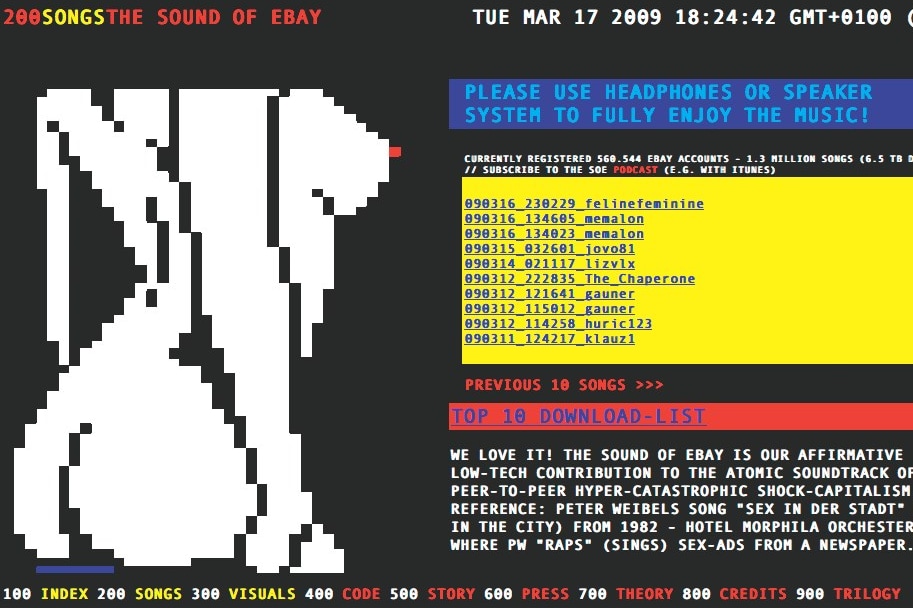
The Basel-based Haus der Elektronischen Künste (HEK) presents a curated selection of net art, spanning from the mid-1990s to the late 2000s, showcasing the nascent stages of internet-native artistic expression. Visitors can engage with interactive pieces via wall-mounted tablets, taking a virtual trip to the Alps courtesy of Studer/van den Berg or experiencing Jodi’s Max Payne Cheats Only (2004), an early example of video game appropriation art that predates its current ubiquity. However, the Austrian duo UBERMORGEN’s The Sound of eBay (2008-9) stands out for its innovative and satirical approach. This artwork generates music based on robot-scraped data from real eBay accounts, which is then played back in the archaic format of teletext sex ads. UBERMORGEN famously described this work as a "high-end, low-tech contribution to the atomic soundtrack of a new shock capitalism," offering a prescient critique of early e-commerce, data exploitation, and the nascent hyper-capitalist digital landscape.
John Gerrard at Fellowship
John Gerrard’s monumental installation, presented as a triptych of screens, greets visitors with three huge, digitally rendered flags. These flags are not static images but dynamic environments, generated in a game engine, that evolve over time. Gerrard, who developed these complex digital simulations over nine years, uses each artwork to comment on critical moments in humanity’s ecological history and its impact on Earth. The first flag emits black smoke from the historical site of the Lucas Gusher in Texas, marking the origin of the 1901 Texas oil boom. The second takes a fiery form, signaling an alarm from the South Pacific near Tonga, evoking the climate crisis and environmental degradation. The third, however, offers a more ambiguous image: a white cloud of clean water vapor released into the Mojave Desert. This final flag prompts viewers to consider whether it represents a vision of a sustainable, cleaner future or, conversely, a white flag of surrender in the face of insurmountable environmental challenges. Gerrard’s work powerfully leverages advanced digital simulation to confront pressing global issues, demonstrating the capacity of digital art to engage with urgent contemporary themes.
The Future Landscape of Art and Technology
Zero 10’s ambitious curatorial project at Art Basel 2026 solidifies the fair’s commitment to exploring the full spectrum of contemporary art, including its most technologically advanced and conceptually challenging forms. By redefining "digital art" beyond screen-based works and embracing a broader historical and methodological view, Paglen and Scheinman have initiated a vital discourse. This sector not only showcases exceptional artistic talent but also serves as a critical mirror reflecting the anxieties and aspirations of an increasingly digitalized world.
While acknowledging the "bullshit" prevalent in certain crypto spaces and the "very well justified" anxieties surrounding AI, Paglen remains optimistic about the potential for genuine artistic innovation. Zero 10 acts as a testament to this belief, presenting a curated selection that celebrates the artists who navigate these complex technological landscapes with integrity and vision. The sector’s success at Art Basel will undoubtedly inspire further integration of digital art into mainstream exhibitions, educational programs, and collecting practices, ensuring its rightful place within the canon of art history.
Zero 10 runs at Art Basel until June 21, inviting visitors to engage with a transformative vision of art in the digital era.