




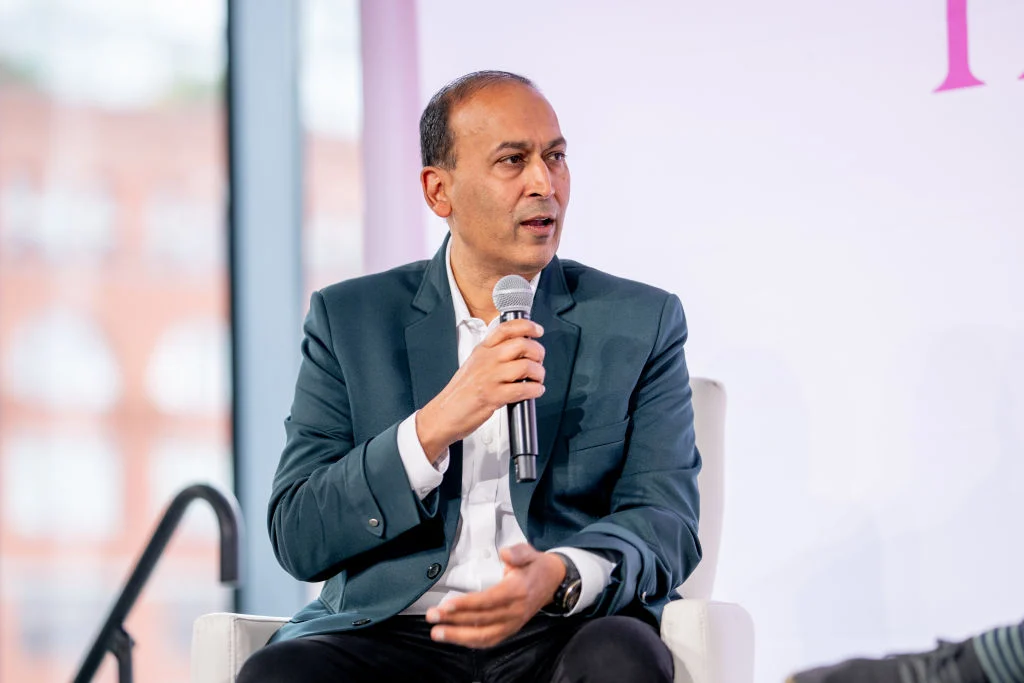
In a significant leadership transition for one of the world’s leading social commerce platforms, Poshmark announced on Monday that its founder, Manish Chandra, will step down from his role as Chief Executive Officer. Chandra, who has been the face and driving force of the fashion resale marketplace since its inception in 2011, will be succeeded by Namsun Kim, an executive who has served as the company’s executive chairman since April and currently holds the position of president of investments at Naver, Poshmark’s parent company. The move marks the end of a nearly 15-year tenure for Chandra as CEO, during which he guided the company from a Silicon Valley garage startup to a publicly traded entity and, eventually, to its acquisition by the South Korean internet giant Naver in a deal valued at approximately $1.2 billion.
While Chandra is relinquishing his day-to-day executive responsibilities, he will remain a vital part of the company’s governance by transitioning to a member of the board of directors. This shift allows Chandra to maintain a strategic advisory role while handing the operational reins to Kim, whose background in high-level investment and corporate strategy aligns with Naver’s long-term vision for Poshmark as a cornerstone of its global e-commerce portfolio. The transition is the culmination of a deliberate succession plan that has been in motion since the beginning of the year, aimed at ensuring organizational stability during a period of rapid evolution in the global resale market.
The Legacy of Manish Chandra: From Garage Startup to Global Marketplace
Manish Chandra founded Poshmark in 2011 alongside co-founders Tracy Sun, Gautam Golwala, and Chetan Pungaliya. At the time, the concept of "social commerce"—combining the connectivity of social media with the transactional nature of e-commerce—was still in its infancy. Chandra’s vision was to create a platform where the act of shopping was secondary to the act of connecting. By allowing users to follow each other, "like" items, and share virtual closets, Poshmark tapped into a communal desire for discovery that traditional e-commerce platforms like eBay or Amazon often lacked.
Under Chandra’s leadership, Poshmark grew exponentially. The platform successfully navigated several rounds of venture capital funding, backed by prominent firms such as Mayfield Fund, Menlo Ventures, and Inventus Capital Partners. In January 2021, amid a surge in online shopping driven by the COVID-19 pandemic, Poshmark went public on the Nasdaq, with its shares more than doubling on their first day of trading. This milestone cemented Poshmark’s status as a heavyweight in the "re-commerce" sector.
In an emotional email sent to Poshmark’s community of users—often referred to as "Poshers"—Chandra reflected on the journey. He noted that leading the company had been the greatest honor of his professional life, attributing the company’s success to the creativity and trust of its 150 million users. His departure as CEO signifies the closing of a chapter defined by rapid scaling and community building, making way for a new era focused on technological integration and international synergy under Naver’s umbrella.
Strategic Succession: Who is Namsun Kim?
Namsun Kim’s appointment as CEO is a strategic move that highlights the deepening integration between Poshmark and Naver. Kim joined Naver, South Korea’s largest internet company, as the head of investments and M&A before rising to his current role as president of investments. He was a central figure in the 2022 acquisition of Poshmark, a deal that was seen as Naver’s "big bet" on the North American market and the burgeoning social commerce sector.
Kim brings a rigorous financial and operational background to the role. Prior to his tenure at Naver, he spent years in the financial sector, including roles at Morgan Stanley and McKinsey & Company. His experience in navigating complex global markets is expected to be a primary asset as Poshmark seeks to improve its profitability and expand its footprint outside of the United States. Since April, Kim has served as Poshmark’s executive chairman, a role that allowed him to work closely with Chandra to understand the company’s unique culture and operational challenges before officially taking the top spot.
According to statements from the company, Kim’s focus will likely involve leveraging Naver’s advanced technological stack—specifically its search algorithms, artificial intelligence, and live-streaming capabilities—to enhance Poshmark’s user experience. By integrating Naver’s "Smart Store" technology and AI-driven personalization, Poshmark aims to stay ahead of competitors like Depop, Vinted, and the resurgent eBay.
A Timeline of Poshmark’s Evolution
The trajectory of Poshmark provides a blueprint for the modern tech-enabled fashion industry. To understand the significance of this CEO transition, one must look at the key milestones that defined Chandra’s leadership:
- 2011: Poshmark is founded in a garage in Menlo Park, California, focusing on an iPhone-first approach to selling secondhand clothing.
- 2012–2017: The company expands its categories from women’s fashion to include men’s, kids’, and beauty. It introduces "Posh Parties," virtual shopping events that drive high engagement.
- 2019: Poshmark expands internationally, launching in Canada, marking its first step toward becoming a global brand.
- January 2021: Poshmark goes public on the Nasdaq (ticker: POSH) at a valuation of nearly $3 billion.
- October 2022: Naver announces its intent to acquire Poshmark for $17.90 per share in cash. The deal, valued at $1.2 billion, takes the company private again.
- 2023: Integration with Naver begins, focusing on AI-driven image recognition for listings and enhanced search functionality.
- August 2025: Manish Chandra announces his resignation as CEO; Namsun Kim is named his successor.
The State of the Resale Market: Context and Competition
The leadership change comes at a pivotal moment for the fashion resale industry. According to industry reports from ThredUp and GlobalData, the global secondhand apparel market is projected to reach $350 billion by 2028, growing three times faster than the overall global apparel market. This growth is driven by a combination of economic factors, such as inflation-weary consumers looking for value, and cultural shifts, particularly among Gen Z and Millennial shoppers who prioritize sustainability and "circular fashion."
However, the sector is not without its challenges. Poshmark faces intense competition from various angles. European-based Vinted has seen massive success by eliminating seller fees, while Depop remains a dominant force among younger, trend-focused demographics. Furthermore, ultra-fast fashion giants like Shein and Temu have disrupted the lower end of the market, offering new clothes at prices that sometimes rival secondhand goods.
Poshmark’s unique selling proposition has always been its social layer. Unlike transactional platforms, Poshmark relies on "social signals" to drive sales. This community-centric model has resulted in high retention rates, with the platform currently boasting 150 million registered users across the U.S., Canada, and Australia. The challenge for Namsun Kim will be to maintain this community spirit while implementing the efficiencies and technical upgrades necessary to compete with the sheer scale of global competitors.
Implications of the Transition: Analysis and Future Outlook
Industry analysts suggest that Kim’s appointment signals a shift from "founder-led growth" to "strategic institutional management." While founders like Chandra are often celebrated for their vision and ability to build culture, institutional leaders like Kim are frequently brought in to optimize operations and maximize the return on investment for the parent company.
One of the primary areas of focus under Kim’s leadership is expected to be the deployment of Naver’s proprietary AI. Naver has invested heavily in generative AI and hyper-scale language models. For Poshmark, this could translate into automated listing tools where a seller simply takes a photo and the AI populates the brand, size, and description, significantly lowering the barrier to entry for new sellers. Additionally, Naver’s expertise in "Live Commerce"—a massive trend in Asia where influencers sell products via live video streams—could be further integrated into Poshmark’s existing "Posh Shows" feature.
The transition also suggests a potential push for further international expansion. With Naver’s backing, Poshmark has the capital to enter new markets in Europe or Southeast Asia, where Naver already has a strong presence. However, the company must balance this expansion with the need for profitability, a goal that has remained elusive for many companies in the resale space.
Official Reactions and Stakeholder Impact
The announcement has been met with a mix of sentimentality and optimism within the Poshmark community. On social media, long-time sellers expressed gratitude for Chandra’s accessibility and his role in creating a platform that allowed many to start small businesses from their homes. "Manish didn’t just build an app; he built a community that changed how we think about our closets," wrote one prominent seller on the platform.
From a corporate perspective, Naver’s leadership has expressed full confidence in Kim. In a brief statement, Naver emphasized that Kim’s dual understanding of Poshmark’s internal culture and Naver’s technological resources makes him the ideal candidate to navigate the next phase of the company’s evolution.
As the retail landscape continues to shift toward a more sustainable and digitally-integrated future, the change in leadership at Poshmark serves as a case study in the lifecycle of a modern tech company. Manish Chandra’s journey from a garage to the board of directors reflects the successful scaling of an idea, while Namsun Kim’s arrival signals the maturity of the social commerce sector as it integrates into the global mainstream. For Poshmark’s 150 million users, the hope is that this new leadership will bring the technical innovation needed to keep the platform competitive without losing the personal, social touch that defined its first decade.