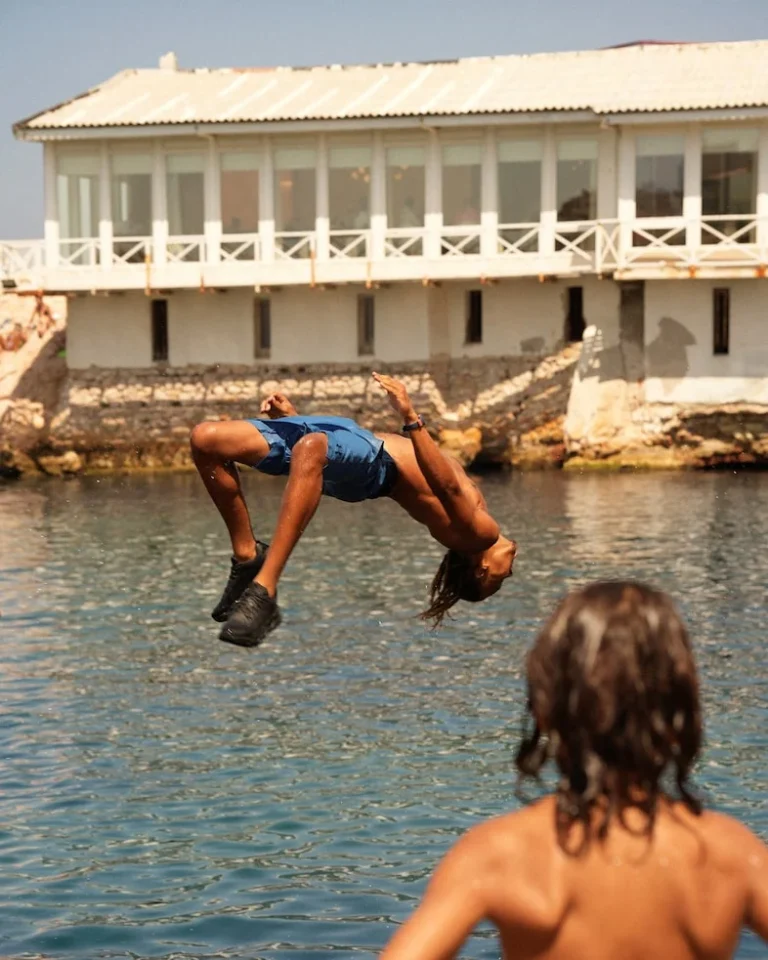





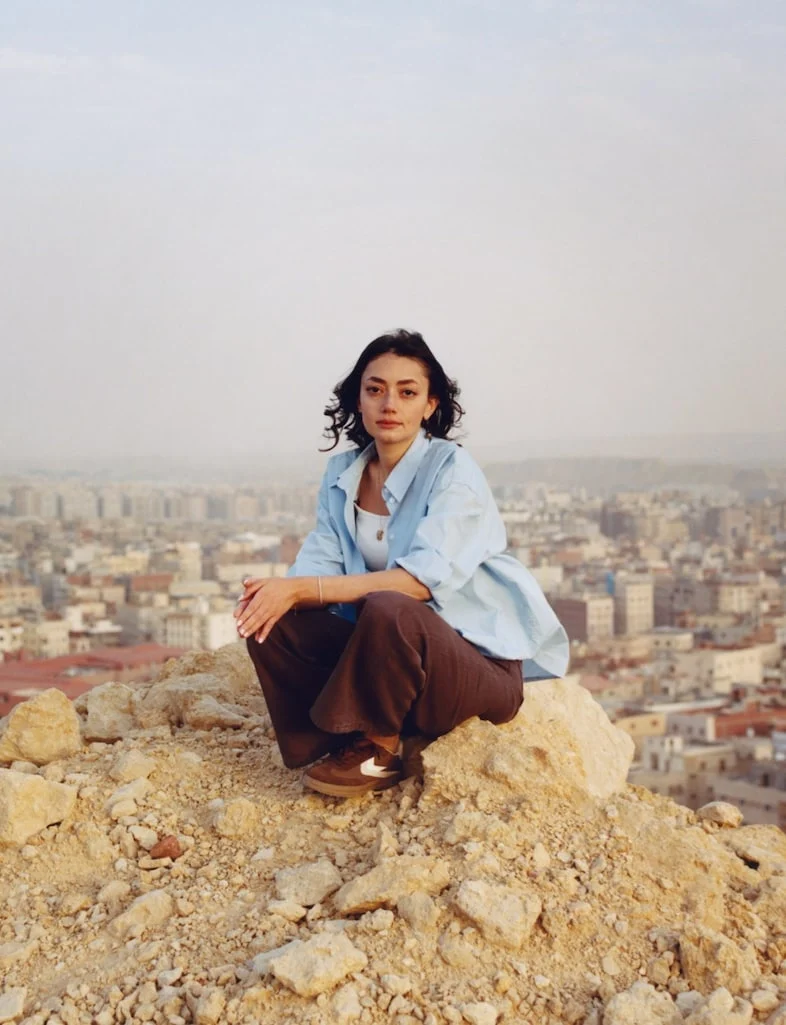
For three weeks in March 2026, Plestia Alaqad, the acclaimed 24-year-old journalist and author from Palestine, embarked on a unique voyage across the Atlantic Ocean. Aboard a vessel with nine other young activists, Alaqad found a rare moment of serenity, describing the open sea as a "Nutopia" – a space where no one claims ownership, fostering an environment of shared purpose and dialogue. This expedition was captured for the upcoming docufilm The Ark of Change, a project designed to highlight pressing global social issues through the perspectives of its diverse participants. While her fellow activists focused on themes such as education or women’s rights, Alaqad chose to address the grave issue of genocide, a topic deeply intertwined with her personal experiences and professional calling. This recent endeavor underscores Alaqad’s unwavering commitment to advocacy, employing new platforms to amplify the Palestinian narrative on a global stage.
From Gaza’s Streets to Global Screens: A Chronology of Reporting
Plestia Alaqad gained international prominence in 2023, emerging as a critical voice from Gaza. At just 21 years old, she became an indispensable source of on-the-ground reporting, using only her iPhone to document the unfolding humanitarian crisis and the devastating impact of military actions on her community. Her raw, unfiltered dispatches provided a window into daily life under siege, capturing the immediate aftermath of Israeli airstrikes, the harrowing conditions in displacement camps, and the pervasive struggles with starvation, disease, and widespread destruction. Her reporting became a vital counter-narrative to official statements, offering a deeply personal and immediate perspective on events that often lacked comprehensive coverage in mainstream media.
Alaqad’s courageous reporting continued despite immense personal risk. Journalists in conflict zones, particularly in Gaza, have faced unprecedented dangers. According to the Committee to Protect Journalists (CPJ), the conflict beginning in October 2023 has been one of the deadliest for media workers on record, with scores of Palestinian journalists killed, injured, or missing. Despite these systemic threats and the documented targeting of media professionals, Alaqad persisted, embodying the resilience of a generation determined to ensure their stories were heard. Her ability to leverage social media platforms allowed her to bypass traditional media gatekeepers, delivering urgent updates directly to a global audience hungry for authentic voices from within the besieged enclave.
Following her evacuation to Australia, Alaqad channeled her experiences into her debut book, The Eyes of Gaza, released in 2025. The memoir, consisting of diary entries penned in the wake of October 7, quickly garnered critical acclaim. It offers intimate and often harrowing anecdotes that delve into the complexities of life under occupation, providing context and depth beyond the fragmented snippets often seen on social media. Alaqad emphasizes the book’s role in offering an authentic Palestinian perspective: "Whenever people ask me about life in Gaza, I always refer them to the book. There is the genocide, but you wake up every day, try to survive it and get on with your day." This highlights the dual reality of enduring immense hardship while striving for normalcy, a dimension often overlooked in broader media portrayals.
Reclaiming the Narrative: The Power of Palestinian Voices
The Eyes of Gaza marks a significant contribution to Palestinian literature, challenging a long-standing pattern where narratives about Palestine are frequently authored by international observers who lack direct lived experience. "There are a lot of books about Gaza," Alaqad notes, "but you rarely see books about Gaza by Palestinian authors. It’s often international authors who have never even lived there writing about us, so I’m glad we are breaking that cycle." This assertion underscores a crucial aspect of cultural self-determination: the right and imperative for communities to tell their own stories, define their own experiences, and shape their own historical memory.
The importance of Palestinian literary voices cannot be overstated. For decades, the Palestinian narrative has been subject to various forms of censorship, misrepresentation, or omission in global discourse. Books like The Eyes of Gaza, alongside works by other Palestinian writers, serve as vital tools for cultural preservation, identity affirmation, and humanization. They offer a counterpoint to geopolitical analyses, grounding the conflict in personal experience and revealing the profound human cost. By sharing her intimate reflections, Alaqad not only documents history but also asserts the agency of those directly impacted, providing a powerful testament to endurance and the enduring spirit of a people.
Broader Context: The Humanitarian Crisis in Gaza
Alaqad’s reporting and writing emerged from a deeply entrenched humanitarian crisis in the Gaza Strip, exacerbated dramatically since October 2023. Prior to the escalation, Gaza had already been under an Israeli and Egyptian blockade since 2007, leading to chronic shortages of essential goods, high unemployment rates, and a crippled infrastructure. The United Nations and various humanitarian organizations had consistently warned of the territory’s dire conditions, describing it as an "open-air prison."
The events of October 7, 2023, and the subsequent military operations, plunged Gaza into an unprecedented catastrophe. Data from UN OCHA and the Palestinian Ministry of Health reveal staggering figures: tens of thousands of Palestinians killed, including a disproportionate number of women and children; over 80% of the population displaced, many multiple times; and vast swathes of residential areas, hospitals, schools, and cultural sites reduced to rubble. Food insecurity has reached famine levels in parts of Gaza, with widespread malnutrition and disease outbreaks due to lack of clean water, sanitation, and medical supplies. Alaqad’s iPhone footage captured these realities in real-time, offering irrefutable evidence of the devastating impact on civilian lives and infrastructure. Her narrative, therefore, is not just a personal memoir but a crucial historical document reflecting a collective tragedy.
Sustaining Hope Amidst Adversity: Alaqad’s Philosophy
A year on from her book’s release, the state of the region remains bleak. Alaqad, now a master’s student in Beirut, finds herself once again living under the shadow of regional instability and Israeli bombardment. Despite the persistent challenges and the personal toll, her determination to find new avenues to reach people remains undimmed. This includes an upcoming acting debut in the Palestinian horror film The Visitor, a venture that showcases her willingness to explore diverse creative mediums for expression and advocacy.
Alaqad’s philosophy is rooted in an unwavering, albeit pragmatic, hope. "We don’t have any option but to remain hopeful," she explains. "Obviously, I feel afraid a lot of the time, but I do things no matter how scared I feel. I need to be able to keep going." This statement encapsulates the resilience that defines many Palestinians, a necessity born from decades of protracted conflict and displacement. It is a hope that acknowledges fear but refuses to be paralyzed by it, propelling individuals to continue their work for justice and a better future. Her decision to engage with film, a powerful medium for cultural expression, reflects a strategic expansion of her advocacy beyond traditional journalism and literature, seeking to connect with audiences through different emotional and intellectual registers.
Cultural Contributions and Artistic Expression
In her efforts to maintain hope and shed light on the Palestinian cause, Alaqad frequently turns to various forms of art and media. Her recommendations span literature, cinema, television, and music, illustrating a rich tapestry of influences that both comfort and inspire her.
Literature:
Alaqad highly recommends Susan Abulhawa’s 2006 novel, Mornings in Jenin. This multigenerational saga follows a Palestinian family through the historical upheavals of their homeland. Alaqad first read it in 2019 and describes its profound impact: "As Palestinians living in Gaza, we’re separated from the rest of Palestine in the West Bank. So reading this book did a lot for me. You know you’ve read a good book when years later it still has an impact on you, and you remember how it made you feel." The novel serves as a crucial bridge, connecting readers to the shared history and fragmented geography of Palestine, fostering a sense of collective identity despite physical separation. It highlights the importance of historical fiction in preserving memory and humanizing political struggles.
Cinema:
Among her film recommendations, Frank Darabont’s 1994 classic, The Shawshank Redemption, holds a special place. The film’s enduring message of hope resonated deeply with Alaqad during her high school years. She recalls a specific quote: "Hope is a good thing, maybe the best of things, and no good thing ever dies." This became a personal mantra, printed and displayed on her bedroom wall, serving as a constant reminder to remain optimistic regardless of circumstances. While acknowledging the impracticality of constant hope, she expresses a deep yearning for a different future in Palestine. The film’s themes of perseverance, inner freedom, and the power of hope against overwhelming odds offer a powerful metaphor for the Palestinian struggle.
Alaqad also finds profound resonance in Palestinian cinema, specifically mentioning Cherien Dabis’s upcoming 2025 film, All That’s Left of You. Watching this film with a childhood friend from Gaza, Karma, proved to be a deeply emotional experience. "We both got so emotional. In fact, we cried at several points, because we realised that this is our life, this is what happened to us," Alaqad recounts. She notes the cathartic power of seeing one’s own experiences reflected on screen: "Sometimes you don’t understand what happened to you until you see it on screen. And then you’re like, ‘Oh my God, how did I survive all of that?’" This underscores the therapeutic and validating role of art in processing trauma and affirming shared realities for communities affected by conflict.
For moments of respite, Alaqad turns to lighter fare like Modern Family. During her master’s studies in Beirut, the show provides a comforting backdrop to her daily routine. "It’s just comforting. Sometimes I want to turn the news off but want to watch something, and start watching something related to Palestine—I just do it subconsciously. That’s why, when things feel overwhelming, I turn on Modern Family again." This highlights the human need for mental breaks and the importance of escapism in managing the emotional toll of constant engagement with traumatic realities.
Music:
Faia Younan, a Syrian singer, is another significant source of inspiration and comfort for Alaqad. Having listened to Younan’s music since childhood with her best friend, Dana, Alaqad later formed a personal friendship with the artist in Lebanon. She deeply admires Younan’s authenticity in an industry often driven by fleeting trends. "She stays true to herself, and I love that about her," Alaqad states. Younan’s commitment to her artistic integrity and cultural roots resonates with Alaqad’s own pursuit of truth and genuine expression in her work.
Wear the Peace: A Symbol of Enduring Identity and Charity
Beyond her journalistic and artistic endeavors, Alaqad actively engages in tangible forms of advocacy and support for her community. Her collaboration with the clothing brand Wear the Peace exemplifies this commitment. This initiative directly benefits the Ghassan Abu Sittah Children’s Fund, a vital organization dedicated to assisting children affected by the conflict in Gaza and the war in Lebanon. The fund addresses critical needs such as medical care, psychological support, and educational resources for vulnerable children who have endured profound trauma and displacement.
The collaboration’s design is rich with symbolism. It features turtle embroidery, a poppy (the national flower of Palestine) on the inside, and a keffiyeh pattern on the outside. Alaqad explains the significance of these elements: "Turtles are patient and carry their home with them on their backs, and that’s how I think of us Palestinians. This did not start in October 2023—for decades, we have been patient and carrying our homes on our backs wherever we go." The turtle symbolizes resilience, patience, and the profound connection Palestinians maintain with their homeland, even in forced displacement. The poppy represents the martyrs and the enduring spirit of the land, while the keffiyeh is a universally recognized symbol of Palestinian identity and resistance. Through this collaboration, Alaqad not only raises crucial funds but also embeds powerful cultural messages within everyday items, fostering a sense of solidarity and reminding the world of the long history of the Palestinian struggle.
The Enduring Impact of a Generation’s Voice
Plestia Alaqad embodies a new generation of Palestinian voices leveraging global platforms to challenge narratives, advocate for justice, and preserve cultural identity. Her journey from an iPhone journalist in Gaza to an author, activist, and emerging artist highlights the evolving landscape of media and advocacy in the 21st century. By fearlessly documenting the human cost of conflict, sharing her personal experiences, and engaging with diverse forms of creative expression, Alaqad offers a multifaceted perspective on the Palestinian experience. Her work serves not only as a record of immense suffering but also as a powerful testament to the indomitable spirit of hope and resilience that continues to define her people. Through her tireless efforts, Plestia Alaqad ensures that the world hears, sees, and feels the story of Palestine, demanding attention and fostering solidarity in an increasingly interconnected yet often fragmented world.