








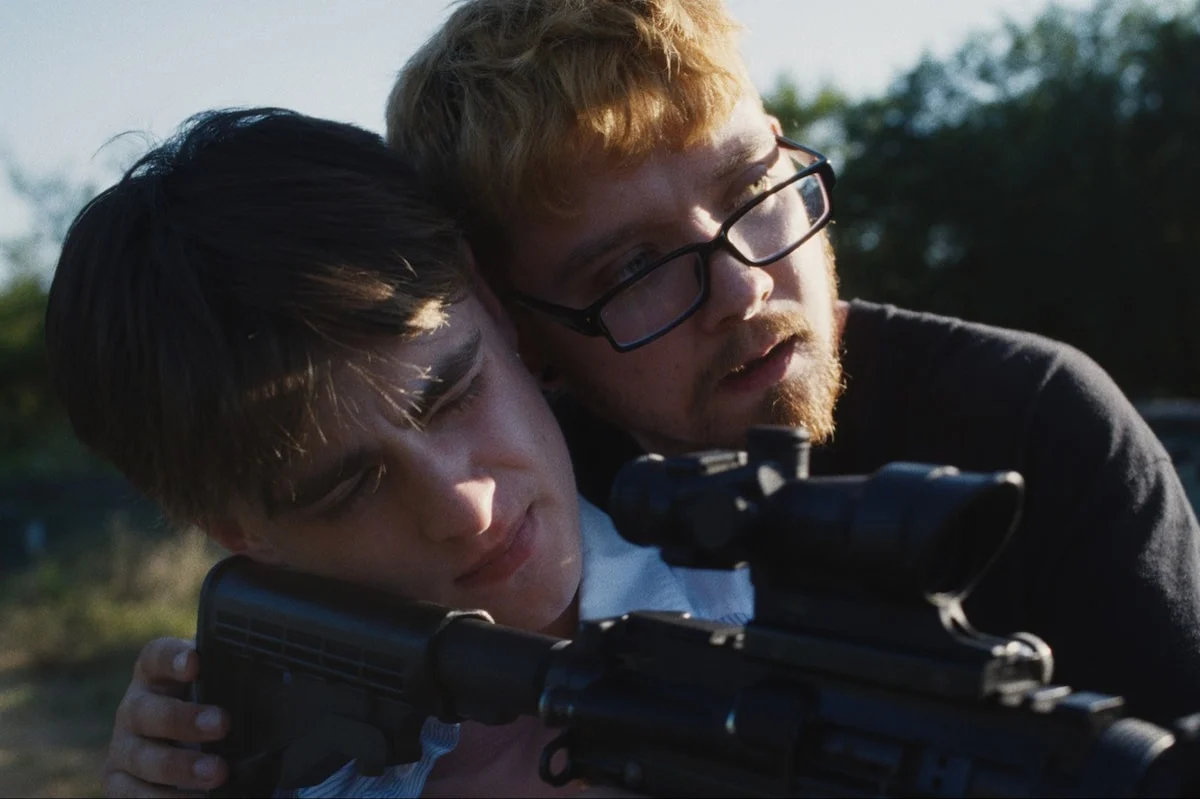
The contemporary landscape of independent cinema is increasingly hostile to challenging, non-formulaic narratives, yet writer-director Oscar Boyson has pierced this barrier with his uncompromising feature debut, Our Hero, Balthazar. Conceived in the late autumn of 2022 alongside journalist Ricky Camilleri, the dark comedy directly engages with the harrowing intersection of digital isolation, incel culture, and contemporary gun violence. The film’s conceptual genesis traces back to a chilling revelation from the May 2022 Uvalde elementary school shooting, during which 18-year-old gunman Salvador Ramos messaged a 15-year-old girl in a foreign country regarding his lethal intentions shortly before killing 21 people. The subsequent global fallout—which saw the unwitting teenager face severe online vitriol and eventual prosecution in Germany for failing to alert authorities—exposed a deeply broken ecosystem of digital connectivity, virtual radicalization, and moral panic. Despite boasting a recognizable ensemble cast featuring former young adult heartthrobs Asa Butterfield, Jaeden Martell, Noah Centineo, and Avan Jogia, Boyson’s provocative picture faced substantial institutional friction, enduring rejections from major international film festivals including Sundance, SXSW, and Cannes before securing its eventual theatrical and digital distribution.
Background Context and Chronology of the Crisis
To understand the cultural urgency of Our Hero, Balthazar, one must examine the documented evolution of mass shooters and the digital footprints they leave behind. Over the past decade, sociological and criminological studies conducted by organizations such as the Violence Project have established a disturbing pattern among perpetrators of mass violence: a profound history of childhood trauma, acute social isolation, feelings of emasculation or grievance, and an explicit desire for public notoriety amplified by internet culture.
The timeline of modern digital radicalization accelerated significantly in the late 2010s and early 2020s, shifting from closed message boards like 4chan and 8chan to mainstream platforms, live-streaming services, and generative artificial intelligence applications. The Uvalde tragedy in May 2022 marked a watershed moment, illustrating how perpetrators increasingly use the globalized internet as an audience for their final performances. This phenomenon was further underscored by subsequent incidents, including the high-profile cases of mass shooters and ideologically driven attackers whose digital archives—such as those of Anderson Aldrich and Randy Stair—revealed individuals crying out for validation within toxic online subcultures long before executing their violent acts. Boyson and Camilleri’s screenplay emerged directly from this historical window, seeking to interrogate the vast chasm between initial digital cries for help and the catastrophic manifestation of lethal violence.
Narrative Structure and Character Subversion
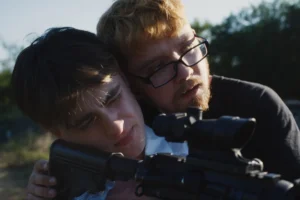
Our Hero, Balthazar utilizes a deceptive narrative arc to challenge audience preconceptions regarding culpability and victimhood. The film opens in a bourgeois milieu, introducing Balthazar, played by Jaeden Martell, a privileged teenager whose life is entirely devoid of genuine emotional connection. Seeking to win the affection of a skeptical peer named Eleanor, portrayed by Pippa Knowles, Balthazar weaponizes his capacity for emotional manipulation, recording tearful YouTube vlogs about gun violence and societal decay. When Eleanor questions the authenticity of his motives, Balthazar devises an elaborate scheme: he tracks down Solomon, a distressed stranger living in Texas whom Balthazar believes is on the verge of executing a school shooting. By intervening and successfully talking Solomon out of mass murder, Balthazar calculates he will secure Eleanor’s romantic devotion.
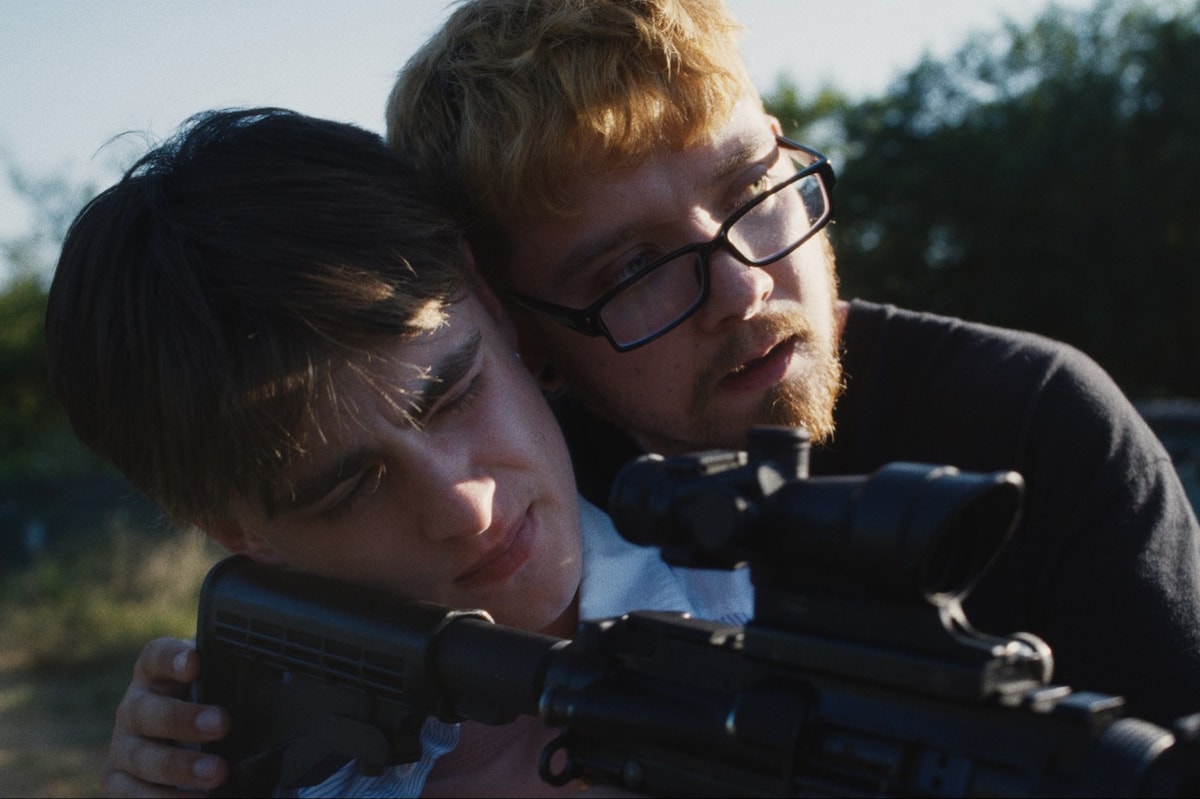
Utilizing AI-generated imagery and explicit digital promises, Balthazar catfishes Solomon, presenting himself as a woman whose sexual desires cannot be fulfilled in New York. However, the narrative pivots radically when Balthazar travels to Texas to confront his target in person. Rather than expressing rage at the deception, Solomon—portrayed with abrasive intensity by Asa Butterfield—is overwhelmed with gratitude that someone crossed geographic boundaries simply to meet him. This narrative shift deliberately alienates viewers looking for a conventional thriller, redirecting focus away from the mechanics of an impending shooting toward an intimate exploration of mutual desperation, shame, and alienation.
Data, Sociological Implications, and Mental Health Realities
Public health data underscores the critical urgency of addressing the root causes depicted in Boyson’s film. According to public health statistics compiled by the Centers for Disease Control and Prevention (CDC), suicide accounts for the overwhelming majority of firearm-related deaths in the United States, far outnumbering public mass casualty events. Researchers note that chronic loneliness and social alienation function as primary drivers across both phenomena, creating a silent epidemic that disproportionately affects young men navigating the transition to adulthood in hyper-digitalized societies.
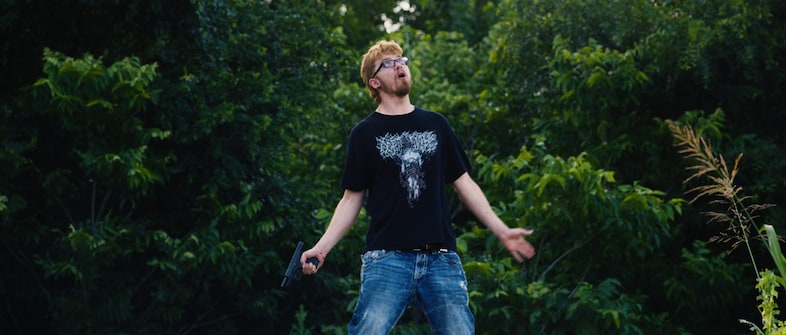
Asa Butterfield’s transformation into Solomon—complete with dyed hair, a raw Texan accent, and socially transgressive behavior modeled loosely on archival footage of historical attackers—serves as a physical manifestation of this societal failure. In promotional and post-screening discussions, the actor has emphasized the necessity of locating the fundamental humanity within reviled archetypes. By forcing audiences to grapple with Solomon’s misogyny, poverty, and desperate need for acknowledgment, the film asks an uncomfortable question: at what point does society collectively abandon vulnerable youths to the algorithms of the internet, only to feign shock when their isolation curdles into aggression?
Industry Resistance and the Festival Circuit
The path to theatrical distribution for Our Hero, Balthazar highlights a growing risk-aversion within the global film industry. Operating as a co-founder of Elara Pictures alongside the Safdie brothers—with an impressive production background on critically acclaimed independent masterworks such as Uncut Gems, Good Time, and Frances Ha—Boyson possesses deep institutional knowledge of independent cinema. Yet, his directorial debut encountered immediate resistance from institutional gatekeepers.
Boyson has openly criticized the modern festival ecosystem, arguing that major cultural hubs increasingly function from a place of conflict avoidance and brand protection. In an era where corporate studios and independent financiers alike worry about controversy, projects dealing directly with real-world traumas like school shootings are frequently sidelined or suppressed before ever reaching an audience. This risk-averse programming strategy creates a paradox: while contemporary youth culture grapples daily with the existential dread of gun violence and digital alienation, mainstream cinematic institutions often retreat into sanititized narratives that offer easy moral binaries rather than complex psychological inquiries.
Technological Complicity and Corporate Accountability
Beyond its exploration of interpersonal psychology, Our Hero, Balthazar touches upon the structural complicity of modern technology corporations in failing to intercept radicalized individuals. During the research and promotional cycle for the film, Boyson referenced alarming real-world precedents, such as the actions of the Tumbler Ridge shooter, an 18-year-old who explicitly detailed his violent intentions to OpenAI’s ChatGPT prior to carrying out an attack. Whistleblower accounts and internal reports revealed that while corporate employees flagged the dangerous interactions to executive leadership, management allegedly chose not to intervene to avoid establishing legal liability or acknowledging institutional responsibility.
This corporate detachment mirrors the broader thematic concerns of Boyson’s film. By illustrating how digital platforms monetize attention, amplify outrage, and leave marginalized users to rot in self-reinforcing echo chambers, Our Hero, Balthazar positions the internet not merely as a communication tool, but as an active participant in the cycle of modern alienation. The film suggests that while legislative action on gun control remains an essential component of addressing public safety, society must also radically reform how it supports isolated youth before they reach the point of no return.
Broader Impact and Critical Reception
Despite its rocky initial reception and the challenges of cutting through a crowded marketplace dominated by horror franchises and intellectual property sequels, Our Hero, Balthazar has generated significant critical debate upon its release. Audiences willing to look past the initial discomfort of its subject matter have reported deeply emotional viewing experiences, proving that independent cinema retains its vital capacity to provoke, challenge, and reflect uncomfortable societal truths.
Ultimately, Boyson’s film avoids reducing its characters to simple political talking points or reductive internet labels like "incel," opting instead for a nuanced examination of the shame inherent in modern loneliness. By mapping the continuum between internal despair and externalized performance, Our Hero, Balthazar challenges viewers to look beyond the polarized media narratives of good versus evil and confront the systemic failures that allow isolation to fester into tragedy. As digital connectivity continues to expand while genuine human community contracts, films like Boyson’s provide an essential, albeit unsettling, mirror to the fractures of twenty-first-century life.