








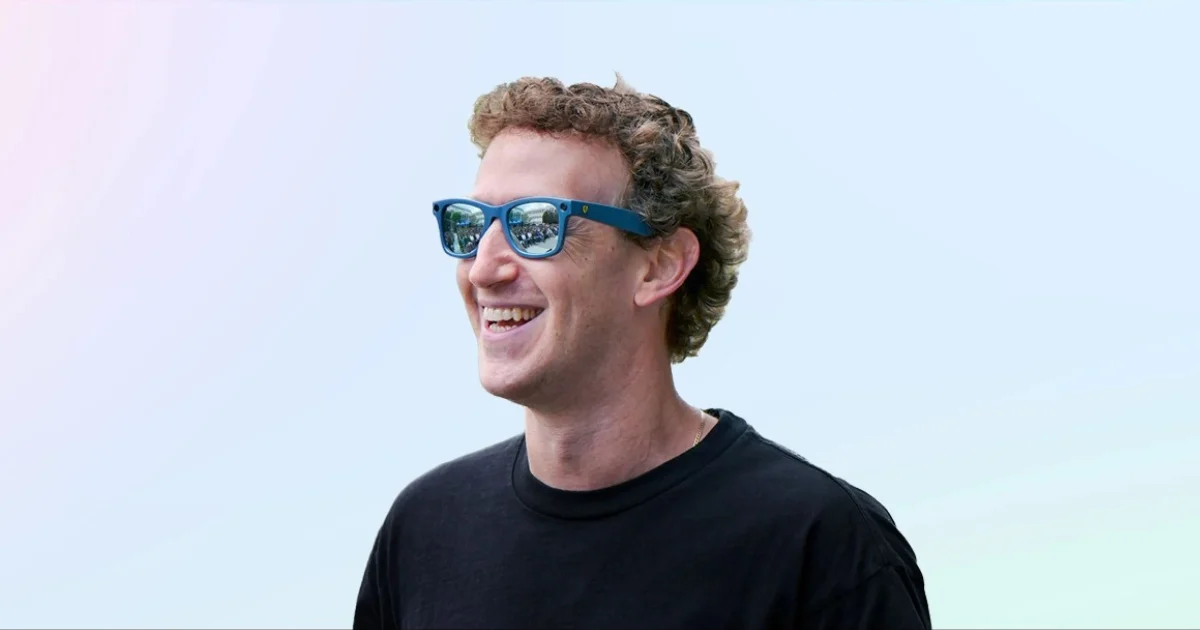
The presence of Meta Platforms Inc. CEO Mark Zuckerberg and his wife, Priscilla Chan, in the front row of Prada’s Fall/Winter 2026 show in Milan has ignited intense industry speculation regarding the next evolution of Meta’s wearable technology. Seated alongside Lorenzo Bertelli—the Chief Merchandising Officer of Prada and son of the legendary Miuccia Prada—Zuckerberg’s appearance transcends a mere interest in high fashion. Industry analysts and insiders suggest the meeting serves as a high-profile signal that a luxury "Prada Edition" of Meta’s AI-powered smart glasses is nearing a formal announcement. This development follows years of Meta’s strategic pivot toward blending silicon-valley utility with European luxury aesthetics, a move designed to transition smart glasses from niche gadgets to essential fashion accessories.
The Milan Sightings: A Strategic Rebrand in Real-Time
Zuckerberg’s attendance at Milan Fashion Week is the latest chapter in a carefully choreographed public image transformation. Over the past two years, the Meta executive has swapped his signature gray t-shirts for custom-tailored streetwear and designer threads, a shift many observers have labeled a "midlife rebrand." However, the Milan appearance was less about personal style and more about corporate synergy. Zuckerberg and Bertelli were observed in deep conversation throughout the event, reinforcing reports that Meta is looking to elevate its hardware portfolio to appeal to a more affluent, fashion-conscious demographic.
The context of this interaction is critical. Prada is currently navigating a period of significant growth and digital transformation under Lorenzo Bertelli’s leadership. By aligning with a tech giant like Meta, Prada stands to position itself at the forefront of the "wearable intelligence" movement, while Meta gains the prestige and design language required to capture the luxury market—a segment that has remained largely elusive for traditional tech hardware.
A History of Partnership: The EssilorLuxottica Connection
The path toward a Prada-branded wearable is paved by Meta’s existing and highly successful partnership with EssilorLuxottica, the French-Italian eyewear conglomerate that owns Ray-Ban and Oakley and holds the licensing rights for Prada and Miu Miu eyewear. The collaboration began in 2021 with the launch of "Ray-Ban Stories" and evolved significantly with the 2023 release of the Ray-Ban Meta collection.
In early 2026, EssilorLuxottica reported a staggering surge in demand for these devices. According to internal sales data, the company sold over 7 million units of AI-integrated glasses in 2025, a nearly 250% increase from the 2 million units sold in 2024. This growth was bolstered by the introduction of the Oakley Meta line, which targeted the performance and athletic markets. With the "lifestyle" (Ray-Ban) and "athletic" (Oakley) segments now established, the "luxury" segment (Prada) represents the logical next frontier for the partnership.
The legal and commercial framework for a Prada collaboration is already in place. Prada and EssilorLuxottica recently finalized a ten-year licensing renewal, extending their partnership through 2030, with an option to continue until 2035. This long-term stability allows for the multi-year development cycles required to integrate Meta’s sophisticated AI sensors and processors into Prada’s high-end frame designs without compromising the brand’s aesthetic integrity.
Chronology of Meta’s Wearable Ambitions
To understand the significance of a potential Prada partnership, one must look at the timeline of Meta’s hardware evolution:
- September 2021: Meta launches "Ray-Ban Stories." The first-generation glasses featured cameras and speakers but lacked integrated AI and were met with modest consumer interest.
- September 2023: The "Ray-Ban Meta" collection debuts. These glasses introduced multi-modal AI, allowing users to ask the glasses questions about what they were seeing in real-time. This version became a viral success.
- June 2025: Reports surface via CNBC that Meta and EssilorLuxottica have begun prototyping luxury frames, specifically mentioning Prada as a primary collaborator.
- September 2025: Meta unveils the Oakley Meta line at its annual Connect conference, focusing on ruggedized frames for outdoor enthusiasts.
- February 2026: Mark Zuckerberg’s high-profile appearance at Prada’s Milan show coincides with reports of record-breaking sales for the AI glasses category.
Market Analysis: The Shift from Tech to Luxury
The success of the Ray-Ban Meta glasses demonstrated that consumers are willing to wear cameras and microphones on their faces if the hardware looks like a standard pair of glasses. Unlike the ill-fated Google Glass, which suffered from a "tech-first" design that alienated the public, Meta’s strategy has been "fashion-first."
A Prada version of Meta AI glasses would likely command a significant price premium, potentially retailing between $600 and $1,000, compared to the $299 starting price of Ray-Bans. This would allow Meta to increase its hardware margins while reinforcing the idea that AI glasses are a status symbol rather than a utility tool. For Prada, the integration of Meta’s Llama-based AI provides a digital edge that competitors in the luxury space, such as LVMH or Kering, have yet to match in the wearable sector.
From a technical standpoint, the Prada AI glasses are expected to feature the next generation of Meta’s AI architecture. This includes improved "See What I See" capabilities, real-time language translation, and enhanced spatial audio. Analysts suggest that the Prada line might also debut more sophisticated materials, such as high-grade acetate and titanium, further distinguishing them from the more mass-market Ray-Ban and Oakley offerings.
Surveillance Concerns and Public Backlash
Despite the commercial success of Meta’s wearables, the expansion into luxury fashion comes at a time of heightened public sensitivity regarding privacy and surveillance. The 2025-2026 period has seen a documented rise in "anti-surveillance" sentiment across the United States and Europe. Reports have emerged of citizens disabling Ring doorbells and destroying Flock Safety automated license plate readers in residential neighborhoods, citing concerns over the "omnipresent eye" of corporate and state surveillance.
Meta’s smart glasses have not been immune to this scrutiny. A recent report by The New York Times suggested that Meta has explored adding facial-recognition capabilities to its glasses—a feature that would allow a wearer to instantly identify strangers in public. While Meta has not officially confirmed the implementation of this feature, the mere possibility has sparked a backlash.
In response to these privacy fears, the developer community has begun creating "counter-tech." One notable example is a recently released mobile application that uses Bluetooth and infrared scanning to alert users if someone wearing active smart glasses is in their immediate vicinity. This "cat-and-mouse" game between wearable tech adoption and privacy advocacy presents a significant hurdle for Meta. If a Prada-branded device is perceived as a "tool for the elite to surveil the public," it could damage both Meta’s and Prada’s brand equity.
The Broader Impact on the AI Ecosystem
The potential launch of Prada AI glasses signals a broader trend in the technology industry: the "invisibleness" of AI. As the technology matures, it is moving away from screens and keyboards and into the fabric of everyday life. By embedding AI into a luxury fashion item, Meta is betting that the path to mass adoption lies in making the technology disappear into a well-designed product.
Furthermore, this partnership challenges the dominant "spatial computing" narrative championed by Apple with its Vision Pro headset. While Apple has focused on a high-fidelity, immersive, but bulky headset, Meta is doubling down on lightweight, stylish eyewear that users can wear all day. The 7 million units sold in 2025 suggest that Meta’s approach—prioritizing style and portability over raw computing power—is currently winning the battle for the consumer’s face.
Conclusion and Future Outlook
While Meta has declined to provide an official comment on the Zuckerberg-Prada meeting in Milan, the circumstantial evidence points toward a major product announcement in the second half of 2026. The synergy between Meta’s AI capabilities, EssilorLuxottica’s manufacturing dominance, and Prada’s cultural capital creates a formidable entry into the luxury tech market.
However, the road ahead is not without challenges. Meta must navigate a complex landscape of privacy regulations and shifting social norms regarding surveillance. As the company prepares to potentially launch the most stylish surveillance device ever made, it will need to balance the allure of luxury with the necessity of public trust. For now, the world’s eyes remain on the front rows of Milan, where the future of human-computer interaction is being stitched together one runway show at a time.