










The intersection of artificial intelligence and consumer fashion has long promised to fulfill a cinematic fantasy first popularized by the 1995 cult-classic film Clueless, in which protagonist Cher Horowitz effortlessly matches outfits via a computerized database. For decades, software developers and fashion technologists have attempted to recreate this frictionless digital closet, only to be stymied by the computational limits of computer vision, generative AI, and predictive styling algorithms. Today, however, those technological barriers are rapidly falling away.
Jenny Wang, a 28-year-old Harvard-trained engineer and tech veteran, has officially announced the launch of Alta, a next-generation AI personal styling agent and digital shopper. Alongside the public unveiling of the company, Wang revealed a successful $11 million seed funding round led by venture capital firm Menlo Ventures. The fresh capital arrives as consumer-facing artificial intelligence shifts from general-purpose chatbots to hyper-personalized, utility-driven agents capable of seamlessly integrating into daily human routines.
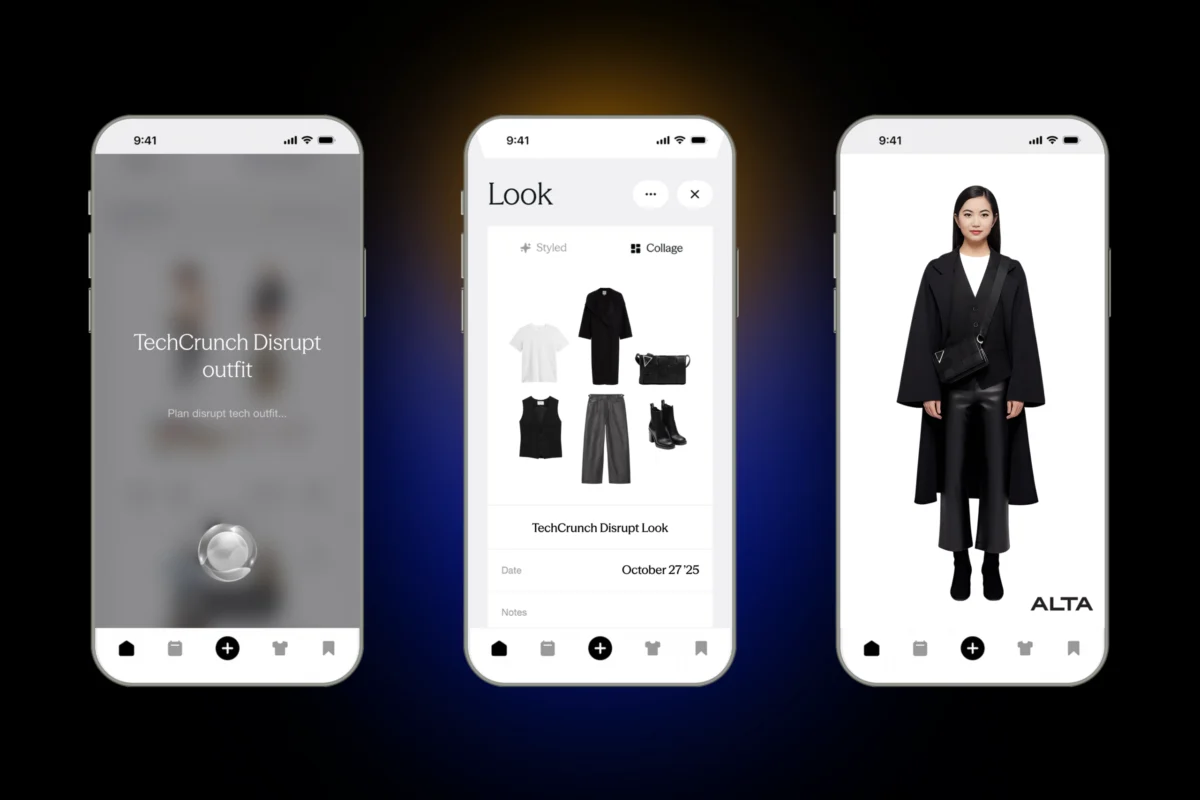
Alta is designed to solve a universal daily dilemma: deciding what to wear based on an intricate matrix of personal budgets, localized weather patterns, lifestyle demands, and real-time calendar events. By synthesizing these variables, the platform offers tailored outfit suggestions, curates comprehensive lookbooks, and allows users to experiment with prospective purchases through hyper-realistic personalized virtual avatars.
The Evolution of the Digital Closet
The journey toward Alta’s market debut represents years of conceptual refinement for Wang. Throughout her career working across various technical and investment roles in the technology sector, the concept of an automated, intelligent styling assistant remained a persistent focus. Previous attempts to build the product stalled primarily because the underlying artificial intelligence technology was simply not mature enough to handle the complex nuances of fabric physics, individual body shapes, and personal aesthetic preferences.
As recent breakthroughs in generative AI, multimodal models, and computer vision transformed the technological landscape, Wang recognized that the infrastructure had finally caught up with her vision. Operating out of New York City—a strategic relocation from San Francisco that places her closer to global fashion capitals like Paris—Wang has assembled a multidisciplinary team of engineers and fashion industry insiders who are actively coding and refining the platform’s proprietary in-house models.
Unlike traditional e-commerce platforms or basic inventory apps, Alta functions as an active agent within a user’s ecosystem. Building a digital closet on the platform is designed to be frictionless. Users can populate their virtual wardrobes by uploading photographs of physical garments, automatically forwarding digital purchase receipts, or selecting items directly from Alta’s extensive apparel database. Furthermore, the platform bridges the gap between ownership and consumption, enabling users to mix and match items they already own with prospective purchases they are considering online.
A Star-Studded Cap Table and High-Profile Partnerships
Alta’s $11 million seed round is notable not only for the capital secured, but also for the caliber of strategic investors and industry heavyweights backing the enterprise. The financing syndicate reflects a rare convergence of Silicon Valley venture capital, elite fashion houses, and cultural influencers.
In addition to Menlo Ventures leading the round, the cap table includes Benchstrength; Algaé Ventures, an investment firm backed by the Arnault family of luxury conglomerate LVMH; Phenomenal Ventures, founded by Meena Harris; and Anthology Fund, the venture arm of AI research leader Anthropic. The round also attracted a high-profile roster of angel investors, including DoorDash co-founder and CEO Tony Xu; supermodels Jasmine Tookes and Karlie Kloss; Rent the Runway co-founder Jenny Fleiss; and Poshmark co-founder and CEO Manish Chandra.
Wang utilized her extensive professional network—forged through years of technical roles, venture investing, and startup advising—to curate an aligned group of backers. Her professional history includes working as an intern at DoorDash, serving as a technical advisor to emerging brands, and volunteering with Karlie Kloss’s coding initiative, "Kode With Klossy."
Crucially, Alta’s development has also been informed by top-tier industry expertise. Meredith Koop, the personal stylist to former First Lady Michelle Obama, actively assisted in training Alta’s foundational AI models to ensure the system’s recommendations adhere to professional styling standards rather than purely algorithmic logic.
Global Expansion and Institutional Validation
Even in its early stages, Alta has secured major institutional partnerships that signal strong demand from both consumers and established fashion institutions. The startup has entered into a formal partnership with the Council of Fashion Designers of America (CFDA), granting its prestigious membership base access to the platform.
International growth is already well underway. Alta has initiated strategic collaborations with renowned organizing consultant Marie Kondo to support expansion across Oceania and the Pacific. Simultaneously, European market penetration is being accelerated with the assistance of LVMH and tech influencer Zita d’Hautville, who is helping guide the startup’s footprint across European territories. Following these regional rollouts, Alta’s leadership team plans to establish direct integrations with global apparel retailers.
Navigating the Consumer AI Competitive Landscape
Alta enters a crowded and increasingly competitive market segment. The quest to build the definitive "Clueless closet" app has attracted numerous players over the years, including digital wardrobe platforms like Whering and Cladwell. These applications have successfully cultivated passionate user bases by allowing individuals to digitize and catalog their wardrobes. However, Wang contends that legacy applications and older architectural frameworks are fundamentally limited in their ability to deliver the deeply intuitive, predictive experiences modern consumers demand.
At the same time, tech giants are moving aggressively into the space. Industry heavyweights such as Google Shopping and Pinterest have introduced AI-driven visual search and styling features designed to capture consumer intent at the point of discovery. Despite these formidable competitors, Wang maintains that future consumer preferences will favor specialized platforms built from the ground up with modern technical architectures and tailored user interfaces.
Implications for the Fashion and Retail Sectors
The rise of AI-powered personal shopping agents like Alta points to a broader structural shift in how consumers interact with retail brands. For decades, online shopping has been predominantly search-driven: consumers visit e-commerce sites, filter products by size and color, and make purchasing decisions in isolation. AI styling agents invert this paradigm by placing the consumer’s existing wardrobe, personal calendar, and daily context at the center of the shopping experience.
By integrating virtual try-on technology with predictive lifestyle recommendations, platforms like Alta have the potential to significantly reduce consumer decision fatigue while simultaneously driving more intentional, high-converting purchases for retail partners. When a user can instantly visualize how a new retail garment pairs with items already hanging in their closet—verified against tomorrow’s weather forecast and an upcoming professional conference—the friction of online apparel retail is dramatically lowered.
As Alta deploys its newly acquired $11 million in capital toward research, development, and team expansion, the startup aims to set a new benchmark for what consumers can expect from personal technology. By marrying rigorous engineering with institutional fashion credibility, Jenny Wang and her team are positioning Alta not merely as a novelty app, but as an indispensable digital infrastructure layer for the future of personal style and commerce.