











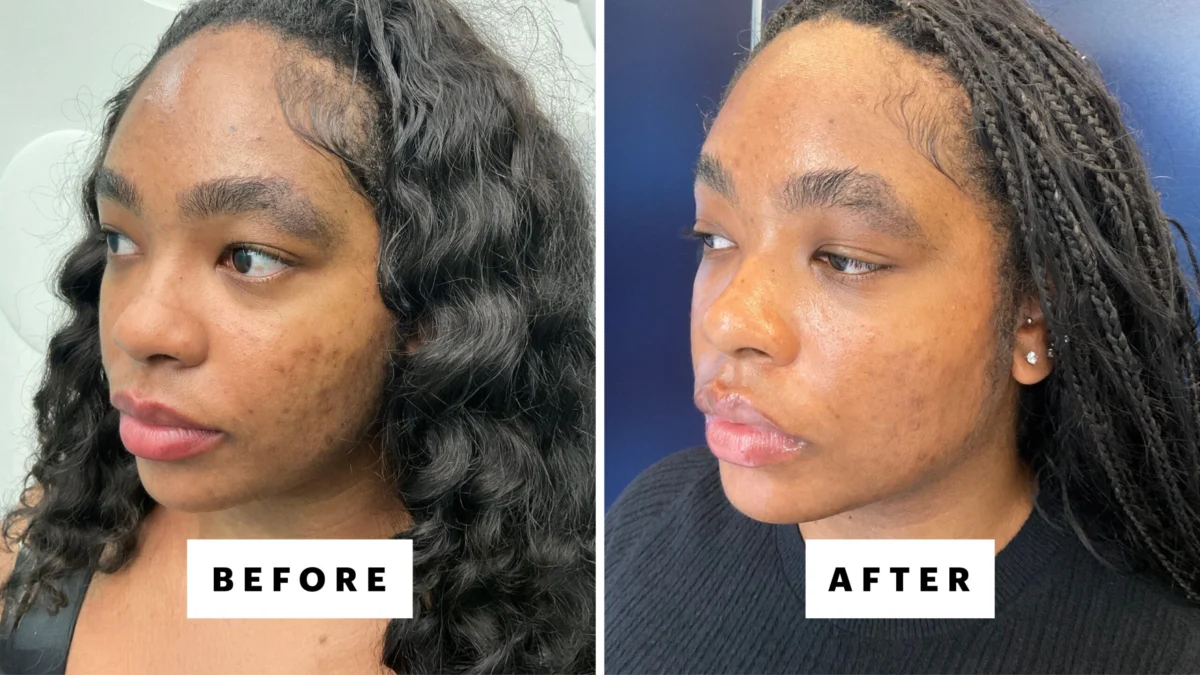
Historically, individuals with darker skin tones have approached laser-based cosmetic procedures with a significant degree of caution. The inherent risks of adverse reactions, including scarring, burns, and persistent hyperpigmentation, have often deterred them from exploring treatments that can otherwise enhance skin vibrancy and address concerns like melasma. This apprehension is rooted in the fundamental principles of laser technology, which often targets melanin, the pigment responsible for skin color. However, a new wave of innovation and patient advocacy is bringing a specific laser treatment, Laser Genesis, to the forefront as a safer and effective option for a broader demographic.
The growing popularity of Laser Genesis, particularly among Black women, has been amplified by a surge of positive testimonials on social media platforms like TikTok. These videos showcase individuals, many of whom are women of color, sharing their experiences with the procedure. The consensus emerging from these online narratives is one of remarkable comfort, with many users describing the treatment as virtually painless and even relaxing, often engaging in conversation or laughter throughout the session. Furthermore, the lack of significant downtime—a stark contrast to the week or more often required for recovery after more aggressive laser treatments—adds to its appeal, allowing individuals to seamlessly reintegrate into their daily lives immediately following an appointment.
This digital groundswell has translated into tangible demand in clinical settings. Dermatologists are reporting a marked increase in patients specifically requesting Laser Genesis by name, a phenomenon that reflects the treatment’s burgeoning reputation. Dr. Saya Obayan, a board-certified dermatologist in Austin, Texas, notes a significant influx of Black women seeking this particular procedure. Similarly, Dr. Sarah Yagerman, a board-certified dermatologist in New York City, observes a shift in patient consultation dynamics, where clients arrive with pre-determined treatment names rather than general skin concerns. "Rather than going to your dermatologist and saying, ‘I want to treat XYZ [condition],’ people are coming in and requesting procedures by the brand name," Dr. Yagerman explains. "Right now, Laser Genesis happens to be the one with a lot of recognition."
Understanding the historical context of laser treatments and darker skin is crucial to appreciating the significance of Laser Genesis. Traditional lasers operate on the principle of selective photothermolysis, a process where light energy precisely targets and heats specific chromophores within the skin. While effective for lighter skin tones, this mechanism can inadvertently target melanin in individuals with higher concentrations of the pigment. As cosmetic chemist Shuting Hu previously explained to Allure, "the heat from the laser can trigger the production of melanocytes, which will create more melanin pigment, leading to hyperpigmentation and dark spots forming." This risk has historically made many laser procedures a gamble for those with melanin-rich skin, potentially leading to irreversible damage.
The Science Behind Laser Genesis: A Safer Approach
Laser Genesis employs a specific type of near-infrared Nd:YAG laser technology. This 1064 nm wavelength is key to its improved safety profile for darker skin tones. Unlike lasers that directly target melanin in the epidermis, the Nd:YAG laser used in Laser Genesis penetrates deeper into the dermis. This approach minimizes the risk of epidermal injury and, consequently, reduces the likelihood of post-inflammatory hyperpigmentation and scarring.
"Ablative lasers like the CO2 laser can be dangerous for skin of color because they target the surface level of the skin, which is where all of our melanin is," states Dr. Obayan, emphasizing why these lasers are more prone to causing hyperpigmentation. In contrast, Laser Genesis "bypasses that first layer of skin to target the dermis, rather than heating up the epidermis." Dr. Yagerman elaborates, "This type of laser doesn’t heat up the [water] in the epidermis like fractional or ablative laser skin resurfacing, so it’s not likely to cause a lot of injury to the surface layer of the skin. Because of that, it’s safer for all skin tones."
The technology behind Laser Genesis, developed by Cutera, utilizes rapid pulses of heat. Dr. Obayan explains that these pulses are very short, allowing the skin to cool down quickly between applications. "When the Laser Genesis pulse hits the skin, it’s a very short pulse, so the skin cools down very quickly. That’s important for skin of color, because the quicker the skin cools down, the less thermal damage to the melanin." This controlled thermal delivery is a critical factor in preventing adverse reactions.

While Laser Genesis is a prominent Nd:YAG laser treatment, it is important to note that other devices utilize similar technology. Aerolase’s Neo Elite and Lumenis’ Splendor X are also 1064 nm Nd:YAG lasers, each with subtle differences in application. The Neo Elite, for instance, uses high-energy pulses for targeted treatment of acne, rosacea, melasma, and razor bumps. The Splendor X, a dual-wavelength laser, is primarily for hair removal but can also address wrinkles and pigmented lesions. Laser Genesis, however, is distinguished by its intended outcome of promoting an overall radiant complexion.
Dr. Kseniya Kobets, a board-certified dermatologist in Elmsford, New York, clarifies the nuances: "Aerolase Neo Elite uses short high-energy pulses to treat a targeted area, making it ideal for treating acne, rosacea, melasma, and razor bumps. Splendor X uses a dual-wavelength laser (still 1064 nm) and is primarily used for hair removal, but can provide wrinkle reduction and treat vascular or pigmented lesions too." Laser Genesis, on the other hand, employs quick pulses in a continuous sweeping motion, focusing on overall skin rejuvenation rather than aggressively targeting specific imperfections. Dr. Kobets notes, "Laser Genesis is more for maintenance and evening out skin tone," a characteristic that leads her to describe it as a "gentle glow" treatment.
Benefits Beyond Safety: Rejuvenation and Collagen Stimulation
Beyond its safety for melanin-rich skin, Laser Genesis offers significant dermatological benefits by stimulating collagen production. Collagen is the primary protein that provides structure and elasticity to the skin. As individuals age, collagen production naturally declines, leading to signs of aging such as fine lines, wrinkles, and decreased skin firmness.
"Our skin is primarily made up of collagen, and as we age, our collagen gets broken down more quickly," states Dr. Obayan. "Having more collagen in your skin helps prevent premature aging." The collagen remodeling induced by Laser Genesis can lead to stronger, tighter skin, effectively reducing the appearance of fine lines and wrinkles over time with consistent treatment.
While not primarily an acne treatment, Laser Genesis can offer ancillary benefits for those prone to breakouts. The heat generated by the laser targets sebaceous glands, which are responsible for oil production and often implicated in acne development. "The heat [from the laser] also targets the sebaceous glands, which are the main reason why we get acne," explains Dr. Kobets. "Heating up these glands reduces oil production and helps to decrease inflammation." This dual action can contribute to clearer, less oily skin.
What to Expect During a Laser Genesis Session
The Laser Genesis procedure is designed to be a comfortable and efficient experience. Upon arrival at the clinic, patients typically undergo a thorough skin cleansing. Eye shields are then applied to protect the eyes from the laser light. The laser handpiece is held approximately a centimeter above the skin, never making direct contact.
The treatment involves a provider sweeping the device across the face in both horizontal and vertical motions. This process can involve thousands of passes over the entire treatment area, yet the sensation is generally described as mild heat, akin to the warmth felt with an arm out of a car window on a warm day. Crucially, there is no zapping or stinging, making it a comfortable experience for most individuals.
The duration of a Laser Genesis session varies depending on the size of the treatment area. For larger areas like the chest, it may take 20 to 30 minutes, while smaller areas like the face can be treated in 10 to 15 minutes. Dermatologists generally recommend undergoing Laser Genesis as a standalone treatment to maximize its effectiveness and keep the total appointment time under 40 minutes. Post-treatment, a moisturizer and sunscreen are applied, and patients are often provided with a take-home kit that may include barrier creams and tinted sunscreen to aid in skin recovery and protection.
.jpeg)
Sun protection is paramount following any laser treatment, and Laser Genesis is no exception. Patients are advised to seek shade and utilize wide-brimmed hats to shield their skin from UV exposure, further supporting the healing process and optimizing results.
Downsides and Considerations
While Laser Genesis offers significant advantages, it is essential to manage expectations regarding its outcomes. It is not designed for drastic skin transformations like the complete eradication of severe acne or long-standing pigmentation issues. Compared to more aggressive laser treatments like CO2 or Erbium lasers, which offer quicker and more dramatic results, Laser Genesis is considered a gentler modality.
"If you want a procedure that’s going to give the best possible results in one session, Laser Genesis would be at the bottom of the list," notes Dr. Friedmann. Furthermore, while effective for overall skin tone improvement, it may be less potent than other 1064 nm Nd:YAG lasers for targeting specific, complex conditions such as cystic acne, folliculitis barbae, or melasma. Its primary strength lies in its ability to provide a subtle yet noticeable enhancement in skin radiance.
Dr. Obayan also cautions that Laser Genesis should not be performed on compromised or injured skin. It is advisable to wait a week or two after neurotoxin injections, such as Botox, before undergoing Laser Genesis to ensure the treatments do not interfere with each other’s efficacy. Additionally, individuals with flushed, irritated, or sunburned skin should postpone treatment until their skin has fully recovered, ideally waiting at least two weeks.
Cost and Results: An Investment in Skin Health
The cost of Laser Genesis treatments can vary significantly, typically ranging from a few hundred dollars to upwards of $1,000 per session. Geographical location plays a substantial role in pricing, with treatments in major metropolitan areas generally being more expensive than in smaller towns. Larger treatment areas will also incur higher costs. While med spas may offer more competitive pricing, Allure advises seeking laser treatments at a dermatologist’s office, where experienced and board-certified professionals can ensure the highest standards of safety and efficacy.
The results of Laser Genesis are often subtle but cumulative. A single session can provide a temporary plumping effect and a reduction in the appearance of pores due to stimulated collagen production. However, for more significant and lasting improvements, multiple treatment sessions are recommended. Patients typically undergo an initial series of four to six treatments spaced two to three weeks apart. Following this initial phase, maintenance treatments can be scheduled every two to four months, or even monthly, depending on individual needs and preferences.
"If you do Laser Genesis every month, each time you use it, you decrease the vascular congestion, so the blood vessels are under better control, and we see that inflammation decreases over time," explains Dr. Obayan. The ongoing stimulation of collagen remodeling without damaging the skin’s surface makes Laser Genesis a valuable component of a long-term beauty maintenance routine. Unlike more aggressive lasers designed for singular corrective treatments, Laser Genesis is well-suited for continuous, regular application, contributing to sustained skin health and rejuvenation.
The growing accessibility and positive reception of Laser Genesis mark a significant advancement in dermatological care, offering individuals with darker skin tones a safer and more effective pathway to achieving their desired skin goals. As awareness and understanding of its benefits continue to spread, this innovative treatment is poised to become a cornerstone of inclusive aesthetic dermatology.