







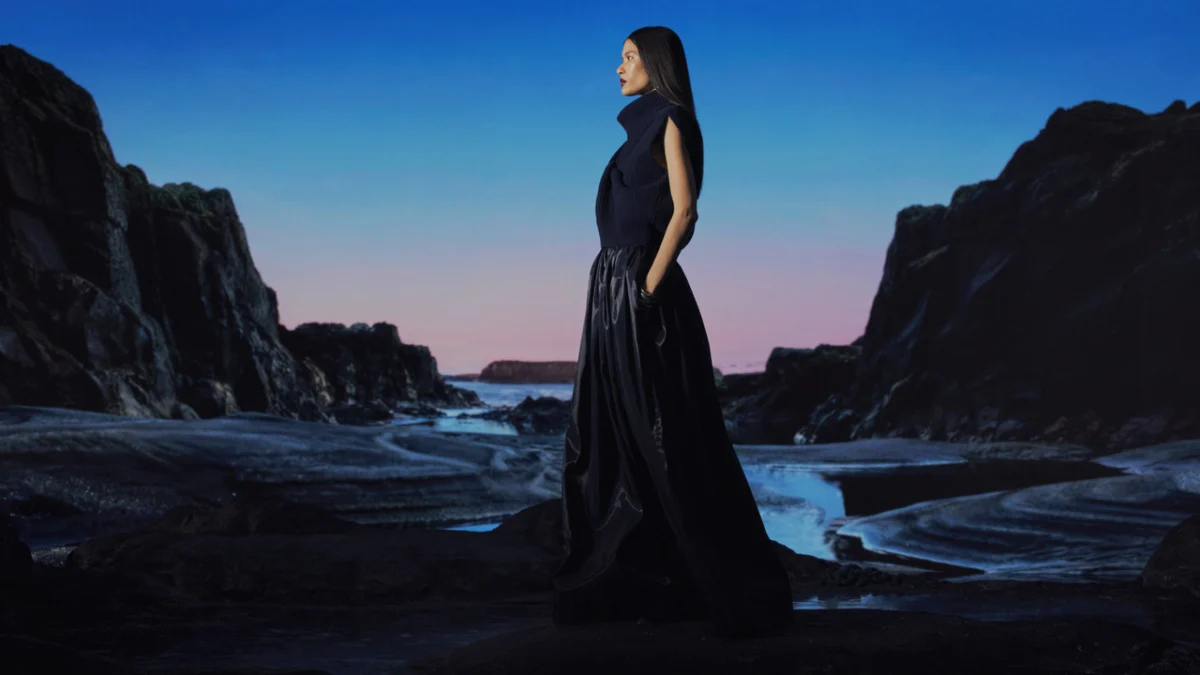
The intersection of high fashion and cutting-edge technology reached a new milestone this Saturday as designer Kate Barton unveiled her latest collection at New York Fashion Week (NYFW). In a presentation that challenged the traditional boundaries of the runway, Barton introduced a sophisticated technological layer to her showcase, utilizing a multilingual artificial intelligence agent designed to bridge the gap between physical garments and digital interaction. Developed in collaboration with Fiducia AI and powered by the IBM watsonx platform on IBM Cloud, the activation allowed guests to engage with the collection through real-time identification of pieces and photorealistic virtual try-on experiences.
The presentation marks a significant evolution in how luxury brands approach consumer engagement during premier industry events. By integrating a visual AI lens capable of detecting specific silhouettes and textures from the new collection, Barton and her technical partners have moved beyond the experimental phase of AI, delivering a production-grade tool that facilitates a deeper understanding of the designer’s creative vision. This initiative reflects a broader trend within the fashion industry, where the focus is shifting from the mere novelty of technology to its practical application as a storytelling and operational asset.
A Strategic Partnership: Merging Design with Enterprise AI
The collaboration between Kate Barton and Fiducia AI, led by founder and CEO Ganesh Harinath, represents a sophisticated fusion of creative direction and technical engineering. To achieve the level of precision required for a high-fashion environment, Fiducia AI leveraged a robust stack of IBM technologies, including IBM watsonx, IBM Cloud, and IBM Cloud Object Storage. This infrastructure provided the computational power necessary to run a multilingual AI agent that can communicate with users via both voice and text, offering an inclusive experience for the international audience typical of New York Fashion Week.
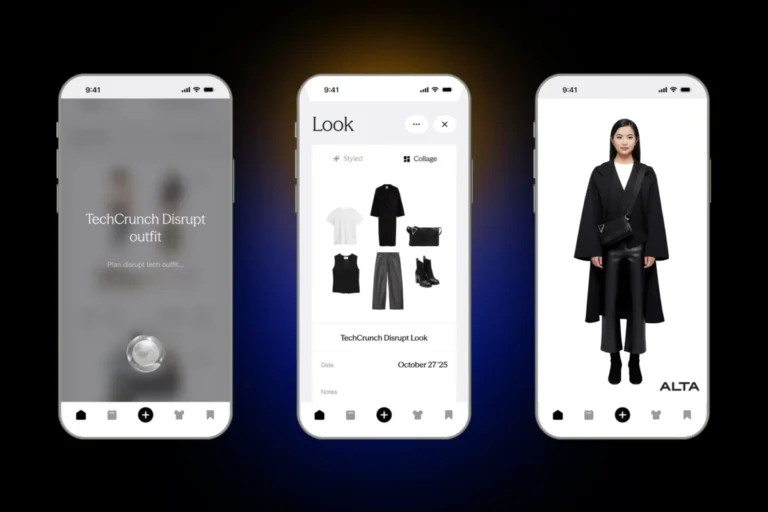
According to Harinath, the primary challenge of the project was not merely the fine-tuning of machine learning models, but rather the complex orchestration of multiple AI components to ensure a seamless user experience. The "visual AI lens" serves as the primary interface, allowing the system to recognize individual pieces from Barton’s latest collection instantaneously. Once a garment is identified, the AI agent provides detailed information about its construction, materials, and the inspiration behind the design. Furthermore, the integration of photorealistic virtual reality try-ons enables attendees to visualize how the avant-garde pieces would look on themselves, effectively democratizing the "front row" experience.
The Chronology of Technological Integration in Barton’s Work
Kate Barton’s journey into the world of fashion technology did not begin with this season’s showcase. The designer has consistently positioned herself as a forward-thinking creative who views technology as an inherent part of the design process. Last season, Barton experimented with AI-generated models, also in partnership with Fiducia AI, to explore the boundaries of digital representation in fashion. That early experiment served as a foundation for the current, more immersive activation, moving from static digital imagery to interactive, real-time engagement.
Barton describes her approach to technology as a "portal" into the world of the collection. She emphasizes that the goal is not to use "AI for AI’s sake," but to use it as a tool for expanding the narrative surrounding the clothes. For Barton, the integration of AI into her set design and presentation is a way to create a sense of curiosity and to prompt the audience to take a "double take," questioning the lines between the real and the unreal. This philosophy of "tech-as-a-tool" is central to her brand identity, distinguishing her from designers who may view technology as a threat to traditional craftsmanship.
Industry Context and the Shift Toward Operational AI
The fashion industry’s relationship with artificial intelligence is currently characterized by a mix of enthusiasm and caution. While many brands are quietly integrating AI into their back-end operations—such as supply chain optimization, demand forecasting, and inventory management—fewer have been willing to make AI a central, public-facing component of their brand identity. Barton suggests that this hesitation stems from a perceived "reputational risk," as brands fear that an over-reliance on automation might alienate consumers who value the human touch in luxury goods.
This cautious adoption mirrors the early days of e-commerce. In the late 1990s and early 2000s, many high-end fashion houses were reluctant to launch websites, fearing that an online presence would dilute the exclusivity of their brands. Eventually, the digital transition became inevitable, and the industry’s focus shifted from whether to be online to the quality of the online experience. A similar trajectory is expected for AI. As the technology matures and the discourse around licensing and credit becomes clearer, AI is likely to move from the periphery of fashion to its operational core.

Data-Driven Insights: The Economic Impact of Fashion AI
The integration of AI in fashion is backed by significant economic projections. According to industry analysis, generative AI alone could add between $150 billion and $275 billion to the apparel, fashion, and luxury sectors’ operating profits within the next three to five years. These gains are expected to come from improvements in design speed, personalized marketing, and more efficient production cycles.
In the context of the Barton-Fiducia collaboration, the use of IBM watsonx highlights the move toward "enterprise-grade" AI in fashion. Unlike consumer-level chatbots, these systems are built for data privacy, reliability, and scale. For a designer, this means the ability to manage vast amounts of visual and textual data—from fabric swatches to historical design references—and turn them into actionable insights or interactive consumer experiences without compromising intellectual property.
Official Responses and Strategic Vision
The leadership involved in the Barton presentation views this moment as a turning point for the industry. Ganesh Harinath of Fiducia AI predicts that AI in fashion will be fully normalized by 2028. By 2030, he envisions a retail landscape where AI is no longer a "feature" but is embedded into every aspect of the business, from the initial sketch to the final point of sale. He notes that the technology required for this transformation largely exists; the current challenge is for brands to assemble the right partners and build teams capable of operationalizing these tools responsibly.
IBM’s perspective reinforces this view. Dee Waddell, the Global Head of Consumer, Travel, and Transportation Industries at IBM Consulting, noted that when product intelligence and consumer engagement are connected in real-time, AI becomes a "growth engine" that provides a measurable competitive advantage. By using IBM watsonx, Barton is not just showing clothes; she is utilizing a platform that can drive real-time interaction and data-driven storytelling, which are becoming essential components of modern brand strategy.
Analyzing the Implications: Human Creativity in an Automated Age
One of the most critical aspects of Barton’s approach is her insistence on maintaining the human element at the center of the technological experience. She is vocal about her opposition to technology used to "erase people," arguing that audiences are sophisticated enough to distinguish between genuine invention and the mere avoidance of human labor. This stance addresses a major concern within the creative industries regarding the potential for AI to displace human designers and artisans.
Instead, Barton sees a future where AI facilitates better prototyping and smarter production decisions, allowing designers to spend more time on the craft that makes fashion "worth wearing." By using AI to handle the "orchestration" of data and presentation, designers can deepen their storytelling and bring a wider audience into the experience. This "human-centric" model of AI deployment suggests that the future of fashion is not automated, but augmented—a world where new tools are used to heighten traditional skills rather than replace them.
Looking Ahead: The Future of Fashion Presentations
The success of the Kate Barton and Fiducia AI activation at New York Fashion Week provides a blueprint for how other brands might navigate the digital transition. As consumers become increasingly accustomed to interactive and personalized digital experiences, the demand for "phygital" (physical and digital) events is likely to grow. The use of multilingual AI agents, in particular, offers a way for brands to scale their presence globally, providing a localized experience for every guest regardless of their native language.
As the industry looks toward 2028 and 2030, the conversation will likely move away from the "novelty" of virtual try-ons and AI assistants. Instead, the focus will be on how these tools can be used to solve systemic issues in fashion, such as reducing waste through more accurate virtual prototyping and improving sustainability by aligning production more closely with consumer demand.
For now, Kate Barton’s latest collection stands as a testament to the potential of interdisciplinary collaboration. By embracing the capabilities of IBM watsonx and the creative engineering of Fiducia AI, she has demonstrated that the runway can be more than just a display of clothing—it can be an immersive, interactive, and intelligent portal into the future of the industry. The most exciting future for fashion, as Barton suggests, is one that uses every tool available to celebrate and elevate the people who create it.